
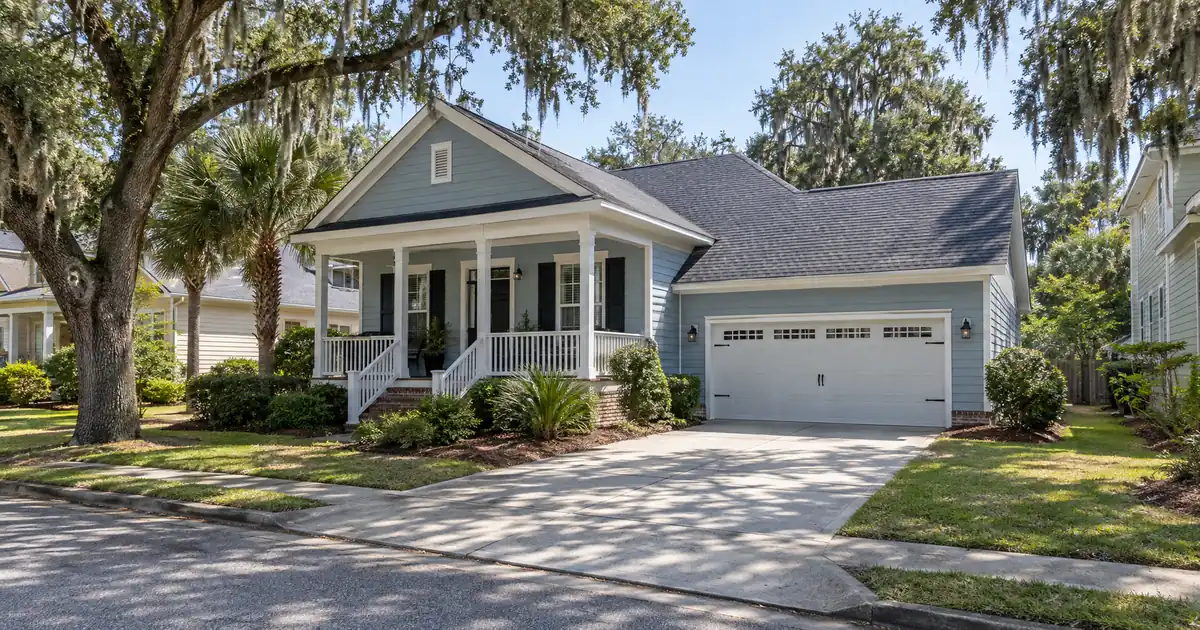
Any cash-out refinance on a Port Royal rental is capped at 75 percent loan-to-value under standard wholesale DSCR guidelines, and the property generally needs about six months of seasoning from the recorded deed before a lender will review pulling equity. That single fact shapes almost everything else in this market: an investor who bought two years ago during Port Royal’s run of double-digit annual appreciation is sitting on real, bankable equity — but the deal still has to clear on today’s rent, not on the comps from 2022.
Key Takeaways: A cash-out refinance on a Port Royal rental is underwritten primarily against the property’s in-place rent measured against its full monthly obligation, not against personal income, which fits investors holding equity in military-adjacent single-family or small multifamily property here.
DSCR Cash-Out Calculator
Run the cash-out numbers in Port Royal, SC
Rate source: Freddie Mac 30-yr average via FRED® — Federal Reserve Bank of St. Louis · effective Sep 17, 2026
Prefilled with starting assumptions — enter your property’s value, balance, taxes, and insurance for a more accurate picture.
Program parameters update from Lendmire’s centralized guideline source. Taxes and insurance are editable estimates.
As of Sep 17, 2026 · General Freddie Mac market benchmark, not a Lendmire loan offer. Property value, balance, taxes, and insurance are editable estimates. Maximum loan-to-value varies by lender, program, property type, and seasoning. Not a Loan Estimate, approval, or commitment to lend. Program availability and eligibility are subject to lender guidelines, credit approval, property review, and underwriting.
- Redfin puts the November median sale price at $392,000, down from a faster market a year prior (Redfin)
- Ten-year appreciation runs 133.63 percent, but trailing one-year appreciation is just 0.54 percent (NeighborhoodScout)
- BAH for an E-5 with dependents at the Beaufort/Parris Island housing area is $2,403 monthly, tax-free
- Cash-out LTV tops out at 75 percent with roughly six months of seasoning required
- Almost 14 percent of the local workforce is active-duty military, a durable, income-verified renter base
Port Royal Market Snapshot
A quick read on the Port Royal investor landscape — figures come from the cited sources below. Confirm current property-level numbers before underwriting.
| Metric | Detail |
|---|---|
| Home prices | $392K median (Redfin) |
| University enrollment | ~2,000-2,124 undergrad enrollment (University of South Carolina) |
| Population | 15,579 population (Census Reporter (ACS 2024 5-yr)) |
The Appreciation Story Has Two Chapters
Port Royal spent the last decade as one of the stronger appreciation stories in the Lowcountry — and the last twelve months as one of the weaker ones. That split matters enormously for anyone underwriting a cash-out.
Ten-year home appreciation in Port Royal sits at 133.63 percent, an average annualized rate of 8.86 percent that ranks in the top 20 percent of markets nationally, according to NeighborhoodScout. That’s the equity an investor who bought early actually has to work with. But the same data source shows the most recent year trailing the rest of the country at just 0.54 percent appreciation, with the latest quarter posting a decline of 3.02 percent — an annualized rate near negative 11.55 percent, among the weaker readings nationally right now.
Redfin’s numbers tell a consistent story from the transaction side: the median sale price in November sat at $392,000, homes moved in 51 days versus 90 days the year before, and 20 homes sold that month against 27 a year earlier (Redfin). Faster days on market, but thinner comps and fewer closings. An appraisal ordered today is going to lean on a smaller, more conservative recent-sales pool than one ordered during the 2021-2022 run.
The practical read: this isn’t the moment to underwrite a cash-out on the theory that comps keep climbing. It’s the moment to underwrite it on what the property already earned over the last several years, banked as equity, and what it earns in rent today. Fortunately, Port Royal’s rent side has an unusual amount of ballast most towns its size don’t have.
Why Rent Here Doesn’t Move Like a Normal Small Town
Roughly 14 percent of Port Royal’s workforce is active-duty military, and median household income sits at $74,870, according to NeighborhoodScout. That’s a meaningfully different tenant base than a comparably-sized coastal town running on tourism and retail wages alone.
The reason traces directly to Marine Corps Recruit Depot Parris Island, an 8,095-acre installation sitting inside Port Royal that has run recruit training since 1915. Roughly 20,000 recruits pass through annually, plus the permanent-party drill instructors, support staff, and their families who live off-base. Naval Hospital Beaufort, commissioned in 1949, adds another layer of military-affiliated households needing off-base housing near MCRD and MCAS Beaufort.
Here’s the number worth underwriting against rather than a generic rent estimate: the 2026 Basic Allowance for Housing for an E-5 with dependents at the Beaufort/Parris Island military housing area runs $2,403 per month, tax-free, and $2,103 without dependents. That figure is set by the Department of Defense, published, and doesn’t move with local rent softness the way a market-rate lease does. For a workforce single-family rental leased to an NCO family, that BAH schedule functions as a rent floor most civilian markets simply don’t have.
Run that against a median-priced property. A $392,000 acquisition refinanced at the 75 percent LTV ceiling puts roughly $2,240 a month in full monthly obligation — principal, interest, an estimated tax line near 0.57 percent of value annually, and insurance near 0.45 percent — once South Carolina averages for taxes and insurance are layered in. Rent at the $2,403 BAH benchmark against that obligation lands the coverage ratio around 1.07x. That’s a workable number under standard 1.00x-benchmark DSCR programs, though it isn’t a wide margin — a property with a lease at or above BAH, verified reserves, and a clean seasoning history strengthens the file more than the ratio alone.
DSCR files in coastal military towns like Port Royal typically show this same pattern: rent comes in close to the BAH schedule rather than a Zillow rent estimate, coverage often lands in the low-1.0s rather than comfortably above 1.20x, and the stronger files carry documented lease history or a signed lease at or near the BAH ceiling rather than a projected asking rent. Reserves and a clean seasoning timeline tend to matter more here than they do in markets with wider coverage cushions.
Old Village and the Zoning Angle Most Investors Miss
Port Royal’s own building code names cottage courts, duplexes, townhouses, and apartment houses as by-right building types across its historic core — an unusually explicit multifamily framework for a Lowcountry town this size. That’s directly relevant to a cash-out strategy aimed at building rather than buying small multifamily, because existing multifamily inventory is thin: Redfin’s most recent monthly snapshot showed zero multifamily units for sale in Port Royal against 20 single-family sales, six condos, and 16 townhouses.
Old Village, centered on Paris Avenue and laid out on a grid of internationally-named streets near where Battery Creek meets the Beaufort River, holds the town’s older housing stock and its most walkable commercial spine. West of Battery Creek is the newer-construction corridor — more predictable builds, lower maintenance profiles, and some waterfront and dock properties along the Beaufort River. Habersham, a New Urbanist community built around cottage courts and townhomes, already carries the attached-unit stock the zoning code favors, making it a logical target for investors pulling equity out of one property to fund a duplex or townhouse acquisition there.
The Ribaut Road corridor adds a third angle: T-5 mixed-use zoning along a high-traffic commercial spine that supports live-work conversions and small apartment product adjacent to retail and service jobs. And just outside Old Village, the Parris Island-adjacent zip code shows 98.6 percent renter-occupancy with 65.7 percent of homes classified as rowhouse or other attached product — one of the only submarkets in the metro where the physical housing stock is already built for income-stacking rather than requiring a conversion. That combination of default-renter demand and attached-unit inventory reduces lease-up risk on exactly the kind of small multifamily deal a DSCR cash-out is often used to fund.
Two Ways the Equity Gets Used
An investor holding a Port Royal rental purchased near the bottom of the last cycle has genuine equity from that 133.63 percent decade of appreciation — the question is what that equity funds next, given that the market itself has gone flat to slightly negative over the trailing year.
Consider an owner holding a West of Battery Creek single-family rental bought several years ago, now leased near the $2,403 BAH benchmark. A cash-out refinance at the 75 percent LTV ceiling converts a portion of that decade of appreciation into capital — sized against the current appraised value, not the peak-cycle number, and subject to the roughly six-month seasoning window and reserve requirements (generally around six months of PITIA on standard balances) that apply to any refinance in the network. That capital becomes the down payment on a Habersham duplex or a Ribaut Road small-multifamily conversion, effectively turning one asset’s appreciation into a second asset’s rent-stacking play.
Frequently Asked Questions
How do you qualify for a DSCR loan in Port Royal, South Carolina?
Qualification centers on the property’s rental income measured against its full monthly obligation — taxes, insurance, and principal and interest — rather than traditional personal-income documentation or W-2s. A lease at or near the local BAH benchmark, or a documented rent roll for a duplex or small multifamily property, typically carries more weight in Port Royal than a generic rent estimate, subject to lender guidelines and credit approval.
DSCR vs. conventional financing
Two common ways to finance an investment property in Port Royal, SC. They qualify you differently — here’s how investors weigh them.
Why investors choose it
- Qualifies on the property’s rental income — no personal tax returns, W-2s, or pay stubs needed to document income.
- No personal debt-to-income ceiling to clear, so existing mortgages and obligations don’t cap your borrowing the same way.
- Can be closed in an LLC, keeping the property inside a business entity.
- Built for scaling — not held to the limit on number of financed properties that conventional financing applies.
- Underwriting centers on the deal: generally qualifies when the rent covers the payment, a 1.00x coverage ratio being a common baseline (confirmed in underwriting).
- Designed specifically for investment property, including long-term and, where the program allows, short-term rentals.
Where it’s strong
- Often the lowest ongoing financing cost for a buyer who fully qualifies on personal income — a fit for a first property or a cost-first purchase.
Trade-offs for investors
- Requires full personal income documentation and must fit within a debt-to-income limit — salary, existing debts, and other mortgages all count.
- Typically held in your personal name rather than a business entity.
- Caps how many financed properties you can carry, which can become a ceiling as a portfolio grows.
- Evaluates you as a borrower as much as the property, which usually means more paperwork.
How investors usually choose: a first or single property often optimizes for the lowest financing cost; portfolio builders often optimize for leverage, vesting in an LLC, and scaling past conventional caps. The right answer depends on your goals, the property, and current guidelines — both paths run through select lenders in Lendmire’s wholesale network, with eligibility and terms confirmed in underwriting.
What are the requirements for an investment property loan in Port Royal, South Carolina?
Most standard DSCR programs are built around credit tiers starting near 620 and improving with higher scores, a coverage ratio benchmarked near 1.00x, and reserves generally around six months of the monthly obligation (closer to nine months above $1.5 million). Cash-out refinances specifically require roughly six months of seasoning from the recorded deed and are capped at 75 percent loan-to-value — exact eligibility depends on lender overlays and property review.
Does Port Royal’s recent flat appreciation affect a cash-out refinance?
Yes — it affects the appraised value the refinance is based on, not the mechanics of qualifying. Trailing twelve-month appreciation has run close to flat with a negative quarterly reading, so an appraisal ordered now will likely track close to recent comparable sales rather than the faster pricing seen a few years earlier.
Can a duplex or cottage-court property in Habersham or Old Village qualify for a cash-out refinance?
Small multifamily property (two to four units) is eligible under standard DSCR cash-out programs, subject to program eligibility and the same 75 percent LTV ceiling and seasoning window as single-family. Port Royal’s building code explicitly permits cottage courts and duplexes in its historic core, which supports acquiring or building this product type, though existing multifamily inventory in town is limited.
What down-payment ranges may DSCR lenders review for Port Royal investment-property purchases?
Down-payment expectations on a purchase typically run in a range tied to credit tier and property type rather than a single fixed number, reviewed against the property’s rental income under lender guidelines. Lendmire arranges these programs across South Carolina and 39 other states plus Washington, D.C., with LLC-titled acquisitions reviewed subject to program eligibility.
For current guidelines and terms, see Lendmire’s DSCR loan programs page.
About Lendmire
Lendmire (NMLS# 2371349) is a DSCR-focused mortgage broker that arranges investor financing across 41 markets, including Washington, D.C., through wholesale and investor-lending channels. Eligibility is generally reviewed by the lender on a property’s rental income rather than personal income documentation, subject to lender guidelines — a structure that tends to fit self-employed investors, LLC operators, and portfolios that have grown past four financed properties. Scotsman Guide recognized the firm as a 2025 Scotsman Guide Top Mortgage Workplace and again as a 2026 Scotsman Guide Top Mortgage Workplace; further detail sits in Lendmire’s industry announcements. For a deeper look at how the underwriting model works, the guide “What Is a DSCR Loan” and the guide “Where DSCR and Conventional Diverge” against conventional financing both walk through the mechanics in more detail.
Every Port Royal investor holding equity right now faces roughly the same fork: pull capital out at today’s flat-to-negative appraisal comps and redeploy it into a second BAH-anchored rental or a Habersham duplex, or leave the debt as-is and let a decade of banked appreciation keep compounding quietly while the market resets. Neither choice is wrong — but the flat trailing-year comps mean whichever path gets chosen should be sized on this year’s rent roll, not last year’s momentum.
For the mechanics of pulling equity out of a rental property, see cash-out refinance on an investment property.
Get Started
Ready to find the right loan for you?
In about 30 seconds you can review financing options available for your investment property. No commitment required.
Informational only. Not a Loan Estimate, approval, or commitment to lend. Program availability and eligibility are subject to lender guidelines, credit approval, property review, and underwriting.
References
1. Redfin — Port Royal, SC Housing Market
2. NeighborhoodScout — Port Royal Real Estate
3. University of South Carolina
4. Census Reporter (ACS 2024 5-yr)
6. Marine Corps Recruit Depot Parris Island
7. a 2025 Scotsman Guide Top Mortgage Workplace
8. a 2026 Scotsman Guide Top Mortgage Workplace
This article is part of Lendmire’s investment property cash-out refinance program — full qualification details, guidelines, and scenarios live on the program page.
Related reading: Cash Out Refinance Investment Property in Port Royal SC · Cash Out Refinance Investment Property in Hilton Head Island, South Carolina · DSCR Loans Beaufort & Port Royal: Investor Financing for MCAS Beaufort, Parris Island, Hunting Island & Real Estate Investors
Guides: Investment Property Cash-Out Refinance in Port Royal, SC · Investment Property Cash-Out Refinance in South Carolina
Brandon Miller
Founder & CEO, Mortgage Loan Originator, Lendmire LLC
- Mortgage Loan Originator · NMLS# 1129696 · Verify on NMLS Consumer Access
- North Carolina Real Estate Broker · License# 343312 · Verify on NCREC
- North Carolina Insurance Producer · License# 19053198 · Property, Casualty, Life, Health · Verify on NAIC SBS
- Lendmire LLC · Firm NMLS# 2371349 · Verify firm licensure
Disclosures. The information presented in this article is general market commentary, not financial, legal, or tax advice. Lendmire is a mortgage brokerage (NMLS# 2371349) — not a direct lender or depository institution — and loan placement is subject to lender underwriting. Nothing in this content represents a commitment to lend. Loan terms, pricing, and program availability vary based on borrower qualifications, property characteristics, and state of subject property, and are subject to change at any time. Lendmire complies with Equal Housing Opportunity requirements. Consumer access: nmlsconsumeraccess.org.