
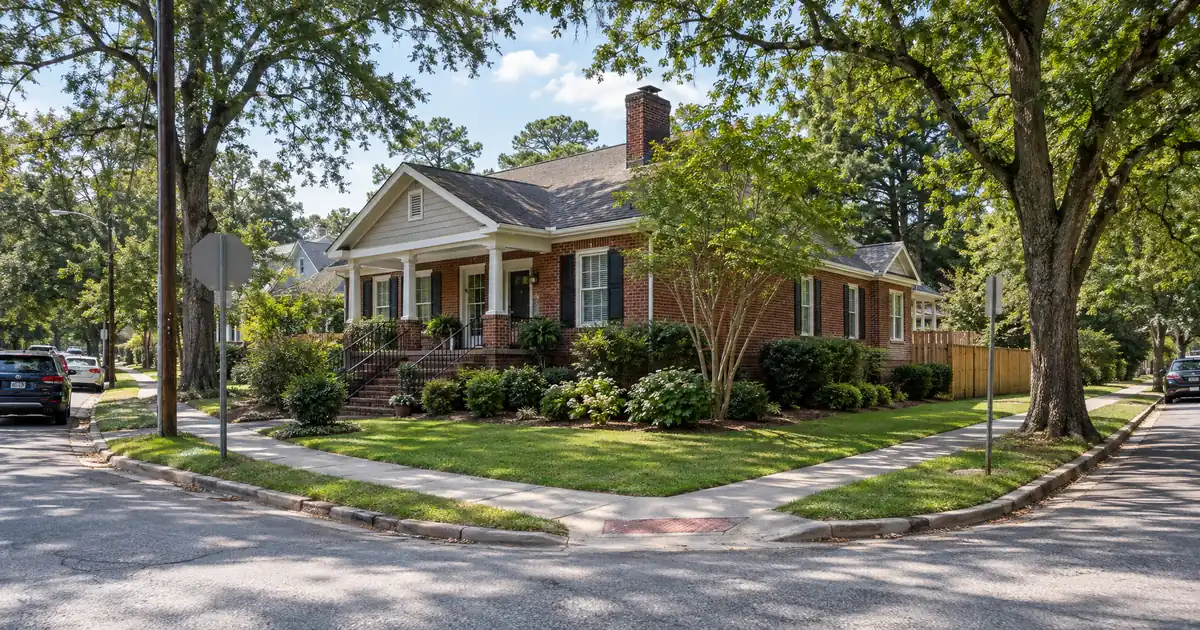
A Deerfield townhouse renting near $2,825 a month is the typical Milton rental, according to Homes.com’s rental listings. That is where a cash out refinance investment property deal in Milton, Georgia, starts. The DSCR math runs like this: rent used for lender review gets divided by the full monthly obligation (principal, interest, taxes, insurance, and any HOA dues). In a city where the median house sells for well over $1 million, that division is the hard part, not the equity.
DSCR Cash-Out Calculator
Run the cash-out numbers in Milton, GA
Rate source: Freddie Mac 30-yr average via FRED® — Federal Reserve Bank of St. Louis · effective Sep 24, 2026
Prefilled with starting assumptions — enter your property’s value, balance, taxes, and insurance for a more accurate picture.
Program parameters update from Lendmire’s centralized guideline source. Taxes and insurance are editable estimates.
As of Sep 24, 2026 · General Freddie Mac market benchmark, not a Lendmire loan offer. Property value, balance, taxes, and insurance are editable estimates. Maximum loan-to-value varies by lender, program, property type, and seasoning. Not a Loan Estimate, approval, or commitment to lend. Program availability and eligibility are subject to lender guidelines, credit approval, property review, and underwriting.
The Short Version:
Cash-out refinancing on a Milton, Georgia rental is underwritten primarily on the property’s rental income measured against its full monthly obligation, and here the limiting factor is thin rent relative to a median sale price of about $1.3 million per Redfin, not a shortage of equity.
- Attached product in the Deerfield/Windward corridor is the most realistic coverage fit.
- Cash-out LTV tops out at 75%, and about 6 months of seasoning applies.
- Estate-tier homes carry appraisal risk because comps are sparse.
- Portal rent averages conflict, so signed local lease comps set the number.
Lendmire (NMLS# 2371349) is a DSCR-focused mortgage broker that arranges investor loans across 40 states plus Washington, D.C., 41 markets total, through wholesale lending channels. Lenders in that network review eligibility and make approval decisions. Milton files come in with a recognizable shape: plenty of equity, thin coverage, and an appraisal that decides everything. The rest of this piece walks through each of those in order.
How the Coverage Math Runs on a Milton Rental
Milton rents sit at roughly 0.3% of value per month or less, and a full-PITIA calculation needs materially more than that at 75% LTV. Single-family rents of about $3,875 per Homes.com against a $1.3 million median sale price work out to about 0.30% monthly. Expect sub-1.00 coverage at the cash-out cap on a median-priced house. Every figure here varies by lender and program — guidelines, property type, leverage, and credit profile all apply.
Here is the mechanism, step by step.
1. The lender takes the rent used for lender review. That is the lower of the lease and the appraiser’s rent schedule (Form 1007) on most files. 2. The lender builds PITIA: principal and interest on the new loan, plus taxes, plus insurance, plus HOA dues if any. 3. Rent divided by PITIA is the coverage number. A 1.00x baseline is common because rent covers the payment at that level, though exact eligibility depends on lender guidelines, credit profile, reserves, and property review.
Now a modeled example. These are assumptions, not market data. Say a Deerfield-area townhouse is valued at a round-number price and rents close to Homes.com’s townhouse median. At 75% LTV, coverage including taxes and insurance lands in the low 0.9s. Drop leverage to about 60% and the same rent moves into the low 1.1s. Same property, same tenant. Only the loan size changed. Final terms depend on lender guidelines, property type, leverage, and the borrower’s complete credit picture.
That is the trade in Milton. A sub-1.00 result does not end the conversation, but it changes the structure. Options a lender may review include lower leverage, interest-only payment structures, or programs that allow coverage below 1.00 with stronger compensating factors. Qualification stays subject to lender guidelines, credit approval, and property review.
Where the Equity Comes From (It Isn’t the Rent)
Equity in Milton is appreciation equity. Coverage is not what builds it. Redfin shows the median sale price up 8.0% year over year, while RentCafe shows average apartment rent at $1,750, down 4.24% over the same stretch. Value is moving up while rent is flat to soft.
The three value measures differ by definition, so treat them separately. Redfin reports a median sale price. Zillow reports a home value index of $956,345, up 2.7%. Data USA reports a median owner-estimated value of $789,000. An investor who bought a few years back at a lower basis may see a wide gap between the original price and today’s appraisal. That gap is the cash-out pool.
The pool is capped by the 75% LTV ceiling, which is a hard cap on cash-out and refinance. It is not the 80% figure sometimes quoted on purchases. Equity available also depends on rent used for lender review, PITIA, and reserves, so it is never a guaranteed cash figure. Run the coverage test first, then look at the LTV. In Milton the appraised value is the likelier limit on a deal. The coverage ratio is the likelier limit on how much of that equity can actually be pulled. These specifics are subject to lender guidelines and a full review of property, leverage, and credit.
Purchase mechanics are a separate topic. For the general cash-out framework, the guide “The Refi Options” covers the program structure.
Which Milton Submarkets Carry a Cash-Out
The Deerfield/Windward corridor is the strongest fit. Crabapple is workable on selected product, and the estate tier is not a coverage play at all. No source gave neighborhood-level prices or rents for Milton, so the read below is qualitative and built on the city’s own land-use pattern and product mix.
Deerfield, Highway 9, and Windward
This is the city’s most commercial node, with shopping plazas like Deerfield Place anchored by Target and Petco. It sits minutes from Alpharetta’s Windward Parkway employment center. The tenant here is a professional commuting to that corridor, and the product is attached: townhomes and a few duplex-style units. Brad Poole Group lists Millstone Parc, nine stacked flats and duplexes at Webb Road and Deerfield Parkway, as one of the few small attached projects in the city.
Attached product prices below the large-lot tier while rents stay near single-family levels. Most Milton cash-out files that reach 1.00x will look like this.
Crabapple
The City of Milton calls Crabapple the heart of the city, a walkable mixed-use area holding City Hall, the library, and a growing Market District. Townhomes and new single-family infill, including a 23-lot subdivision along Crabapple Road, make it a mixed bag for coverage. Older, smaller homes and townhomes can pencil at lower leverage. New-build single-family generally does not.
Skip the Estate Tier
Birmingham and Birmingham Crossroads carry the AG-1 farms and horse estates, priced well into the multimillions. The Manor Golf & Country Club and White Columns are the signature gated communities. These are executive-rental properties, and the price-to-rent gap is too wide for coverage to work. Two practical notes for anyone holding property up there. Standard programs go up to $3,000,000, so many estates sit above the range. And barndominiums and log homes are not reviewable through the network’s DSCR programs, which matters in horse country where both show up.
What Derails Milton Files
Three things break Milton files: portal rent conflicts, estate-tier appraisals, and reserves documentation on larger balances.
Rent conflicts. Published Milton rents disagree with each other. RentCafe puts the average single-family rent at $2,711, Apartments.com at $4,037, and Rentometer shows three-bedroom homes in the $2,600s to $2,800s. One portal even shows a citywide “median rent” above $12,000, which is a skew, not a number to underwrite from. The rent used for program review will come from the signed lease and the appraiser’s rent schedule. Investors who pencil coverage from portal averages get surprised when the schedule lands lower.
Comp depth. Below roughly $1.8 million the comps are plentiful. Redfin shows 44 days on market against 49 the year before, and 182 homes sold in the latest month versus 165. Kroupa Team, a brokerage marketing page rather than official data, describes the sub-$1.8 million tier as seller-leaning and $3 million-plus estates as taking 60-plus days. Estate-tier appraisals rest on sparse, slow comps. That is where appraisal reconsideration requests show up, and where an investor should expect a lower value than the listing chatter implied. A reconsideration packet with recent in-neighborhood sales and condition adjustments is a routine step.
Seasoning and reserves. Cash-out generally requires about 6 months of ownership, measured from title recording and documented by the settlement statement. Reserves typically run about 6 months of PITIA, and about 9 months above $1,500,000. At Milton price levels, many balances cross that line, so the reserve number moves. Reserves documentation (statements showing the funds, held in the borrower or the entity) is the item files get pended on, not the credit pull. Credit tiers commonly run from a 620 floor up through 680 and 700, with better positioning at the higher tiers, subject to lender guidelines.
Working DSCR brokers see a recurring pattern in high-price, low-yield suburbs like this one: the borrower has real equity, the appraisal supports the value, and the file still stalls on coverage because the rent was underwritten from a portal average. The files that clear tend to bring a signed lease, a rent schedule expectation, and a leverage level chosen after running full PITIA, not before.
Local rental rules, taxes, and insurance vary, and investors should confirm them with qualified local professionals before sizing a refinance.
What the Proceeds Do Next
Cash pulled from a Milton rental most likely goes into a market with better rent-to-value. Milton has almost no small multifamily inside city limits, so income stacking is not a realistic local strategy. The City of Milton’s economic development page shows the city is 60% residential and 30% agricultural, with under 2% commercial. RentCafe puts renters at 27% of households, about 4,181. It is a thin, high-income renter pool, which supports steady demand for a well-priced townhome or house but not volume.
An investor looking for 2-4 unit math will find it in neighboring markets. Milton is the equity source, and the proceeds fund the yield somewhere else. Whether that trade beats simply holding is a genuine toss-up. If appreciation continues at its current pace, holding may earn more than redeploying. If it stalls, the cash sitting in a low-coverage property is the weaker position. Investors who want to see how the two loan types compare on their file can weigh conventional and DSCR loans against each other. For the refinance category more broadly, see the refinance side, and for the state platform, Lendmire’s Georgia DSCR platform covers the wider Georgia picture. To run a specific file, investors can request a quote or call 828-256-2183. For the underlying mechanics, Lendmire’s DSCR guide covers the basics.
What a Local Appraiser Would Tell You
Milton is a place people buy to live in, not to rent out. Median household income runs about $171,295 and homeownership is 72.5%. The rent doesn’t carry the price, and nobody here pretends it does. The properties that refinance cleanly are the modest attached units near Windward, priced well under the estate tier, at moderate leverage. Everything else is a value story, and the appraiser, not the rent roll, will tell you how much of it you can pull.
Frequently Asked Questions
How do you qualify for a DSCR cash-out refinance in Milton, Georgia?
The property’s rent has to cover its full monthly obligation (principal, interest, taxes, insurance, and HOA dues), with 1.00x as the common baseline. On top of that, expect about 6 months of seasoning from title recording, a 75% LTV ceiling, a credit floor of 620, and reserves of about 6 months of PITIA. In Milton, the coverage test is usually the tightest one. All of it is subject to lender guidelines and property review.
DSCR vs. conventional financing
Two common ways to finance an investment property in Milton, GA. They qualify you differently — here’s how investors weigh them.
Why investors choose it
- Qualifies on the property’s rental income — no personal tax returns, W-2s, or pay stubs needed to document income.
- No personal debt-to-income ceiling to clear, so existing mortgages and obligations don’t cap your borrowing the same way.
- Can be closed in an LLC, keeping the property inside a business entity.
- Built for scaling — not held to the limit on number of financed properties that conventional financing applies.
- Underwriting centers on the deal: generally qualifies when the rent covers the payment, a 1.00x coverage ratio being a common baseline (confirmed in underwriting).
- Designed specifically for investment property, including long-term and, where the program allows, short-term rentals.
Where it’s strong
- Often the lowest ongoing financing cost for a buyer who fully qualifies on personal income — a fit for a first property or a cost-first purchase.
Trade-offs for investors
- Requires full personal income documentation and must fit within a debt-to-income limit — salary, existing debts, and other mortgages all count.
- Typically held in your personal name rather than a business entity.
- Caps how many financed properties you can carry, which can become a ceiling as a portfolio grows.
- Evaluates you as a borrower as much as the property, which usually means more paperwork.
How investors usually choose: a first or single property often optimizes for the lowest financing cost; portfolio builders often optimize for leverage, vesting in an LLC, and scaling past conventional caps. The right answer depends on your goals, the property, and current guidelines — both paths run through select lenders in Lendmire’s wholesale network, with eligibility and terms confirmed in underwriting.
What are the requirements for an investment property loan in Milton, Georgia?
Requirements center on the property’s rent, the credit tier, reserves, and leverage. Standard programs reach $3,000,000, which matters because Milton’s estate tier can exceed it. Manufactured homes, log homes, and barndominiums fall outside these programs. Entity-held rentals (an LLC, for example) are common, subject to lender program eligibility.
Will a median-priced Milton house clear 1.00x coverage on a cash-out?
Usually not at 75% LTV. Single-family rent near $3,875 against a median sale price around $1.3 million is roughly 0.30% a month, and full PITIA needs more than that. Lower leverage, a below-median purchase basis, interest-only structures, or a sub-1.00 program are the paths a lender may review.
Is appreciation or rent the bigger driver of cash-out proceeds in Milton?
Appreciation. Redfin shows prices up 8.0% year over year while RentCafe shows apartment rents down 4.24%. Zillow’s index is more modest at 2.7%, so the size of the equity depends on which measure the appraiser’s comps follow. The appraisal, not the coverage number, sets how much value is on paper.
Can a self-employed investor buying in Milton be reviewed for DSCR financing?
Yes. Lendmire arranges DSCR investor loans, and eligibility is generally reviewed around the property’s rental income rather than personal income documents. Approval remains with the lender and depends on program guidelines, credit, and reserves.
For current guidelines and terms, see Lendmire’s DSCR loan programs page.
About Lendmire
Lendmire is a DSCR-focused mortgage brokerage, NMLS# 2371349, placing investor loans across 41 markets, including Washington, D.C. Lenders in the network generally review eligibility around a property’s rental income instead of personal income documentation, which suits LLC-held rentals, self-employed investors, and portfolios growing past conventional financed-property limits. The brokerage is recognized as a 2026 Scotsman Guide Top Workplace and a 2025 Scotsman Guide Top Workplace, as covered in the 2026 Top Workplace recognition announcement.
Get Started
Ready to find the right loan for you?
In about 30 seconds you can review financing options available for your investment property. No commitment required.
Informational only. Not a Loan Estimate, approval, or commitment to lend. Program availability and eligibility are subject to lender guidelines, credit approval, property review, and underwriting.
References
1. Homes.com’s rental listings
2. Redfin, Milton housing market
3. Homes.com’s townhouse median
4. RentCafe, Milton rent trends
7. Brad Poole Group, Milton new development
9. RentCafe
10. Apartments.com
11. Rentometer
12. Kroupa Team
13. City of Milton Economic Development
14. $171,295
15. a 2026 Scotsman Guide Top Workplace
16. a 2025 Scotsman Guide Top Workplace
17. the 2026 Top Workplace recognition announcement
This article is part of Lendmire’s investment property cash-out refinance program — full qualification details, guidelines, and scenarios live on the program page.
Related reading: DSCR Cash Out Refinance in Milton, Georgia: The 2026 DSCR Refinance Guide to Crabapple · Cash Out Refinance Investment Property in Carrollton, Georgia · DSCR Cash Out Refinance in Marietta, Georgia: Plant 6 Payroll and Square-Side Equity
Guides: Investment Property Cash-Out Refinance in Georgia
Brandon Miller
Founder & CEO, Mortgage Loan Originator, Lendmire LLC
- Mortgage Loan Originator · NMLS# 1129696 · Verify on NMLS Consumer Access
- North Carolina Real Estate Broker · License# 343312 · Verify on NCREC
- North Carolina Insurance Producer · License# 19053198 · Property, Casualty, Life, Health · Verify on NAIC SBS
- Lendmire LLC · Firm NMLS# 2371349 · Verify firm licensure
Legal disclosures. Lendmire (NMLS# 2371349) is a state-licensed mortgage brokerage that arranges financing through wholesale lender relationships. Lendmire is not a direct lender, depository institution, or registered financial advisor. The discussion above is general informational content about real estate financing — it is not financial, legal, or tax advice, and readers should consult licensed professionals for guidance on their individual circumstances. Loan inquiries are subject to lender underwriting; this article does not represent a commitment to lend. Loan terms, rates, and qualification standards vary by borrower, property, and state, and are subject to change at any time. Equal Housing Opportunity. NMLS Consumer Access: nmlsconsumeraccess.org.