
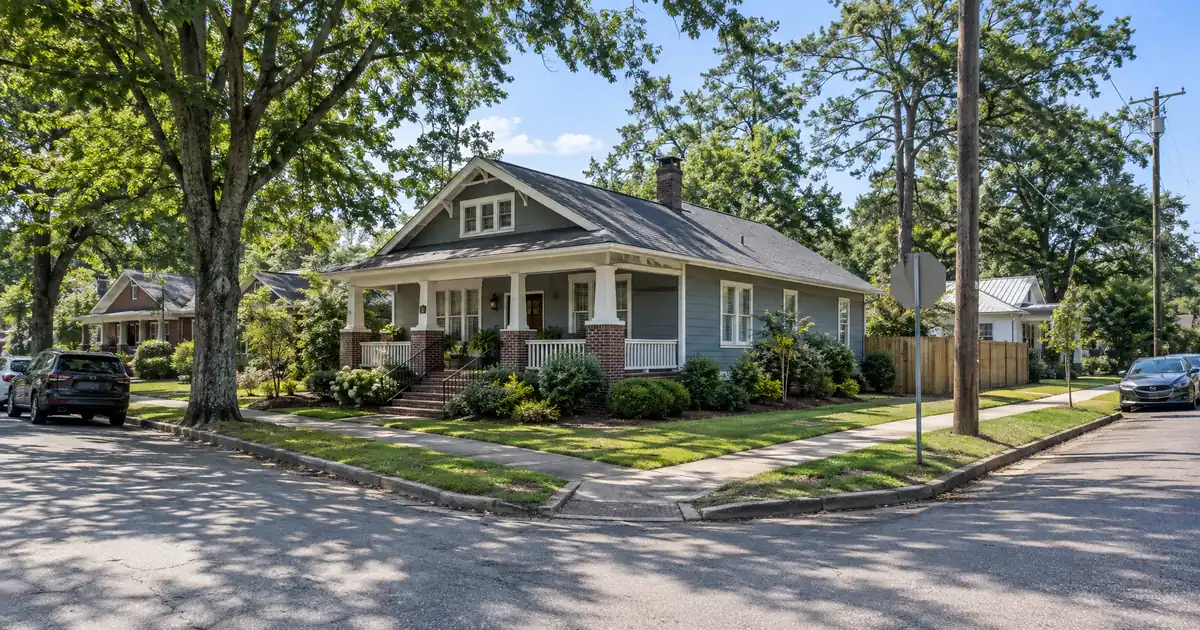
Hoover rents do not cover Hoover prices, and that is the objection that stops most investors before they run a single refinance scenario. The objection is mostly correct for single-family stock at the median. It is also incomplete. A cash-out refinance does not depend on the purchase-side rent-to-price ratio alone. It depends on appraised value, the 75% loan-to-value ceiling, and whether the property’s rent covers its full obligation after the new loan sits on top. This analysis tests that logic against Hoover’s actual numbers.
At a Glance: A cash-out refinance on a Hoover, Alabama rental is underwritten primarily on the property’s rental income measured against its full monthly obligation, with proceeds capped by a 75% loan-to-value ceiling on appraised value and a seasoning period of about six months from title recording.
DSCR Cash-Out Calculator
Run the cash-out numbers in Hoover, AL
Rate source: Freddie Mac 30-yr average via FRED® — Federal Reserve Bank of St. Louis · effective Sep 24, 2026
Prefilled with starting assumptions — enter your property’s value, balance, taxes, and insurance for a more accurate picture.
Program parameters update from Lendmire’s centralized guideline source. Taxes and insurance are editable estimates.
As of Sep 24, 2026 · General Freddie Mac market benchmark, not a Lendmire loan offer. Property value, balance, taxes, and insurance are editable estimates. Maximum loan-to-value varies by lender, program, property type, and seasoning. Not a Loan Estimate, approval, or commitment to lend. Program availability and eligibility are subject to lender guidelines, credit approval, property review, and underwriting.
- Redfin puts the Hoover median sale price at $477K, up 2.2% year over year.
- Modeled coverage on a median-priced single-family rental falls well below 1.00 at full PITIA.
- Multi-unit stock is scarce but is where coverage can clear 1.0x.
- Appreciation, not cash flow, is the likely source of extractable equity.
- The corporate tenant base, not rent yield, is Hoover’s underwriting strength.
Lendmire (NMLS# 2371349) is a DSCR-focused mortgage broker. Hoover, Alabama rental property investors can tap DSCR programs that Lendmire arranges, available across 41 markets, including Washington, D.C. The statewide detail sits on Lendmire’s Alabama DSCR loan programs page. This piece covers the equity-extraction side only: what a Hoover owner can pull out, what the coverage ratio will allow, and where the redeployed capital goes.
What the Coverage Math Says
The coverage math in Hoover breaks into two camps. Median-priced single-family rentals land well under 1.00, while small multifamily can clear it with room. The difference is large enough to drive property-type selection before any other decision.
The inputs: RentCafe reports a Hoover average rent of $1,291, with 2BR units at $1,322 and 3BR units at $1,555. Zumper shows $1,445 on listing-based data and $2,000 for 3BR. These two sources conflict, and the right response is to underwrite inside the range rather than pick the friendlier number. All of these are apartment-weighted or all-property-type averages, not single-family lease comps.
Run the numbers on a modeled basis. The table assumes a 75% LTV refinance and full PITIA (principal, interest, taxes, and insurance). Rents and prices are the cited figures. The coverage column is illustrative modeling, not a sourced market fact, rounded down. Exact terms depend on the lender’s guidelines, property type, leverage, and a full review of the borrower’s file.
| Scenario (modeled) | Rent assumption | Price assumption | Coverage |
|---|---|---|---|
| Median SFR, RentCafe 3BR | $1,555 | $477K | ~0.55x |
| Median SFR, Zumper 3BR | $2,000 | $477K | ~0.7x |
| Below-median older SFR | $1,555 | $300K | ~0.9x |
| Triplex, three 2BR units | 3 × $1,322 | $460K–$549.9K | ~1.2x–1.4x |
Standard DSCR programs are commonly built around a 1.00x benchmark because rent covers the obligation at that level. Some lenders review sub-1.00 files, but those typically bring lower leverage, different pricing, more reserves, or stronger compensating factors. Exact eligibility depends on lender guidelines, credit profile, reserves, and property review.
So a single-family owner at the Hoover median faces a structural gap that no refinance structure erases. Sub-1.00 programs, reduced leverage, interest-only structuring, and larger reserves are paths a lender would review, with qualification subject to credit approval and property review. Stacked units are the cleaner route to coverage. The triplex figures rest on a thin sample: Homes.com showed two multi-family listings in Hoover priced between $460,000 and $549,900, averaging 60 days on market (Homes.com). Two listings is an illustration, not a trend.
Where Does the Equity Come From?
In Hoover, extractable equity comes from price appreciation and a lower original basis, not from yield. That is a real constraint, because the appreciation is moderate.
Redfin shows the city median up 2.2% year over year at a median of $477K and $197 per square foot, with homes averaging 48 days on market. Zillow’s home value index for the 35236 ZIP sits at $438,571, up 3.1% (Zillow). The gap between $477K and roughly $439K is methodology. Redfin reports sale prices across the city, while Zillow’s index is a ZIP-level value estimate. This article uses the Redfin figure as the city median throughout. Both sources point the same direction: low-single-digit growth. For comparison, Redfin’s statewide Alabama benchmark sits at a $301,146 median, up 2.1%, so Hoover carries a large premium to the state without a growth premium to match.
Moderate growth changes what a cash-out looks like. The 75% LTV ceiling applies to appraised value, and about six months of ownership, measured from title recording, must have passed first. Consider an owner of a Riverchase-area property appraising near the neighborhood’s $475K median, with an existing balance at 55% of value. At the 75% ceiling, roughly 20 points of value become gross proceeds before costs and reserves of about six months PITIA. That is the entire mechanic. It works when the original basis was low or when a value-add raised the appraisal. It works less well for a recent buyer at today’s prices, whose equity cushion is thin and whose appreciation has not had time to accumulate. Every figure here varies by lender and program — guidelines, property type, leverage, and credit profile all apply.
Proceeds are never guaranteed. Equity available depends on rent used for lender review, PITIA, reserves, and the LTV ceiling, and the loan must still clear coverage after the new obligation. A refinance that lifts the balance can drag coverage below 1.00 on a property that cleared comfortably before. Run the post-refinance number first.
Broker-attributed commentary reinforces the pattern. Ark7, citing an Alabama investment brokerage, groups Hoover with appreciation-plus-rent suburbs and places Birmingham’s east and north-side neighborhoods in the cash-flow category. That is a secondary view, but it matches the math. Hoover is appreciation-led.
The Tenant Base Behind the Rent Roll
Hoover’s strongest underwriting argument is not yield. It is tenant quality. The city is a corporate-services hub, not a bedroom suburb, and that stabilizes the long-term rental demand a lender reviews when it looks at a cash-out file.
The market source page lists Regions Bank, AT&T of Alabama, BlueCross BlueShield of Alabama, and McLeod Software as headquarters or regional operations centers. Headcounts from the city’s financial report, as reproduced on Wikipedia, run 2,644 at Regions, 1,869 at Hoover City Schools, 1,711 at BlueCross BlueShield of Alabama, 1,170 at AT&T of Alabama, and 700 at McLeod Software. These counts come from a dated report, so read them as scale indicators.
The population base is large and steady. The City of Hoover Data Dashboard calls Hoover the second-largest city in the 1.1-million-person Birmingham-Hoover metro and Alabama’s sixth-largest, with almost 93,000 residents. Data USA puts median household income at $107,822 and shows only slight population movement, up 0.44% in the latest year. That is stability, not a growth story.
Healthcare adds a second anchor. UAB Medical West operates what its page describes as Alabama’s first freestanding ER, in Hoover. HooverSun quotes the Hoover Health Care Authority chair calling it the busiest freestanding ER in the state. Bham Now reports a Grandview freestanding ER on Valleydale Road has won local approval, which would be the metro’s fifth. More facilities mean more clinical and support jobs near the US-280 corridor.
One caveat on tenure: RentCafe counts 10,680 renter-occupied households, 29% of the total, against 26,322 owner-occupied. A 71% ownership rate means the rental pool is smaller than in a typical Alabama college market. Tenant quality is good, but the renter pool is shallow.
Submarkets: Where a Refinance Pencils
Riverchase and the older, below-median pockets are where a Hoover cash-out file works best. The resort and gated enclaves are where it works worst.
Riverchase. Redfin shows a $475K median for the three months ending May, up 3.9% year over year, with homes averaging 52 days on market (Redfin Riverchase). The tenant story is straightforward: employees at the nearby office parks, plus retail and hospitality staff tied to the Riverchase Galleria. Bham Now reports the city commissioned a study of the mall campus’s future use, which is a medium-term variable for the area’s rental pool. Riverchase’s appreciation outpaces the city’s 2.2%, which helps a cash-out appraisal. The rent side still needs below-median entry or multi-unit product.
Bluff Park. The Williams Group’s Hoover guide cites starter homes around $250K and says Bluff Park, parts of Riverchase, and some older neighborhoods serve buyers between $250K and $400K. Those are agent estimates. No reliable neighborhood rent source turned up, so coverage here is an inference, not a measurement. At a $250K-class entry price against a $1,291 to $1,555 rent range, the ratio improves materially over the city median. Plausibly this is the best single-family cash-flow pocket in the city. The data gap is real, so a lease comp on the specific property matters more here than anywhere else.
Chapel Hill. RentCafe lists $1,225 per month here, below the $1,291 city average. It is the only lower-rent Hoover pocket the research surfaced, and no sale-price data accompanied it. Lower rent only helps coverage if the price is lower still. Without that, it is a data point, not a thesis.
Ross Bridge. Homes.com reports a 12-month median sale price of $490,000, down 5%. RentCafe lists the area at $1,614, the highest neighborhood rent shown, though that is an apartment average. Pricing and available terms vary by lender, borrower profile, property type, and full underwriting review. For a cash-out, a falling median is the key risk: the appraisal is the denominator of the entire 75% calculation. A softening price trend works against proceeds even if rents hold.
Skip the Resort Premium
Greystone is the clearest mismatch in the city. Redfin’s neighborhood page shows a $653K median, but the figures swing sharply year over year, so use that number directionally. The tenant profile is executive and luxury, and the rent-to-price fit is likely poor for DSCR. A property priced in that range needs rent well beyond the cited Hoover ranges to approach 1.0x. Equity may exist in a Greystone property. Coverage to extract it probably does not.
Newer construction deserves the same caution on a different axis. NewHomeSource lists 1,056 new homes across 89 Hoover communities, mostly high-end single-family such as Blackridge. The Williams Group places Blackridge and Everlee between $400K and $800K. That supply competes for resale buyers and can cap price growth on comparable resale homes, which matters for the appraisals a cash-out depends on. It is a builder-listing count, not an absorption study, so treat it as a headwind to monitor rather than measure.
Multi-Unit: Scarce but Decisive
Small multifamily is the property type that most changes the coverage picture, and Hoover has almost none for sale. Redfin’s new-listings page counted one multi-family unit for sale in Hoover last month, against 29 condos and 38 townhouses. Duplexes, triplexes, and fourplexes are scarce, and no Hoover-specific fourplex pricing turned up.
Scarcity cuts both ways. An owner who already holds a Hoover multi-unit asset has a coverage profile most of the city’s housing stock cannot match, and the refinance math in the table above reflects that. A buyer shopping for one will find little. The one named triplex listing in the research carries a Birmingham mailing address near the US-280 corridor, a reminder that jurisdiction lines blur in this area. Appraisers may pull comps from Birmingham-area addresses on a thin-inventory property, which affects valuation. Confirm the property’s actual jurisdiction before underwriting, and expect appraisal comps to be a point of friction on any multi-unit file.
Condos and townhomes are the middle category. No price or rent data supports specific coverage claims for them here, but the inventory is deeper, and entry prices likely sit below single-family. That makes them a natural place to look for a lower-basis rental, with the caveat that HOA dues enter the PITIA calculation and can erode the coverage that lower price creates.
What Hoover Files Typically Look Like
DSCR files in markets like this one typically look like a high-quality tenant base paired with tight coverage, where the deciding variables are the lease comp and the appraisal rather than the borrower’s profile. The stronger submissions pair a documented lease or market-rent opinion with a realistic taxes-and-insurance load, because a rent that cleared comfortably on a back-of-envelope screen often lands closer to the line at full PITIA. Owners holding for long-term growth in value tend to land in the leverage-versus-coverage tradeoff: pulling the maximum leverage a program allows leaves less cushion, and pulling less preserves it. The brokerage’s usual advice is to size the proceeds to the coverage number, not the other way around.
Honest Gaps in the Rental Data
The data on Hoover’s rental market is thinner and more contradictory than the headline figures suggest, and an honest underwriting read has to say so.
Rent direction is contested. RentCafe shows $1,291, up 2.56%, with 68% of rentals falling between $1,001 and $1,500. Zumper shows $1,445, down 8%. Both cannot describe the same market, and the methodology gap (apartment-weighted versus listing-based, all property types) likely explains much of it. Final terms depend on lender guidelines, property type, leverage, and the borrower’s complete credit picture.
Vacancy is the weakest link. iPropertyManagement reports 15.1% for the Birmingham-Hoover metro, and Ark7 cites Alabama’s statewide rate at 10.1%. Both are broader than Hoover, and the metro figure reads high. There is no reliable Hoover-only vacancy source. A prudent underwriter would not assume a very low vacancy rate on the strength of the city’s income profile alone.
No oversupply or absorption study for Hoover apartments turned up, and no neighborhood-level rent-to-price data beyond the RentCafe points above. Investors should verify current local rental rules, taxes, and insurance with qualified local professionals. For the tradeoffs against a conventional product, the conventional-vs-DSCR tradeoffs cover the structural differences, and the DSCR fundamentals cover how the ratio is built.
Frequently Asked Questions
How much equity can a Hoover rental release in a cash-out refinance?
Proceeds are capped at 75% of appraised value, less the existing payoff and costs, and the loan still has to clear coverage after the new balance is added. With the city median up only 2.2% and homes averaging 48 days on market, appreciation alone produces modest equity for recent buyers. Longer-held or value-add properties have the most room. The refi options page walks through the structure.
DSCR vs. conventional financing
There are two common ways to finance an investment property in Hoover, AL, and they qualify you differently — here’s how investors weigh them.
Why investors choose it
- Qualifies on the property’s rental income — no personal tax returns, W-2s, or pay stubs needed to document income.
- No personal debt-to-income ceiling to clear, so existing mortgages and obligations don’t cap your borrowing the same way.
- Can be closed in an LLC, keeping the property inside a business entity.
- Built for scaling — not held to the limit on number of financed properties that conventional financing applies.
- Underwriting centers on the deal: generally qualifies when the rent covers the payment, a 1.00x coverage ratio being a common baseline (confirmed in underwriting).
- Designed specifically for investment property, including long-term and, where the program allows, short-term rentals.
Where it’s strong
- Often the lowest ongoing financing cost for a buyer who fully qualifies on personal income — a fit for a first property or a cost-first purchase.
Trade-offs for investors
- Requires full personal income documentation and must fit within a debt-to-income limit — salary, existing debts, and other mortgages all count.
- Typically held in your personal name rather than a business entity.
- Caps how many financed properties you can carry, which can become a ceiling as a portfolio grows.
- Evaluates you as a borrower as much as the property, which usually means more paperwork.
How investors usually choose: a first or single property often optimizes for the lowest financing cost; portfolio builders often optimize for leverage, vesting in an LLC, and scaling past conventional caps. The right answer depends on your goals, the property, and current guidelines — both paths run through select lenders in Lendmire’s wholesale network, with eligibility and terms confirmed in underwriting.
Will a median-priced Hoover single-family rental clear 1.00x?
Not on the modeled math. A $477K median against RentCafe’s $1,555 three-bedroom rent runs near 0.55x at full PITIA, and even Zumper’s $2,000 figure only reaches roughly 0.7x. Below-median older stock, multi-unit property, lower leverage, or sub-1.00 programs are the paths a lender would review, subject to guidelines and credit approval.
Does Hoover’s thin multi-unit inventory hurt appraisals?
Yes, it can. With one multi-family listing in the city and two on Homes.com, appraisers may pull comps from Birmingham-area addresses, and that affects the value the 75% ceiling is applied to. Confirm which side of the jurisdiction line the property sits on before ordering the file.
How long must a Hoover owner hold before a cash-out?
About six months of ownership, measured from title recording, under the program parameters. That is separate from the equity question: six months satisfies seasoning, but only appreciation or a lower original basis creates proceeds.
Which Hoover submarkets suit a cash-out refinance best?
Riverchase and the older below-median pockets such as Bluff Park fit best, since Riverchase’s median is up 3.9% and Bluff Park starter homes trade near $250K. Greystone and Ross Bridge are weaker fits: Greystone’s price level strains coverage, and Ross Bridge’s median is down 5%, which pressures appraised value. These specifics are subject to lender guidelines and a full review of property, leverage, and credit.
Where the Mispricing Sits
Hoover’s asymmetric opportunity is the multi-unit and below-median older stock around Riverchase and Bluff Park: assets priced as ordinary suburban housing but carrying corporate-suburb tenants, where a lease comp can show coverage the single-family median never will. Owners already holding that product, with a low basis and about six months of seasoning behind them, hold the one position in the city where 75% of appraised value and a 1.0x-plus rent coverage ratio can coexist. To compare structures for a specific property, compare DSCR options or call 828-256-2183. The investment property refinance options cover the rate-and-term alternatives.
For current guidelines and terms, see Lendmire’s DSCR loan programs page.
About Lendmire
A non-QM mortgage broker (NMLS# 2371349), Lendmire arranges DSCR financing for real estate investors in 41 markets — 40 states plus Washington, D.C. Because deals are underwritten primarily on property cash flow rather than personal income documentation, the structure suits self-employed buyers and entity-owned portfolios, depending on program guidelines. Lendmire places loans through wholesale investor lenders; it is not a direct lender. The firm was recognized by Scotsman Guide in 2025 and named a top-ranked workplace in 2026.
Get Started
Ready to find the right loan for you?
In about 30 seconds you can review financing options available for your investment property. No commitment required.
Informational only. Not a Loan Estimate, approval, or commitment to lend. Program availability and eligibility are subject to lender guidelines, credit approval, property review, and underwriting.
References
1. Redfin, Hoover housing market
2. RentCafe, Hoover rent trends
3. Zumper, Hoover rent research
4. Homes.com
5. Zillow
6. Redfin — Alabama Housing Market
7. Ark7
8. Wikipedia
9. City of Hoover Data Dashboard
11. UAB Medical West freestanding ER
12. HooverSun
15. Bham Now
16. Hoover guide
17. Homes.com
18. NewHomeSource
19. Redfin’s new-listings page
21. recognized by Scotsman Guide in 2025
22. Scotsman Guide — Top Workplaces 2026
This article is part of Lendmire’s investment property cash-out refinance program — full qualification details, guidelines, and scenarios live on the program page.
Related reading: Luxury Rental DSCR Loans In New Jersey · Jersey Shore Vacation Rental Loans: DSCR Financing In Ocean City, Cape May And Long Beach Island · DSCR Cash-out Refinance In New Jersey: Pulling Equity From A Rental
Guides: Investment Property Cash-Out Refinance in Hoover, AL · Investment Property Cash-Out Refinance in Alabama
Brandon Miller
Founder & CEO, Mortgage Loan Originator, Lendmire LLC
- Mortgage Loan Originator · NMLS# 1129696 · Verify on NMLS Consumer Access
- North Carolina Real Estate Broker · License# 343312 · Verify on NCREC
- North Carolina Insurance Producer · License# 19053198 · Property, Casualty, Life, Health · Verify on NAIC SBS
- Lendmire LLC · Firm NMLS# 2371349 · Verify firm licensure
Compliance and disclosures. Lendmire (NMLS# 2371349) is a licensed mortgage broker and is not a direct lender, depository institution, financial advisor, or tax professional. Content in this article is general market analysis and educational information — not financial, legal, or tax advice for any specific situation. Lendmire does not guarantee loan approval; every transaction is subject to underwriting by the funding lender. Mortgage pricing and loan program guidelines are subject to change at any time without notice and vary by borrower characteristics, property type, and state regulations. Lendmire complies with Equal Housing Opportunity. Licensure verification: NMLS Consumer Access.