
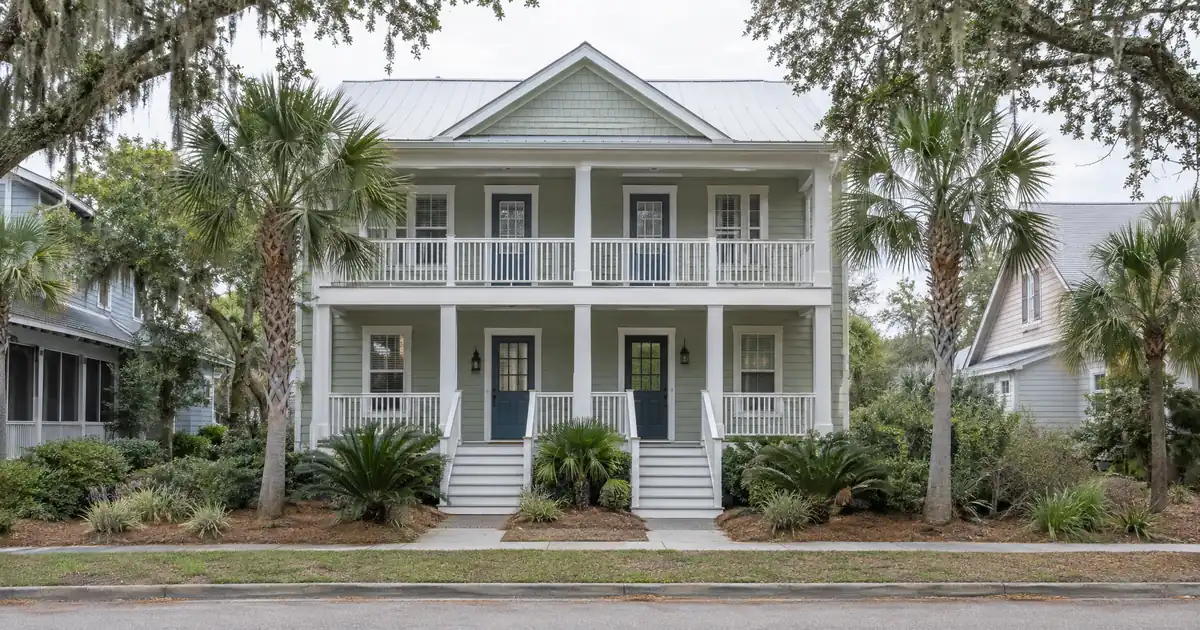
According to Data USA, the homeownership rate on Kiawah Island is 98.9%. Almost nobody here rents, so almost no long-term rental comps exist. A cash-out refinance on an investment property here is therefore an equity question first and a cash-flow question second. Lendmire (NMLS# 2371349) is a DSCR-focused mortgage broker. It works with Kiawah Island, South Carolina investors to place DSCR financing through wholesale lenders reaching 41 markets — 40 states plus Washington, D.C. This report shows where the coverage math breaks on-island, how much equity access survives, and where the proceeds work harder.
The Short Version: A cash-out refinance on a Kiawah Island, South Carolina investment property is underwritten primarily on the property’s rental income measured against its full monthly obligation, so the file works only when documented rent, remaining equity, and the program’s loan-to-value ceiling line up after ownership seasoning.
DSCR Cash-Out Calculator
Run the cash-out numbers in Kiawah Island, SC
Rate source: Freddie Mac 30-yr average via FRED® — Federal Reserve Bank of St. Louis · effective Sep 24, 2026
Prefilled with starting assumptions — enter your property’s value, balance, taxes, and insurance for a more accurate picture.
Program parameters update from Lendmire’s centralized guideline source. Taxes and insurance are editable estimates.
As of Sep 24, 2026 · General Freddie Mac market benchmark, not a Lendmire loan offer. Property value, balance, taxes, and insurance are editable estimates. Maximum loan-to-value varies by lender, program, property type, and seasoning. Not a Loan Estimate, approval, or commitment to lend. Program availability and eligibility are subject to lender guidelines, credit approval, property review, and underwriting.
- Average Kiawah rent of $3,996 sits against a $2,190,560 average home value.
- Condos and villas posted a $1,327,500 median, the lowest on-island entry.
- Cash-out typically caps at 75% LTV after roughly six months of ownership.
- Johns Island three-bedroom rents of $2,400–$3,000 sit on more workable DSCR ground.
Kiawah Island Market Snapshot
A quick read on the Kiawah Island investor landscape — figures come from the cited sources below. Confirm current property-level numbers before underwriting.
| Metric | Detail |
|---|---|
| Home prices | 34 sales (Movoto Market Trends) |
| Recent appreciation | +7.3% (Zillow Home Value Index) |
Condos and Villas: The Realistic Kiawah Collateral
Condos and villas are the most reviewable Kiawah product for a cash-out. They are the lowest-priced on-island entry, and they are the closest thing to a multi-owner, rentable asset. The James Schiller Team’s condo report puts the median sale price for beachfront condos and interior villas at $1,327,500, up from $995,125 a year earlier, with a 91.8% list-to-sale ratio. Sample sizes are small, so read the jump as direction rather than a precise appreciation figure.
That 33% year-over-year move is the reason an owner would consider pulling equity at all. Say an investor bought a villa and has held it past the roughly six-month seasoning mark, measured from title recording. If the appraisal lands near the condo median and the existing balance is under about 50% of value, a meaningful slice of equity sits between the current loan and the 75% ceiling. How much of that slice is usable depends on rent, full housing obligation, and reserves, not on appraised value alone.
The tenant story is narrow. Kiawah Exclusives advertises monthly rentals only from mid-October to mid-March, a snowbird window rather than a year-round lease base. Island geography reinforces the point: Akers Ellis describes a barrier island 13 miles long with 10 miles of beach, and Kiawah Island Golf Resort’s careers page lists nearly 500 private villas and luxury homes, five championship courses, and more than 13 restaurants and cafés. Demand is resort-driven. Lenders reviewing a long-term-rent file will see that.
What Does the Coverage Number Actually Look Like?
On-island coverage runs well below 1.00x at standard leverage. Run the numbers on a modeled villa at the condo median, with the Zillow average rent of $3,996 as the rent used for lender review. Using full housing costs (principal, interest, taxes, and insurance on a standard 30-year amortization), a 75% LTV cash-out lands near 0.5x. Those are modeled assumptions, not sourced market data. Final terms depend on lender guidelines, property type, leverage, and the borrower’s complete credit picture.
Even the top of the observed range doesn’t rescue it. Zillow shows houses listing at rents well above the average, with only two rentals available at the time. Put the highest listing against a typical home value at 75% LTV, still including taxes and insurance, and coverage still lands well below 1.00x, in the neighborhood of 0.7x. The two datasets aren’t matched, so treat these ratios as directional modeled assumptions rather than sourced market data. These specifics are subject to lender guidelines and a full review of property, leverage, and credit.
Here’s the catch. Reaching the standard 1.00x benchmark would take the loan-to-value down to roughly 30–40%, where modeled coverage on the average rent moves into the 0.85–1.05 band. At those levels the cash-out stops being much of a cash-out. Some lenders review sub-1.00 scenarios through lower-leverage structures, interest-only options, or no-ratio programs, usually with stronger reserves, more cash in, or different pricing. Eligibility depends on credit profile, reserves, property review, and lender guidelines.
The guideline parameters worth knowing for this file are:
- 75% LTV ceiling on cash-out
- About six months of seasoning
- A 1.00 minimum DSCR on standard programs
- Credit tiers that start at a 620 floor
- Reserves of about six months of full housing cost, rising to about nine months above $1,500,000
- Terms vary by lender guidelines, property type, leverage, credit profile, and full file review.
Loan sizes up to $3,000,000 fit standard programs, which covers most Kiawah condos but not every estate. Review details are subject to lender overlays and program review. For the full mechanics, see Lendmire’s DSCR cash-out refi mechanics. Exact terms depend on the lender’s guidelines, property type, leverage, and a full review of the borrower’s file.
Which Value Do You Trust? Pricing Is a Mess
Kiawah’s price data is contradictory, and the appraisal will pick a side for you. Zillow models an average home value of $2,190,560, up 7.3%. That is an index, not a sale price. Movoto reports a $1,500,000 median sale price with homes averaging 54 days on market and 34 sales in the latest month. Redfin showed a $1.2M median in an earlier month, down 12.5% year over year, on only 9 sales.
The honest read: volatile, thin-sample, roughly flat to modestly up. For a cash-out, that matters more than anywhere with deep comps. Data USA reports a 2024 median property value near $2M and a 32.1-minute average commute, but with a 98.9% ownership rate, an appraiser has few rentals to anchor the income side. They lean on a handful of sales. The value, and therefore the 75% proceeds ceiling, can swing more than owners expect.
The practical conclusion is that a Kiawah owner shouldn’t plan the next acquisition around a Zillow estimate. Plan around the conservative end of Movoto’s median, and treat any appraisal above it as a bonus.
(Houzeo-style medians north of $4 million come from a handful of closings and shouldn’t anchor anyone’s equity math.)
Johns Island: Where the Proceeds Go to Work
Johns Island is where DSCR math functions near Kiawah, and it is the logical destination for cash-out proceeds. The renter pool behind Kiawah’s resort economy lives off-island. WCBD reports that Kiawah Partners, the developer behind the Beach Club and Cassique Club, says around 60% of its employees live on Johns Island and Wadmalaw Island. That is a developer statement to the press, not audited data.
Rent bands point the same direction. A Redfin Johns Island listing roundup shows two-bedroom apartments at $1,980–$2,550 and three-bedroom units at $2,410–$2,900, with Hamlet Maybank and The Sanderling among the complexes. A local broker analysis puts three-bedroom single-family rents at $2,400–$3,000, though that figure dates to late 2024 and is a marketing number. It needs confirming with a rent schedule at underwriting. Zillow’s rental listings add small-house datapoints for the 29455 zip code at $2,149 and $2,950.
Those rents run roughly 25–50% below the Kiawah average. Against home prices that sit far under Kiawah’s seven-figure basis, coverage ratios have a realistic shot at clearing 1.00x. Verified Johns Island median prices weren’t found in this review, so no coverage figure is modeled here.
One caution: concessions. The same Redfin listings show lease-up incentives of up to two months free at several complexes. Effective rent runs below asking rent, so underwrite on net figures. The “tight supply” narrative from some brokers doesn’t match what those listings show.
The Town of Kiawah Island’s Infrastructure & Public Works Committee materials add a useful demand detail. They record a contractor renting a condo on Kiawah to house repair crews, because crews living in West Ashley and Johns Island were losing hours to commuting. The worst bottlenecks are on Maybank Highway and the Johns Island bridges. Housing close to the island carries a durable edge over farther-out submarkets.
Small multi-unit is the plausible way to stack income. A local broker recommends townhomes and duplexes as a balance of renter affordability and investor yield. That is opinion, not a verified supply count. One longer-dated supply risk: Charleston County’s Kiawah River workforce-housing requirement doesn’t have to begin until the 200th home is built, per Charleston Business.
Equity Extraction, Step by Step
The sequence for pulling equity off a Kiawah asset is mechanical, and each step can fail independently.
1. Confirm seasoning. The program wants roughly six months of ownership measured from title recording. Buy-and-refinance-immediately plays don’t work.
2. Set a defensible value. Use the conservative sale comps, not the index. Appraised value times the 75% ceiling, minus the existing payoff, is the theoretical ceiling on cash out.
3. Test coverage. The rent used for lender review, divided by the full monthly obligation (principal, interest, taxes, insurance, and any HOA dues), has to meet the program minimum. On Kiawah, this is the step that usually binds.
4. Size reserves. Plan on about six months of full housing cost, or about nine above $1,500,000, held outside the proceeds.
5. Pick the deployment. The proceeds are only useful if the next asset covers its own debt.
Picture an owner holding a seasoned villa with substantial equity but sub-1.00 coverage. The owner has choices. Lower the loan-to-value until the number clears, accept a reduced cash-out, explore a sub-1.00 structure with a lender that reviews them, or sell. None are automatic, and each is subject to credit approval and property review. Equity available is never a guaranteed cash figure.
Tenant demand is thin enough that borrowers should run the Johns Island deployment math before they refinance, not after. Often the better move is a smaller cash-out that still clears 1.00x on the Kiawah collateral and funds a duplex or townhome near the island labor shed, where coverage is naturally stronger. For broader refinance structures, see investor refinance options, and for how this differs from income-based underwriting, the guide “Where DSCR and Conventional Diverge”.
What the Deal Desk Sees in Markets Like This
In luxury, thin-comp markets, the friction point is rarely credit. It is the appraisal and the rent schedule. Files where the borrower arrives with a documented lease history, an HOA budget, and a conservative value expectation tend to move through lender review with fewer revisions. The files that stall typically assume an index value and a rent figure from a handful of listings, then discover that neither survives review. Lendmire’s team tends to model the 75% ceiling and the coverage number together before an application is built, since the lower of the two binds.
Mid-October to mid-March. That is the window when Kiawah’s rental market actually exists, and it shapes how a lender reads income on any short-lease unit. Twelve-month leases are the cleaner documentation story on mainland comps, which is another reason proceeds routed to Johns Island tend to simplify the next file.
Who Lives Here, and Why It Matters for the Lender
Kiawah’s resident base is small and affluent. Census Reporter shows 2,196 residents in the ACS five-year estimate, and Cubit Planning lists a median household income of $213,594. The 2020 census counted 2,013 residents, per Wikipedia, with the population exceeding 10,000 in the busy season. That swell is visitors and second-home owners, not leaseholders.
The employment base is mostly off-island. The Charleston Regional Development Alliance lists Boeing at more than 9,000 employees, MUSC at roughly 17,000, and Joint Base Charleston at nearly 25,000 jobs. MUSC is the state’s largest healthcare system. The state’s Charleston MSA labor profile also names Kiawah Island Inn Company among major employers. Kiawah Island Golf Resort is the on-island landmark and dominant employer, though no verified headcount was found. Limited new construction, per a local agent blog, helps hold values but also limits the supply of rental-eligible product.
DSCR vs. conventional financing
There are two common ways to finance an investment property in Kiawah Island, SC, and they qualify you differently — here’s how investors weigh them.
Why investors choose it
- Qualifies on the property’s rental income — no personal tax returns, W-2s, or pay stubs needed to document income.
- No personal debt-to-income ceiling to clear, so existing mortgages and obligations don’t cap your borrowing the same way.
- Can be closed in an LLC, keeping the property inside a business entity.
- Built for scaling — not held to the limit on number of financed properties that conventional financing applies.
- Underwriting centers on the deal: generally qualifies when the rent covers the payment, a 1.00x coverage ratio being a common baseline (confirmed in underwriting).
- Designed specifically for investment property, including long-term and, where the program allows, short-term rentals.
Where it’s strong
- Often the lowest ongoing financing cost for a buyer who fully qualifies on personal income — a fit for a first property or a cost-first purchase.
Trade-offs for investors
- Requires full personal income documentation and must fit within a debt-to-income limit — salary, existing debts, and other mortgages all count.
- Typically held in your personal name rather than a business entity.
- Caps how many financed properties you can carry, which can become a ceiling as a portfolio grows.
- Evaluates you as a borrower as much as the property, which usually means more paperwork.
How investors usually choose: a first or single property often optimizes for the lowest financing cost; portfolio builders often optimize for leverage, vesting in an LLC, and scaling past conventional caps. The right answer depends on your goals, the property, and current guidelines — both paths run through select lenders in Lendmire’s wholesale network, with eligibility and terms confirmed in underwriting.
For a sense of state-level options, see South Carolina DSCR financing. Investors should verify current local rental rules, taxes, and insurance with qualified local professionals, since flood-zone and insurance costs will strongly affect the coverage number.
The Asymmetric Opportunity
The mispricing here is the gap between Kiawah’s value and its rent. Kiawah holds the equity, and the Johns Island labor shed holds the income. A low-leverage cash-out on a seasoned Kiawah villa, with proceeds directed into a Johns Island duplex or townhome near the Maybank Highway corridor, uses the island’s appreciation to buy rent coverage the island can’t produce itself.
Frequently Asked Questions
How do you qualify for a DSCR loan in Kiawah Island, South Carolina?
The property has to show enough rent against its full monthly obligation to meet the program minimum, typically 1.00x on standard programs. Credit tiers generally start at a 620 floor, and reserves of about six months are common. On Kiawah the binding constraint is rent, since the Zillow average of $3,996 is thin against island values. Eligibility depends on lender guidelines, credit profile, and property review.
What are the requirements for an investment property cash-out refinance in Kiawah Island, South Carolina?
Expect a 75% LTV ceiling, roughly six months of ownership measured from title recording, and a rent schedule used for eligibility review. Reserves run about six months, rising to about nine above $1,500,000. Standard programs go up to $3,000,000. Manufactured homes, log homes, and barndominiums fall outside these programs. Every figure here varies by lender and program — guidelines, property type, leverage, and credit profile all apply.
How do DSCR lenders review rental income instead of traditional tax-return income in South Carolina?
They test the property’s rent against its full monthly obligation instead of building the file around W-2 or tax-return income. Lendmire arranges DSCR investor loans. A key feature is that qualification centers on the subject property, which suits LLC-titled holdings, subject to lender program eligibility.
Will an appraiser find rental comps for a Kiawah property?
Very few. With homeownership at 98.9% per Data USA and only two Kiawah rentals listed on Zillow at the time, appraisers lean on sale comps and a handful of leases. Johns Island supplies the more realistic rent comps, which is another reason to model that deployment separately.
Can the cash-out proceeds fund a purchase in a different submarket?
Yes. Proceeds are generally unrestricted capital once the loan is placed. Many Kiawah owners route them toward higher-yield rentals near the island, such as Johns Island duplexes or townhomes. Reach Lendmire at 828-256-2183 to walk a scenario through before committing to a purchase.
For current guidelines and terms, see Lendmire’s DSCR loan programs page.
About Lendmire
Lendmire, NMLS# 2371349, is a non-QM mortgage broker serving real estate investors in 41 markets, including Washington, D.C., through DSCR investor loan programs. Qualification is generally reviewed around the subject property’s rental income rather than the borrower’s W-2 history, a practical fit for LLC-titled portfolios and self-employed investors. All scenarios remain subject to the lender’s review and program guidelines. The firm has been named a 2026 Scotsman Guide Top Workplace and was recognized by Scotsman Guide in 2025.
Get Started
Ready to find the right loan for you?
See your offer in seconds. No credit pull, no obligation.
Informational only. Not a Loan Estimate, approval, or commitment to lend. Program availability and eligibility are subject to lender guidelines, credit approval, property review, and underwriting.
References
2. Zillow Rental Manager: Kiawah Island
3. Zillow Home Values: Kiawah Island
4. jamesschiller.com — Condos Sales Market Trend Summary Reports
5. Movoto Market Trends: Kiawah Island
6. kiawahexclusives.com — Snowbird Rentals
7. Akers Ellis
8. kiawahresort.com — Careers page
9. Redfin Kiawah Island Housing Market
11. Redfin Johns Island listing roundup
12. $2,400–$3,000
13. cms2.revize.com — April 209 April
14. locatingchs.com — Johns Island Rental Analysis 2025 2026
16. $213,594
17. Wikipedia
18. Charleston Regional Development Alliance
19. MUSC
20. a 2026 Scotsman Guide Top Workplace
21. recognized by Scotsman Guide in 2025
This article is part of Lendmire’s investment property cash-out refinance program — full qualification details, guidelines, and scenarios live on the program page.
Related reading: Cash Out Refinance Investment Property in Kiawah Island, South Carolina: Equity Over Cash Flow · DSCR Loans Kiawah Island & Seabrook: Investor Financing for Luxury Resort STR, Ocean Course, Johns Island & Real Estate Investors · DSCR Cash Out Refinance in Johns Island, South Carolina: The 2026 DSCR Financing Guide to Maybank Highway
Guides: Investment Property Cash-Out Refinance in South Carolina
Brandon Miller
Founder & CEO, Mortgage Loan Originator, Lendmire LLC
- Mortgage Loan Originator · NMLS# 1129696 · Verify on NMLS Consumer Access
- North Carolina Real Estate Broker · License# 343312 · Verify on NCREC
- North Carolina Insurance Producer · License# 19053198 · Property, Casualty, Life, Health · Verify on NAIC SBS
- Lendmire LLC · Firm NMLS# 2371349 · Verify firm licensure
Important disclosures. Lendmire (NMLS# 2371349) is a licensed mortgage brokerage. Lendmire is not a direct lender, depository institution, or financial advisor. All loan inquiries are subject to lender underwriting; this article does not constitute a commitment to lend. Rates, terms, and program guidelines are subject to change without notice and vary by borrower profile, property type, and state. Information in this article is general in nature and is not financial, legal, or tax advice. Equal Housing Opportunity. NMLS Consumer Access: nmlsconsumeraccess.org.