
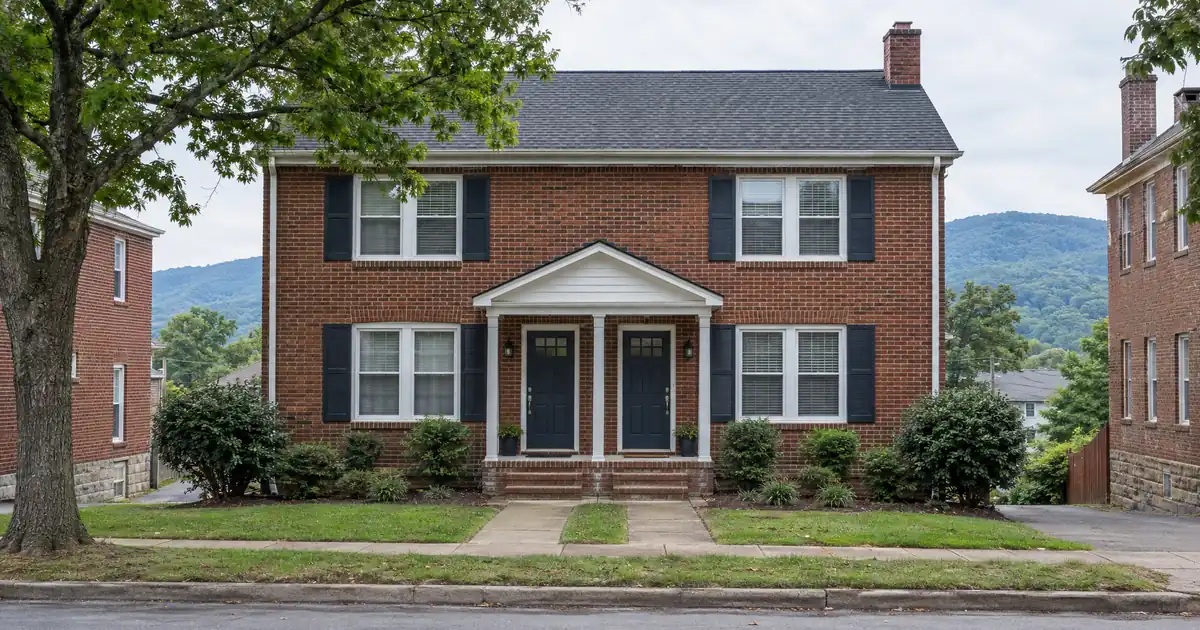
Picture an investor holding a three-bedroom house bought at a steep discount, carried through a full renovation and now leased at a rent the old purchase price never hinted at. The appraised value has moved. The equity is real on paper and idle in practice. That investor is weighing a DSCR cash out refinance in Martinsville, Virginia to turn the gap into capital for the next purchase. The decision comes down to three things: what the rent covers, what an appraiser can actually support, and how much the 75% ceiling leaves on the table.
DSCR Cash-Out Calculator
Run the cash-out numbers in Martinsville, VA
Rate source: Freddie Mac 30-yr average via FRED® — Federal Reserve Bank of St. Louis · effective Sep 24, 2026
Prefilled with starting assumptions — enter your property’s value, balance, taxes, and insurance for a more accurate picture.
Program parameters update from Lendmire’s centralized guideline source. Taxes and insurance are editable estimates.
As of Sep 24, 2026 · General Freddie Mac market benchmark, not a Lendmire loan offer. Property value, balance, taxes, and insurance are editable estimates. Maximum loan-to-value varies by lender, program, property type, and seasoning. Not a Loan Estimate, approval, or commitment to lend. Program availability and eligibility are subject to lender guidelines, credit approval, property review, and underwriting.
Key Takeaways:
A cash-out refinance on a Martinsville, Virginia rental is underwritten primarily on the property’s rental income measured against its full monthly obligation, while seasoning, credit, reserves and an appraisal supported by thin local comps decide how much equity can actually come out under a typical 75% LTV ceiling. Final terms depend on lender guidelines, property type, leverage, and the borrower’s complete credit picture.
- Redfin shows a median sale price near $138K on just 23 sales, so comps are thin. – Zumper lists average rent near $1,000 a month; Trulia puts houses near $1,150. – Sovah Health, the city’s largest employer, reports 700+ employees.
- Cash-out programs typically want about 6 months of seasoning from title recording and cap LTV at 75%.
- Older stock dominates: a housing market study found 65.7% of units predate 1980.
Martinsville Market Snapshot
A quick read on the Martinsville investor landscape — figures come from the cited sources below. Confirm current property-level numbers before underwriting.
| Metric | Detail |
|---|---|
| Home prices | 23 sales (Redfin) |
| Employment | 700+ employees (Sovah Health) |
| Vacancy | 1.3% (2020 Housing Market Study) |
Start in ZIP 24112, Where the Comps Are Thin
ZIP 24112, the central and south side of the city, is where the equity-extraction story starts. It shows the widest spread between what an investor can pay for a tired house and what a renovated one can be worth. The catch is how scattered the comparable sales are.
Recent sales in Redfin’s Martinsville data show the spread. A 616-square-foot two-bedroom sold for $38,000, while a three-bedroom, two-bath house sold for $139,900. The city-wide median sale price sat at $138K, down 4.8% year over year, on only 23 homes sold in the month. Those are anecdotal comps, not a neighborhood price band, and no reliable submarket-level price or rent source exists for this city. Treat any neighborhood median you see quoted with suspicion.
Why does this matter for a cash-out? An appraiser working from a dispersed comp set of this size can land well below what your renovation budget implies. One sale at $38,000 and one at nearly $140,000 give the appraiser plenty of room to choose. Size the refinance to conservative comps, not to the best sale on the board.
Other sources measure the market differently, so expect disagreement. Zillow’s typical home value is $116,601, up 4.0% over the past year, but it is an index across all homes, not a sold-price median. Movoto shows a median list price near $187K with a median of 89 days on market. Listings run well above closed sales here. For appraisal purposes, closed sales are what matter. This article uses the Redfin sold figure as its working reference.
Honestly, this is a genuine toss-up on appreciation. Sold prices are slipping in one snapshot and the index is rising in another. The cash-out thesis in this city is better built on forced appreciation, meaning rehab that lifts rent and value, than on the market drifting upward.
Uptown and the New-Unit Question
Uptown is the walkable historic core, and it is the submarket most exposed to new apartment supply. A cash-out here works best if your rental competes on condition and location rather than price alone.
The Uptown Revitalization Association works to enhance the central business district, and the art walks and the Heritage Center & Museum give it an identity the rest of the city lacks. The likely tenant base is workforce and service employees, though that is an inference rather than a sourced finding. The Dick & Willie Passage, 4.5 miles of paved trail, is the kind of amenity that helps a nearby rental stand out.
Then there is supply. The Martinsville-Henry County EDC housing page lists a mixed-use conversion of the former BB&T building that adds 63 residences in Uptown, along with 23 apartments at the former Fieldale School and a 52-unit affordable community. That is a small number in absolute terms. For a city of 13,658 people, it is notable. New units could compete with renovated one- and two-bedroom rentals near Uptown.
The demand signal is mixed. The same housing study reported rental vacancy of 1.3% with waiting lists and strongest demand for one- and two-bedroom units. It is a dated report, and another aggregator shows a much higher vacancy figure. Because the sources conflict, assume moderate vacancy in your underwriting and confirm it locally instead of trusting either number. Small units look like the best-absorbed product, but the pipeline is the thing to watch.
The Payroll Behind the Rents
Martinsville’s rental demand rests on two payrolls: a hospital inside the city and advanced manufacturing just outside it. Both support long-term leases with employed tenants, which is the profile DSCR lenders like to see behind a rent figure.
Sovah Health – Martinsville is the largest employer in the city, with over 700 employees, over 100 physicians and allied health professionals, and more than 22 specialties. The hospital is licensed for 220 beds. Per Data USA, health care and social assistance is the largest resident employment sector at 970 people, followed by retail trade at 826 and manufacturing at 778. Manufacturing carries more weight regionally: VEDP notes that one in every five people employed in Martinsville-Henry County works in it.
The industrial comeback is concrete. A $155 million Press Glass investment announced 335 new jobs at Commonwealth Crossing in Ridgeway, and Crown Holdings announced 126 jobs and a new can facility. Per the Harvest Foundation, Commonwealth Crossing is a 726-acre business park along the North Carolina border. It sits outside city limits, so an investor chasing that workforce may end up buying in the county, and the financing conversation changes little either way.
There is no four-year residential university here, so student-driven demand is minimal. This is an employment-driven market. The city’s median age of 38.4 fits that picture.
What Does the Coverage Math Look Like at These Values?
At Martinsville values, a renovated house can cover its full monthly obligation with room to spare, but the cushion shrinks fast as appraised value rises. The reason is structural: the new loan is sized to value, and rent is not.
Run the numbers on a modeled 75% LTV cash-out, with taxes and insurance included in the monthly obligation and a standard 30-year amortization. Every figure below is a modeled assumption, not a market statistic. The rents bracket the sourced range: about $1,000 average from Zumper and about $1,150 for a house from Trulia. These specifics are subject to lender guidelines and a full review of property, leverage, and credit.
| Modeled value | Modeled rent | Coverage incl. Taxes/insurance |
|---|---|---|
| $140,000 | $1,150 | about 1.3x |
| $140,000 | $1,000 | about 1.15x |
| $187,000 | $1,150 | right around 1.0x |
| $187,000 | $1,000 | about 0.85-0.9x |
The pattern matters more than any single row. Hold rent constant and let the appraisal climb from the closed-sales range toward the list-price range, and coverage falls from comfortable to borderline. An investor who stretches for the highest possible appraisal to maximize proceeds is quietly trading away coverage. That is a bad exchange when the rent ceiling is this visible.
Most standard DSCR programs are built around a 1.00x benchmark, because the rent covers the payment at that level. Some lenders may review lower-ratio scenarios, but those usually bring stronger compensating factors, lower leverage, different pricing or more cash retained.
If your file lands in the bottom row, a few structures may be reviewed. A sub-1.00 program, an interest-only structure or reduced leverage could each change the picture. Qualification stays subject to lender guidelines, credit approval and property review, and none of them is a given. Before reaching for a lower-coverage structure, ask whether the property’s rent is simply too low for its appraised value. If so, that is a signal about the asset, not the loan type.
The sourced rent-to-value picture points the same way. Rent against the $138K median sale price works out to roughly 0.7% a month, and about 0.5% against the $187K list price. That is arithmetic, not a sourced ratio. Price is low but rent is also low, so coverage depends on buying below the median and improving the property. Underwrite each house on its own numbers, not on a city ratio.
Seasoning, Appraisals and the 75% Ceiling
A cash-out refinance on a Martinsville investment property typically requires about 6 months of ownership measured from title recording, caps LTV at 75% and needs about 6 months of reserves against the full monthly obligation. The appraisal, not the rent, is usually the binding constraint in this market.
Start with seasoning. The clock runs from title recording, not from contract date and not from the day the renovation wraps. An investor who closed in cash at a deep discount and finished the rehab at month four still waits for month six. LLC-titled properties are generally workable, subject to program terms, but the ownership history should be clean before the file goes in.
Then the 75% cap. It is a ceiling, not a target, and the equity that comes out depends on rent used for lender review, the full monthly obligation, reserves and the appraised value together. Credit tiers step up at 620, 660, 680 and 700, with 620 as the floor on most files, and stronger credit generally opens more flexibility. Loan amounts on standard programs run up to $3,000,000, but Martinsville files live at the other end. Smaller balances route through select lenders in the network, and a refinance sized to a $38,000-type comp would likely fall below most lenders’ minimums. Not ideal. Program details move, so confirm current parameters before building a plan around them.
One property-type note is relevant here. Manufactured homes (single- and double-wide), log homes and barndominiums fall outside these DSCR programs. NeighborhoodScout describes the most common dwellings as three- and four-bedroom single-family detached homes, and that’s the target. But in a market with very low entry prices, confirm the construction type of any bargain before assuming it’s reviewable.
Working DSCR brokers see a recurring pattern in small, thin-comp markets like this one: the rent number rarely kills the file, and the appraisal often does. Investors underwrite to their renovation budget, the appraiser underwrites to three or four nearby closed sales, and the gap shows up at the end. Pulling the most conservative comps before ordering anything, and sizing the request to them, prevents most of the disappointment.
Property age matters too. Per the housing market study, most of the stock is older single-family, and market-rate rents are achievable mainly with newly built or modern units. Older houses rent at a discount to new ones. Renovated older houses and small multifamily are the realistic strategy, and rehab scope drives both rent and appraisal. Small multifamily is the harder category to research: rent data covers mostly 50-plus-unit buildings, so underwrite duplexes from your own lease comps.
For deeper mechanics, see the equity-extraction mechanics, investor refinance options and the guide “What Is a DSCR Loan”. On the conventional side, the tradeoffs between conventional and DSCR loans determine where the flip point falls. For a W-2 investor with one or two financed properties and clean traditional personal-income documentation, conventional cash-out may cost less and is often the better call. As the financed count climbs, or once the properties sit in an LLC or the personal returns muddy the rental income, DSCR becomes the more practical lane.
Where the Proceeds Go (and Where They Shouldn’t)
The strongest use of Martinsville cash-out proceeds is another renovation-driven purchase in the same submarket, where coverage already works at local values. The weakest is capital moved into markets where the math doesn’t pencil.
DSCR vs. conventional financing
There are two common ways to finance an investment property in Martinsville, VA, and they qualify you differently — here’s how investors weigh them.
Why investors choose it
- Qualifies on the property’s rental income — no personal tax returns, W-2s, or pay stubs needed to document income.
- No personal debt-to-income ceiling to clear, so existing mortgages and obligations don’t cap your borrowing the same way.
- Can be closed in an LLC, keeping the property inside a business entity.
- Built for scaling — not held to the limit on number of financed properties that conventional financing applies.
- Underwriting centers on the deal: generally qualifies when the rent covers the payment, a 1.00x coverage ratio being a common baseline (confirmed in underwriting).
- Designed specifically for investment property, including long-term and, where the program allows, short-term rentals.
Where it’s strong
- Often the lowest ongoing financing cost for a buyer who fully qualifies on personal income — a fit for a first property or a cost-first purchase.
Trade-offs for investors
- Requires full personal income documentation and must fit within a debt-to-income limit — salary, existing debts, and other mortgages all count.
- Typically held in your personal name rather than a business entity.
- Caps how many financed properties you can carry, which can become a ceiling as a portfolio grows.
- Evaluates you as a borrower as much as the property, which usually means more paperwork.
How investors usually choose: a first or single property often optimizes for the lowest financing cost; portfolio builders often optimize for leverage, vesting in an LLC, and scaling past conventional caps. The right answer depends on your goals, the property, and current guidelines — both paths run through select lenders in Lendmire’s wholesale network, with eligibility and terms confirmed in underwriting.
Consider a scenario where an investor pulls equity from a renovated house in ZIP 24112 and buys a second tired house nearby, then repeats the loop. The same thesis drives both properties: buy well below the closed-sales median, renovate to the modern standard that commands market rent, refinance once seasoned. The repeat loop is where the six-month seasoning rule hurts. Each cycle needs the clock to run, and each refinance needs comps that support the value.
Now the counter-case. An investor who uses proceeds to chase yield in a market with higher rents but higher prices may find coverage thinner, not thicker. The 0.95% rent-to-price figure one analytics site reports for Martinsville describes mid-term rentals, not long-term leases, so it is not a benchmark for this plan. Stress-test before committing.
Appreciation is the other tension. With sold prices down in one snapshot and index values up in another, the wise approach is to underwrite as if values stay flat. If your cash-out only works when the appraisal rises on its own, it doesn’t work. If it works on the renovation-driven value alone, the market becomes a tailwind instead of a requirement. Before you commit, verify current local rental rules, taxes and insurance with qualified local professionals.
Investors who want a Martinsville file reviewed can connect with Lendmire or call 828-256-2183. For the broader state context, see Lendmire’s Virginia DSCR loan programs, which cover how files are structured across the state.
Frequently Asked Questions
How do you qualify for a DSCR loan in Martinsville, Virginia?
The property has to show that its rent covers its full monthly obligation, typically at a 1.00x benchmark or better, along with a credit score that clears the program floor (620 on most files) and adequate reserves, about 6 months. In Martinsville, where houses rent around $1,000 to $1,150 against low purchase prices, coverage often clears at conservative appraised values. It gets thinner as the appraisal stretches. Final eligibility depends on lender guidelines and property review.
What are the requirements for a cash-out refinance on an investment property in Martinsville, Virginia?
Expect about 6 months of ownership from title recording, LTV capped at 75%, reserves around 6 months of the full monthly obligation and a qualifying coverage ratio at or above the program minimum. The property also has to be an eligible type, and manufactured homes, log homes and barndominiums fall outside these programs. Smaller loan balances route through select lenders in the network. Actual proceeds depend on the appraisal and are never guaranteed.
Will a low-priced Martinsville house work for a cash-out refinance?
It can, but the loan amount has to clear the lender’s minimum. A house that sold near $38,000 supports a very small loan at 75% LTV, which many lenders won’t take. Investors usually do better refinancing renovated properties with appraised values in the range of the higher closed sales, where the balance is large enough for a wider lender pool.
Why do Martinsville appraisals matter so much for a cash-out?
The city recorded only 23 home sales in the most recent Redfin snapshot, and those sales span a wide price range. An appraiser has few comparable sales to work from, so the result can land below what your renovation budget implies. Sizing the request to the most conservative comps keeps the file from stalling.
The Real Choice
Here is the decision many Martinsville investors face once a rehab is done. Option one is to refinance as soon as seasoning allows, sized to conservative comps. Proceeds are smaller and the coverage cushion is comfortable, but the capital is in hand for the next purchase while the pipeline of new Uptown units is still small. Option two is to wait until the renovated rent is proven and a stronger set of comparable sales exists. Proceeds can be larger and the file cleaner, but the equity sits idle in the meantime. Each path has a real cost, and neither is obviously right. In a market this thin, waiting is itself a bet on which comparable sales show up next.
For current guidelines and terms, see Lendmire’s DSCR loan programs page.
About Lendmire
Lendmire, NMLS# 2371349, is a non-QM mortgage broker working with real estate investors across 41 markets, Washington, D.C. included, on DSCR investor loan programs. Files are generally reviewed around the subject property’s rental income rather than the borrower’s W-2 history, which tends to suit LLC-titled portfolios and self-employed investors. Every scenario stays subject to lender review and program guidelines. The firm holds consecutive Scotsman Guide recognitions as a 2025 Scotsman Guide Top Mortgage Workplace and a 2026 Scotsman Guide Top Mortgage Workplace. More company news appears in Lendmire’s press newsroom.
Get Started
Ready to find the right loan for you?
In about 30 seconds you can review financing options available for your investment property. No commitment required.
Informational only. Not a Loan Estimate, approval, or commitment to lend. Program availability and eligibility are subject to lender guidelines, credit approval, property review, and underwriting.
References
1. Redfin: Martinsville housing market
2. Zumper: Martinsville rent research
3. Trulia
4. Sovah Health – Martinsville
5. martinsvillehousing.com — A housing market study
6. Zillow’s typical home value
7. Movoto
8. Martinsville-Henry County EDC: housing
9. Census Reporter — Martinsville VA
10. sovahhealth.com
11. Data USA: Martinsville, VA
12. VEDP
13. Virginia Economic Development Partnership: Press Glass
14. Harvest Foundation: Commonwealth Crossing
16. a 2025 Scotsman Guide Top Mortgage Workplace
17. a 2026 Scotsman Guide Top Mortgage Workplace
This article is part of Lendmire’s investment property cash-out refinance program — full qualification details, guidelines, and scenarios live on the program page.
Related reading: Luxury Rental DSCR Loans In New Jersey · Jersey Shore Vacation Rental Loans: DSCR Financing In Ocean City, Cape May And Long Beach Island · DSCR Cash-out Refinance In New Jersey: Pulling Equity From A Rental
Guides: Investment Property Cash-Out Refinance in Virginia
Brandon Miller
Founder & CEO, Mortgage Loan Originator, Lendmire LLC
- Mortgage Loan Originator · NMLS# 1129696 · Verify on NMLS Consumer Access
- North Carolina Real Estate Broker · License# 343312 · Verify on NCREC
- North Carolina Insurance Producer · License# 19053198 · Property, Casualty, Life, Health · Verify on NAIC SBS
- Lendmire LLC · Firm NMLS# 2371349 · Verify firm licensure
Disclosures. The information presented in this article is general market commentary, not financial, legal, or tax advice. Lendmire is a mortgage brokerage (NMLS# 2371349) — not a direct lender or depository institution — and loan placement is subject to lender underwriting. Nothing in this content represents a commitment to lend. Loan terms, pricing, and program availability vary based on borrower qualifications, property characteristics, and state of subject property, and are subject to change at any time. Lendmire complies with Equal Housing Opportunity requirements. Consumer access: nmlsconsumeraccess.org.