
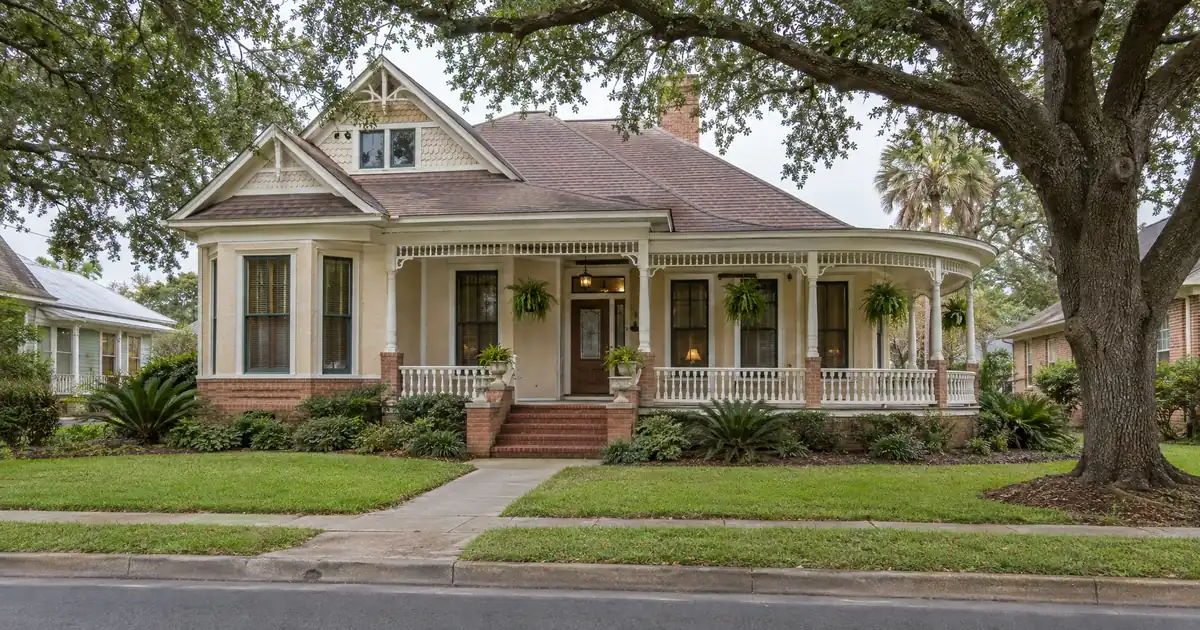
Most McAllen equity stories get told backwards. Investors see a $287K median sale price, up 10.3 percent year over year, and assume the appraisal will carry the cash-out. It won’t. On a DSCR file the appraisal sets the ceiling, and the rent-to-debt ratio decides how much of that ceiling you can use. In this market those two numbers point in different directions more often than investors expect.
At a Glance: A DSCR cash-out refinance in McAllen, Texas is underwritten primarily on the property’s rental income measured against its full monthly obligation, so the file runs appraisal, lease evidence, title seasoning and reserves documentation, with the lender sizing proceeds to whichever limit binds first.
DSCR Cash-Out Calculator
Run the cash-out numbers in Mcallen, TX
Rate source: Freddie Mac 30-yr average via FRED® — Federal Reserve Bank of St. Louis · effective Sep 24, 2026
Prefilled with starting assumptions — enter your property’s value, balance, taxes, and insurance for a more accurate picture.
Program parameters update from Lendmire’s centralized guideline source. Taxes and insurance are editable estimates.
As of Sep 24, 2026 · General Freddie Mac market benchmark, not a Lendmire loan offer. Property value, balance, taxes, and insurance are editable estimates. Maximum loan-to-value varies by lender, program, property type, and seasoning. Not a Loan Estimate, approval, or commitment to lend. Program availability and eligibility are subject to lender guidelines, credit approval, property review, and underwriting.
- Single-family detached is 64.40 percent of McAllen housing units, so most files are workforce houses.
- Cash-out caps at 75 percent LTV, with about six months of seasoning from title recording. HUD puts rental vacancy at 10.6 percent, so underwrite a real vacancy allowance.
- Small multi-unit carries the coverage math better than single-family here, but comps are thin.
Mcallen Market Snapshot
A quick read on the Mcallen investor landscape — figures come from the cited sources below. Confirm current property-level numbers before underwriting.
| Metric | Detail |
|---|---|
| Home prices | $190,400 median value (Data USA, McAllen) |
| Typical rents | $986 average rent (-$6) (HUD USER PD&R Edge, McAllen HMA) |
| Cap rates | 7.6% cap rate claim (Redfin McAllen multi-family) |
| Population | 142,000+ population (Rio South Texas Region) |
| Employment | 9,700+ hospital jobs (McAllen Chamber, Health Sector) |
| Vacancy | 10.6% rental (HUD USER PD&R Edge, McAllen HMA) |
Downtown and Central McAllen: Where Small Multi-Unit Lives
Central McAllen is the strongest cash-out submarket in the city for coverage, because the basis is low and the product is small multi-unit. TurboHome puts the Downtown and Arts District median near $220,000, anchored by the International Museum of Art & Science and the 17th Street entertainment corridor. That is directional, from a single consumer guide, so treat it that way.
The inventory tells the rest. Listing sites show steady fourplex supply in the 78501 and 78504 ZIP codes. Homes.com shows 48 multi-family listings in 78504 alone, and a renovated five-unit sits in the Historic Palm District. One month’s Redfin count showed only 9 multi-family units for sale against 53 condos and 42 townhouses, so the niche is uneven rather than absent. Fourplexes tend to repeat the same layout: two 3-bed/2-bath units and two 2-bed/2-bath units.
One fully leased fourplex listing reports $57,660 in annual gross rent. That works out to roughly $1,200 per unit per month. It’s a seller claim, not a verified rent roll. The point isn’t the exact figure. Four doors at that level produce far more gross rent than one house renting near the citywide median, and the payment doesn’t quadruple with it.
The North Side and Newer Builds: Steady Renters, Thinner Coverage
North McAllen (Woodhollow, Royal Oak, Spanish Oaks) is workforce single-family territory. Woodhollow is built out with 1990s three-bedroom homes in the mid-$200s to $300s. Spanish Oaks and Sharyland-area homes start around $300,000. Far north, Tres Lagos is a 2,571-acre master-planned community with new construction from roughly $250,000, per the developer.
These pockets resell well. They also carry a higher basis against the same rent, which is the wrong direction for coverage. A newer home in a master-planned community can appraise cleanly and still produce a rent-to-debt ratio that limits the cash-out. Tres Lagos adds an HOA layer, so HOA questionnaire completeness and any rental restrictions belong in the file before submission, not after the lender asks.
The Math Behind the Ceiling
The 75 percent LTV cap is the top of the range, not the expected result. DSCR is monthly rent divided by the full monthly obligation: principal, interest, taxes, insurance and any HOA dues. Most standard programs are built around a 1.00x benchmark, though some lenders review lower ratios with stronger compensating factors, lower leverage or more reserves. Eligibility still depends on credit (620 is the floor, with pricing tiers above it), reserves, the property review and lender guidelines.
Run the numbers on two modeled files. Inputs are assumptions, not sourced market data. Coverage is rent over full obligation including taxes and insurance at Texas-average loading, at 75 percent LTV, rounded down.
| Factor | Workforce SFR | Fourplex |
|---|---|---|
| Modeled value | $287,000 (near the Redfin median) | $500,000 |
| Modeled rent | $1,400 total | $1,200 x 4 units |
| Coverage at 75% LTV | Under 0.75x | About 1.4x |
| Comp depth | Deep | Thin |
The single-family rent is the older Zillow citywide median, which covers all property types, so read it as a rough guide. The point holds anyway. A median-priced McAllen house at full cash-out leverage lands well below 1.00x. Picture an investor holding one of those free and clear: the equity is real, but a 75 percent LTV loan won’t cover itself on that rent.
That sub-1.00 file has options a lender may review: a lower LTV so the payment shrinks, a sub-1.00 program with compensating factors, or an interest-only structure. All of it is subject to lender guidelines, credit approval and property review. The fourplex file is the opposite problem. Coverage is comfortable, and the constraint becomes appraisal support and rent evidence.
Say you own a fourplex bought below today’s value. The stronger play may be pulling less than the cap allows. The extra coverage cushion is worth more than the last few points of proceeds, particularly with vacancy running where it is (next section). That’s a judgment call, not a rule.
What Does 10.6 Percent Vacancy Do to a Cash-Out?
It should change how you size the loan, even though DSCR programs work from lease or market rent rather than a vacancy-adjusted pro forma. HUD’s analysis of the McAllen market calls rental conditions slightly soft. It estimates rental vacancy at 10.6 percent, up from 9.8 percent in 2020 and 7.5 percent in 2010, with apartment vacancy at 11.2 percent. HUD ties that to apartment completions outpacing absorption, and reports average apartment rents at $986, down $6 year over year.
Two consequences for a cash-out. First, newer apartment product is the direct competitor for your tenants, so a lender reviewing a rent schedule that sits well above nearby comps will push back. RentCafe shows apartments in 50+ unit buildings averaging $997, with two-bedrooms at $1,038 and three-bedrooms at $1,246. Second, flat rents plus moderate price growth mean the loan should be sized on today’s rent and today’s appraisal. Don’t build a plan that needs either to rise.
Working DSCR brokers see a recurring pattern in soft-rent, growing-price markets like this one: the sale median runs ahead of what the income supports. The appraisal comes back fine, the coverage ratio is what trims the proceeds, and the investor’s cash-out target was based on price appreciation. Files sized off the rent schedule first tend to hold together.
One more flag. Sales are moving slower, with homes at 88 days on market versus 75 a year earlier. The sale median also skews toward newer homes. Older central stock may appraise below the headline numbers. If a value comes in light, an appraisal reconsideration with recent in-neighborhood sales and documented condition work is a routine step, not an emergency. Fourplex comps are thin, so the packet matters more there.
Hospitals, Residents and a Cross-Border Economy
Demand here doesn’t depend on the apartment cycle. Health care and private education make up 30.5 percent of the metro workforce, per the state’s economic development office. Inside city limits, Data USA counts 63.5k employed, led by health care and social assistance (9,393), retail trade (8,483) and educational services (8,067).
Five major hospitals employ over 9,700 people combined, according to the McAllen Chamber, a figure from a few years back. UTRGV reported a record 35,812 first-day enrollment and has a McAllen site. Its residency programs train at Rio Grande Regional Hospital and Doctors Hospital at Renaissance in the city. HUD also expects job gains from construction and education and health services, including a $9 million South Texas College expansion and a new Texas A&M nursing building in McAllen.
Residents and nursing students need housing near the medical corridor, which favors small units and workforce houses over luxury product. The McAllen/Reynosa International Metro adds a second base: 29 industrial parks and a Foreign Trade Zone per the McAllen Chamber, plus a contact-center sector employing over 6,500 people. Tenant demand ties to cross-border trade as well as local employers.
Seasoning and Paper
Seasoning is where cash-out files get kicked back. Lenders generally want about six months of ownership measured from title recording, documented by the settlement statement. Files that assume the seasoning requirement away, or count from contract date, don’t survive review. Settlement reconciliation matters when the purchase closed under an LLC and the deed shows a different vesting than the borrowing entity.
Put the file together in this order:
1. Confirm the recorded date. Pull the recorded deed and settlement statement and check that vesting matches the entity that will borrow, subject to lender program eligibility.
2. Assemble entity documents. Articles, operating agreement, EIN letter and a good-standing certificate. Mismatched signers stall more files than credit does.
3. Build lease evidence. Executed leases and, on a fourplex, a clean rent roll by unit. A gross-income number from a marketing sheet isn’t evidence.
4. Bind insurance early. A complete, current quote in the file before submission. Stale-dated quotes change the coverage number mid-review.
5. Document reserves. About six months of PITIA is typical, with more expected on balances above $1,500,000. Show the source and seasoning of the funds.
6. Order the appraisal with the rent schedule. On small multi-unit, give the appraiser the leases up front and flag any comp gaps early.
Loan amounts run up to $3,000,000 on standard programs, with smaller balances routed through select lenders in the network. Review details are subject to lender overlays and program changes. Confirm current terms before you commit to a number.
Where the Proceeds Go
Cash-out proceeds are only useful if the next deal clears on its own numbers. The cleanest use in this market is another small multi-unit in central McAllen, where basis is lowest and rent per door is highest relative to price. The pull-out-and-buy-a-house version tends to reproduce the sub-1.00 problem in the new property. Investors chaining acquisitions should run the next property’s coverage before pulling proceeds, not after. The guide “What Is a DSCR Loan” covers the mechanics, and the guide “The Refi Options” walks through sizing. Lendmire’s refi programs and the side-by-side comparison fill in the rest. Investors with a specific property can review my scenario or call 828-256-2183.
Lendmire is a broker. It arranges these loans through wholesale channels, and the lenders review eligibility and approve. Verify current local rental rules, taxes and insurance with qualified local professionals before you underwrite anything here.
DSCR vs. conventional financing
Two common ways to finance an investment property in Mcallen, TX. They qualify you differently — here’s how investors weigh them.
Why investors choose it
- Qualifies on the property’s rental income — no personal tax returns, W-2s, or pay stubs needed to document income.
- No personal debt-to-income ceiling to clear, so existing mortgages and obligations don’t cap your borrowing the same way.
- Can be closed in an LLC, keeping the property inside a business entity.
- Built for scaling — not held to the limit on number of financed properties that conventional financing applies.
- Underwriting centers on the deal: generally qualifies when the rent covers the payment, a 1.00x coverage ratio being a common baseline (confirmed in underwriting).
- Designed specifically for investment property, including long-term and, where the program allows, short-term rentals.
Where it’s strong
- Often the lowest ongoing financing cost for a buyer who fully qualifies on personal income — a fit for a first property or a cost-first purchase.
Trade-offs for investors
- Requires full personal income documentation and must fit within a debt-to-income limit — salary, existing debts, and other mortgages all count.
- Typically held in your personal name rather than a business entity.
- Caps how many financed properties you can carry, which can become a ceiling as a portfolio grows.
- Evaluates you as a borrower as much as the property, which usually means more paperwork.
How investors usually choose: a first or single property often optimizes for the lowest financing cost; portfolio builders often optimize for leverage, vesting in an LLC, and scaling past conventional caps. The right answer depends on your goals, the property, and current guidelines — both paths run through select lenders in Lendmire’s wholesale network, with eligibility and terms confirmed in underwriting.
Frequently Asked Questions
Can I pull cash out of a McAllen house that’s only a few months old on my books?
Only after about six months of ownership, counted from title recording rather than contract. The settlement statement is the document that proves it. Lenders also reference the recorded value history, so a very recent purchase at a discount can complicate how the appraisal is treated.
Why does my McAllen house appraise fine but produce a small cash-out?
Coverage, not value, is usually the binding limit. At a median-area price and typical single-family rent, full-obligation coverage at 75 percent LTV can land below 1.00x. The lender sizes proceeds down to where the property’s income supports the payment, subject to program guidelines.
Is fourplex financing easier to cash out than a single-family rental in McAllen?
The coverage math is easier. Four units at around $1,200 each cover a payment that one house at the citywide median cannot. The friction moves to appraisal support and rent-roll clarity, since fourplex comps are thinner and seller-marketed incomes often don’t match executed leases.
Does McAllen’s vacancy affect how much I can borrow?
Not through a vacancy line in the formula, since DSCR programs work from lease or market rent. It matters indirectly. With rental vacancy at 10.6 percent per HUD, rents priced above nearby comps invite pushback, and an appraiser’s rent schedule may come in under your leases.
What documents hold up a McAllen cash-out most often?
Entity vesting that doesn’t match the deed, missing unit-level leases on multi-unit, and incomplete insurance quotes. If the property sits in a master-planned community like Tres Lagos, the HOA questionnaire is a fourth. All four are fixable before submission.
Next Step: Pull the Rent Roll Before the Price Comps
Before you decide how much equity to chase in McAllen, build the unit-level rent schedule from executed leases and compare it against current listings for similar fourplexes in the 78501 and 78504 ZIP codes. That one exercise tells you whether your coverage or your appraisal is the number that will set your proceeds.
For current guidelines and terms, see Lendmire’s DSCR loan programs page.
About Lendmire
Lendmire, NMLS# 2371349, is a mortgage brokerage focused on investor financing. It arranges DSCR loans in 40 states plus Washington, D.C., 41 markets total, with qualification based on the property’s income rather than personal income documentation, subject to lender guidelines. That structure suits LLC-held rentals and growing portfolios. Lendmire has been a top-ranked workplace in 2026 and was recognized by Scotsman Guide in 2025; see Lendmire’s 2026 Top Workplace announcement.
Get Started
Ready to find the right loan for you?
In about 30 seconds you can review financing options available for your investment property. No commitment required.
Informational only. Not a Loan Estimate, approval, or commitment to lend. Program availability and eligibility are subject to lender guidelines, credit approval, property review, and underwriting.
References
1. Redfin, McAllen housing market
2. NeighborhoodScout — Mcallen Real Estate
3. HUD USER, McAllen market analysis
5. Redfin McAllen multi-family
7. McAllen Chamber, health sector
8. TurboHome
9. Homes.com shows 48 multi-family listings in 78504
10. treslagosmcallen.com — The developer
13. Texas Economic Development Corporation, McAllen-Edinburg-Mission
14. UTRGV Newsroom
15. McAllen Chamber
16. Scotsman Guide — Top Workplaces 2026
17. recognized by Scotsman Guide in 2025
18. Lendmire’s 2026 Top Workplace announcement
This article is part of Lendmire’s investment property cash-out refinance program — full qualification details, guidelines, and scenarios live on the program page.
Related reading: Cash Out Refinance Investment Property McAllen Texas · DSCR Loans in McAllen / Rio Grande Valley, Texas: Investor Financing for Edinburg, Mission, Harlingen & Real Estate Investors · DSCR Cash Out Refinance Mesquite Texas
Guides: Investment Property Cash-Out Refinance in McAllen, TX · Investment Property Cash-Out Refinance in Texas
Brandon Miller
Founder & CEO, Mortgage Loan Originator, Lendmire LLC
- Mortgage Loan Originator · NMLS# 1129696 · Verify on NMLS Consumer Access
- North Carolina Real Estate Broker · License# 343312 · Verify on NCREC
- North Carolina Insurance Producer · License# 19053198 · Property, Casualty, Life, Health · Verify on NAIC SBS
- Lendmire LLC · Firm NMLS# 2371349 · Verify firm licensure
Legal disclosures. Lendmire (NMLS# 2371349) is a state-licensed mortgage brokerage that arranges financing through wholesale lender relationships. Lendmire is not a direct lender, depository institution, or registered financial advisor. The discussion above is general informational content about real estate financing — it is not financial, legal, or tax advice, and readers should consult licensed professionals for guidance on their individual circumstances. Loan inquiries are subject to lender underwriting; this article does not represent a commitment to lend. Loan terms, rates, and qualification standards vary by borrower, property, and state, and are subject to change at any time. Equal Housing Opportunity. NMLS Consumer Access: nmlsconsumeraccess.org.