
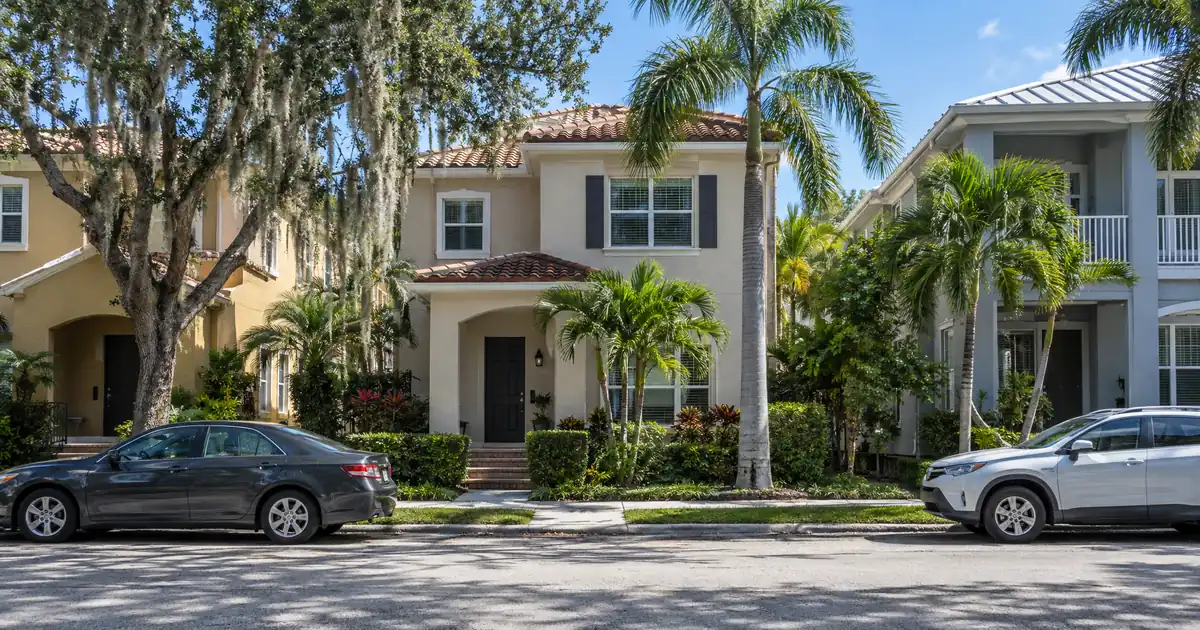
The 75% LTV ceiling on a DSCR cash-out is not the number that limits most Miramar owners. Coverage is. Zillow puts the typical Miramar home value at $521,847, down 2.0% over the past year. Against local rents, a single-family house borrowed at the full ceiling lands well under 1.00 once taxes and insurance are counted. The usable cash-out amount usually gets set by what rent can carry, not by the maximum leverage on paper.
The Quick Read: A DSCR cash-out refinance on a Miramar, Florida rental is underwritten primarily on the property’s rental income measured against its full monthly obligation, with the appraised value setting the ceiling and seasoning and reserves gating eligibility. Equity you can pull is the lower of what the LTV cap and the coverage ratio allow.
DSCR Cash-Out Calculator
Run the cash-out numbers in Miramar, FL
Rate source: Freddie Mac 30-yr average via FRED® — Federal Reserve Bank of St. Louis · effective Sep 24, 2026
Prefilled with starting assumptions — enter your property’s value, balance, taxes, and insurance for a more accurate picture.
Program parameters update from Lendmire’s centralized guideline source. Taxes and insurance are editable estimates.
As of Sep 24, 2026 · General Freddie Mac market benchmark, not a Lendmire loan offer. Property value, balance, taxes, and insurance are editable estimates. Maximum loan-to-value varies by lender, program, property type, and seasoning. Not a Loan Estimate, approval, or commitment to lend. Program availability and eligibility are subject to lender guidelines, credit approval, property review, and underwriting.
- Modeled coverage on a typical Miramar single-family home falls below 1.00 at the full 75% LTV.
- Values are flat to slightly down, so equity depends on today’s appraisal, not appreciation.
- Only 3.94% of housing units are duplexes, converted homes, or small apartment buildings, so expect one rent per property.
- Miramar Park of Commerce tenants and Memorial Hospital Miramar anchor demand now that Spirit Airlines is gone.
- Townhomes and condos come closer to 1.00 coverage, but HOA dues matter. Exact terms depend on the lender’s guidelines, property type, leverage, and a full review of the borrower’s file.
Miramar Market Snapshot
A quick read on the Miramar investor landscape — figures come from the cited sources below. Confirm current property-level numbers before underwriting.
| Metric | Detail |
|---|---|
| University enrollment | 51,000+ students (Broward College About) |
| Population | 138,590 residents (City of Miramar FY2023 Annual) |
| Employment | 10,000+ employees (Miramar Park of Commerce) |
The Coverage Math Behind a Miramar Cash-Out
Coverage sets the cash-out amount here, and the gap between the LTV cap and the coverage limit is wide. Rent divided by full PITIA (principal, interest, taxes, insurance, and any HOA dues) has to clear the program’s 1.00 baseline, and on typical Miramar stock it clears only at much lower leverage than the ceiling.
Run the numbers on a hypothetical. Take the Zillow citywide value of $521,847. Rent lookups are unreliable for houses in this city (more on that below), so the rents here are modeled assumptions, not sourced house rents. Apartment List shows a 2-bedroom listing average of $2,581+ and an overall median rent of $1,734. U.S. News shows a median rent of $1,907, though its methodology is unclear. The table uses those as modeled rents and includes taxes and insurance in every coverage figure. It rounds every ratio down.
| Modeled scenario | LTV | Coverage incl. Taxes and insurance |
|---|---|---|
| House at $521,847, rent $2,581 | 75% | Below 0.8 |
| Same house, same rent | About 50% | Near 1.0 |
| Same house, rent $1,907 | 75% | In the 0.5s |
| Same house, rent $1,907 | About 35% | Near 1.0 |
| Condo near $275,000, rent $1,900 | 75% | Just above 1.0 before HOA |
The condo row uses the Houzeo condo figure of roughly $275,000, cited below. The rent is a modeled assumption, and HOA dues can erase the margin entirely. Investors should pull actual dues before trusting that row.
This pattern in the Houzeo market data makes sense. Houzeo puts Miramar single-family homes near $577,750 and condos near $275,000, so the price gap between the two is wide. A sub-1.00 file may be reviewable through a sub-1.00 program, interest-only structuring, or a lower balance. Those are options a lender would weigh, subject to credit, reserves, and property review, and they usually come with lower leverage or more cash in. Some investors reaching for those structures should instead ask whether this property is the right one to refinance.
Program terms move with lender guidelines. Typically, DSCR cash-outs top out at 75% LTV, look for about six months of ownership measured from title recording, and expect roughly six months of PITIA in reserves. Credit tiers generally start at a 620 floor, with better structures at 660, 680, and 700. Loan sizes run up to $3,000,000 on standard programs.
Appreciation Won’t Bail Out the Appraisal
Miramar values are flat to slightly lower, so the appraised number on refinance day is the number that matters. Zillow’s index shows homes going pending in about 36 days. Movoto reports a median sale price of $525,000 and about 60 days to sell. Houzeo shows a longer 99 days on market and 6.7 months of inventory, so the sources disagree on pace.
They disagree on level too. NeighborhoodScout places the median house value higher at $552,667, reflecting a different methodology than Zillow’s index. It also says Miramar’s annual appreciation is higher than in 60% of other Florida cities. That means middle of the pack, not a growth story. Redfin’s older reading showed $575K and rising, so the spread among sources is about $50K.
Genuine uncertainty sits here. An appraiser choosing comps from the high end of that spread could produce a value several percent above one who picks the low end. The prudent approach is to size the cash-out off the lower plausible value, then treat anything above it as a bonus. An owner who bought years ago and expects the refinance to unlock a big paper gain should test that assumption against recent closed sales first. Investors who plan a later sale should also allow a longer marketing period than the pending-time figures suggest.
Spirit Left. Who Pays the Rent Now?
The tenant base is broader than any single employer, though Spirit’s exit is a real regional shock. Spirit Airlines moved to Miramar in 1999, and Miramar Park of Commerce materials put roughly 1,000 of its people at the park as of the last expansion. (Reports differ on how to describe the headquarters location, with some outlets saying Dania Beach.) In early May, NPR reported that Spirit began an orderly wind-down effective immediately after financing talks failed. Yahoo Finance reported nearly 5,000 Florida workers losing jobs. For investors, a DSCR loan is reviewed primarily on property-level rental income covering the payment, subject to lender guidelines, so the question is whether a given property’s rent still holds up as local employment shifts.
No source quantifies the effect on Miramar rents or values, so any claim that the shutdown has or hasn’t moved local pricing would be speculation. What can be said is where the rest of the demand sits. The Park of Commerce holds more than 10,000 employees across more than 180 companies, including GE, Siemens, Humana, Quest Diagnostics, and Toyota. Trade press reports it 98% leased with more than 30 healthcare companies, and Memorial Healthcare System leases over 200,000 square feet there. Memorial Hospital Miramar adds a separate healthcare job base inside the city.
Underwriting should lean on that diversification. The city’s own financial report lists population at 138,590, up 2.87% from the 2020 count, making Miramar the fourth-largest city in Broward County. The Census Bureau’s QuickFacts page is the official source for further housing figures.
Miramar is not a college town. Broward College enrolls more than 51,000 students system-wide, and that number belongs to the whole system, not the Miramar sites. Investors shouldn’t underwrite student demand here.
Where in Miramar the Ratios Cooperate
No source gave neighborhood-level house prices or house rents, so this section stays qualitative.
Monarch Lakes, Huntington, Vizcaya, and Windsor Palms are the likely workforce entry point. Monarch Lakes is a master-planned mix of single-family homes and townhouses, and an investor blog calls it more affordable than Miramar’s upscale pockets. Townhomes there are the closest thing to a DSCR sweet spot, because lower balances need less rent to cover. Rent.com lists an average 1-bedroom at $2,236 in Vizcaya.
Miramar Town Center is the condo, townhome, and apartment submarket. The Greater Fort Lauderdale Alliance describes it as a walkable, mixed-use center in the geographic heart of the city. Rent.com puts an average 1-bedroom there at $2,472. Apartment-portal rents like that are the strongest evidence of what the smaller unit types can command, though they aren’t house rents.
East Miramar (Miramar Park, Rodgers Heights, Miramar Isles) is the older, ranch-style area. Rent.com lists 1-bedroom averages of $1,300 in Rodgers Heights and $1,500 in Miramar Park. Cheaper rent does not automatically mean better coverage. Local agent commentary suggests entry prices that partly offset the low rents, and older stock brings condition questions. Investors should pull actual 3-bedroom rent comps before calling this the cash-flow submarket.
West of I-75 (Riviera Isles, Sunset Lakes) is the higher-price tier. Homes.com describes Riviera Isles as gated, with more than 1,300 homes around Lake Riviera. Rents are probably strong there, but rent-to-value is likely tighter, and I could not source that ratio. Country Club Ranches is an estate-priced pocket and not a DSCR target.
The stronger cash-out play might be the townhome belt rather than the west side, though owners who hold west-side homes for their appraisal strength could reasonably disagree. Coverage math favors the cheaper unit. Appraisal stability favors the pricier one.
Why Small Multifamily Won’t Rescue the Math
Duplexes, converted homes, and small apartment buildings are only 3.94% of Miramar’s housing units. Single-family detached homes are 62.31%, and row houses and attached homes are 12.20%. That mix leaves little room for the stacked-income strategy that props up coverage in other markets.
Underwrite one rent per property. That changes the refinance question. In markets with plentiful duplexes, an owner can borrow against a second or third rent stream. Here the owner is borrowing against one lease, and if it doesn’t cover the full obligation at the desired LTV, the cash-out gets smaller.
A related point is that institutional supply sets a ceiling on rents. RentCafe reports an average apartment rent of $2,591, down 1.06% from the prior year. Its data covers buildings with 50 or more units, so it reflects large complexes, not houses. The portals disagree by about $400 on the citywide average, with Apartments.com near $2,183. Only 30% of households rent, per the same RentCafe page. Rent trends across three sources run flat to slightly negative, so nobody should underwrite a rent bump to fix coverage.
The supply picture is mildly supportive. The wider Fort Lauderdale multifamily market is projected to see 3,300 deliveries and 4.9% vacancy, as reported by South Florida Agent Magazine citing Marcus & Millichap. That is metro-level, not Miramar-specific. Low new supply helps rent stability, which lenders like, but it doesn’t create rent growth.
Seasoning, Reserves, and Where the Proceeds Go
Working DSCR brokers see a recurring pattern in suburban single-family markets where price has outrun rent: the LTV cap isn’t what binds, the coverage ratio is. Owners arrive expecting to draw to the maximum, and the file comes back smaller once full PITIA goes in the denominator. The files that go smoothly usually start with a coverage calculation, before an appraisal is ordered.
The cleanest cash-out thesis is redeploying proceeds into another property where the numbers already pencil at current pricing. Miramar’s townhomes and condos are the obvious in-market candidates, subject to HOA dues and the lender’s condo eligibility rules. Pulling equity to fund out-of-market purchases where coverage doesn’t work is a different decision, and one worth stress-testing before committing.
A few mechanics matter for a Miramar owner:
- Seasoning: About six months of ownership from title recording is typical, so a recent purchase may need to wait.
- Reserves: Expect roughly six months of PITIA, more on balances above $1,500,000.
- Entity ownership: LLC-held rentals can work, subject to lender program eligibility.
- Property type: Manufactured homes, log homes, and barndominiums fall outside these programs.
Owners who need to compare paths should look at the program-to-program comparison. Conventional financing may cost less for a single rental held personally by a high-income W-2 borrower. DSCR becomes the practical path for entity-owned portfolios, self-employed investors, or anyone past the conventional financed-property limits.
To test a specific property, see how the DSCR math pencils or call 828-256-2183.
Before any file goes forward, verify current City of Miramar and Broward County rental rules, taxes, and insurance costs with qualified local professionals. In South Florida those line items can swing the coverage number a lot.
What Would Change This Picture
Rents rising while values hold would loosen the math. If flat-to-slightly-negative rents continue and values keep drifting lower, the cash-out window narrows further. Neither outcome is predictable from the sources reviewed, and the Spirit fallout is still working through the local economy.
For owners with strong coverage and a specific next purchase, the equity is available under the right structure. For owners hoping appreciation will rescue thin coverage, it probably won’t.
The Owners Who Come Out Ahead
The investors who run coverage first, size the cash-out to the lower appraisal case, and redeploy into Miramar’s lower-balance townhomes will come out ahead while everyone else waits for values to move.
DSCR vs. conventional financing
Two common ways to finance an investment property in Miramar, FL. They qualify you differently — here’s how investors weigh them.
Why investors choose it
- Qualifies on the property’s rental income — no personal tax returns, W-2s, or pay stubs needed to document income.
- No personal debt-to-income ceiling to clear, so existing mortgages and obligations don’t cap your borrowing the same way.
- Can be closed in an LLC, keeping the property inside a business entity.
- Built for scaling — not held to the limit on number of financed properties that conventional financing applies.
- Underwriting centers on the deal: generally qualifies when the rent covers the payment, a 1.00x coverage ratio being a common baseline (confirmed in underwriting).
- Designed specifically for investment property, including long-term and, where the program allows, short-term rentals.
Where it’s strong
- Often the lowest ongoing financing cost for a buyer who fully qualifies on personal income — a fit for a first property or a cost-first purchase.
Trade-offs for investors
- Requires full personal income documentation and must fit within a debt-to-income limit — salary, existing debts, and other mortgages all count.
- Typically held in your personal name rather than a business entity.
- Caps how many financed properties you can carry, which can become a ceiling as a portfolio grows.
- Evaluates you as a borrower as much as the property, which usually means more paperwork.
How investors usually choose: a first or single property often optimizes for the lowest financing cost; portfolio builders often optimize for leverage, vesting in an LLC, and scaling past conventional caps. The right answer depends on your goals, the property, and current guidelines — both paths run through select lenders in Lendmire’s wholesale network, with eligibility and terms confirmed in underwriting.
Frequently Asked Questions
How do you qualify for a DSCR cash-out refinance in Miramar, Florida?
Qualification rests mainly on the property’s rent covering its full monthly obligation, with a 1.00 baseline typical, plus a credit score at or above a 620 floor. Lenders also look at about six months of seasoning and roughly six months of PITIA in reserves. On most Miramar single-family homes, coverage at 75% LTV falls short, so the cash-out amount often lands below the LTV ceiling. Eligibility is subject to lender guidelines and property review.
What are the requirements for an investment property loan in Miramar, Florida?
Expect an appraisal, proof of reserves, a credit score at or above the program floor, and rent documentation such as a lease or market rent schedule. Loan amounts run up to $3,000,000 on standard programs. Manufactured homes, log homes, and barndominiums are outside these programs. Details vary by borrower, property, and lender.
Does Spirit Airlines’ shutdown make Miramar riskier for DSCR lending?
It adds uncertainty, but no source quantifies an effect on Miramar rents or values, so anyone claiming one is guessing. The city’s demand rests on a broader employer base: the Park of Commerce with over 10,000 employees, its healthcare cluster, and Memorial Hospital Miramar. Lenders focus on the property’s rent and value, so the practical step is underwriting to actual lease rents, not assumed demand.
Should a Miramar owner cash out a townhome or a single-family house?
Townhomes and condos usually give coverage more room because their balances are lower against similar rents. Single-family homes carry higher values and thinner rent-to-value. The catch with condos is HOA dues, which count in the ratio, and some lenders apply extra condo eligibility rules. Owners should run both before choosing.
Can Lendmire help arrange DSCR financing for an investment property in Miramar?
Yes. Lendmire is a mortgage broker that arranges DSCR investor loans. One key feature is that cash-out programs qualify primarily on the property’s rental income, with a 75% LTV ceiling. Approval rests with the lender, subject to program guidelines.
For current guidelines and terms, see Lendmire’s DSCR loan programs page.
About Lendmire
Lendmire, NMLS# 2371349, is a mortgage brokerage focused on investor financing, arranging DSCR loans in 40 states plus Washington, D.C. — 41 markets total. Qualification is based on the property’s income rather than personal income documentation, subject to lender guidelines, making it a fit for LLC-held rentals and scaling portfolios. The firm was recognized by Scotsman Guide as a 2026 Top Workplace and was a top-ranked workplace in 2025. More company news appears in Lendmire’s press newsroom.
For broader investor-financing rules and property-type coverage across the state, see Florida DSCR loans.
Investors weighing their equity options can start with cash-out refinance on an investment property.
Get Started
Ready to find the right loan for you?
In about 30 seconds you can review financing options available for your investment property. No commitment required.
Informational only. Not a Loan Estimate, approval, or commitment to lend. Program availability and eligibility are subject to lender guidelines, credit approval, property review, and underwriting.
References
1. Zillow Home Values, Miramar
3. City of Miramar Annual Comprehensive Financial Report
7. Movoto
10. NPR, Spirit Airlines ceases operations
11. Yahoo Finance
14. U.S. Census Bureau QuickFacts, Miramar
15. Rent.com
16. Greater Fort Lauderdale Alliance, Miramar
17. Homes.com
18. RentCafe
19. recognized by Scotsman Guide as a 2026 Top Workplace
20. Scotsman Guide — Top Workplaces 2025
This article is part of Lendmire’s investment property cash-out refinance program — full qualification details, guidelines, and scenarios live on the program page.
Related reading: Cash Out Refinance Investment Property in Miramar, Florida: The 2026 DSCR Cash-Out Guide for Miramar Investors · Cash Out Refinance Investment Property in Miramar Beach, Florida · DSCR Cash Out Refinance in Miramar Beach, Florida: The 2026 DSCR Financing Guide to Scenic Gulf Drive
Guides: Investment Property Cash-Out Refinance in Miramar, FL · Investment Property Cash-Out Refinance in Florida
Brandon Miller
Founder & CEO, Mortgage Loan Originator, Lendmire LLC
- Mortgage Loan Originator · NMLS# 1129696 · Verify on NMLS Consumer Access
- North Carolina Real Estate Broker · License# 343312 · Verify on NCREC
- North Carolina Insurance Producer · License# 19053198 · Property, Casualty, Life, Health · Verify on NAIC SBS
- Lendmire LLC · Firm NMLS# 2371349 · Verify firm licensure
Legal disclosures. Lendmire (NMLS# 2371349) is a state-licensed mortgage brokerage that arranges financing through wholesale lender relationships. Lendmire is not a direct lender, depository institution, or registered financial advisor. The discussion above is general informational content about real estate financing — it is not financial, legal, or tax advice, and readers should consult licensed professionals for guidance on their individual circumstances. Loan inquiries are subject to lender underwriting; this article does not represent a commitment to lend. Loan terms, rates, and qualification standards vary by borrower, property, and state, and are subject to change at any time. Equal Housing Opportunity. NMLS Consumer Access: nmlsconsumeraccess.org.