
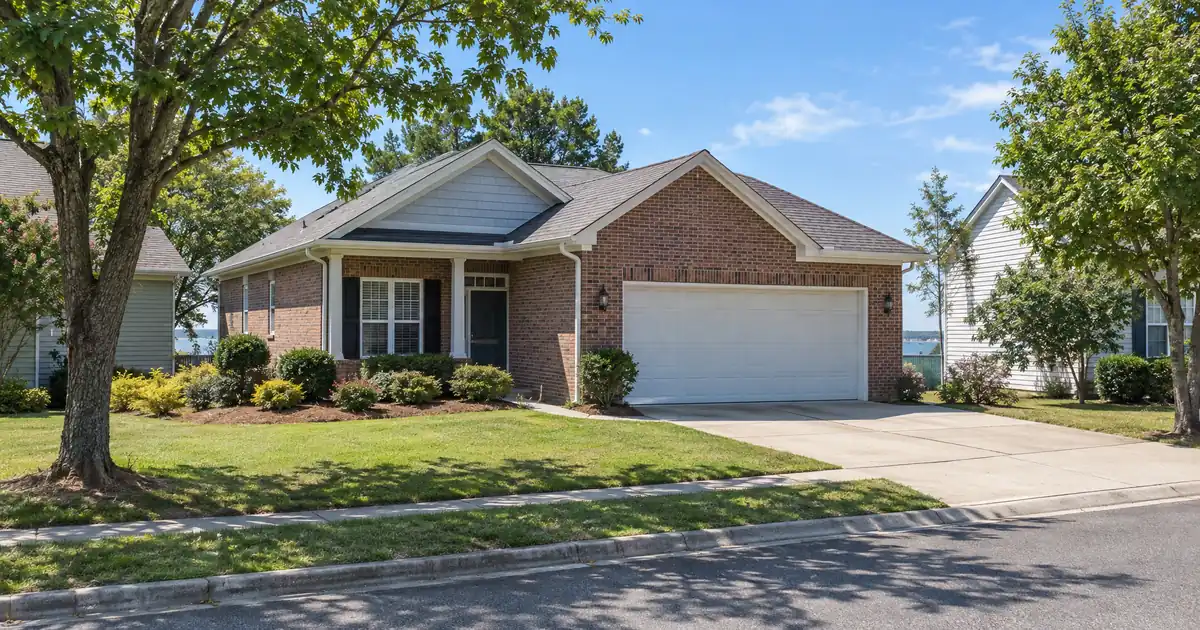
The 75 percent loan-to-value ceiling is not what limits a cash-out refinance in Morehead City. The appraisal is. Sale medians here swing hard from one reporting window to the next, because a small number of waterfront closings can drag the whole average around. An investor who sizes proceeds off a headline median is likely to be disappointed by a plain workforce rental.
The better approach starts from the other end: what the property rents for, what its full obligation looks like, and what value an appraiser can support from comparable sales.
DSCR Cash-Out Calculator
Run the cash-out numbers in Morehead City, NC
Rate source: Freddie Mac 30-yr average via FRED® — Federal Reserve Bank of St. Louis · effective Sep 24, 2026
Prefilled with starting assumptions — enter your property’s value, balance, taxes, and insurance for a more accurate picture.
Program parameters update from Lendmire’s centralized guideline source. Taxes and insurance are editable estimates.
As of Sep 24, 2026 · General Freddie Mac market benchmark, not a Lendmire loan offer. Property value, balance, taxes, and insurance are editable estimates. Maximum loan-to-value varies by lender, program, property type, and seasoning. Not a Loan Estimate, approval, or commitment to lend. Program availability and eligibility are subject to lender guidelines, credit approval, property review, and underwriting.
TL;DR: A DSCR cash-out refinance on a Morehead City, North Carolina rental is underwritten primarily on the property’s rental income measured against its full monthly obligation, with proceeds capped by a 75 percent loan-to-value ceiling and roughly six months of seasoning. Coverage here depends heavily on property type.
- Typical single-family value sits near $374,416 per Zillow, which pressures single-family coverage.
- Duplexes and small multifamily fit better because rent barely climbs with unit size.
- Hospital, port, and marine-science employment anchor long-term tenant demand.
- Waterfront appreciation rarely comes with matching rent growth.
Morehead City Market Snapshot
A quick read on the Morehead City investor landscape — figures come from the cited sources below. Confirm current property-level numbers before underwriting.
| Metric | Detail |
|---|---|
| Typical rents | $1,134 (Niche (real estate page)) |
| University enrollment | 1,614 total (Data USA (Carteret CC)) |
| Employment | 150+ employees (County employers article) |
Why Medians Mislead Here
Treat any single Morehead City price statistic as a range, not a fact. Different sources measure different things: some track a modeled index of typical home values, some estimate a median value, and others report median list prices, which reflect asking prices rather than closed sales. Those figures can sit well apart from one another, and none of them settles the question alone. Sale medians in a market this small can also swing sharply from one reporting period to the next, which reads as a shifting mix of high-end waterfront deals in a thin sample, not as appreciation. Niche offers one estimate of median value, and it is worth comparing against other sources rather than relying on any one of them.
For a refinance, that volatility matters in one specific way. Your cash-out is calculated on appraised value, and the appraiser selects comparable sales. If the nearest comps are waterfront closings, the value may be generous. If they are modest inland sales, expect something closer to the rent-supported level. Plan around the second outcome.
A local brokerage describes the market as moving from rapid appreciation toward normalization, with waterfront holding up best and ranging from roughly $400,000 for smaller homes to above $2 million. That is marketing copy, so weigh it accordingly. The directional point still holds: price gains are concentrated where rents do not scale with price.
The Mechanics, Step by Step
Four inputs decide how much capital a cash-out can release: seasoning, appraised value, coverage, and reserves. Walking through them in order shows where a Morehead City file tends to tighten.
Step one, seasoning. Programs in the network generally look for about six months of ownership, measured from title recording. An investor who bought a duplex last spring has cleared it. One who closed last month has not.
Step two, the ceiling. Cash-out leverage tops out at 75 percent of appraised value, which is lower than the 80 percent purchase figure. From that ceiling, the existing payoff comes out first, and what remains is potential proceeds. Potential, not promised: the final figure depends on rent used for lender review, reserves, and the lender’s review.
Step three, coverage. The coverage number is monthly rent divided by the full monthly obligation: principal, interest, taxes, insurance, and any HOA dues. A 1.00 minimum is the standard benchmark in these programs. Some lenders review lower ratios, but usually with lower leverage, stronger compensating factors, or different pricing.
Step four, reserves and credit. Reserves of about six months of the full obligation are typical, and credit tiers run from a 620 floor up through 660, 680, and 700. Better tiers generally improve leverage and pricing options, subject to lender guidelines.
Now run a modeled single-family case. These are assumptions, not market data. Take a house appraised near the Zillow typical value, with rent at a modeled $2,150 single-family asking figure that Homes.com shows. At 75 percent leverage and counting taxes and insurance in the full obligation, coverage lands in the low 0.9s. That is under the benchmark.
Under 1.00 does not end the conversation. A lender may review a sub-1.00 program at reduced leverage, an interest-only structure, or a smaller cash-out request, but qualification stays subject to lender guidelines, credit approval, and property review. (And lower leverage means a smaller check, which defeats the point for many investors.)
A practical note from the deal desk. Lendmire’s team sees a recurring pattern in thin coastal markets: the files that move cleanly pair a rent figure supported by a signed lease with comps pulled from the property’s own neighborhood, while the friction usually arrives when an owner’s value expectation was anchored to a headline median. Ordering the appraisal inputs early, and sizing the request off conservative value, avoids that mismatch.
Why Duplexes Beat Houses on Coverage
Rent in Morehead City barely rises from a one-bedroom to a two-bedroom, and that single fact reshapes the refinance math. Rentometer’s micro-area report shows $1,701 for a one-bedroom, $1,753 for a two-bedroom, $2,216 for a three-bedroom, and $2,411 for four or more. The one-bedroom to two-bedroom gap is about $50. Two-bedroom to three-bedroom is about $460.
The implication: a building with two or three smaller units collects more total rent than one large house at a similar basis. Run a modeled duplex at an assumed $450,000 appraised value, with two-bedroom units at the Rentometer figure, and coverage including taxes and insurance clears about 1.2x at 75 percent leverage. That sits comfortably above the baseline, while the single-family case sits below it. Same city, same leverage, a roughly 0.3 gap in the ratio.
Caveats apply. Rentometer’s report covers a micro area, not strictly the city limits, and all asking-rent aggregators in this market disagree with each other. Niche’s Census-derived median rent is $1,134, well below the asking figures, which likely reflects older and smaller units. Local annual-lease comps should anchor any real underwriting. Seasonal furnished duplex listings that appear on rental portals are not valid long-term comps, so exclude them.
Townhouses and condos look weaker on rent, at $1,150 and $1,300 asking respectively, though their lower basis can partially offset that. This is a genuine toss-up for investors holding one: coverage depends on each unit’s own price and rent, not on category.
Where the Tenants Actually Come From
Demand here rests on employment anchors rather than a university. Carteret Community College reported total enrollment of 1,614, with 633 full-time and 981 part-time students. That is a modest renter pool, and the city has no four-year residential campus. The stronger anchors are institutional employers.
Hospital corridor. Carteret Health Care is an independent hospital and a member of the Mayo Clinic Care Network, with 135 beds per its company profile. A dated local-business ranking listed it among the largest employers in the county, alongside county schools, county government, and the community college, with headcounts in the hundreds. Nurses, travel clinicians, and allied health staff generate steady lease demand along and near Arendell Street. Duplexes in that corridor are the cleanest coverage candidates in this analysis.
Port-adjacent west side. The NC State Port of Morehead City is a working deep-water facility inside a resort town. NC Ports credits the Wilmington and Morehead City system combined with $687 million and more than 87,000 jobs annually statewide. A Reason Foundation analysis put Morehead City warehouse use closer to 100 percent of capacity. Logistics, trucking, and marine-trades workers form a tenant base that does not depend on tourist seasons. Confirm exact geography locally before underwriting a specific block.
Marine science and downtown. The UNC Institute of Marine Sciences operates in the city, and NC State’s CMAST works out of the same area. Researchers, graduate staff, and tournament-season workers around the Big Rock Blue Marlin Tournament add a small but steady layer of demand near the downtown waterfront. Downtown duplexes may hold the most equity, but they are also the likeliest to be appraised against waterfront comps, for better or worse.
Price tiers. One investment-platform blog places the more affordable stock in the southwest and higher price tags in the southeast. That is qualitative guidance only, and no sourced neighborhood-level rent or price bands exist in the research. Still, the logic is sound: the higher-priced southeast likely produces the weakest rent-to-value ratios, and the affordable southwest is where workforce single-family and small multifamily should cash-flow best.
Military adds one more pool. The Carteret County workforce page notes proximity to Camp Lejeune and Marine Corps Air Station Cherry Point as a labor source. Cherry Point sits in neighboring Craven County, so think of it as a commuter driver, not a local employer.
Waterfront Equity Is Not Rental Equity
Here’s the catch. Investors with the biggest paper gains in Morehead City often hold the properties with the weakest coverage. Price appreciation concentrates in waterfront and lifestyle housing, while rents stay anchored to local wages, so each dollar of added value brings little added rent.
That splits the refinance thesis in two. On a waterfront property, the cash-out depends on the price gain, and coverage may force reduced leverage even at a high appraisal. On an inland duplex or workforce rental, cash flow carries the file and appreciation is a bonus. Neither is wrong. The mistake is treating them as the same loan.
Population trends support the long-term rental case modestly. Census Reporter puts the city at 9,806 residents on 7.4 square miles with a median age of 44.2, and Neilsberg reports 2.98 percent growth over a three-year span against 1.02 percent nationally. This is a small, older, renter-heavy town with limited supply, not a high-growth metro, so build the refinance case on the property, not on population momentum. Verify current local rental rules, taxes, and insurance with qualified local professionals before committing.
How Proceeds Become the Next Deal
Cash released by a refinance is capital, and what matters is what it buys. In this market, the reinvestment logic points toward the same product that covers best: small multifamily near the hospital or port. An investor can pull equity from a seasoned property, then use it as the down payment on another duplex.
That recycling only works if the refinanced property keeps its own coverage above the benchmark after the new loan. Model the new obligation first, then the acquisition. For deeper background, see Lendmire’s primer on DSCR loans, the page on pulling equity out, and the refinance side of the platform. Investors weighing this route against bank financing can review the conventional-vs-DSCR tradeoffs.
DSCR vs. conventional financing
There are two common ways to finance an investment property in Morehead City, NC, and they qualify you differently — here’s how investors weigh them.
Why investors choose it
- Qualifies on the property’s rental income — no personal tax returns, W-2s, or pay stubs needed to document income.
- No personal debt-to-income ceiling to clear, so existing mortgages and obligations don’t cap your borrowing the same way.
- Can be closed in an LLC, keeping the property inside a business entity.
- Built for scaling — not held to the limit on number of financed properties that conventional financing applies.
- Underwriting centers on the deal: generally qualifies when the rent covers the payment, a 1.00x coverage ratio being a common baseline (confirmed in underwriting).
- Designed specifically for investment property, including long-term and, where the program allows, short-term rentals.
Where it’s strong
- Often the lowest ongoing financing cost for a buyer who fully qualifies on personal income — a fit for a first property or a cost-first purchase.
Trade-offs for investors
- Requires full personal income documentation and must fit within a debt-to-income limit — salary, existing debts, and other mortgages all count.
- Typically held in your personal name rather than a business entity.
- Caps how many financed properties you can carry, which can become a ceiling as a portfolio grows.
- Evaluates you as a borrower as much as the property, which usually means more paperwork.
How investors usually choose: a first or single property often optimizes for the lowest financing cost; portfolio builders often optimize for leverage, vesting in an LLC, and scaling past conventional caps. The right answer depends on your goals, the property, and current guidelines — both paths run through select lenders in Lendmire’s wholesale network, with eligibility and terms confirmed in underwriting.
Frequently Asked Questions
Can a Morehead City rental that was bought in a hot waterfront market still do a cash-out?
Yes, if it has about six months of seasoning and the appraised value supports the request. The 75 percent ceiling applies to appraised value, not purchase price. Coverage still has to meet the lender’s minimum, and waterfront properties often need reduced leverage because rents trail value. Eligibility is subject to lender review.
Why do Morehead City price statistics look so inconsistent?
The city is small, and a few high-end waterfront sales can swing a median sharply. Zillow’s index, Niche’s estimate, and Redfin’s sale median all show different figures. Underwrite a cash-out from the specific property’s comps, not from any citywide headline number.
Does a duplex really cover better than a single-family home here?
Usually, based on the available rent data. Asking rent rises only modestly between one- and two-bedroom units, so two units can outproduce one larger house at a similar basis. Local annual-lease comps should confirm it property by property.
Does the port affect tenant demand?
It supports long-term demand through logistics, trucking, and marine-trades employment. The state-level port figures cover Wilmington and Morehead City combined, so the city-specific effect is directional, not measured. Hospital employment adds a second, separate anchor.
What if coverage lands below 1.00?
Options a lender may review include lower leverage, an interest-only structure, or a sub-1.00 program, each with different pricing and conditions. None is assured, and eligibility review depends on credit, reserves, and property review.
Three Indicators to Watch Over the Next Quarter
1. Appraisal comp mix. If recent closings near a target property skew waterfront, expect appraisals to run richer than rents justify. If they skew inland, plan for conservative value.
2. Days on market. Redfin’s recent jump in marketing time suggests buyers are slower. A sustained rise would pressure appraised values on workforce rentals before it touches rents.
3. Annual-lease duplex listings near Arendell Street. Rising annual-lease duplex rents against the current two-bedroom levels would widen coverage on small multifamily, and thin listings would confirm how tight supply is.
For current guidelines and terms, see Lendmire’s DSCR loan programs page.
About Lendmire
Lendmire (NMLS# 2371349), a non-QM mortgage broker serving investors in 41 markets including Washington, D.C., helps structure DSCR scenarios commonly evaluated around a property’s rental income rather than personal income paperwork, subject to lender guidelines. Recognized as a top-ranked workplace in 2026 and a 2025 Scotsman Guide Top Workplace, Lendmire places loans through wholesale investor lenders and is not a direct lender.
For broader investor-financing rules and property-type coverage across the state, see North Carolina DSCR loans.
Get Started
Ready to find the right loan for you?
In about 30 seconds you can review financing options available for your investment property. No commitment required.
Informational only. Not a Loan Estimate, approval, or commitment to lend. Program availability and eligibility are subject to lender guidelines, credit approval, property review, and underwriting.
References
1. Zillow Home Value Index, Morehead City
2. Niche
3. Data USA, Carteret Community College
5. Homes.com
9. NC Ports, economic development
10. Reason Foundation, North Carolina ports
11. UNC Institute of Marine Sciences
12. Carteret County workforce page
13. Neilsberg, Morehead City population by year
14. Scotsman Guide — Top Workplaces 2026
15. a 2025 Scotsman Guide Top Workplace
This article is part of Lendmire’s investment property cash-out refinance program — full qualification details, guidelines, and scenarios live on the program page.
Related reading: Cash Out Refinance Investment Property in Morehead City, North Carolina · DSCR Cash Out Refinance in New Bern, North Carolina: A 2026 Guide to Historic District Equity · Cash Out Refinance Investment Property in Corolla, North Carolina
Guides: Investment Property Cash-Out Refinance in North Carolina
Brandon Miller
Founder & CEO, Mortgage Loan Originator, Lendmire LLC
- Mortgage Loan Originator · NMLS# 1129696 · Verify on NMLS Consumer Access
- North Carolina Real Estate Broker · License# 343312 · Verify on NCREC
- North Carolina Insurance Producer · License# 19053198 · Property, Casualty, Life, Health · Verify on NAIC SBS
- Lendmire LLC · Firm NMLS# 2371349 · Verify firm licensure
Disclosures. The information presented in this article is general market commentary, not financial, legal, or tax advice. Lendmire is a mortgage brokerage (NMLS# 2371349) — not a direct lender or depository institution — and loan placement is subject to lender underwriting. Nothing in this content represents a commitment to lend. Loan terms, pricing, and program availability vary based on borrower qualifications, property characteristics, and state of subject property, and are subject to change at any time. Lendmire complies with Equal Housing Opportunity requirements. Consumer access: nmlsconsumeraccess.org.