
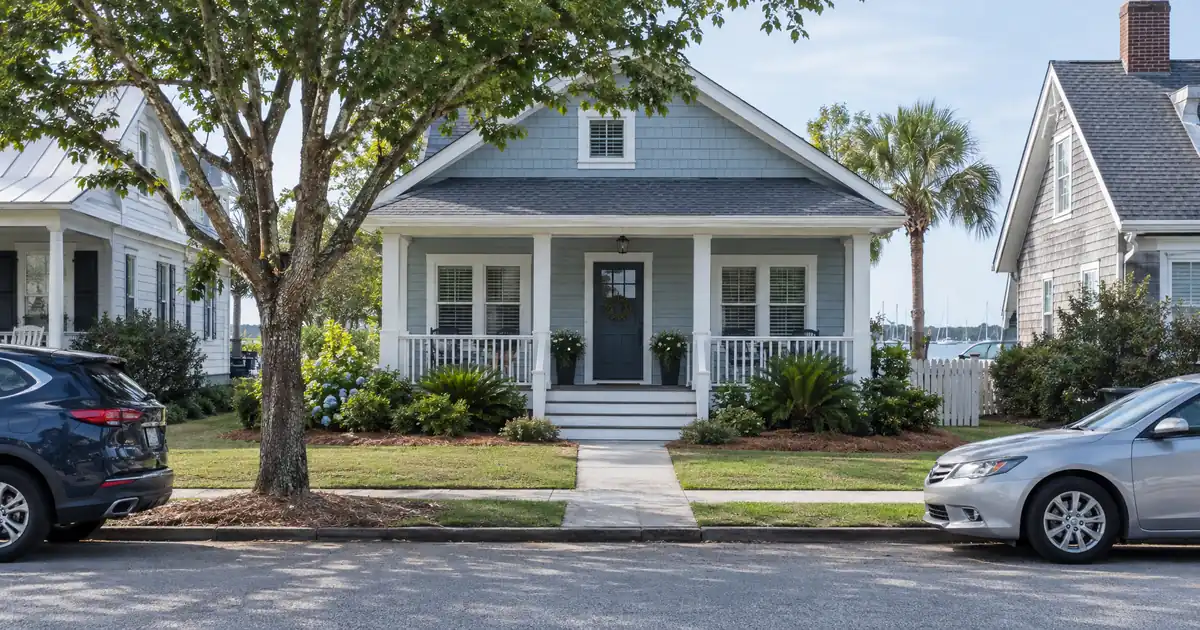
Most Morehead City owners looking at a cash-out refinance start with the wrong number. They look at the citywide median sale price, and that figure is close to useless here. The city is small, waterfront sales distort every average, and an appraiser will price your rental against its own closest comps, not against a headline. The number that sets your proceeds is the appraised value of one modest rental, run through a 75 percent loan-to-value ceiling.
TL;DR: A DSCR cash-out refinance on a Morehead City, North Carolina rental is underwritten primarily on the property’s rental income measured against its full monthly obligation, with the owner’s personal income documents playing a secondary role, subject to lender guidelines.
DSCR Cash-Out Calculator
Run the cash-out numbers in Morehead City, NC
Rate source: Freddie Mac 30-yr average via FRED® — Federal Reserve Bank of St. Louis · effective Sep 24, 2026
Prefilled with starting assumptions — enter your property’s value, balance, taxes, and insurance for a more accurate picture.
Program parameters update from Lendmire’s centralized guideline source. Taxes and insurance are editable estimates.
As of Sep 24, 2026 · General Freddie Mac market benchmark, not a Lendmire loan offer. Property value, balance, taxes, and insurance are editable estimates. Maximum loan-to-value varies by lender, program, property type, and seasoning. Not a Loan Estimate, approval, or commitment to lend. Program availability and eligibility are subject to lender guidelines, credit approval, property review, and underwriting.
- Cash-out LTV tops out at 75 percent, with about six months of ownership required first.
- Single-family rents sit near 0.57 percent of typical value, per Homes.com and Zillow.
- Duplexes and small multifamily carry coverage better than single-family here.
- Hospital, port, and marine-science employment anchor long-term tenant demand.
Lendmire (NMLS# 2371349) works with Morehead City, North Carolina investors to place DSCR financing through wholesale lenders reaching 41 markets — 40 states plus Washington, D.C. This piece covers the equity-extraction side only: what a Morehead City rental can support on a cash-out, and where the math tightens. Lendmire’s primer on DSCR loans covers the basics.
Morehead City Market Snapshot
A quick read on the Morehead City investor landscape — figures come from the cited sources below. Confirm current property-level numbers before underwriting.
| Metric | Detail |
|---|---|
| Typical rents | $1,134 (Niche (real estate page)) |
| University enrollment | 1,614 total (Data USA (Carteret CC)) |
| Employment | 150+ employees (County employers article) |
What the Underwriting Actually Measures
Cash-out proceeds are the lesser of two constraints: the leverage ceiling and the coverage test. Understanding both, step by step, explains most surprises.
Step one is value. Under the verified program parameters, cash-out leverage caps at 75 percent of appraised value, and the property generally needs about six months of ownership, measured from title recording. Step two is coverage. Qualifying monthly rent is divided by the full monthly obligation (principal, interest, taxes, insurance, and any HOA dues). A 1.00x baseline is common because rent covers the payment at that level, though exact eligibility depends on lender guidelines, credit profile, reserves (about six months of PITIA), and property review. Credit tiers run from a 620 floor upward through 660, 680, and 700, and stronger tiers generally improve options.
Now the part that trips people up. Say you expect your rental to appraise at a value where your existing payoff equals 60 percent of it. A 75 percent ceiling leaves 15 points of value available. If the appraisal comes in 10 percent lower than you expected, your payoff becomes about 66.7 percent of the new value. Only 8.3 points remain. A 10 percent value miss cut your accessible equity nearly in half. That is why the appraisal, not the market narrative, drives the outcome.
Why the Median Sale Price Can’t Be Trusted Here
Morehead City has 9,806 residents across 7.4 square miles, per Census Reporter’s ACS profile. Small markets produce noisy statistics. Zillow’s index puts the typical home value at $374,416, up 7.5 percent over the past year. Niche shows a lower median value of $357,400. Redfin’s median sale price has swung by tens of percent between reporting periods, which reflects a thin sample and a shifting mix of waterfront sales, not real appreciation. Movoto’s median list price shows the opposite direction, down 10 percent year over year.
This article uses the Zillow figure as its reference point and treats the rest as a range. The practical read: a plain workforce rental may appraise below what headline medians suggest, because appraisers pull comps that match the property, and waterfront closings don’t match a modest rental.
The appreciation story is also lopsided. A local brokerage describes a shift from rapid gains to normalization, with waterfront staying resilient across a range from roughly $400,000 to well over $2 million. That source is marketing material, but the logic holds. Rents on waterfront property don’t scale with price. A refinance thesis there depends on price gains. A thesis on inland or lower-priced units depends on cash flow. Know which one you’re underwriting.
Single-Family Math: Tight at Full Leverage
Single-family is the harder product to refinance here. Homes.com shows a median asking rent of $1,900 across the city, with single-family homes at $2,150, townhouses at $1,150, and condos at $1,300. Against Zillow’s typical value, single-family rent is about 0.57 percent of value per month. Against any of the higher sale-price figures, it’s under 0.4 percent.
Run the numbers on a modeled single-family rental valued near the typical figure, at $2,150 rent and 75 percent LTV. Including taxes and insurance at North Carolina-average assumptions, coverage lands around 0.9x. That is below the 1.00x baseline. These are modeled inputs, not a quote.
Sub-1.00 files can go a few ways. A lender may review a sub-1.00 program with lower leverage and added conditions. An owner might restructure toward interest-only, or pay the balance down before applying. Each path involves tradeoffs in proceeds and pricing, and qualification stays subject to lender guidelines, credit approval, and property review. The cleaner move is usually to refinance a lower-basis property.
One caution on rent data: the sources disagree. Niche’s Census-derived median rent is $1,134, while listing aggregators run much higher. Asking rents reflect current listings, not in-place leases. A lender will want the actual lease or a market-rent appraisal, so use in-place numbers.
Duplexes: Where the Coverage Holds
Duplexes and small multifamily are the strongest fit. Rentometer’s micro-area report shows 1-bedroom rent at $1,701, 2-bedroom at $1,753, 3-bedroom at $2,216, and 4-plus-bedroom at $2,411. The step from a 1-bedroom to a 2-bedroom is only about $50. The step from a 2-bedroom to a 3-bedroom is about $460.
Rent barely rises with unit size, so more doors on one lot beat one bigger house. Consider a modeled duplex at an assumed $500,000 value with two 2-bedroom units at $1,753 each, financed at 75 percent LTV. Including taxes and insurance, coverage comes out around 1.1x. Compare that with the single-family case above. Same leverage, roughly 0.2x better coverage, purely from unit count. The scope caveat matters: Rentometer’s report covers a micro area, not just city limits, so local annual-lease comps should confirm any figure before it goes in a file.
One listing trap. Some duplex units appear furnished on seasonal terms, which are not annual leases. Don’t use those as long-term comps.
Where the Tenants Come From
Demand here is anchored by employment, not one large employer. Three anchors stand out.
Health care. Carteret Health Care is an independent 135-bed hospital and a member of the Mayo Clinic Care Network, with a cancer center, birthing center, and dialysis. A dated county employer ranking put it above 600 employees, and county government and Carteret Community College each sat above 400 to 500. Those headcounts are dated and county-level, so treat them as approximate. The Arendell Street corridor runs past the hospital, and nurses, travel clinicians, and allied health staff generate steady rental demand nearby.
The port. The NC State Port of Morehead City is one of two state-owned ocean ports. NC Ports attributes $687 million and more than 87,000 jobs to the port system statewide, a figure covering Wilmington and Morehead City combined. A Reason Foundation brief puts Morehead City warehouse use closer to 100 percent of capacity. Logistics, trucking, and marine-trades tenants cluster in the west-central port area, though investors should confirm exact geography locally.
Marine science and education. Carteret Community College enrolled 1,614 students, with 633 full-time and 981 part-time. The UNC Institute of Marine Sciences sits in the city, and NC State’s CMAST works out of the area. There is no four-year residential campus, so student demand is small. Researchers and staff matter more than students. The Carteret County workforce page also notes access to separating Marines and dependents from Camp Lejeune and Cherry Point. Cherry Point sits in neighboring Craven County, so it’s a commuter and tenant-pool driver, not a local employer.
Median household income sits at $39,136 per Data Commons, and most residents rent. That supports long-term-lease underwriting, though a modest income base also caps how far rents can stretch.
Submarkets: What Pencils and What Doesn’t
Neighborhood-level price and rent data doesn’t exist in a form worth citing, so this section stays qualitative.
- Arendell Street and the hospital area. The best mix of tenant stability and small-multifamily product. Nurse and clinician demand makes lease-up less of a question mark than in most coastal towns.
- Downtown and waterfront, near Evans Street. Hospitality, marine-trades, and professional tenants. A duplex here may carry the most equity, but appraised value can run ahead of rent. This is the appreciation-versus-cash-flow tension in one submarket.
- Port and west-central area. Workforce tenants tied to logistics. Lower basis, better coverage potential. The tradeoff is thinner comps.
- Southwest versus southeast. One investment blog places more affordable stock in the southwest and higher price tags in the southeast. Rent-to-price ratios in the southeast likely compress coverage, so the southwest is the likelier DSCR fit.
Honestly, the right choice between downtown and the port area depends on what you want from the refinance. Downtown maximizes equity to pull. The port side maximizes the odds the coverage number clears 1.00x.
What the Deal Desk Tends to See
On files from small coastal markets like this one, Lendmire’s deal desk tends to see the same friction point: the owner’s expected value came from headline medians, and the appraisal came back tied to modest comps. Cleaner files usually carry a signed annual lease at market rent, documented seasoning past six months, and a property whose comps sit close by. The files that stall often lean on waterfront-driven value assumptions for a property that rents like a workforce unit.
What Happens to the Proceeds?
Cash-out proceeds become down-payment capital for the next acquisition, with reserves set aside first. Plan for the reserve requirement (about six months of PITIA, more on larger balances), because it comes out of the same pool. Pulling equity out works best when the next purchase covers its own payment. If it doesn’t, the refinance just moves leverage around. The refinance side and the conventional-vs-DSCR tradeoffs frame the alternatives. Investors can compare DSCR options or call 828-256-2183. Lendmire’s North Carolina DSCR loan programs cover statewide program detail. Investors should verify current local rental rules, taxes, and insurance with qualified local professionals. Terms vary by lender guidelines, property type, leverage, credit profile, and full file review.
DSCR vs. conventional financing
Two common ways to finance an investment property in Morehead City, NC. They qualify you differently — here’s how investors weigh them.
Why investors choose it
- Qualifies on the property’s rental income — no personal tax returns, W-2s, or pay stubs needed to document income.
- No personal debt-to-income ceiling to clear, so existing mortgages and obligations don’t cap your borrowing the same way.
- Can be closed in an LLC, keeping the property inside a business entity.
- Built for scaling — not held to the limit on number of financed properties that conventional financing applies.
- Underwriting centers on the deal: generally qualifies when the rent covers the payment, a 1.00x coverage ratio being a common baseline (confirmed in underwriting).
- Designed specifically for investment property, including long-term and, where the program allows, short-term rentals.
Where it’s strong
- Often the lowest ongoing financing cost for a buyer who fully qualifies on personal income — a fit for a first property or a cost-first purchase.
Trade-offs for investors
- Requires full personal income documentation and must fit within a debt-to-income limit — salary, existing debts, and other mortgages all count.
- Typically held in your personal name rather than a business entity.
- Caps how many financed properties you can carry, which can become a ceiling as a portfolio grows.
- Evaluates you as a borrower as much as the property, which usually means more paperwork.
How investors usually choose: a first or single property often optimizes for the lowest financing cost; portfolio builders often optimize for leverage, vesting in an LLC, and scaling past conventional caps. The right answer depends on your goals, the property, and current guidelines — both paths run through select lenders in Lendmire’s wholesale network, with eligibility and terms confirmed in underwriting.
Frequently Asked Questions
How much equity can a Morehead City rental actually release?
Less than headline medians imply. Proceeds depend on the appraised value of your specific property, the 75 percent LTV ceiling, your existing payoff, and reserves. Because sale-price data here swings so much, a modest rental can appraise well below what waterfront-heavy medians suggest.
Does a single-family rental in Morehead City clear 1.00x coverage?
Often not at full leverage. Single-family rent runs about 0.57 percent of typical value, and modeled coverage including taxes and insurance lands below 1.00x at 75 percent LTV. A duplex, a townhouse, or a lower-basis home has better odds. Sub-1.00 programs exist but usually carry lower leverage or added conditions.
Do I need to have owned the property for a set period?
Yes. Programs generally look for about six months of ownership, measured from title recording, before a cash-out. Ownership shorter than that typically limits the file to a rate-and-term structure or a different program.
Do the port and the hospital really support long-term tenant demand?
They support it better than tourism does. Health care and port work are year-round, and the hospital’s Mayo Clinic Care Network affiliation supports clinician housing needs. Note that the port figures are statewide and the county headcounts are dated, so they show direction, not precise local demand.
Can I refinance a property held in an LLC?
Often yes, subject to lender program eligibility. Requirements vary by borrower, entity documents, and property, so confirm before assuming.
Watchlist for the Next Quarter
- Appraisal comps: track whether recent closings near your property are modest workforce sales or waterfront outliers, since that gap sets your usable value.
- Days on market and list-price direction: the recent divergence between sale-price and list-price data suggests a shifting mix, and a settling trend would make appraisals more predictable.
- Port throughput and the Interstate 42 corridor: capacity near 100 percent is a demand signal, and highway progress could widen the commuter tenant pool.
For current guidelines and terms, see Lendmire’s DSCR loan programs page.
About Lendmire
Lendmire (NMLS# 2371349), a non-QM mortgage broker serving investors in 41 markets including Washington, D.C., helps structure DSCR scenarios commonly evaluated around a property’s rental income rather than personal income paperwork, subject to lender guidelines. Recognized as a 2025 Scotsman Guide Top Workplace and a top-ranked workplace in 2026, Lendmire places loans through wholesale investor lenders and is not a direct lender.
Get Started
Ready to find the right loan for you?
In about 30 seconds you can review financing options available for your investment property. No commitment required.
Informational only. Not a Loan Estimate, approval, or commitment to lend. Program availability and eligibility are subject to lender guidelines, credit approval, property review, and underwriting.
References
1. Homes.com
2. Zillow Home Value Index, Morehead City
3. Niche
4. Data USA, Carteret Community College
8. NC Ports, economic development
9. Reason Foundation, North Carolina ports brief
10. UNC Institute of Marine Sciences
11. Carteret County workforce page
12. Google Data Commons, Morehead City
13. a 2025 Scotsman Guide Top Workplace
14. Scotsman Guide — Top Workplaces 2026
This article is part of Lendmire’s investment property cash-out refinance program — full qualification details, guidelines, and scenarios live on the program page.
Related reading: DSCR Cash Out Refinance Morehead City North Carolina · Cash Out Refinance Investment Property Beaufort North Carolina · DSCR Cash Out Refinance Boone North Carolina: How Mountain City Investors Access Equity
Guides: Investment Property Cash-Out Refinance in North Carolina
Brandon Miller
Founder & CEO, Mortgage Loan Originator, Lendmire LLC
- Mortgage Loan Originator · NMLS# 1129696 · Verify on NMLS Consumer Access
- North Carolina Real Estate Broker · License# 343312 · Verify on NCREC
- North Carolina Insurance Producer · License# 19053198 · Property, Casualty, Life, Health · Verify on NAIC SBS
- Lendmire LLC · Firm NMLS# 2371349 · Verify firm licensure
Legal disclosures. Lendmire (NMLS# 2371349) is a state-licensed mortgage brokerage that arranges financing through wholesale lender relationships. Lendmire is not a direct lender, depository institution, or registered financial advisor. The discussion above is general informational content about real estate financing — it is not financial, legal, or tax advice, and readers should consult licensed professionals for guidance on their individual circumstances. Loan inquiries are subject to lender underwriting; this article does not represent a commitment to lend. Loan terms, rates, and qualification standards vary by borrower, property, and state, and are subject to change at any time. Equal Housing Opportunity. NMLS Consumer Access: nmlsconsumeraccess.org.