
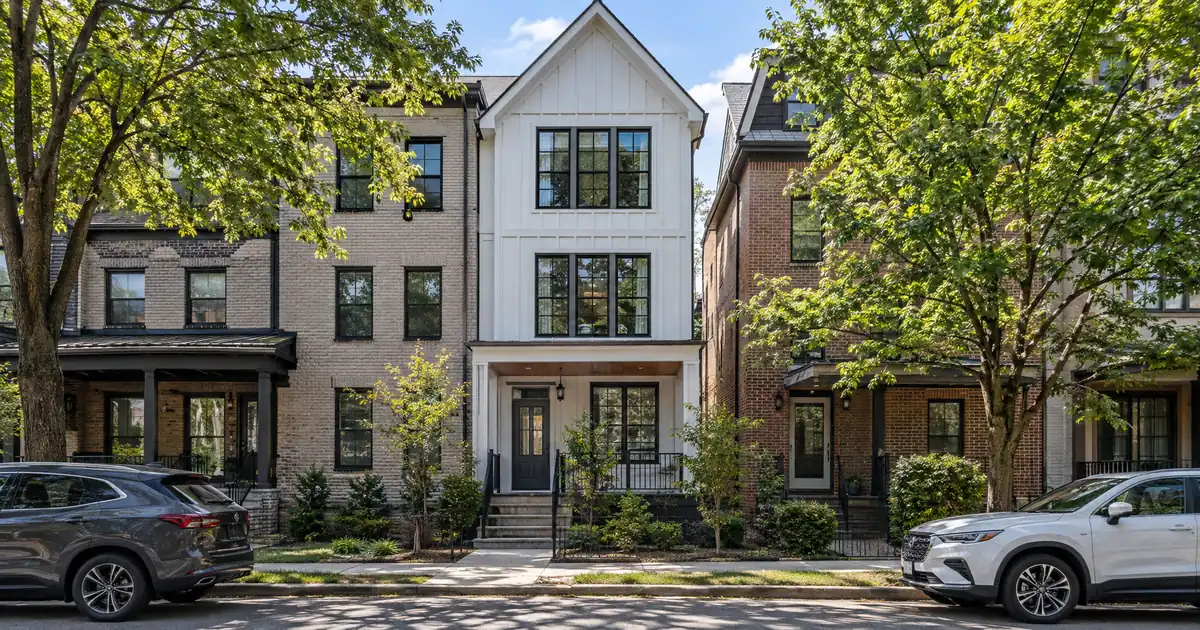
Redfin puts Nashville’s median sale price at $480K, or $275 per square foot. Zillow’s home value index lands lower, at $434,068, on a different methodology. Neither number describes the duplex an investor bought in a workable corridor several years ago. That owner is sitting on a different number, and a DSCR cash-out refinance exists to turn it into capital.
Lendmire (NMLS# 2371349) is a mortgage brokerage that helps Nashville, Tennessee investors arrange DSCR financing across 41 markets, including Washington, D.C. This article covers the extraction side only: what the equity is worth, how seasoning and the loan-to-value ceiling shape it, and which Nashville corridors produce a refinance that still clears the coverage test.
DSCR Cash-Out Calculator
Run the cash-out numbers in Nashville, TN
Rate source: Freddie Mac 30-yr average via FRED® — Federal Reserve Bank of St. Louis · effective Sep 24, 2026
Prefilled with starting assumptions — enter your property’s value, balance, taxes, and insurance for a more accurate picture.
Program parameters update from Lendmire’s centralized guideline source. Taxes and insurance are editable estimates.
As of Sep 24, 2026 · General Freddie Mac market benchmark, not a Lendmire loan offer. Property value, balance, taxes, and insurance are editable estimates. Maximum loan-to-value varies by lender, program, property type, and seasoning. Not a Loan Estimate, approval, or commitment to lend. Program availability and eligibility are subject to lender guidelines, credit approval, property review, and underwriting.
Key Takeaways:
A DSCR cash-out refinance in Nashville, Tennessee is underwritten primarily on the property’s rental income measured against its full monthly obligation, so the question is whether a corridor’s rents kept pace with its appraisals. Where values ran ahead of leases, proceeds and coverage pull in opposite directions.
- East Nashville and Wedgewood-Houston hold the banked equity. Coverage is the constraint.
- Antioch and Donelson product models near 1.2x including taxes and insurance.
- Two-to-four unit refinances typically cap below the 75 percent single-family ceiling.
- Downtown lease-up risk makes high-rise rent assumptions a weak base for a refinance.
Nashville Market Snapshot
A quick read on the Nashville investor landscape — figures come from the cited sources below. Confirm current property-level numbers before underwriting.
| Metric | Detail |
|---|---|
| Home prices | $480K median (Redfin Nashville Housing Market) |
| Typical rents | $1,358 median (Apartment List Nashville Rent) |
| Cap rates | 8.27% cap rate (Redfin East Nashville) |
| Vacancy | Overall 8.5% (NorthMarq Nashville Multifamily) |
East Nashville: Where the Equity Sits
East Nashville is the clearest cash-out candidate in the city. Redfin’s East Nashville data shows a median sale price of $567K and $350 per square foot. The median is down 5.5 percent year over year, while price per square foot is up 0.6 percent. Flat pricing today says little about the basis of an owner who bought into the duplex and fourplex stock years ago. That owner’s gain was banked before the plateau.
The product matters as much as the location. East Nashville’s small multifamily stock lets stacked rents carry a larger loan than a single-family house would. A four-unit package in the Inglewood pocket, per a Redfin cap-rate listing, performs at roughly a 5 percent cap rate. Three of the four units rent below market, and light updates could lift the cap rate to about 7 percent. The refinance logic follows: buy at 5, season the leases, refinance closer to 7.
Here’s the catch. A refinance sized on appraised value is only as good as the rent roll that supports it. Below-market leases lift the upside but depress today’s coverage number. An investor who refinances before repricing the units borrows against value the rents haven’t yet earned.
Seasoning, the Ceiling and What Proceeds Actually Are
Cash-out proceeds are a residual. They are what remains of the allowed loan-to-value after the existing balance, closing costs and reserves. The mechanics are short.
- Seasoning: roughly six months of ownership, measured from title recording.
- Ceiling: 75 percent LTV on cash-out, a hard cap. The 80 percent figure belongs to purchases and does not carry over.
- Property type: 2-4 unit refinances typically run about five points lower, near 70 percent, than single-family. Model that haircut before sizing a duplex or fourplex refinance.
- Coverage: most standard programs are built around a 1.00x benchmark, meaning rent used for lender review against full PITIA. Some lenders review lower ratios, but usually with lower leverage or stronger compensating factors.
- Credit and reserves: a 620 floor is common, with stronger tiers at 660, 680 and 700. Reserves typically run about six months of PITIA.
Equity available is never a guaranteed cash figure. It depends on rent used for lender review, the obligation and the ceiling, all subject to lender guidelines, credit approval and property review. The guide “What Is a DSCR Loan” covers the ratio in detail. Loan amounts on standard programs run up to $3,000,000.
Run the Numbers on a Donelson Duplex
Donelson shows what a refinance looks like when rents still cover the debt. A fully leased duplex was listed near $450,000 on the Redfin multi-family pages, grossing $3,100 a month ($1,550 per side). That works out to a gross cap rate of about 8.27 percent and a gross rent multiplier of 12.1.
Treat the following as a modeled assumption, not a market fact. Say the owner holds a comparable duplex appraised near that $450,000 list price, with a modest existing balance. At a 70 percent LTV the new loan sits about 25 points of value above the old balance, before payoff costs. Rent against full PITIA, with taxes and insurance included, models in the low-1.2 territory. That clears the 1.00x benchmark with cushion. A larger draw or a single-family structure would change the picture.
DSCR files in markets like this one typically look like a two-variable problem. The investor arrives focused on proceeds, while the lender’s review turns on rent-versus-obligation. The files that move smoothly usually show a current lease roll, a real insurance quote in hand, and an owner who sized the draw to the coverage number rather than the ceiling. The files that stall are often sized to the maximum and then re-cut when coverage falls short.
Antioch and Donelson four-bedroom and duplex product both model in the high-1.1 to roughly 1.2 range on this kind of full-obligation math. Madison clears 1.00x by a thinner margin. Germantown and 12 South run well below it. Those are appreciation corridors, not cash-flow corridors.
Where Do the Proceeds Go?
The proceeds work hardest when they fund the next acquisition at a better coverage ratio than the property being refinanced. The pattern Nashville supports is to pull equity from an appreciation-heavy asset, such as an East Nashville duplex with thin coverage, and redeploy it into workforce product.
Antioch is the obvious target. Run Home Rentals describes the workable investor product as three-bedroom, two-bath single-family homes in the $380K to $480K range, suited to family tenants. That sits at or below the citywide Redfin median, which is the point. Lower entry prices against workable rents are what produce coverage near 1.2x.
The rotation has a structural benefit. It converts a low-coverage asset’s trapped equity into a higher-coverage asset, and it does so without selling. The equity recycle pathway outlines how investors use that cycle.
Skip the Downtown Rent Roll
Downtown Nashville is the weakest place in the city to anchor a cash-out refinance. Redfin shows a downtown median sale price of $688K, up 11.7 percent year over year, at $643 per square foot. That is appreciation, but it arrives with lease-up risk. NorthMarq reports that metro absorption reached 8,700 units over the trailing twelve months, nearly matching new supply. Downtown is the exception, with deliveries still outpacing absorption and vacancy elevated at 9.4 percent. Metro-wide rents slipped for a second straight quarter, with softness concentrated in Class B and Class C assets.
A refinance built on downtown rent assumptions inherits that vacancy. Workforce Class B and C corridors outside downtown are nearer equilibrium and safer to underwrite.
Zoom out and the citywide picture is soft but not broken. Apartment List puts median rent at $1,358, down 4.0 percent year over year. RentCafe reports an average of $1,847 on a large-building basis, and 48 percent of households rent. The gap between the two rent figures reflects methodology. Underwrite against property-level comps, not either headline.
Wedgewood-Houston: Equity First, Coverage Later
Wedgewood-Houston is the tension case. Benoit Properties describes the district as 60-70 percent through its gentrification arc, with the 18-acre Wedgewood Village mixed-use project underway. Oak Street Real Estate Group cites new-construction one-bedroom rents from $1,800 to over $2,500.
Those are new-building rents. The older duplex and fourplex stock nearby, including the adjoining 8th Avenue South and Edgehill corridor, is where legacy owners have built their equity. Those owners have the most to extract and the thinnest coverage to work with. Where values have risen faster than rents, an interest-only DSCR structure can move a cash-flow-neutral property toward positive coverage. That is a structure a lender would review, not a promise.
This one is a genuine toss-up. Investors focused on equity growth can reasonably hold and refinance later. Investors who need the capital now may get more out of a refinance on a workable-coverage asset elsewhere.
Demand Anchors Behind the Rents
Tenant demand rests on employment, not tourism. Vanderbilt University Medical Center and Vanderbilt University together employ about 50,000 people, per NASHtoday. HCA Healthcare runs its global headquarters from the Gulch. The Nashville Area Chamber of Commerce lists Vanderbilt at 13,575 students, Belmont at 8,803 and Tennessee State University at 8,198. Census Bureau estimates put the city at 721,074 residents.
Hospital, university and corporate payrolls support long-term leases. That matters for a lender reviewing a refinance, because lease length and stability shape how much weight a rent figure carries. Investors should confirm current local rules, taxes and insurance with qualified Nashville professionals before underwriting.
Investors working through a specific file can review Tennessee DSCR financing or request a scenario review. The team is also reachable at 828-256-2183.
DSCR vs. conventional financing
Two common ways to finance an investment property in Nashville, TN. They qualify you differently — here’s how investors weigh them.
Why investors choose it
- Qualifies on the property’s rental income — no personal tax returns, W-2s, or pay stubs needed to document income.
- No personal debt-to-income ceiling to clear, so existing mortgages and obligations don’t cap your borrowing the same way.
- Can be closed in an LLC, keeping the property inside a business entity.
- Built for scaling — not held to the limit on number of financed properties that conventional financing applies.
- Underwriting centers on the deal: generally qualifies when the rent covers the payment, a 1.00x coverage ratio being a common baseline (confirmed in underwriting).
- Designed specifically for investment property, including long-term and, where the program allows, short-term rentals.
Where it’s strong
- Often the lowest ongoing financing cost for a buyer who fully qualifies on personal income — a fit for a first property or a cost-first purchase.
Trade-offs for investors
- Requires full personal income documentation and must fit within a debt-to-income limit — salary, existing debts, and other mortgages all count.
- Typically held in your personal name rather than a business entity.
- Caps how many financed properties you can carry, which can become a ceiling as a portfolio grows.
- Evaluates you as a borrower as much as the property, which usually means more paperwork.
How investors usually choose: a first or single property often optimizes for the lowest financing cost; portfolio builders often optimize for leverage, vesting in an LLC, and scaling past conventional caps. The right answer depends on your goals, the property, and current guidelines — both paths run through select lenders in Lendmire’s wholesale network, with eligibility and terms confirmed in underwriting.
Frequently Asked Questions
How do you qualify for a DSCR cash-out refinance in Nashville, Tennessee?
Qualification centers on the property’s rent used for program review against its full monthly obligation, with 1.00x a common benchmark. Lenders also review credit, typically with a 620 floor, about six months of ownership from title recording and roughly six months of PITIA in reserves. The 75 percent LTV ceiling caps the draw. All of this is subject to lender guidelines and property review.
What are the requirements for an investment property refinance in Nashville, Tennessee?
Eligible property types generally include single-family homes and 2-4 unit residential, which covers much of East Nashville’s small multifamily stock. Loan sizes run up to $3,000,000 on standard programs. Manufactured homes, log homes and barndominiums fall outside these programs. A 2-4 unit refinance typically carries a lower LTV ceiling than single-family.
Is East Nashville or Antioch better for a cash-out refinance?
They do different jobs. East Nashville duplexes and fourplexes hold the larger banked equity but usually run thinner coverage. Antioch and Donelson product models stronger, near 1.2x including taxes and insurance, but holds less accumulated appreciation. Many investors pull from the first and redeploy into the second.
Does Nashville’s softer rent trend affect a refinance?
Yes, because the eligibility reviews current rent, not peak rent. Apartment List shows median rent down 4.0 percent year over year, and NorthMarq reports softness concentrated in Class B and Class C assets. An owner whose leases were signed at higher levels should expect the rent used for the lender’s review to reflect today’s market.
How does Lendmire arrange DSCR loans, and how is eligibility reviewed, for investors in Tennessee?
Lendmire is a mortgage broker arranging DSCR investor loans through wholesale channels. A key feature is that eligibility is generally reviewed around the property’s rental income rather than personal income documentation. LLC-titled borrowers may be eligible, subject to lender program eligibility.
About Lendmire
Lendmire (NMLS# 2371349) is a DSCR-focused mortgage broker that helps arrange investor financing across 41 markets, including Washington, D.C., through wholesale and investor-lending channels. DSCR eligibility is generally reviewed by the lender on the property’s rental income rather than personal income documentation, subject to lender guidelines. That suits self-employed investors, LLC operators and portfolios above four financed properties. Scotsman Guide named Lendmire a Top Mortgage Workplace in both 2025 and 2026.
The biggest blind spot for a Nashville cash-out borrower is the appraisal-and-rent gap. Zillow’s index shows average values down 3.0 percent year over year, and median rent is down 4.0 percent. A refinance sized on last year’s value and last year’s leases can land short when both inputs have slipped.
Get Started
Ready to find the right loan for you?
In about 30 seconds you can review financing options available for your investment property. No commitment required.
Informational only. Not a Loan Estimate, approval, or commitment to lend. Program availability and eligibility are subject to lender guidelines, credit approval, property review, and underwriting.
References
1. Redfin
5. NorthMarq
8. RentCafe
10. Oak Street Real Estate Group
11. NASHtoday
12. Nashville Area Chamber of Commerce
13. Census Bureau
14. 2025
15. 2026
This article is part of Lendmire’s investment property cash-out refinance program — full qualification details, guidelines, and scenarios live on the program page.
Related reading: Luxury Rental DSCR Loans In Nashville: What The Rent Must Cover · DSCR Cash Out Refinance in Gallatin, Tennessee: The 2026 DSCR Financing Guide to Nashville Pike · DSCR Investment Property Loans in Nashville, IN: The 2026 DSCR Guide to Brown County State Park
Guides: Investment Property Cash-Out Refinance in Nashville, TN · Investment Property Cash-Out Refinance in Tennessee
Brandon Miller
Founder & CEO, Mortgage Loan Originator, Lendmire LLC
- Mortgage Loan Originator · NMLS# 1129696 · Verify on NMLS Consumer Access
- North Carolina Real Estate Broker · License# 343312 · Verify on NCREC
- North Carolina Insurance Producer · License# 19053198 · Property, Casualty, Life, Health · Verify on NAIC SBS
- Lendmire LLC · Firm NMLS# 2371349 · Verify firm licensure
Legal disclosures. Lendmire (NMLS# 2371349) is a state-licensed mortgage brokerage that arranges financing through wholesale lender relationships. Lendmire is not a direct lender, depository institution, or registered financial advisor. The discussion above is general informational content about real estate financing — it is not financial, legal, or tax advice, and readers should consult licensed professionals for guidance on their individual circumstances. Loan inquiries are subject to lender underwriting; this article does not represent a commitment to lend. Loan terms, rates, and qualification standards vary by borrower, property, and state, and are subject to change at any time. Equal Housing Opportunity. NMLS Consumer Access: nmlsconsumeraccess.org.