
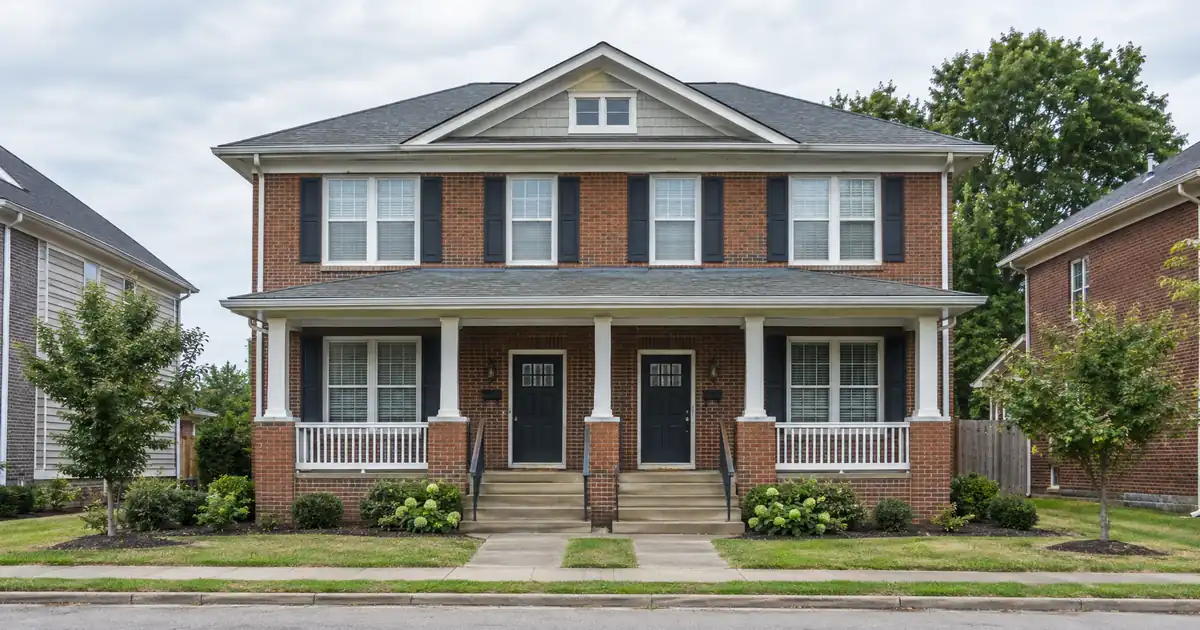
The cash-out refinance on a small-market rental usually breaks at the appraisal, not at the loan. Thin comps, sources that disagree by tens of thousands of dollars, and a seller-era purchase price that may not hold up all land on the investor at once. Paducah has all three. The city runs about 27,000 residents, so the sales sample is small and the price data is noisy.
Paducah, Kentucky rental property investors can tap DSCR programs that Lendmire (NMLS# 2371349) arranges, available across 41 markets, including Washington, D.C. This article stays on the equity side of the deal: what the appraiser is likely to see, what the rents will carry, and which local signals matter over the next 6-24 months.
DSCR Cash-Out Calculator
Run the cash-out numbers in Paducah, KY
Rate source: Freddie Mac 30-yr average via FRED® — Federal Reserve Bank of St. Louis · effective Oct 1, 2026
Prefilled with starting assumptions — enter your property’s value, balance, taxes, and insurance for a more accurate picture.
Program parameters update from Lendmire’s centralized guideline source. Taxes and insurance are editable estimates.
As of Oct 1, 2026 · General Freddie Mac market benchmark, not a Lendmire loan offer. Property value, balance, taxes, and insurance are editable estimates. Maximum loan-to-value varies by lender, program, property type, and seasoning. Not a Loan Estimate, approval, or commitment to lend. Program availability and eligibility are subject to lender guidelines, credit approval, property review, and underwriting.
The Short Version:
A DSCR cash-out refinance in Paducah, Kentucky is underwritten primarily on the property’s rental income measured against its full monthly obligation, with proceeds limited by a 75% LTV ceiling. Seasoning, reserves, and credit tiers apply, all subject to lender guidelines. Zillow’s observed rent index of $1,255 a month sets the benchmark.
- Price sources range from $139K to $232K, so appraisal risk is the main variable.
- Duplexes and small conversions make up about 15% of units, per NeighborhoodScout.
- Cash-out is capped at 75% LTV, with about 6 months of seasoning from title recording.
- Plan proceeds from today’s comps and rents, not appreciation.
- Nuclear-site projects are announced, not built. Treat them as upside, not underwriting.
- Every figure here varies by lender and program — guidelines, property type, leverage, and credit profile all apply.
Paducah Market Snapshot
A quick read on the Paducah investor landscape — figures come from the cited sources below. Confirm current property-level numbers before underwriting.
| Metric | Detail |
|---|---|
| Home prices | $290K median (Redfin multi-family listings) |
| Employment | About 1,300 employees (Baptist Health Paducah) |
What Does the Appraiser Actually See in Paducah?
The appraiser sees a flat-to-slow market with unusually inconsistent data. Zillow puts its modeled home value index at $184,557, up 6.7% over the past year. Redfin shows a January median sale price of $139K, down 26.8%, but that rests on only 21 closed sales, so ignore the swing. NeighborhoodScout reads $152,908 with a trailing 12-month change of about -1.4%, against a 10-year average of 4.81% a year. List-price trackers show the median asking price softening, with Movoto down 3% year over year in its citywide read. Final terms depend on lender guidelines, property type, leverage, and the borrower’s complete credit picture.
The honest summary: values are moving sideways, and the spread between sources is wider than any one appreciation figure. Don’t underwrite a cash-out on a hoped-for bump. Base proceeds on what recent closed comps support today, and treat any renovation-and-hold appreciation as a bonus if it shows up.
That matters because 75% of value is a ceiling, not a promise. Picture an investor whose payoff sits around 50% of a conservative appraised value. That leaves an usable gap, but a 10% haircut on the appraisal shrinks it fast. Equity available depends on rent used for lender review, full PITIA, reserves, and the LTV cap.
The Rent Side: Where Coverage Comes From
Rents in Paducah are modest but steady. Zillow’s observed rent index is $1,255, while the Census-based median is $817, per City-Stats. The gap reflects older, cheaper stock in the Census figure against current asking rents. Apartment Finder shows average rents of $1,014 for a two-bedroom and $1,335 for a three-bedroom. Apartments.com puts one-bedrooms near $896, up 3.1% annually. Rent growth runs roughly 2-3% depending on the source, with no reliable vacancy rate to lean on.
Run the numbers on a modeled pair, using Zillow’s value and rent index. That implies a gross rent-to-price near 0.68% a month, an illustrative figure computed from Zillow data. At 75% LTV, with taxes and insurance included at typical Kentucky averages, coverage lands around 1.1x. It clears the 1.00 baseline, but with little cushion. These specifics are subject to lender guidelines and a full review of property, leverage, and credit.
Now take a small three-bedroom house with an asking rent near $1,400, per Rent.com, against a modeled value near the NeighborhoodScout median. Same assumptions, and coverage lands around 1.5x, rounded down. The takeaway: inexpensive three-bedroom houses with $1,300-$1,400 rents are the workforce benchmark. The $2,000-plus asking rents on larger updated houses are worth verifying against closed leases before they carry a file.
Review details sit with the lender. The 1.00 baseline is common because rent covers the obligation at that level, but exact eligibility depends on credit, reserves, and property review. Lendmire’s DSCR guide covers the mechanics.
Duplexes and the Downtown Fourplex
Small multifamily is the most plausible income-stacking play in Paducah, and also the hardest to appraise. About 15% of the city’s housing units are duplexes or small conversions, which is a meaningful stock for a market this size. Inventory is thin, though. Homes.com shows 8 multifamily listings priced from $92,000 to $799,000, and Redfin shows 12 at a median list price of $290K.
One downtown fourplex listing shows four units generating $3,600 a month in total. That is about $900 per unit, with a mix of two- and three-bedrooms. Four rent checks share one obligation, so a vacant unit costs about 25% of income, where a single-family vacancy costs all of it. Lenders’ coverage math reflects that difference. Treat it as a single-listing data point, not a market rent.
Per-unit rents are low. Listings show a six-unit building with two-bedrooms at $715-$825, and a duplex with a three-bedroom side at $1,200 and a vacant one-bedroom side the seller says could fetch $750-$800. Underwrite the actual rent roll. “Could rent for” is not a lease.
The catch is comps. With so few multifamily sales, an appraisal can come in light, and the haircut lands directly on cash-out proceeds. Build in room for it. Buildings with five or more units tend to drift toward commercial DSCR territory, which is a different file.
Neighborhood Notes (And a Caveat)
No reliable per-neighborhood price or rent source exists for Paducah, so this section is qualitative. Anyone claiming a street-level ranking without comps is guessing. Pull comps by ZIP (42001 and 42003) and by street.
Lower Town is the character play. The City of Paducah notes its National Register listing in 1982, and the Artist Relocation Program drove its revival. Demand comes from creatives and tourism-adjacent workers. Victorian-era buildings mean rehab costs, unusual layouts, and appraisal comps that don’t match the house next door. Cash-out here needs a careful appraisal. Skip it if you want a simple file.
Downtown carries the fourplex and small-building stock, near the quilt museum, the Carson Center, and the riverfront murals. Walkable services help tenant retention, and the building types fit income stacking.
Lone Oak, Olivet, and Reidland to the west and southwest sit near I-24 and the Mercy Health – Lourdes Hospital address on Lone Oak Road. Ranch homes and newer townhomes dominate. For workforce three-bedrooms with hospital-adjacent demand, this is the corridor to price first.
Southside needs its own warning. A 48-unit, $12 million project is moving forward there, per WKMS, plus new for-sale homes, new apartments near the Kentucky Oaks Mall corridor, and a planning approval of 196 multifamily units in an earlier year. Public investment and walkable services help long-term demand, but new competing supply is the reason to underwrite Southside rents conservatively. If you hold there, refinance on today’s rent roll, not next year’s hope.
The Demand Floor
Paducah’s tenant base is anchored by healthcare and education, not by a big residential university. Data USA shows health care and social assistance as the largest resident sector at 2,343 workers, followed by retail at 1,920 and educational services at 1,399. Baptist Health Paducah employs about 1,300 and runs a 337-bed hospital that serves four states, and Mercy Health – Lourdes is the second hospital. West Kentucky Community & Technical College reported a fall headcount of 5,384, though student demand is mostly commuter-based.
The population base is small but regional. The city sits near 27,000 residents and the metro near 100,000, per Census Bureau QuickFacts. Local officials describe a housing shortage. A Census Bureau study cited by the Paducah Sun projects 5,993 more McCracken County residents by 2040 and a need for 2,436 housing units. That is a projection, not a measured vacancy rate. It still supports steady long-term rental demand, which helps a cash-out file.
Working DSCR brokers see a recurring pattern in small river-town markets like this one: the rent side of the file is clean, and the value side is where it stalls. Coverage clears easily on modest-priced houses, and then a thin-comp appraisal lands low and the proceeds shrink. The files that go smoothly usually come with a clear rent roll, recent comps already pulled, and conservative expectations on value.
The Nuclear Wildcard
Skip the “boom town” narrative, but don’t ignore the pipeline. Paducah’s old DOE enrichment site is attracting projects. The City of Paducah announced that General Matter plans a $1.5 billion uranium enrichment facility, with about 140 full-time jobs and roughly $71 million a year in economic benefit. Greater Paducah Economic Development has also announced a planned $1.8 billion Global Laser Enrichment facility, and its news page says the site is one of four DOE finalists for AI data center and energy infrastructure.
These are announced or planned projects, not guaranteed rental demand. Treat them as a potential tailwind for appraisals and tenant pools if construction and hiring materialize, and never as underwriting input. A cash-out sized to today’s rents works whether the projects happen or not. That is the point.
What to Watch Over the Next 6-24 Months
Four indicators matter more than any single price series:
- Closed comps, not list prices. List-price trackers have shown softening, so watch whether closings follow.
- Southside lease-up. If new apartments fill, the supply risk is overstated. If concessions appear, tighten Southside assumptions.
- Project milestones at the DOE site. Hiring announcements and construction starts carry more weight than press releases.
- Multifamily sale volume. More closed duplex and fourplex sales means better appraisal support for the next investor.
The pattern that could break: a stretch of falling closed prices on top of rising new supply. That combination would squeeze cash-out proceeds while leaving coverage intact, a file that qualifies but pays out less than planned.
Seasoning, LTV, and Recycling the Proceeds
Cash-out refinances under these programs typically cap at 75% LTV, with about 6 months of ownership measured from title recording. Minimum coverage is typically 1.00 on rent used for lender review against PITIA, credit tiers start at a 620 floor, and reserves run about 6 months of PITIA on most files. Loan amounts go up to $3,000,000 on standard programs, with smaller balances routed through select lenders in the network. Everything here is subject to lender guidelines, credit approval, and property review.
Manufactured homes, log homes, and barndominiums fall outside these DSCR programs. Paducah has rural-edge stock where that matters, so confirm construction type before planning a pull.
The equity recycle works best when proceeds fund a next purchase with its own coverage above the baseline. The equity recycle pathway and the refinance pathway for investor properties show how those pieces connect, and the side-by-side comparison covers why many investors use this route instead of conventional. For Kentucky specifics, see Kentucky DSCR financing.
Verify current local rental rules, taxes, and insurance with qualified local professionals before sizing any deal. To start a scenario, run the numbers with Lendmire or call 828-256-2183.
Frequently Asked Questions
How do you qualify for a DSCR cash-out refinance in Paducah, Kentucky?
The property has to show rent that covers its full monthly obligation, typically at a 1.00 baseline or better, within the 75% LTV ceiling. Lenders also review credit (floor near 620), about 6 months of reserves, and seasoning from title recording. Qualification rests on the property’s income rather than personal income documentation, subject to lender guidelines and approval.
DSCR vs. conventional financing
There are two common ways to finance an investment property in Paducah, KY, and they qualify you differently — here’s how investors weigh them.
Why investors choose it
- Qualifies on the property’s rental income — no personal tax returns, W-2s, or pay stubs needed to document income.
- No personal debt-to-income ceiling to clear, so existing mortgages and obligations don’t cap your borrowing the same way.
- Can be closed in an LLC, keeping the property inside a business entity.
- Built for scaling — not held to the limit on number of financed properties that conventional financing applies.
- Underwriting centers on the deal: generally qualifies when the rent covers the payment, a 1.00x coverage ratio being a common baseline (confirmed in underwriting).
- Designed specifically for investment property, including long-term and, where the program allows, short-term rentals.
Where it’s strong
- Often the lowest ongoing financing cost for a buyer who fully qualifies on personal income — a fit for a first property or a cost-first purchase.
Trade-offs for investors
- Requires full personal income documentation and must fit within a debt-to-income limit — salary, existing debts, and other mortgages all count.
- Typically held in your personal name rather than a business entity.
- Caps how many financed properties you can carry, which can become a ceiling as a portfolio grows.
- Evaluates you as a borrower as much as the property, which usually means more paperwork.
How investors usually choose: a first or single property often optimizes for the lowest financing cost; portfolio builders often optimize for leverage, vesting in an LLC, and scaling past conventional caps. The right answer depends on your goals, the property, and current guidelines — both paths run through select lenders in Lendmire’s wholesale network, with eligibility and terms confirmed in underwriting.
What are the requirements for an investment property loan refinance in Paducah, Kentucky?
Expect an appraisal, a lease or market rent opinion, proof of reserves, and entity documents if an LLC holds title. Paducah’s thin comp pool makes the appraisal the step to prepare for most carefully. Exact requirements vary by lender and loan scenario.
Will the nuclear-site projects raise my Paducah rental’s appraisal?
Not by themselves. Appraisers rely on closed comparable sales, and the General Matter and Global Laser Enrichment projects are announced or planned, not built. If hiring starts, rents and sales could follow. Plan proceeds on today’s comps.
Does a duplex or fourplex work better than a single-family for cash-out in Paducah?
Multi-unit properties spread vacancy risk, since one empty unit in a fourplex costs about 25% of income instead of all of it. The tradeoff is appraisal difficulty: few multifamily sales mean fewer comps. Single-family three-bedrooms are easier to value but carry all-or-nothing vacancy exposure.
Can a LLC-owned Paducah rental be reviewed for DSCR financing?
Yes, subject to lender program eligibility. Lendmire arranges DSCR investor loans as a non-QM mortgage broker. Qualification centers on the property’s rental income, which suits LLC-held rentals and growing portfolios.
For current guidelines and terms, see Lendmire’s DSCR loan programs page.
One Thing to Do First
Before anything else, pull closed comps for your property in ZIP 42001 or 42003 and compare them against the list-price figures. In a market where sources disagree by $90,000, that comparison tells you more about your cash-out proceeds than any citywide median.
About Lendmire
Lendmire, NMLS# 2371349, is a mortgage brokerage focused on investor financing, arranging DSCR loans in 40 states plus Washington, D.C. — 41 markets total. Qualification is based on the property’s income rather than personal income documentation, subject to lender guidelines, which fits LLC-held rentals and scaling portfolios. The firm was recognized by Scotsman Guide as a 2026 Top Workplace, after being a 2025 Scotsman Guide Top Workplace, as covered in the 2026 industry recognition release.
Get Started
Ready to find the right loan for you?
In about 30 seconds you can review financing options available for your investment property. No commitment required.
Informational only. Not a Loan Estimate, approval, or commitment to lend. Program availability and eligibility are subject to lender guidelines, credit approval, property review, and underwriting.
References
1. city-stats.com — Kentucky Paducah
3. Redfin
5. Zillow
6. Redfin
7. Movoto
10. Rent.com
11. Homes.com
12. City of Paducah
13. WKMS
14. Data USA
15. West Kentucky Community & Technical College
17. Paducah Sun
18. City of Paducah
19. Greater Paducah Economic Development
20. recognized by Scotsman Guide as a 2026 Top Workplace
21. a 2025 Scotsman Guide Top Workplace
22. EIN Presswire — Lendmire Recognized as a 2026 Top Workplace by Scotsman Guide
This article is part of Lendmire’s investment property cash-out refinance program — full qualification details, guidelines, and scenarios live on the program page.
Related reading: Luxury Rental DSCR Loans In New Jersey · Jersey Shore Vacation Rental Loans: DSCR Financing In Ocean City, Cape May And Long Beach Island · DSCR Cash-out Refinance In New Jersey: Pulling Equity From A Rental
Guides: Investment Property Cash-Out Refinance in Paducah, KY · Investment Property Cash-Out Refinance in Kentucky
Brandon Miller
Founder & CEO, Mortgage Loan Originator, Lendmire LLC
- Mortgage Loan Originator · NMLS# 1129696 · Verify on NMLS Consumer Access
- North Carolina Real Estate Broker · License# 343312 · Verify on NCREC
- North Carolina Insurance Producer · License# 19053198 · Property, Casualty, Life, Health · Verify on NAIC SBS
- Lendmire LLC · Firm NMLS# 2371349 · Verify firm licensure
Compliance and disclosures. Lendmire (NMLS# 2371349) is a licensed mortgage broker and is not a direct lender, depository institution, financial advisor, or tax professional. Content in this article is general market analysis and educational information — not financial, legal, or tax advice for any specific situation. Lendmire does not guarantee loan approval; every transaction is subject to underwriting by the funding lender. Mortgage pricing and loan program guidelines are subject to change at any time without notice and vary by borrower characteristics, property type, and state regulations. Lendmire complies with Equal Housing Opportunity. Licensure verification: NMLS Consumer Access.