
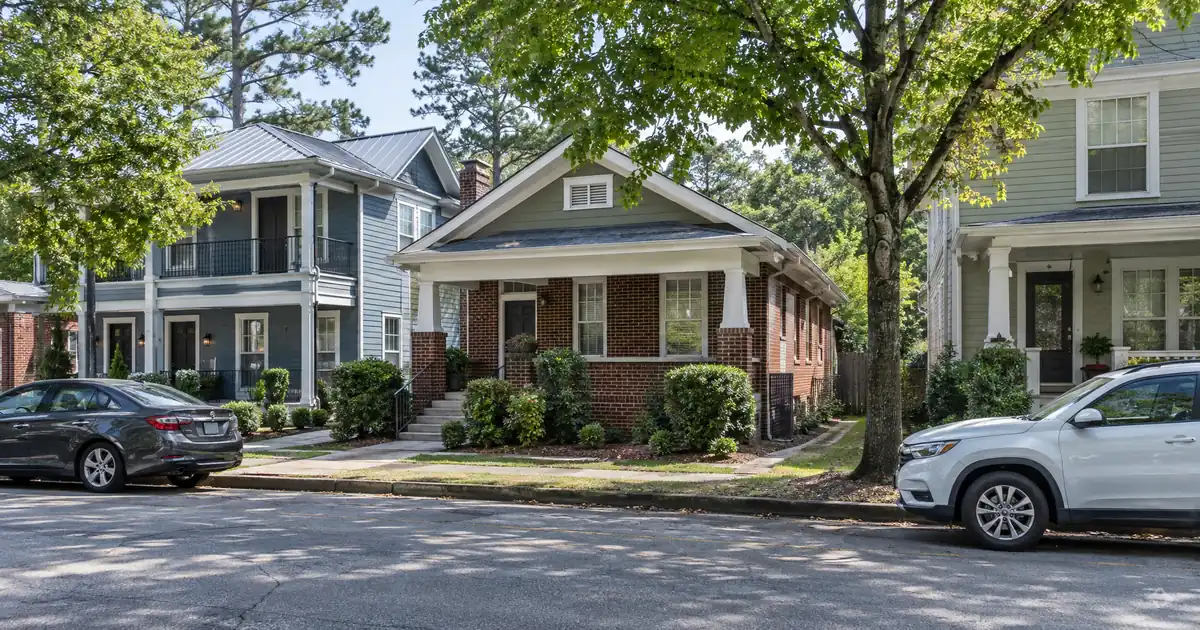
A rental on the Summerville Road corridor hits the coverage math like this. NeighborhoodScout models the submarket’s median real estate price at $136,586 and average rent at $1,111. Model a cash-out at 75 percent of that value, including taxes and insurance at Alabama-average loads, and the rent-to-debt ratio lands around 1.4x. Now swap in the citywide sale-price median and the same exercise on a blended-rent single-family home falls below 1.0x. Same city, same loan structure, two very different answers. Phenix City’s equity story is really a story about which properties can carry the debt once the appraisal comes in.
Lendmire (NMLS# 2371349) is a DSCR-focused mortgage broker, and it works with Phenix City, Alabama investors through a DSCR program footprint spanning 40 states plus Washington, D.C. The brokerage arranges these loans through wholesale channels; lenders review and approve each file.
DSCR Cash-Out Calculator
Run the cash-out numbers in Phenix City, AL
Rate source: Freddie Mac 30-yr average via FRED® — Federal Reserve Bank of St. Louis · effective Sep 24, 2026
Prefilled with starting assumptions — enter your property’s value, balance, taxes, and insurance for a more accurate picture.
Program parameters update from Lendmire’s centralized guideline source. Taxes and insurance are editable estimates.
As of Sep 24, 2026 · General Freddie Mac market benchmark, not a Lendmire loan offer. Property value, balance, taxes, and insurance are editable estimates. Maximum loan-to-value varies by lender, program, property type, and seasoning. Not a Loan Estimate, approval, or commitment to lend. Program availability and eligibility are subject to lender guidelines, credit approval, property review, and underwriting.
TL;DR: A cash-out refinance on a Phenix City, Alabama rental is underwritten primarily on the property’s rental income measured against its full monthly obligation, with borrowing capped by a 75 percent LTV ceiling and roughly six months of ownership, subject to lender guidelines.
- Older Summerville Road stock models around 1.4x; median-priced houses model below 1.0x.
- Duplexes stack income and clear coverage with room to spare.
- Sale prices have outrun rents, so the appraisal and the rent roll can disagree.
- Rents near Columbus-area employers are the most defensible underwriting.
Phenix City Market Snapshot
A quick read on the Phenix City investor landscape — figures come from the cited sources below. Confirm current property-level numbers before underwriting.
| Metric | Detail |
|---|---|
| Home prices | $170,300 home value (StateDemographics) |
| Recent appreciation | +16.1% yoy (Redfin) |
| Vacancy | 22.7% (NeighborhoodScout) |
Where the Equity Actually Sits
Phenix City’s equity sits in a price run-up that rents have not matched. Redfin shows a median sale price of $255,000, up 16.1 percent year over year, with homes going pending in about 21 days at roughly 1 percent under list. Movoto, by contrast, shows a median listing price near $261,000, down 1 percent. The sources measure different things, and the direction of the market depends on which one you read.
Rents tell a softer story. Zumper puts median rent at $1,080 and shows it down 11 percent over the trailing year. Zillow’s rental data shows an average of $1,295 across property types, with one-bedrooms at $847 and two-bedrooms at $925. The RentCafe figure of $1,174 covers only buildings with 50 or more units. Census-based aggregators run lower, near $926 to $967, and they lag.
For a refinance investor, this divergence matters in two ways. Owners who bought before the price run have real equity on paper. But a cash-out is sized by the lesser of what the appraisal supports at 75 percent LTV and what the rent can carry, so the rent side is the binding constraint on most single-family houses. Sold-price gains have outpaced rent growth, and no single source’s appreciation number should size a cash-out.
Coverage here is monthly rent divided by the full monthly obligation: principal, interest, taxes, insurance, and any HOA dues. Most standard DSCR programs are built around a 1.00x baseline because rent covers the payment at that level. Some lenders review lower ratios with compensating factors such as lower leverage, stronger reserves, or different pricing. Details are covered in the DSCR qualification mechanics.
Summerville Road: The Coverage Anchor
The Summerville Road corridor (ZIP 36867) is the best-documented submarket in Phenix City, and it is where the modeled numbers work best. NeighborhoodScout describes the stock as mostly small-to-medium single-family homes and small apartment buildings, with many residences built between 1940 and 1969. TopHap shows a typical corridor home built in 1950 with an automated valuation of $175,696, or about $110 per square foot. That is a valuation model, not a sale price.
Run the numbers on the modeled inputs: $1,111 rent against a $136,586 value. That is a rent-to-value ratio of roughly 0.81 percent monthly. At a 75 percent cash-out on a 30-year structure, with taxes and insurance included, coverage comes out around 1.4x. That is a modeled result built on third-party figures, not a quote.
Here’s the catch. NeighborhoodScout also reports a 22.7 percent vacancy figure for the area, which is a modeled number, but it hints at older, possibly stale stock. Underwrite from in-place leases and a fresh appraisal, not from the submarket average. A 1950s house with deferred maintenance can lease at the average and still appraise below it.
Worth thinking through: a Summerville Road owner with a paid-down house has the lowest-value asset here, so the absolute cash extracted is modest. The stronger play may be pulling smaller amounts repeatedly from several of these properties rather than chasing one large draw. That trades scale for coverage cushion. Investors weighing appreciation over cash flow could argue the other way.
Duplexes and Small Stacks: Where the Ratio Jumps
Income stacking is where Phenix City coverage stops being a struggle. A Redfin-listed duplex is marketed at $170,000 with two leased units at $850 and $725, or $1,575 a month combined. That is about 0.93 percent monthly gross rent-to-price. Modeled at 75 percent LTV with taxes and insurance included, coverage clears 1.5x comfortably. The listing agent quotes a cap rate of about 9.4 percent before vacancy, maintenance, management, and reserves. Treat that as a marketing claim; it looks high for that gross rent.
The property-type pattern matters more than the single listing. Homes.com shows a range of small multifamily stock: a renovated duplex with two units at $1,000 each, a 2008-built duplex a block and a half from Riverwalk access with 2BR/1BA sides, and a seven-unit lot with a 3/1 house, a quadplex of 1/1 units, and two 1/1 cottages. Redfin also shows a converted multifamily on Summerville Road. Asking prices for those were not captured, so no coverage math is attached.
The two risk profiles differ. Newer-build duplexes near the riverfront are cleaner collateral. Older converted houses need scrutiny on unit legality and separate metering before a lender will treat both units’ income as qualifying. Confirm that first, because it decides whether the rent roll counts at all.
Rentometer adds a useful wrinkle. It shows average rents of $965 for a one-bedroom, $1,010 for a two-bedroom, and $1,465 for a three-bedroom, with three-bedroom and larger houses running $1,400 to $2,100. The jump from 2BR to 3BR is about $455, versus roughly $45 from 1BR to 2BR. Bedroom count is the biggest rent lever in the market. A duplex of three-bedroom units, or a single three-bedroom house, earns far more per added room than a two-bedroom does. Sample sizes are unknown, so local comps decide.
The Median House Problem (What’s the Catch on Sub-1.00 Files?)
The median-priced single-family rental is the file most likely to disappoint. Blend Redfin’s $255,000 median with Zillow’s $1,295 average rent and the monthly rent-to-price ratio is about 0.5 percent. Modeled at 75 percent LTV including taxes and insurance, that lands near 0.9x, below the standard 1.00x baseline. Both inputs blend property types, so treat 0.5 percent as a rough ceiling for the comparison.
The gap between sources is instructive. Using the Census-derived owner-estimated median home value of $170,300 (StateDemographics, reprinting ACS data) against the same $1,295 rent, modeled coverage would sit in the low-1.3 range. Neither figure is wrong. An owner who bought years ago at a lower basis holds a house the market values at the Redfin number, and the refinance appraisal will reflect that market, not the owner’s memory.
A three-bedroom at Rentometer’s $1,465 average against a $255,000 value models right around 1.0x, which leaves very little cushion. On a property that only reaches that level, a lender reviewing the file will look closely at the appraisal, reserves, and credit tier.
When a scenario falls below 1.00x on long-term rent, the paths a lender may review include:
- A lower LTV, which shrinks the debt against the same rent. At about 65 percent, the median-house model improves to roughly 1.0x.
- A sub-1.00 program or a no-ratio structure, which typically carries stronger compensating factors and different pricing.
- An interest-only structure, which changes the monthly obligation the ratio is measured against.
Whether any of these apply is subject to lender guidelines, credit approval, and property review. For the mechanics of how leverage and coverage interact on cash-out files, see DSCR cash-out refi mechanics.
A Two-State Tenant Base, One Alabama Address
Phenix City sits across the Chattahoochee from Columbus, Georgia, and the two cities function as one interconnected metro, per Apartments.com’s area description. The city even runs on Eastern Time, unlike the rest of Alabama. The property, taxes, and lending sit in Alabama, but a large share of the demand comes from Georgia-side employers.
The City of Phenix City’s economic development page lists the regional anchors, though the page is dated and its counts are best read as a rough ranking. Fort Benning tops the list at a historically cited 42,000, sitting about 12 to 13 miles from Summerville Road. Beyond it come Global Payments (formerly TSYS) and Piedmont Columbus Regional at roughly 4,000 each, Aflac near 3,700, and St. Francis Hospital at about 2,000. Piedmont is the nearest hospital system, and Columbus State University sits across the river. Troy University operates a Phenix City campus; no enrollment figure was verified for either school.
The Army’s own newcomer guidance has warned of on-post wait times of up to six months. Relocation guides describe most personnel living off-post, with Phenix City and neighboring Fort Mitchell offering lower housing costs than Columbus. That is a demand pattern tied to employment, not to any tenant characteristic, and it supports long-term leases and steady absorption across the metro’s workforce housing.
The concentration cuts both ways. A tenant base tied to a handful of large institutions is durable, but a workforce disruption at one of them lands on the whole metro at once. A refinance investor extracting equity today is betting those anchors hold through the loan term.
Riverfront and Lakewood: The Appreciation Side
Downtown Phenix City is the redevelopment story. The city’s Riverwalk page describes a 1.21-mile structure on the western bank of the river and an open-air amphitheater seating 3,000. Alabama Recreation Trails calls the adjacent whitewater course the longest urban whitewater course in the world. Business View Magazine has reported $40 million to $50 million of riverfront construction, including a Troy University campus and a hotel and conference center. That coverage is dated.
No rent or price data was found for the downtown core, so no coverage math is attached. Qualitatively, it is a walkable, amenity-led area with higher appreciation potential than Summerville Road, and likely thinner rent-to-value. The Lakewood area and the newer-construction communities off Summerville Road follow the same pattern: suburban, newer stock, and pricing that rewards appreciation more than cash flow.
Picture an investor holding a newer-build home near the riverfront that appraised well above purchase. The equity is real, but the rent likely covers less of the debt than a Summerville Road house does. That owner may need a lower LTV to clear coverage, which means the cash-out is smaller than the equity suggests. The equity is there. The constraint is the ratio.
What the 75 Percent Ceiling Really Means
Cash-out proceeds are set by the tightest of several constraints, and the LTV cap is only the first. On most files, the program parameters look like this:
| Factor | Typical guideline |
|---|---|
| Cash-out LTV ceiling | 75 percent |
| Seasoning | About 6 months from title recording |
| Baseline coverage | 1.00x (rent vs. full PITIA) |
| Credit tiers | 620 floor; 660, 680, 700 tiers |
| Reserves | About 6 months PITIA |
Loan amounts run up to $3,000,000 on standard programs, and smaller balances route through select lenders in the network. These figures reflect a wholesale-network guideline set, not a commitment. Equity available depends on rent used for lender review, the monthly obligation, reserves, and the 75 percent ceiling, and it is not a guaranteed cash figure.
Working DSCR brokers see a recurring pattern in two-state military-adjacent markets like this one: the appraisal and the rent roll tell different stories. Owners who bought early expect a large draw, then find the rent carries only a fraction of it. The files that go smoothly start with the coverage calculation, not the equity estimate, and they pair it with closed comps in the subject’s own ZIP rather than a citywide median. Zillow, for instance, puts ZIP 36870 at $247,130, versus Redfin’s $255,000 citywide.
For LLC-held properties, closings are supported subject to lender program eligibility. For how cash-out refinancing compares with conventional alternatives, see the guide “Where DSCR and Conventional Diverge”. Investors can request a quote or call 828-256-2183 to run a specific property.
The Next 6 to 24 Months: What Could Break the Pattern
Three indicators decide whether today’s cash-out math holds or gets harder.
DSCR vs. conventional financing
Two common ways to finance an investment property in Phenix City, AL. They qualify you differently — here’s how investors weigh them.
Why investors choose it
- Qualifies on the property’s rental income — no personal tax returns, W-2s, or pay stubs needed to document income.
- No personal debt-to-income ceiling to clear, so existing mortgages and obligations don’t cap your borrowing the same way.
- Can be closed in an LLC, keeping the property inside a business entity.
- Built for scaling — not held to the limit on number of financed properties that conventional financing applies.
- Underwriting centers on the deal: generally qualifies when the rent covers the payment, a 1.00x coverage ratio being a common baseline (confirmed in underwriting).
- Designed specifically for investment property, including long-term and, where the program allows, short-term rentals.
Where it’s strong
- Often the lowest ongoing financing cost for a buyer who fully qualifies on personal income — a fit for a first property or a cost-first purchase.
Trade-offs for investors
- Requires full personal income documentation and must fit within a debt-to-income limit — salary, existing debts, and other mortgages all count.
- Typically held in your personal name rather than a business entity.
- Caps how many financed properties you can carry, which can become a ceiling as a portfolio grows.
- Evaluates you as a borrower as much as the property, which usually means more paperwork.
How investors usually choose: a first or single property often optimizes for the lowest financing cost; portfolio builders often optimize for leverage, vesting in an LLC, and scaling past conventional caps. The right answer depends on your goals, the property, and current guidelines — both paths run through select lenders in Lendmire’s wholesale network, with eligibility and terms confirmed in underwriting.
Rent direction. Zumper shows rents falling while Zillow shows a gain of $120. If rents keep softening while prices hold, coverage compresses on the median house first. Track closed lease comps, not asking rents.
Price momentum. Redfin shows a sale-price surge; Movoto shows listings dipping. If the surge is not sustained, a refinance appraisal that would have come in high may come in flat. Owners planning a cash-out for the next deal should not wait on appreciation to fill a gap that the rent doesn’t already cover.
New supply. NewHomeSource lists 13 communities in the Phenix City area, and the Summerfield and Lakewood addresses suggest active building. New stock competes for renters at the top of the rent band, which can pressure rents on older houses. No permit counts were found, so the size of that effect is unknown.
For seasoning, the six-month clock runs from title recording, so a recent purchase timed against a planned refinance should be mapped early. And as a reminder, verify current local rental rules, taxes, and insurance with qualified local professionals. Phenix City straddles Russell and Lee counties, so jurisdiction can vary by address. More on the state’s lending picture is at DSCR loans in Alabama.
Frequently Asked Questions
Does a Phenix City house need to appraise at the Redfin median to support a cash-out?
No. The appraiser values the specific property from closed comps, and the loan is sized at up to 75 percent of that value. Older stock on Summerville Road will appraise well below the citywide median, but modeled coverage is often stronger there because rent is a larger share of value.
Why does the same house model differently against Census values and Redfin values?
The Census-derived owner-estimated median of $170,300 is a self-reported value that lags, while Redfin’s $255,000 reflects recent sales. A house valued at either number carries the same rent, so coverage swings from the low-1.3 range to about 0.9x. The refinance appraisal will reflect market value, not owner estimates.
Can a duplex in Phenix City reach coverage that a single-family house can’t?
Often, yes. A listed duplex at $170,000 with $1,575 in combined rent models above 1.5x, while a median-priced house models near 0.9x. Both units must be legally separate and the leases documented. Older converted houses need extra scrutiny.
How does living across the river from Columbus affect a lender’s view?
The property, tax jurisdiction, and lending are in Alabama, but tenant demand ties to Georgia employers and the nearby Army installation. Lenders review the property’s rent and appraisal, so the employment anchors mainly support the durability of the rent roll rather than changing program terms.
What happens if rents are falling but prices are rising?
Coverage compresses even as equity grows. The usual response is a lower LTV, which shrinks the debt against the same rent, or a structure a lender may review with compensating factors. Eligibility depends on lender guidelines, credit approval, and property review.
Where the Asymmetric Opportunity Sits
The best mismatch between price and rent in Phenix City is small multifamily. Duplexes and three-to-four-unit properties trade at prices closer to single-family levels but carry income from two or more leases, which is why a listed duplex models above 1.5x while the median house sits below 1.0x. The second pocket is older, three-bedroom stock along Summerville Road, where the Rentometer premium of roughly $455 over a two-bedroom lands on a house valued near $136,586. That rent-to-value ratio, not the citywide median, is the number to underwrite against.
For current guidelines and terms, see Lendmire’s DSCR loan programs page.
About Lendmire
Lendmire (NMLS# 2371349) is a mortgage brokerage focused on DSCR investor financing, helping arrange programs through wholesale and investor-lending channels in 41 markets, including Washington, D.C. DSCR loans are evaluated by the lender on property cash flow rather than personal income, subject to lender guidelines, supporting LLC closings and accommodating investors with four or more financed properties. Scotsman Guide named Lendmire a Top Mortgage Workplace in both 2025 and 2026.
Get Started
Ready to find the right loan for you?
In about 30 seconds you can review financing options available for your investment property. No commitment required.
Informational only. Not a Loan Estimate, approval, or commitment to lend. Program availability and eligibility are subject to lender guidelines, credit approval, property review, and underwriting.
References
1. NeighborhoodScout – Summerville Road
2. StateDemographics – Phenix City
3. Redfin – Phenix City housing market
4. Zumper – Phenix City rent research
5. Zillow rental market trends
6. Redfin – Phenix City multi-family listings
7. Homes.com
9. Apartments.com’s area description
10. City of Phenix City – Major Employers
11. Piedmont
13. Troy University
14. City of Phenix City – Riverwalk
16. 2025
17. 2026
This article is part of Lendmire’s investment property cash-out refinance program — full qualification details, guidelines, and scenarios live on the program page.
Related reading: DSCR Cash Out Refinance for Phenix City Investment Property · DSCR Cash Out Refinance Homewood Alabama · Cash Out Refinance Investment Property Selma Alabama
Guides: Investment Property Cash-Out Refinance in Alabama
Brandon Miller
Founder & CEO, Mortgage Loan Originator, Lendmire LLC
- Mortgage Loan Originator · NMLS# 1129696 · Verify on NMLS Consumer Access
- North Carolina Real Estate Broker · License# 343312 · Verify on NCREC
- North Carolina Insurance Producer · License# 19053198 · Property, Casualty, Life, Health · Verify on NAIC SBS
- Lendmire LLC · Firm NMLS# 2371349 · Verify firm licensure
Legal disclosures. Lendmire (NMLS# 2371349) is a state-licensed mortgage brokerage that arranges financing through wholesale lender relationships. Lendmire is not a direct lender, depository institution, or registered financial advisor. The discussion above is general informational content about real estate financing — it is not financial, legal, or tax advice, and readers should consult licensed professionals for guidance on their individual circumstances. Loan inquiries are subject to lender underwriting; this article does not represent a commitment to lend. Loan terms, rates, and qualification standards vary by borrower, property, and state, and are subject to change at any time. Equal Housing Opportunity. NMLS Consumer Access: nmlsconsumeraccess.org.