
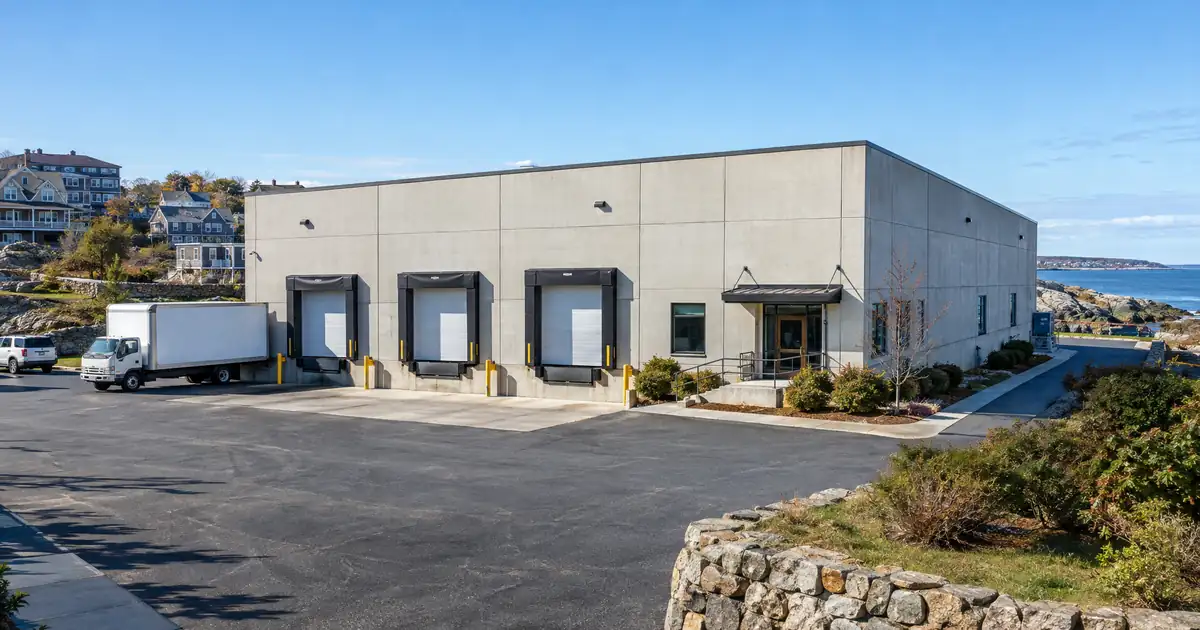
Picture an investor holding a small multi-unit building near Provincetown’s town center, bought several years ago and now appraising well above the purchase price. The equity is real. The rent roll, though, was set by year-round tenants paying what the local market bears. That mismatch between the value and the lease income decides how any cash-out refinance here gets built.
TL;DR: A DSCR cash-out refinance in Provincetown, Massachusetts suits investors with large equity in small multi-unit or mixed-use holdings who can accept thin or sub-1.00 long-term coverage, because the loan is underwritten primarily on the property’s rental income measured against its full monthly obligation, with leverage capped at 75 percent.
DSCR Cash-Out Calculator
Run the cash-out numbers in Provincetown, MA
Rate source: Freddie Mac 30-yr average via FRED® — Federal Reserve Bank of St. Louis · effective Sep 24, 2026
Prefilled with starting assumptions — enter your property’s value, balance, taxes, and insurance for a more accurate picture.
Program parameters update from Lendmire’s centralized guideline source. Taxes and insurance are editable estimates.
As of Sep 24, 2026 · General Freddie Mac market benchmark, not a Lendmire loan offer. Property value, balance, taxes, and insurance are editable estimates. Maximum loan-to-value varies by lender, program, property type, and seasoning. Not a Loan Estimate, approval, or commitment to lend. Program availability and eligibility are subject to lender guidelines, credit approval, property review, and underwriting.
- Zillow’s home value index sits at $924,274, up 4.0 percent.
- Dated market-rent benchmarks of $1,900 to $3,000 imply thin coverage at these prices.
- Cash-out leverage caps at 75 percent, with about six months of seasoning.
- Year-round rental scarcity supports tenant demand, but the appraisal carries the file.
The Appreciation Is Real. The Rent Isn’t.
Provincetown values and Provincetown rents belong to different economies. The appreciation story is easy to document, while the rent story is thin and has to be underwritten carefully.
Start with pricing, where the sources disagree. The Zillow Home Value Index, the canonical figure used here, is $924,274. Redfin shows a $877,000 median sale price, down 22.1 percent year over year, but that rests on only 7 sales. One month of trades in a town this small is noise. Movoto puts the median list price at $1.56 million, which reflects what sellers ask rather than what closes. Redfin also shows price per square foot up 7.8 percent and homes selling in 16 days against 48 a year earlier. Liquid enough, in other words, for an appraiser to find support.
Rents are a different matter. The town’s UMass Donahue Institute short-term rental study cites Year-Round Market-Rate Rental Housing Trust estimates of $1,900 for a one-bedroom, $2,400 for a two-bedroom and $3,000 for a three-bedroom. That study is dated, so treat those figures as a ceiling rather than a current median. The town’s Housing Needs Assessment shows how wide the spread runs: ACS median gross rent of $1,150, a town survey median of $1,400, and asking rents the report says sit well above both.
The practical read is this. In-place leases will likely land below asking rents, and an appraiser’s Form 1007 rent schedule could fall anywhere in that band. Size the cash-out against the lower in-place figure. Treat asking rents as upside.
Sizing the Cash-Out (It’s Mostly a Leverage Problem)
The DSCR ratio is monthly rent divided by the full monthly obligation: principal, interest, taxes, insurance and any HOA dues. On Provincetown prices that denominator is large. The guide “What Is a DSCR Loan” covers the mechanics. Here is the local math.
Run the numbers on a modeled single unit valued near the Zillow index with a $2,400 rent. These are modeled assumptions, not sourced market data. Including taxes and insurance at Massachusetts averages, at the 75 percent LTV ceiling, coverage lands around 0.4x. A three-bedroom at $3,000 still sits near 0.5x to 0.6x. Single units at these prices do not cover on long-term rent. Not close.
Stacking helps but does not fix it. Consider a modeled three-unit building valued near the $1.56 million Movoto list median with three two-bedrooms at $2,400 each. Coverage lands around 0.7x to 0.75x including taxes and insurance. Even three-bedroom rents across all three units stay under 1.00.
That is the honest position. Most Provincetown long-term rentals will fall below the 1.00 baseline that standard programs are built around. Sub-1.00 scenarios may be reviewed by select lenders, but the file gets harder. Expect lower leverage, stronger credit, deeper reserves and more lender scrutiny. Interest-only structuring or a sub-1.00 program are the paths a lender would review, subject to lender guidelines, credit approval and property review. Nothing here should be read as a promise of qualification.
The verified program parameters for a cash-out refinance:
- Leverage caps at 75 percent LTV. Never 80.
- Seasoning runs about six months of ownership from title recording.
- Credit tiers run 620, 660, 680 and 700, with 620 the floor.
- Reserves run about six months of PITIA, stepping up to about nine months above $1,500,000.
- Loan amounts run up to $3,000,000 on standard programs.
Those reserve requirements matter more here than in most markets, because Provincetown balances cross the $1.5 million line easily. Proceeds depend on rent used for lender review, PITIA, reserves and the LTV ceiling. They are never a guaranteed cash figure. Parameters reflect select wholesale-network guidelines and can change, so confirm current terms before structuring. These specifics are subject to lender guidelines and a full review of property, leverage, and credit.
DSCR files in markets like this one typically look like a high-value, low-coverage borrowing problem. The strongest files arrive with a rent schedule in hand, conservative leverage well under the cap, reserves documented beyond the minimum, and a clear story about why the property stays in the year-round rental pool. The weakest arrive assuming the appraisal alone does the work.
Investors who want to see how a structure pencils can run the numbers with Lendmire or call 828-256-2183.
Where the Equity Sits (and Where It Doesn’t Cash Flow)
Equity concentration and coverage run in opposite directions in Provincetown. The neighborhoods with the most appraisal cushion have the worst rent-to-debt ratio.
East End. According to Coastal Neighborhoods, the East End sits northeast of downtown, includes the Gallery District, and its harbor-fronting homes on Commercial Street are among the most sought after on the Outer Cape. Expect the highest price per unit. Great for appraised value, worst for coverage. Skip it if the goal is a file that clears 1.00.
Town Center. This is the strongest play for a DSCR borrower. A Cape Cod MLS-based listings site shows mixed-use clusters of commercial and residential space in the town center, which points to income stacking. Residential units over commercial space can improve the rent-to-debt picture, if the lender allows mixed-use. That is a real “if” on program eligibility, so confirm early.
West End. Quieter and more residential, near National Seashore beaches and Herring Cove Beach, per the West End neighborhood page. No verified price or rent figures exist for it, so treat it as a middle-of-the-road candidate rather than a cash-flow pick.
Creek Round Hill Road and Highland Moors. These dune-side pockets above downtown are likely the more workforce-oriented, lower-cost corners of town. No sourced pricing exists. The price-to-rent gap is probably narrowest in non-waterfront, multi-unit properties away from Commercial Street, but only a rent schedule settles that.
Waterfront condos. Complexes like Delft Haven face Cape Cod Bay and carry strong appraisal appeal. Condos are the dominant stock in town, at 54.9 percent of units and 80.8 percent of sales in the town’s older housing report. That data is dated, but the structural pattern holds. The catch: condo questionnaires and warrantability can complicate DSCR cash-outs. Redfin also reports 46 percent of properties face severe flood risk over 30 years. Waterfront equity is the most exposed equity in town.
This one is a genuine toss-up for a cash-out borrower. Waterfront units give the biggest appraisal and the ugliest coverage, while inland small multifamily gives a smaller pull with a file that is easier to defend. Investors who plan to redeploy the proceeds into a cash-flowing deal elsewhere may prefer the bigger pull. Those who plan to hold and refinance again may prefer the defensible file.
Why Tenants Stay (and Why Supply Stays Tight)
Provincetown’s year-round rental demand is structural, and it is one of the stronger arguments for holding a rental through a cash-out.
The resident base is small. Census Reporter shows 3,703 residents with a median age of 56.3, while Wikipedia reports a summer population reaching as high as 60,000. Data USA shows the largest resident employment sectors are professional, scientific and technical services (392 workers), accommodation and food services (336) and retail trade (314). Resident employment grew 8.01 percent, from 2.06 thousand to 2.22 thousand. Outer Cape Health Services runs the Provincetown Health Center. No universities and no acute-care hospital sit in town, so this is a hospitality, retail and small-business economy.
Employers are short of housing for their workers. In the town’s business survey, 37 percent of business owners lost employees to housing costs and 61 percent raised wages to retain staff. That supports year-round tenant demand, especially for smaller one- and two-bedroom units.
On supply, the Housing Needs Assessment shows year-round units grew about 13 percent, roughly 230 units. It also shows non-seasonal vacancies fell by half. The same report flags condo conversions of year-round rentals, at 22 to 109 a year from 2007 through 2018. The evidence points to scarcity, not oversupply. A rental that stays in the pool has scarcity value, and a condo conversion offers a second exit, which supports value.
New supply is modest and restricted. The town reports that Province Post is the largest affordable development to date and includes 4 unrestricted market units, out of 65 apartments. It may cap the low end for studios and one-bedrooms. It is unlikely to compete with market-rate two- and three-bedroom units. Underwrite small units more conservatively.
The town also pays landlords to convert seasonal or short-term units to year-round leases. Per the Provincetown Independent, Lease to Locals offers one-time payments of $6,000 to $20,000. That is a program fact, not a recommendation. Investors should verify current local rental rules, taxes and insurance with qualified local professionals.
Appreciation vs. Cash Flow: Pick Your Lane
The refinance here is appraisal-led, and coverage will stay tight even when values rise. The town’s housing report says median sales prices have risen considerably over 15 years while median household income declined. A published study attributes part of that to non-local buyers, noting over 140 properties carry a New York City mailing address.
Value here is set by outside wealth, not local rents. That is good for equity and bad for ratios. An investor cashing out is betting the valuation holds while rents creep up behind it. Redfin’s 22.1 percent year-over-year drop in median sale price on a handful of sales is a reminder that this market can print a scary number in any given month.
DSCR vs. conventional financing
There are two common ways to finance an investment property in Provincetown, MA, and they qualify you differently — here’s how investors weigh them.
Why investors choose it
- Qualifies on the property’s rental income — no personal tax returns, W-2s, or pay stubs needed to document income.
- No personal debt-to-income ceiling to clear, so existing mortgages and obligations don’t cap your borrowing the same way.
- Can be closed in an LLC, keeping the property inside a business entity.
- Built for scaling — not held to the limit on number of financed properties that conventional financing applies.
- Underwriting centers on the deal: generally qualifies when the rent covers the payment, a 1.00x coverage ratio being a common baseline (confirmed in underwriting).
- Designed specifically for investment property, including long-term and, where the program allows, short-term rentals.
Where it’s strong
- Often the lowest ongoing financing cost for a buyer who fully qualifies on personal income — a fit for a first property or a cost-first purchase.
Trade-offs for investors
- Requires full personal income documentation and must fit within a debt-to-income limit — salary, existing debts, and other mortgages all count.
- Typically held in your personal name rather than a business entity.
- Caps how many financed properties you can carry, which can become a ceiling as a portfolio grows.
- Evaluates you as a borrower as much as the property, which usually means more paperwork.
How investors usually choose: a first or single property often optimizes for the lowest financing cost; portfolio builders often optimize for leverage, vesting in an LLC, and scaling past conventional caps. The right answer depends on your goals, the property, and current guidelines — both paths run through select lenders in Lendmire’s wholesale network, with eligibility and terms confirmed in underwriting.
The stronger play for most borrowers is conservative leverage on a small multifamily or mixed-use asset, even if that leaves equity unextracted. Pull less than the cap allows and the file holds up under review. Investors weighing this against a bank loan should compare DSCR loans with conventional financing, and those working through the refinance mechanics should start with a breakdown of how investor refinances work.
Redeploying the Proceeds
A cash-out only earns its keep if the capital goes somewhere that covers. Provincetown proceeds usually make more sense deployed into a market where rents sit closer to prices, since local single-unit coverage runs well under 1.00. Pulling equity with a DSCR cash-out works best when the next acquisition is underwritten on its own coverage, not propped up by the Provincetown appraisal.
The Next Step Before Any Application
Order a Form 1007 rent schedule on the property before anything else. It turns the widest unknown in this market, the gap between asking rent and in-place rent, into a number a lender will actually use, and it tells an investor whether the plan is a full-cap pull or a conservative one.
Frequently Asked Questions
How do you qualify for a DSCR loan in Provincetown, Massachusetts?
Qualification centers on the property’s rent against its full monthly obligation, plus credit, reserves and leverage. Standard programs are built around a 1.00 baseline, and credit tiers start at a 620 floor. Provincetown’s high prices make sub-1.00 coverage common, so expect conversations about lower leverage and added reserves, subject to lender guidelines.
What are the requirements for an investment property loan in Provincetown, Massachusetts?
For a cash-out refinance, the verified guidance is up to 75 percent LTV, about six months of seasoning and roughly six months of PITIA in reserves. Reserves step up to about nine months above $1,500,000. Approval depends on lender review of the borrower, the property and the rent schedule.
How much equity can be pulled from a Provincetown rental?
It depends on rent used for lender review, PITIA, reserves and the 75 percent ceiling, so it is never a fixed figure. With local coverage often under 1.00, many borrowers find the practical pull sits below the cap. A Form 1007 rent schedule is the best predictor.
Do condos complicate a cash-out in Provincetown?
They can. Condos make up 54.9 percent of units in the town’s older housing report, so the stock is condo-heavy. Condo questionnaires and warrantability requirements can limit eligibility in some DSCR programs, so confirm the complex’s status before committing to a plan.
Can a LLC-owned Provincetown rental be reviewed for DSCR financing?
Yes, depending on program guidelines. Lendmire arranges DSCR investor loans and the review centers on property-level rental income rather than personal income documentation.
For current guidelines and terms, see Lendmire’s DSCR loan programs page.
About Lendmire
Lendmire, NMLS# 2371349, is a mortgage brokerage specializing in DSCR investor loans. It helps arrange financing across 41 markets, including Washington, D.C., through wholesale and investor-lending channels. The model centers on property-level rental income reviewed by the lender rather than W-2 documentation, subject to lender guidelines, which suits entity-owned and multi-property investors. Lendmire is recognized as a 2026 Scotsman Guide Top Mortgage Workplace and was a top-ranked workplace in 2025.
For broader investor-financing rules and property-type coverage across the state, see Massachusetts DSCR loans.
Get Started
Ready to find the right loan for you?
In about 30 seconds you can review financing options available for your investment property. No commitment required.
Informational only. Not a Loan Estimate, approval, or commitment to lend. Program availability and eligibility are subject to lender guidelines, credit approval, property review, and underwriting.
References
1. Zillow Home Values, Provincetown
2. Redfin Provincetown Housing Market
6. Wikipedia
9. Provincetown Housing Reports
10. Province Post
12. a 2026 Scotsman Guide Top Mortgage Workplace
13. Scotsman Guide — Top Workplaces 2025
This article is part of Lendmire’s investment property cash-out refinance program — full qualification details, guidelines, and scenarios live on the program page.
Related reading: Luxury Rental DSCR Loans In New Jersey · Jersey Shore Vacation Rental Loans: DSCR Financing In Ocean City, Cape May And Long Beach Island · DSCR Cash-out Refinance In New Jersey: Pulling Equity From A Rental
Guides: Investment Property Cash-Out Refinance in Provincetown, MA · Investment Property Cash-Out Refinance in Massachusetts
Brandon Miller
Founder & CEO, Mortgage Loan Originator, Lendmire LLC
- Mortgage Loan Originator · NMLS# 1129696 · Verify on NMLS Consumer Access
- North Carolina Real Estate Broker · License# 343312 · Verify on NCREC
- North Carolina Insurance Producer · License# 19053198 · Property, Casualty, Life, Health · Verify on NAIC SBS
- Lendmire LLC · Firm NMLS# 2371349 · Verify firm licensure
Required disclosures. Lendmire (NMLS# 2371349) operates as a licensed mortgage broker, not a direct lender or depository. The discussion in this article is general in nature and should not be relied upon as financial, legal, or tax advice — every investment scenario is unique and should be reviewed by a qualified professional. Any loan inquiry is subject to lender underwriting, and this article is not a commitment to lend or a guarantee of approval. Mortgage rates, loan terms, and program guidelines vary by borrower, property, and state, and may change without notice. Equal Housing Opportunity. Verify licensure at NMLS Consumer Access.