
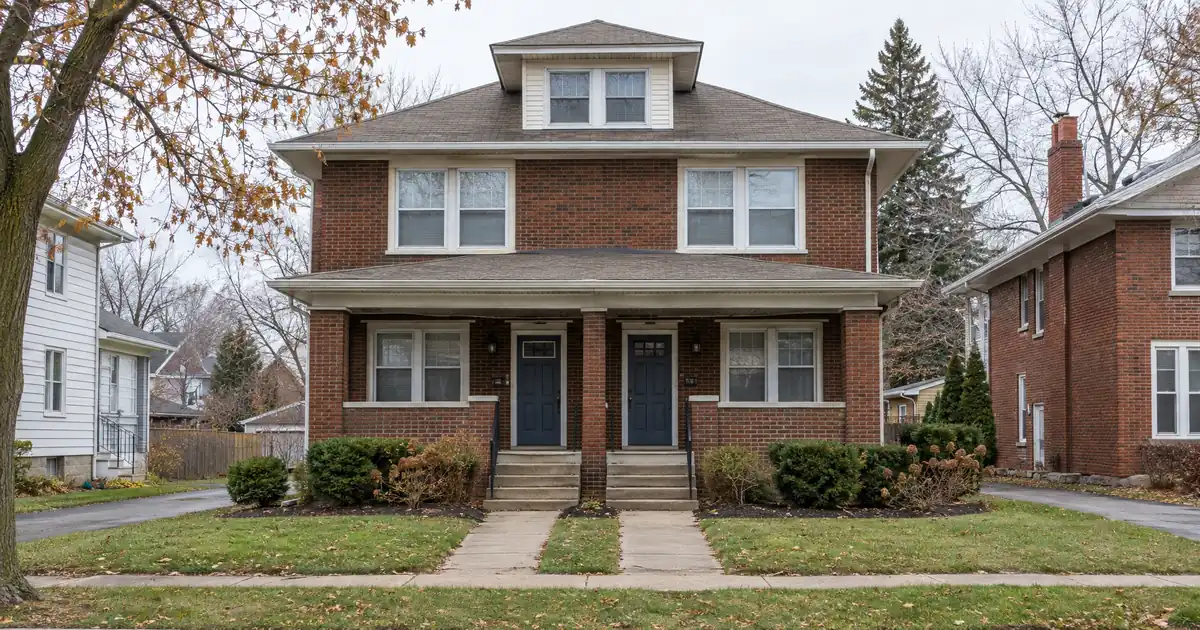
A three-bedroom rental in Reynoldsburg hits the DSCR math like this. Say the property is valued near $300,000, a modeled figure that sits close to the citywide median sale price. It rents for about $1,714, the average ForRent.com listing figure for three-bedroom houses. Run rent against a full monthly obligation that includes principal, interest, taxes, and insurance on a 75 percent LTV cash-out, and the coverage number lands in the mid-0.8s to low-0.9s. Pull LTV down toward 60 percent and it approaches 1.00. Same house, same tenant. Only the leverage changed.
That gap is the story for equity extraction in this Columbus suburb. Reynoldsburg is a stable, employer-backed rental market, but it is not an appreciation market. The cash-out has to be earned through purchase basis, value-add, or paydown, and the structure has to be sized around coverage rather than around the LTV ceiling.
DSCR Cash-Out Calculator
Run the cash-out numbers in Reynoldsburg, OH
Rate source: Freddie Mac 30-yr average via FRED® — Federal Reserve Bank of St. Louis · effective Sep 24, 2026
Prefilled with starting assumptions — enter your property’s value, balance, taxes, and insurance for a more accurate picture.
Program parameters update from Lendmire’s centralized guideline source. Taxes and insurance are editable estimates.
As of Sep 24, 2026 · General Freddie Mac market benchmark, not a Lendmire loan offer. Property value, balance, taxes, and insurance are editable estimates. Maximum loan-to-value varies by lender, program, property type, and seasoning. Not a Loan Estimate, approval, or commitment to lend. Program availability and eligibility are subject to lender guidelines, credit approval, property review, and underwriting.
At a Glance:
A cash-out refinance on a Reynoldsburg, Ohio rental is underwritten primarily on the property’s rental income measured against its full monthly obligation, with proceeds limited by the LTV ceiling and reserves. Investors here generally need ownership seasoning, and coverage math drives how much equity is realistically accessible.
- Median sale price sits near $310,000 per Redfin, down 0.94 percent year over year.
- Average rent is $1,316, up 2.93 percent, per RentCafe.
- The 75 percent LTV ceiling on cash-out often produces sub-1.00 coverage on single-family rentals here.
- Roughly 6 months of ownership seasoning, measured from title recording, typically applies before cash-out.
- Equity comes from basis, rehab, or paydown, not market lift.
Why Reynoldsburg Rents Hold Up Without Price Growth
Tenant demand in Reynoldsburg rests on employment, not on momentum. Per Census Bureau QuickFacts, the city has a population of 41,224 across 11.3 square miles, with a median age of 37.2. It sits in the Columbus metro across three counties: Franklin, Licking, and Fairfield.
The employment base is unusual for a suburb this size. The Ohio Development Services Agency’s Ohio Major Employers report lists Victoria’s Secret at 5,669 employees and Bath & Body Works at 5,390, both attributed to Reynoldsburg. Those counts come from an older edition of the report, and retail corporate structures shift, so treat them as evidence of a historically deep white-collar and distribution base, not a live headcount. That corporate presence has fed the local retail economy of big-box stores and grocery anchors for years.
Residents’ own industries tell a broader story. Data USA shows health care and social assistance as the largest resident industry at 3,179 people, followed by retail trade at 2,553 and transportation and warehousing at 2,210. Three sectors with different cyclical profiles is a healthier tenant mix than a single-employer town.
Healthcare matters geographically too. Mount Carmel Health System operates an emergency room and primary care office near Baltimore-Reynoldsburg Road (SR 256) and Taylor Road, tied into the Mount Carmel East hospital campus just outside the city. Shift workers in clinical and support roles create steady demand for three-bedroom rentals near that corridor. OhioHealth and Ohio State facilities sit within commuting range as well.
The tension is that a durable rental base does not mean rising values. Rent growth of about 3 percent is a supportive backdrop for coverage, but it is not a reason to expect the appraisal to do the work.
The Appreciation Question: What the Value Data Says
Reynoldsburg’s pricing is flat to soft, and cash-out proceeds should be planned accordingly. Redfin’s median sale price of $310,000 is down 0.94 percent year over year, with homes taking an average of 53 days to sell against 45 the year before. Houzeo reports 49 days on market, a 2.4-month supply, and 31 sales in its most recent monthly count, with homes closing at 97.55 percent of asking price. Movoto’s read is similar: 46 days on market versus 36 a year earlier.
Measures differ by source. Zillow’s index puts the typical home value at $281,048, up 1.1 percent, but that is a modeled index of typical values rather than a median of recent sales, so it runs lower than transaction-based figures. Resideline’s ZIP 43068 data shows a middle half of closed sales between $236,000 and $350,000, which is a wide band. This article uses the Redfin figure as its citywide anchor and treats the others as context.
What does that mean for someone planning a refinance? Three things.
- Do not underwrite lift. A thesis that assumes market appreciation will expand the refinance is weak here. Proceeds come from buying below market, forcing value through rehab, or paying the balance down.
- The appraisal comp set matters more than usual. With a balanced market and roughly 2.5 percent of negotiating room off list, appraisers will lean on recent closed sales rather than asking prices. A rehab-and-refinance file should carry a conservative after-repair value.
- Price band drives coverage. Older, lower-priced stock in the lower end of that $236,000 to $350,000 spread is where rent-to-value is strongest.
This one’s a genuine trade-off. Buyers who paid near the top of the band a few years ago may find little accessible equity at a 75 percent cap. Owners who bought at a discount or renovated are holding the real cash-out candidates.
Where the Coverage Math Lands
Single-family coverage in Reynoldsburg is workable but not generous. Zillow’s typical value against ForRent.com’s average three-bedroom house rent of about $1,714 works out to roughly 0.6 percent of value per month. That is a calculation from listing-based inputs, so verify against current comps on any specific property.
Here is the modeled version. Assume a $300,000 valuation, the $1,714 rent, a 30-year term, and taxes and insurance at Ohio averages. These are modeled assumptions, not market facts.
| LTV | Modeled coverage (with taxes and insurance) |
|---|---|
| 75 percent | Roughly 0.85 to 0.92 |
| 65 percent | Roughly 0.95 to 0.98 |
| 60 percent | Near 1.00 or slightly above |
The 1.00 benchmark is common because rent covers the full payment at that level. Some lenders will review lower ratios, but usually with lower leverage, different pricing, more cash reserves, or stronger compensating factors. Eligibility depends on lender guidelines, credit profile, reserves, property review, and state overlays.
So a Reynoldsburg owner chasing the full 75 percent on a single-family house should expect a sub-1.00 conversation. The paths a lender would review include a sub-1.00 program, an interest-only structure, or a smaller cash-out request at lower LTV. Qualification stays subject to lender guidelines, credit approval, and property review.
The rent data has a wrinkle. RentCafe reports an average rent of $1,316, with two-bedrooms at $1,390 and three-bedrooms at $1,615. It also finds 73 percent of rentals in the $1,001 to $1,500 band. But RentCafe covers only buildings with 50 or more units, so it skews toward apartment complexes. Those complexes set a ceiling that a $1,700 house competes against. A single-family landlord asking above the complex band needs a real reason: more space, a garage, a yard.
Rent growth of roughly 3 percent supports modest headroom but not aggressive rent resets. Foreclosure.com’s automated valuation points the other way, with values and rents softening, but that source is low-authority. Local comps should settle the question on any given file.
Property Types: Single-Family, Then Small Multifamily
Workforce single-family homes and three-bedroom rentals are the core DSCR product in Reynoldsburg. NeighborhoodScout puts detached single-family homes at 60.14 percent of housing units, and RentCafe shows 39 percent of households, or 6,682, renting. That renter share is large enough to support institutional-style demand without dominating the city.
Small multifamily is the interesting alternative. No verified duplex or fourplex price data exists in the research, so this is qualitative. Local listing copy describes duplex and townhome-style small properties with unit rents that sit close to the citywide average. If the price per door stays below single-family levels, income stacking across two to four units can lift coverage without a rent premium. Anecdotal listing text also describes some of these units as rented below market. Below-market leases are cash-out upside only if the leases can be reset, and that depends on tenant turnover and local comps rather than on the loan.
(For anyone modeling this, a duplex’s coverage math is the same formula. Sum the unit rents, divide by full PITIA, and compare against the single-family alternative at the same LTV.)
Manufactured homes, log homes, and barndominiums fall outside these DSCR programs, which matters in the fringe areas of a three-county city.
Reynoldsburg Corridors That Matter for Rental Demand
The research didn’t surface reliable neighborhood-level price or rent data, so this section stays qualitative. Three anchors organize demand.
The SR 256 and Taylor Road medical corridor near I-70. The Mount Carmel Reynoldsburg emergency room and primary care office sit here, and the Mount Carmel East hospital campus is close by. Healthcare is the top resident industry, so this corridor supports steady rental demand from clinical, administrative, and support staff. It is the most defensible place to hold a three-bedroom rental if the goal is tenant retention.
The I-70 and I-270 interchange area. Highway access matters for a workforce that commutes into the wider Columbus metro and works in transportation and warehousing. One low-authority source claims a 5 to 10 percent rent premium for quick highway access. That number isn’t reliable enough to underwrite. The directional point stands: commuter access supports lease renewals.
Old Reynoldsburg and the Blacklick Woods side. The Livingston House on Graham Road anchors the historic core, while Blacklick Woods Metro Park offers a nature center, a golf course, and a greenway trail. The city bills itself as “The Birthplace of the Tomato,” and the annual Tomato Festival, first held in 1966, is a local institution. None of that moves rents on its own, but the park and historic amenities support the owner-occupant and long-tenure renter appeal that reduces turnover.
What the Deal Desk Tends to See
On files from markets structurally like Reynoldsburg, meaning balanced inventory, flat pricing, and coverage that pencils close to 1.00, the common friction point is not the loan program. It is the gap between the owner’s expected value and the appraiser’s recent-sales median. The cleaner files from a documentation standpoint tend to arrive with a current lease, a rent comparable set, and a realistic value expectation already reconciled. Files that assume a higher after-repair value than the closed comps support tend to get re-sized at lower proceeds. Lendmire’s role is to arrange the structure and match the file to a lender program that fits the coverage number, since lenders review eligibility and approve.
Structuring the Cash-Out: Seasoning, LTV, and the Recycle
Three program levers shape what a Reynoldsburg owner can pull out. All are guidance, not guarantees, and vary by borrower, property, and loan scenario.
Seasoning. Most cash-out programs look for roughly 6 months of ownership, measured from title recording. An investor who bought a discounted house, rehabbed it, and placed a tenant can generally reach a refinance at that mark, with the appraised value reflecting the improvements.
LTV. The cash-out ceiling is 75 percent, a hard cap. Purchase loans run to higher LTV, but that isn’t the number to borrow for a refinance. Equity available depends on rent used for lender review, PITIA, reserves, and that ceiling, so it is not a guaranteed cash figure.
DSCR vs. conventional financing
Two common ways to finance an investment property in Reynoldsburg, OH. They qualify you differently — here’s how investors weigh them.
Why investors choose it
- Qualifies on the property’s rental income — no personal tax returns, W-2s, or pay stubs needed to document income.
- No personal debt-to-income ceiling to clear, so existing mortgages and obligations don’t cap your borrowing the same way.
- Can be closed in an LLC, keeping the property inside a business entity.
- Built for scaling — not held to the limit on number of financed properties that conventional financing applies.
- Underwriting centers on the deal: generally qualifies when the rent covers the payment, a 1.00x coverage ratio being a common baseline (confirmed in underwriting).
- Designed specifically for investment property, including long-term and, where the program allows, short-term rentals.
Where it’s strong
- Often the lowest ongoing financing cost for a buyer who fully qualifies on personal income — a fit for a first property or a cost-first purchase.
Trade-offs for investors
- Requires full personal income documentation and must fit within a debt-to-income limit — salary, existing debts, and other mortgages all count.
- Typically held in your personal name rather than a business entity.
- Caps how many financed properties you can carry, which can become a ceiling as a portfolio grows.
- Evaluates you as a borrower as much as the property, which usually means more paperwork.
How investors usually choose: a first or single property often optimizes for the lowest financing cost; portfolio builders often optimize for leverage, vesting in an LLC, and scaling past conventional caps. The right answer depends on your goals, the property, and current guidelines — both paths run through select lenders in Lendmire’s wholesale network, with eligibility and terms confirmed in underwriting.
Reserves and credit. Reserves of about 6 months of PITIA are typical, higher on larger balances, and credit tiers generally start at a 620 floor with better positioning at 660, 680, and 700. Loan amounts run up to $3,000,000 on standard programs, though most Reynoldsburg files will be far smaller. Smaller balances route through select lenders in the network.
Properties held in an LLC may be eligible, subject to lender program eligibility.
The cleanest way to think about proceeds: what gets recycled is the equity created by basis or renovation, not by the market. Say an investor holds a Reynoldsburg house bought at a discount to the median. If the property appraises near the citywide median and coverage clears at a reduced LTV, the proceeds can fund the down payment on the next acquisition. If the appraisal comes in low, or coverage forces LTV lower than expected, the recycle shrinks. Understanding how DSCR cash-out works in practice helps set that expectation before the appraisal is ordered. Investors comparing structures can see Lendmire’s refi programs, and those weighing this against traditional paths should compare the tradeoffs between conventional and DSCR financing. For the basics of the product, Lendmire’s primer on DSCR loans covers the calculation.
Some non-QM platforms layer state-specific overlays that shrink usable LTV, which matters when the ceiling is already the binding constraint. That is worth screening for before committing to a lender path. Ohio investors can review Ohio DSCR investor loans to see how the state fits into the broader program.
Where Investors Get This Wrong
Most Reynoldsburg cash-out misfires trace to one assumption: that the 75 percent ceiling is the target. It isn’t. It is the outer limit, and on single-family rentals at current price-to-rent ratios, the coverage number often stops the deal before the LTV cap does.
The stronger play might be the smaller cash-out. Pulling less at lower LTV can clear the 1.00 baseline and keep the file in a standard program. Investors who need more capital could argue the other way and accept a sub-1.00 structure. That is a legitimate choice, just one with higher pricing or added conditions, and it should be run against the next acquisition’s return, not against the headline proceeds.
Also skip the assumption that rent increases will rescue coverage. With average rents rising about 3 percent, a lease reset helps at the margin. It doesn’t close a gap of several coverage points.
Taxes and insurance also feed directly into the coverage number. As with any refinance, verify current local rental rules, taxes, and insurance with qualified local professionals before sizing the loan.
Frequently Asked Questions
How much can I pull out of a Reynoldsburg rental?
It depends on coverage before it depends on value. The LTV ceiling for cash-out is 75 percent, but on a typical three-bedroom house the rent often covers the full payment only at a lower LTV, closer to 60 percent in the modeled math. Proceeds also depend on reserves and the appraisal, so no cash figure is guaranteed.
Does Reynoldsburg’s flat pricing hurt a cash-out refinance?
It removes the easiest source of proceeds, which is market appreciation. With the median sale price near $310,000 and slightly down year over year, equity has to come from a discounted purchase, renovation, or loan paydown. Owners who bought near the top of the local price band have the least accessible equity.
When can I refinance after buying a Reynoldsburg property?
Cash-out programs typically look for about 6 months of ownership measured from title recording. That window is what lets a purchase-and-rehab investor refinance on the improved value. Program details vary by lender and are subject to lender guidelines.
Are duplexes better than single-family homes for DSCR cash-out here?
They can be, if the price per door stays below single-family levels. Unit rents in small multifamily listings run close to the citywide average, so stacking two or more rents against one payment lifts coverage. Verified duplex pricing wasn’t available in the research, so compare local listings and comps before assuming it.
What kind of tenant demand supports Reynoldsburg rentals?
Employment across healthcare, retail, and transportation and warehousing drives it, per Data USA resident industry counts. The Mount Carmel Reynoldsburg facility, the retail base, and Columbus metro commuting access all feed rental demand. It is a workforce market, not a luxury or student one.
To discuss a specific file, reach Lendmire at 828-256-2183 or get a rental-income loan quote.
Three Indicators to Watch Next Quarter
- Days on market against the recent baseline. Redfin shows 53 days against 45 a year ago, and Movoto shows 46 against 36. If either keeps stretching, appraisal comps will soften and cash-out proceeds shrink.
- Rent growth against the apartment band. RentCafe’s average rent is up 2.93 percent, with 73 percent of rentals between $1,001 and $1,500. If houses at $1,700 or more start sitting vacant, the coverage assumptions behind most single-family refinances need a haircut.
- Employer headcount news from the retail-corporate base. The large Reynoldsburg-based retail employers are the demand anchor. Any restructuring that changes local staffing would show up in leasing before it shows up in prices.
For current guidelines and terms, see Lendmire’s DSCR loan programs page.
About Lendmire
A DSCR-focused mortgage broker, Lendmire (NMLS# 2371349) places investor financing across 41 markets, meaning 40 states plus Washington, D.C., with DSCR eligibility generally reviewed by the lender on property cash flow rather than traditional personal-income documentation, subject to lender guidelines. Lendmire was recognized by Scotsman Guide in 2025 and recognized by Scotsman Guide as a 2026 Top Workplace.
Get Started
Ready to find the right loan for you?
In about 30 seconds you can review financing options available for your investment property. No commitment required.
Informational only. Not a Loan Estimate, approval, or commitment to lend. Program availability and eligibility are subject to lender guidelines, credit approval, property review, and underwriting.
References
1. Redfin: Reynoldsburg housing market
2. RentCafe: Reynoldsburg average rent and market trends
3. Census Reporter: Reynoldsburg, OH profile
4. Ohio Development Services Agency: Ohio Major Employers report
6. Houzeo: Reynoldsburg housing market
7. Zillow’s
10. recognized by Scotsman Guide in 2025
11. recognized by Scotsman Guide as a 2026 Top Workplace
This article is part of Lendmire’s investment property cash-out refinance program — full qualification details, guidelines, and scenarios live on the program page.
Related reading: Cash Out Refinance Investment Property in Reynoldsburg, Ohio: Equity Extraction Near the Taylor Road Corridor · Investment Property Loans in Columbus, OH: Will the Rent Cover the Mortgage Here? · Cash Out Refinance Investment Property in Findlay, Ohio: Duplex Equity Near the University
Guides: Investment Property Cash-Out Refinance in Ohio
Brandon Miller
Founder & CEO, Mortgage Loan Originator, Lendmire LLC
- Mortgage Loan Originator · NMLS# 1129696 · Verify on NMLS Consumer Access
- North Carolina Real Estate Broker · License# 343312 · Verify on NCREC
- North Carolina Insurance Producer · License# 19053198 · Property, Casualty, Life, Health · Verify on NAIC SBS
- Lendmire LLC · Firm NMLS# 2371349 · Verify firm licensure
Important disclosures. Lendmire (NMLS# 2371349) is a licensed mortgage brokerage. Lendmire is not a direct lender, depository institution, or financial advisor. All loan inquiries are subject to lender underwriting; this article does not constitute a commitment to lend. Rates, terms, and program guidelines are subject to change without notice and vary by borrower profile, property type, and state. Information in this article is general in nature and is not financial, legal, or tax advice. Equal Housing Opportunity. NMLS Consumer Access: nmlsconsumeraccess.org.