
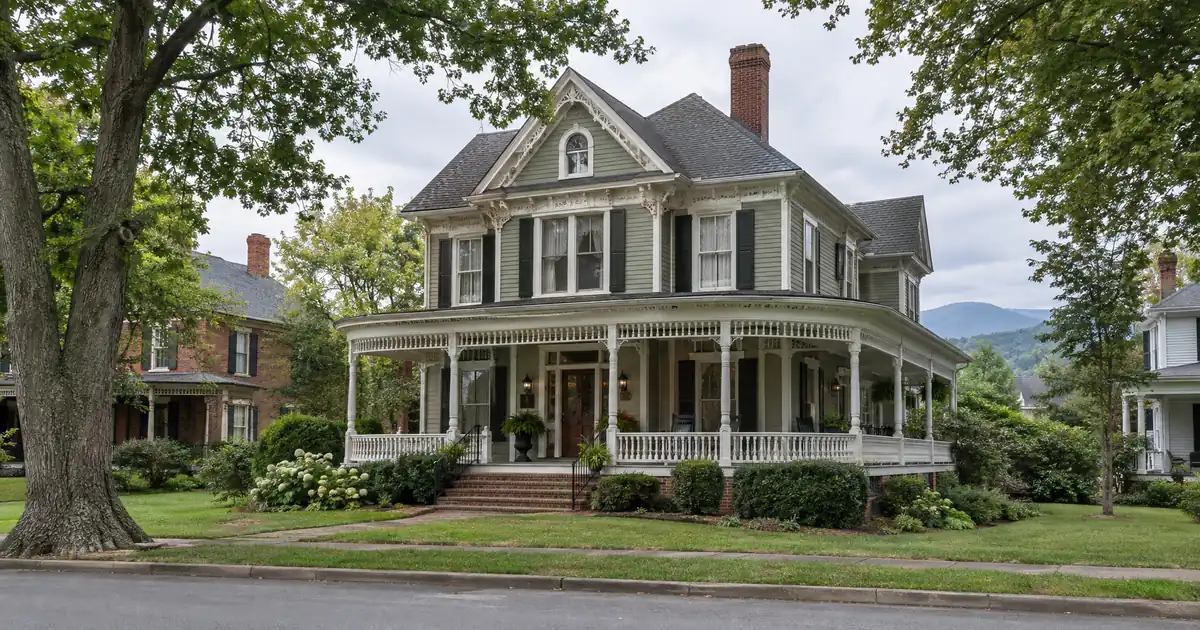
Two readings from the Tullahoma market should shape any equity-extraction plan over the next 6-18 months. First, homes are taking longer to sell: Redfin showed 67 days on market against 50 a year earlier, at a $300K median sale price, which means fewer clean comps for an appraiser. Second, a roughly 1,000-unit mixed-use proposal off North Jackson Street, reported by the market source, could add rental supply if it advances (its current status needs checking). An investor holding a paid-down bungalow or ranch here is looking at a market where value is hard to pin down and rent is the binding constraint.
This piece covers the owner’s side of the trade: pulling equity out of a Tullahoma rental already held, what the rent-to-value ratio does to the coverage number, and where the math clears.
DSCR Cash-Out Calculator
Run the cash-out numbers in Tullahoma, TN
Rate source: Freddie Mac 30-yr average via FRED® — Federal Reserve Bank of St. Louis · effective Sep 24, 2026
Prefilled with starting assumptions — enter your property’s value, balance, taxes, and insurance for a more accurate picture.
Program parameters update from Lendmire’s centralized guideline source. Taxes and insurance are editable estimates.
As of Sep 24, 2026 · General Freddie Mac market benchmark, not a Lendmire loan offer. Property value, balance, taxes, and insurance are editable estimates. Maximum loan-to-value varies by lender, program, property type, and seasoning. Not a Loan Estimate, approval, or commitment to lend. Program availability and eligibility are subject to lender guidelines, credit approval, property review, and underwriting.
TL;DR: A DSCR cash-out refinance on a Tullahoma, Tennessee rental is underwritten primarily on the property’s rental income measured against its full monthly obligation, with proceeds capped by a 75 percent LTV ceiling and roughly six months of seasoning from title recording, subject to lender guidelines.
- Rent-to-value runs thin citywide, so lower-priced older stock carries the coverage number.
- Price sources disagree widely, so expect a conservative appraisal and size the cash-out on the low end.
- Engineering and hospital employment anchors tenant demand. Small multifamily stock looks thin.
- Sub-1.00 files usually mean lower leverage or a different program structure.
Tullahoma Market Snapshot
A quick read on the Tullahoma investor landscape — figures come from the cited sources below. Confirm current property-level numbers before underwriting.
| Metric | Detail |
|---|---|
| Home prices | 25 sales (Redfin) |
| Typical rents | $815 median contract (City-Data) |
| University enrollment | ~7,000 students (Motlow State Community College) |
| Employment | Hospital ~450 staff (tullahoma.org — Move to Tullahoma) |
Why the Valuation Is the First Risk
Tullahoma’s price data does not agree with itself, and a cash-out is sized off the appraisal, so that disagreement is the first thing to underwrite. Redfin put the median sale price at $300K, up 1.9 percent year over year. Homes.com shows a $385,000 twelve-month median, up 4 percent. Movoto lists a $328K median list price, down 7 percent, and Zillow’s home value index sits at $263,387. Four sources, a spread of more than $120,000 between the low and high figure.
The gap reflects method. Sold versus listed prices, twelve-month windows versus single months, and a thin sales count that lets new construction tilt the median. Redfin logged 25 sales in its most recent monthly snapshot. Small samples swing.
This is the skeptical read: an investor who bought an older ranch and assumes it appraises near the Homes.com median may be disappointed. The prudent working assumption is the lower end of the range, with any upside treated as bonus proceeds rather than plan. Sizing the next acquisition off a high-end valuation is how a cash-out plan falls short at closing.
The mechanics are simple. Cash-out refinances on investment property cap at 75 percent LTV, and most files need about six months of ownership measured from title recording. Available equity then depends on the appraised value, the rent used for lender review against full PITIA, and required reserves of about six months PITIA. It is never a guaranteed cash figure. The pulling equity out page walks through the general structure. Everything here is subject to lender guidelines and borrower profile.
Does the Rent Support the Value?
Not at the top of the price range. Rent-to-value is the variable that decides whether a Tullahoma cash-out clears, and citywide it is thin, roughly 0.37-0.46 percent a month. That comes from dividing the $1,200 average rent Zumper reports by the Movoto list-price median at the low end and the Zillow value at the high end. It mixes source types, so treat it as a directional band.
Rent signals conflict. Zillow Rental Manager shows houses renting between $775 and $1,775 with a $1,200 median. That reading was dated early in the prior period and barely moved year over year. Zumper shows an 11 percent annual gain but a 4 percent drop over the latest month, which looks like noise on a small listing sample. City-Data’s ACS figure puts median contract rent at $815, but that blends older and subsidized units and understates what a renovated house commands.
The practical read: underwrite the $1,200-$1,400 zone. Anything above that needs a signed lease or a true comparable rental. An appraiser’s rent schedule that comes in high is a common reason a cash-out shrinks late in the file.
Apartments set the floor. Rent.com puts one- and two-bedroom apartments at $850-$1,050, so houses command a real premium over apartment units. That premium is why the single-family rental is the right product here, and why stacking doors is not automatically smarter.
Coverage Math by Value Tier
Coverage falls as value rises, and the crossover sits near the $200,000 mark. The figures below are modeled assumptions, not sourced market data: a $1,200 rent, a 75 percent LTV refinance on a standard 30-year amortization, and full PITIA including taxes and insurance. Bands are rounded down.
| Appraised value | Modeled coverage | Read |
|---|---|---|
| About $150,000 | Around 1.3x | Clears with cushion |
| About $200,000 | Around 1.0x | Borderline |
| About $250,000 | Around 0.8x | Needs lower LTV |
| About $350,000 | Around 0.6x | Skip at this rent |
A 1.00x baseline is the benchmark most standard DSCR programs are built around, because rent covers the obligation at that level. Some lenders review lower ratios, but those files usually carry lower leverage, different pricing or more cash reserves. Exact eligibility depends on lender guidelines, credit profile, reserves and property review.
Run the numbers on a $250,000 bungalow. At $1,200 rent the coverage sits around 0.8x at the full 75 percent LTV. Lift documented rent to $1,400 and it moves to the low 0.9s. Cut the leverage and it improves further, because the payment shrinks while rent stays put. That is the trade in this market: less cash out in exchange for a loan that fits.
Sub-1.00 files are not dead on arrival. A lender may review a sub-1.00 program, an interest-only structure or a reduced LTV as alternatives, but qualification stays subject to lender guidelines, credit approval and property review. Where coverage lands under 1.00 at full leverage, the honest framing is that the owner gets a smaller check.
Skip the New Builds
New construction is the clearest place where the math breaks. Listings in The Stillwater community run roughly $349,000-$371,000 for three- and four-bedroom homes on Homes.com. Redfin’s new-construction page shows 34 listings at a $319K median list price. Against a $1,200 market rent, a $350,000 house sits near 0.6x under the same modeled assumptions.
Newly built homes on the north and west ends carry listing prices from $450,000 to $770,000. Those are owner-occupant products. An investor who bought new and now wants equity out faces two problems: little seasoned appreciation to extract and a rent that cannot carry the loan.
Is there a scenario where new construction works for a cash-out? Possibly a builder-discount purchase that appraises well above cost, combined with documented rents above the $1,400 zone. Those are narrow cases. Most investors will do better extracting from older stock.
Where the Older Stock Pencils
The bungalows and ranches are the natural workforce-rental stock, and they are where cash-out coverage has room. Homes.com describes the city as mostly early-20th-century bungalows and mid-century ranches priced from $110,000 to $500,000. NeighborhoodScout puts single-family detached homes at 74.73 percent of 8,222 housing units. The price band at the low end lines up with coverage above 1.0x in the table above.
The older core near downtown and the Chamber sits close to city services and holds much of this housing. No reliable neighborhood-level price or rent series exists for it, so the case is qualitative: older houses at lower basis, near employers, renting at the market median. Investors comparing submarkets should use a live rental comp, not a neighborhood average that nobody has published.
Around Motlow State’s main campus on Ledford Mill Road, tenants are staff, students and commuters. Motlow State Community College states enrollment of approximately 7,000, but it serves an 11-county area across multiple campuses, so the Tullahoma housing demand is a fraction of that number. Bel-Aire shows up as a popular neighborhood on Redfin’s new-construction listings, though no character or price data supports a detailed profile.
Honestly, the stronger play may be the unglamorous $140,000-$220,000 ranch over anything newer. Less appreciation upside, but the coverage number survives the appraisal and the lender’s rent review. Investors chasing appreciation could argue the other way, though the price data here shows volatility rather than a clean upward trend.
The AEDC Tenant Base (and Its Limit)
Tullahoma’s demand story is tied to engineers and technicians more than to a single factory. Arnold Air Force Base hosts the Arnold Engineering Development Complex, and the Tullahoma Area Chamber of Commerce lists AEDC, the University of Tennessee Space Institute, Motlow and the hospital among its board members. The Chamber’s economy page points to multiple industrial parks and manufacturing facilities, and to a location between Nashville, Chattanooga and Huntsville. No sourced headcount exists for AEDC or its contractors, so the claim here is qualitative: a technical, higher-income tenant pool with demand tied to federal testing activity.
UTSI was created to work alongside AEDC, per Wikipedia’s institute history, adding graduate students, faculty and researchers to the tenant mix. No enrollment figure was found.
Healthcare adds a second anchor. The Chamber’s move-to-Tullahoma page says Vanderbilt Tullahoma-Harton Hospital employs approximately 450 physicians, nurses and staff across 135 beds (an undated figure, so approximate). Nurse and allied-health renters tend to hold steady leases, which supports coverage stability on a refinance.
The limit is scale. The population sits around 21,001, and HomeSnacks cites 21,107. Treat both as approximate. A market this size cannot absorb a lot of new supply without pressure on rents, which is why the mixed-use proposal deserves a status check before any investor assumes rents will climb.
Duplex and Fourplex Reality Check
Small multifamily is a thin slice of the stock, and no sourced inventory or pricing for duplexes or fourplexes turned up. Single-family dominates at roughly three-quarters of units. The data also shows apartments renting $850-$1,050 per unit against $1,200 for a house, so a duplex only helps if the price per door sits well below a single-family price. Stacking units is not a free coverage boost here.
Yardi’s RentCafe data covers buildings with 50 or more units, which says little about a four-unit building. Investors with an existing small multifamily already in hand should underwrite per-unit rents against the apartment band, not the house median. Anyone building a multi-unit thesis from scratch needs local comps first.
What Sub-1.00 Files Look Like on the Desk
Lendmire’s deal desk tends to see the same friction point in small Southern markets with thin sales volume: the appraisal and the rent schedule arrive lower than the owner’s expectation, and the cash-out gets resized late. The cleaner files come in with a lease or comparable rent in hand, a realistic value expectation and reserves already documented. Owners who plan for a lower LTV from the start usually end up with fewer surprises than those who plan around the 75 percent ceiling.
A few program facts frame the structure. The credit tiers run 620, 660, 680 and 700, with 620 the floor, and pricing and leverage generally improve as the score rises. Standard programs go up to $3,000,000, and smaller balances, which describes most Tullahoma rentals, route through select lenders in the network. Loans to LLC-titled borrowers are available subject to lender program eligibility. These are guideline ranges, not commitments. Lendmire is a DSCR-focused mortgage broker and arranges loans through wholesale lending channels. Lenders review eligibility and approve.
The cash-out proceeds are the point. Owners typically redeploy them into the next acquisition or into renovations that lift documented rent. In a market where rent drives coverage, renovation capital spent on a documented rent increase can do more for the next refinance than a bigger check does. Refi programs cover the rate-and-term alternative for owners who do not need cash out. A comparison of DSCR and conventional loans, along with an overview of DSCR loan fundamentals, covers the rest.
Investors can see the state-level program structure at Lendmire’s Tennessee DSCR loan programs or run a specific property through request a scenario quote. Phone is 828-256-2183.
DSCR vs. conventional financing
Two common ways to finance an investment property in Tullahoma, TN. They qualify you differently — here’s how investors weigh them.
Why investors choose it
- Qualifies on the property’s rental income — no personal tax returns, W-2s, or pay stubs needed to document income.
- No personal debt-to-income ceiling to clear, so existing mortgages and obligations don’t cap your borrowing the same way.
- Can be closed in an LLC, keeping the property inside a business entity.
- Built for scaling — not held to the limit on number of financed properties that conventional financing applies.
- Underwriting centers on the deal: generally qualifies when the rent covers the payment, a 1.00x coverage ratio being a common baseline (confirmed in underwriting).
- Designed specifically for investment property, including long-term and, where the program allows, short-term rentals.
Where it’s strong
- Often the lowest ongoing financing cost for a buyer who fully qualifies on personal income — a fit for a first property or a cost-first purchase.
Trade-offs for investors
- Requires full personal income documentation and must fit within a debt-to-income limit — salary, existing debts, and other mortgages all count.
- Typically held in your personal name rather than a business entity.
- Caps how many financed properties you can carry, which can become a ceiling as a portfolio grows.
- Evaluates you as a borrower as much as the property, which usually means more paperwork.
How investors usually choose: a first or single property often optimizes for the lowest financing cost; portfolio builders often optimize for leverage, vesting in an LLC, and scaling past conventional caps. The right answer depends on your goals, the property, and current guidelines — both paths run through select lenders in Lendmire’s wholesale network, with eligibility and terms confirmed in underwriting.
Frequently Asked Questions
How much equity can a Tullahoma rental owner actually pull out?
No fixed figure exists. The ceiling is 75 percent LTV on appraised value, and the real number depends on rent used for lender review against full PITIA and reserves of about six months PITIA. Given how far price sources diverge, a conservative appraisal assumption is the safer planning basis.
Does a recently bought property qualify right away?
Most files require roughly six months of ownership measured from title recording before cash-out is available. Tullahoma’s long days on market make a fresh acquisition that much harder to re-value upward quickly, so investors usually plan the holding period around documented rent rather than a quick flip in value.
Will AEDC employment support the rent number on an appraisal?
It supports demand, but not a specific rent. An appraiser relies on rental comps, and the $1,200-$1,400 zone is where documented support is strongest. Tenant quality helps lease stability. It does not substitute for a signed lease.
Is an older bungalow or a newer home the better cash-out candidate here?
The older bungalow or ranch, in most cases. Lower value against a $1,200 market rent keeps coverage near or above 1.0x, while homes near $350,000 fall well below it under modeled full-PITIA assumptions.
What if my coverage lands under 1.00?
Options a lender may review include a lower LTV, a sub-1.00 program or an interest-only structure, each subject to lender guidelines, credit approval and property review. Expect a smaller cash-out rather than a denial in many cases, though outcomes vary by file.
What a Local Appraiser Would Say
Older ranches and bungalows priced under roughly $220,000 are the houses that refinance cleanly in Tullahoma, because the rent covers them. A $350,000 new build will appraise and sit on the market for months, but no $1,200 rental will carry it. Verify current local rental rules, taxes and insurance with qualified local professionals, then size the cash-out on the low appraisal, not the high one.
For current guidelines and terms, see Lendmire’s DSCR loan programs page.
About Lendmire
Lendmire, NMLS# 2371349, is a mortgage brokerage focused on investor financing, arranging DSCR investor loans across 40 states plus Washington, D.C. (41 markets total). Qualification rests primarily on the property’s rental income rather than personal income documentation, subject to lender guidelines, which suits LLC-held rentals and scaling portfolios. The firm is recognized as a 2026 Scotsman Guide Top Mortgage Workplace and a 2025 Scotsman Guide Top Workplace.
Get Started
Ready to find the right loan for you?
In about 30 seconds you can review financing options available for your investment property. No commitment required.
Informational only. Not a Loan Estimate, approval, or commitment to lend. Program availability and eligibility are subject to lender guidelines, credit approval, property review, and underwriting.
References
1. Redfin: Tullahoma Housing Market
3. Motlow State Community College: Admissions
4. Tullahoma Area Chamber of Commerce: Move to Tullahoma
5. Homes.com: Tullahoma Local Guide
6. Movoto
8. Zumper: Tullahoma Rent Research
10. Rent.com
11. Homes.com
12. Redfin — Amenity New Construction
14. Tullahoma Area Chamber of Commerce
15. tullahoma.org — Tullahoma Economy Facts
16. Wikipedia’s institute history
17. HomeSnacks
19. a 2026 Scotsman Guide Top Mortgage Workplace
20. a 2025 Scotsman Guide Top Workplace
This article is part of Lendmire’s investment property cash-out refinance program — full qualification details, guidelines, and scenarios live on the program page.
Related reading: Cash Out Refinance Investment Property in Tullahoma, Tennessee: AEDC Demand Meets Thin Rent Math · Cash Out Refinance Investment Property Jackson Tennessee · DSCR Cash Out Refinance in Elizabethton, Tennessee: Will My Rent Cover the Loan After Cash Out?
Guides: Investment Property Cash-Out Refinance in Tennessee
Brandon Miller
Founder & CEO, Mortgage Loan Originator, Lendmire LLC
- Mortgage Loan Originator · NMLS# 1129696 · Verify on NMLS Consumer Access
- North Carolina Real Estate Broker · License# 343312 · Verify on NCREC
- North Carolina Insurance Producer · License# 19053198 · Property, Casualty, Life, Health · Verify on NAIC SBS
- Lendmire LLC · Firm NMLS# 2371349 · Verify firm licensure
Important disclosures. Lendmire (NMLS# 2371349) is a licensed mortgage brokerage. Lendmire is not a direct lender, depository institution, or financial advisor. All loan inquiries are subject to lender underwriting; this article does not constitute a commitment to lend. Rates, terms, and program guidelines are subject to change without notice and vary by borrower profile, property type, and state. Information in this article is general in nature and is not financial, legal, or tax advice. Equal Housing Opportunity. NMLS Consumer Access: nmlsconsumeraccess.org.