
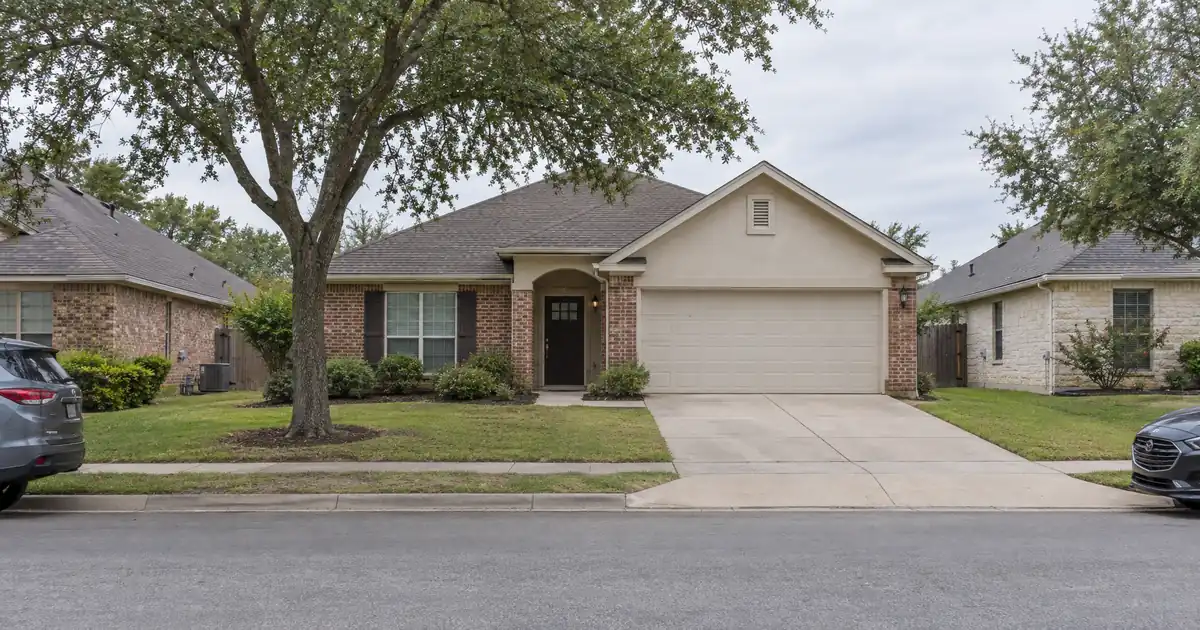
Walk a few blocks off the courthouse square and Weatherford’s rental math changes. Older two-bedroom units in small downtown buildings list at $1,025 and $1,250 a month. The citywide median sale price sits at $348K. Put four of those units under one roof and one loan, and the rent roll starts to carry its own debt in a way the median single-family house does not. That gap drives every DSCR cash out refinance in Weatherford, Texas. Owners of small multifamily in the historic core are the ones most likely to pull meaningful equity. Owners of median-priced houses usually hit a coverage limit well before they reach the program’s LTV ceiling.
DSCR Cash-Out Calculator
Run the cash-out numbers in Weatherford, TX
Rate source: Freddie Mac 30-yr average via FRED® — Federal Reserve Bank of St. Louis · effective Sep 24, 2026
Prefilled with starting assumptions — enter your property’s value, balance, taxes, and insurance for a more accurate picture.
Program parameters update from Lendmire’s centralized guideline source. Taxes and insurance are editable estimates.
As of Sep 24, 2026 · General Freddie Mac market benchmark, not a Lendmire loan offer. Property value, balance, taxes, and insurance are editable estimates. Maximum loan-to-value varies by lender, program, property type, and seasoning. Not a Loan Estimate, approval, or commitment to lend. Program availability and eligibility are subject to lender guidelines, credit approval, property review, and underwriting.
The Short Version:
A cash-out refinance on a Weatherford, Texas rental is sized by how far the property’s rent stretches against its full monthly obligation, including taxes and insurance. In a flat-price market with a $348K median, that coverage test usually sets the ceiling on proceeds before appraised value does.
- At 75 percent LTV, a median-value 3-bedroom models near 0.85x coverage, including taxes and insurance. Older downtown two-bedrooms at $1,025–$1,250 give fourplexes cushion that houses lack.
- Prices are flat, so cash-out equity comes from a discounted purchase or a renovation.
- Seasoning typically runs about six months, counted from title recording.
- Concessions at newer apartment complexes cap what comparable units can charge.
Weatherford Market Snapshot
A quick read on the Weatherford investor landscape — figures come from the cited sources below. Confirm current property-level numbers before underwriting.
| Metric | Detail |
|---|---|
| Typical rents | 54% of rentals at $1,001–$1,500 (RentCafe/Yardi Matrix) |
| University enrollment | 7,742 total (Weatherford College news) |
| Employment | ~600 ft employees (D Magazine) |
| Vacancy | 7.1% rental (Wikipedia, Parker County) |
Why the Old Core Out-Covers the Median House
Small multifamily near downtown is the strongest cash-out position in Weatherford. A single-family rental at the median value models near 0.85x coverage at 75 percent LTV once taxes and insurance are included. A fourplex renting older units at $1,025–$1,250 can model well above 1.00x on the same structure. The difference comes from rent per dollar of value, not from the neighborhood’s reputation.
The coverage math is plain division. Qualifying monthly rent goes on top. The full monthly obligation goes underneath: principal, interest, taxes, insurance and any HOA dues. The pillar page on “What Is a DSCR Loan” covers the mechanics. The Weatherford-specific problem is what happens when that formula meets a $348K house.
Run the numbers on a 3-bedroom house that appraises at the Redfin median and rents at the $1,995 three-bedroom median reported by RentHop. Model a 75 percent LTV cash-out on a standard 30-year amortization, with Texas-average taxes and insurance included. Coverage lands around 0.85x. Now swap in Zumper’s citywide median rent of $1,750, which covers all bedroom counts. Coverage drops to about 0.74x. In the model, the house reaches roughly 1.00x only when the new loan is held near 60 percent of value.
Here’s the catch. Taxes and insurance on a house at that price take a large share of the rent before principal and interest are counted at all. That leaves little room for a big cash-out.
The comparison below uses modeled assumptions, not appraisals. The fourplex value is a placeholder, because no public source in the research prices Weatherford fourplexes. Replace it with an actual appraisal when one is available.
| Modeled scenario | Monthly rent basis | LTV | Coverage (incl. Taxes/insurance) |
|---|---|---|---|
| SFR at $348K value | $1,995 (3BR median) | 75 percent | ~0.85x |
| SFR at $348K value | $1,750 (citywide median) | 75 percent | ~0.74x |
| SFR at $348K value | $1,995 (3BR median) | ~60 percent | ~1.00x |
| Fourplex, $520K assumed value | $4,100 gross | 75 percent | ~1.17x |
| Fourplex, $520K assumed value | $5,000 gross | 75 percent | ~1.42x |
The fourplex rows use the downtown listing rents, with four units at $1,025 or four at $1,250. That is the whole point of the old core. Rents on small, older units are modest, but they add up across four doors, and the building’s value doesn’t rise in step. Lenders may apply a vacancy factor or use the lower of lease rent and appraised market rent. Either one trims qualifying income on 2-4 unit files, and the $4,100 row already assumes the low end of the listing range.
What about the owner whose house models at 0.85x? A few paths exist, and a lender reviews each one on its own merits. The simplest is a smaller cash-out that holds the new loan closer to the level where coverage reaches 1.00x. Some lenders also review sub-1.00 programs. Those usually call for stronger credit, deeper reserves, lower LTV or different pricing. An interest-only structure narrows the gap, but in this model it still leaves a median-value house short of 1.00x. None of these is automatic. Each one depends on lender guidelines, credit approval and property review.
On the broker side, the usual friction point on 2-4 unit files from thin-inventory towns like this one is the appraisal, not the rent roll. Redfin counted a single multifamily unit for sale in Weatherford in a recent month. With so few local sales, appraisers often go outside the city for comparable sales and rely more on the rent schedule. Files that arrive with signed leases, a current rent roll and records of recent unit turns tend to hold their value in review. Files built on the owner’s own rent estimate have a harder time.
Six Months, 75 Percent and One Appraisal
Most DSCR cash-out programs in the wholesale network cap the new loan at 75 percent of appraised value. They look for about six months of ownership, counted from title recording, and generally expect about six months of reserves. Coverage, appraisal and the LTV cap each set a ceiling on the loan. Proceeds follow whichever ceiling is lowest.
The steps run in this order:
1. Seasoning. Programs typically look for about six months of ownership. The clock starts when title is recorded, not when the purchase contract was signed.
2. Appraisal. The appraiser sets the value and, on most DSCR files, completes a market rent schedule. In Weatherford, that schedule often decides the file.
3. Coverage. The lender divides rent used for lender review by the full new obligation. Most standard programs are built around a 1.00x benchmark, because the rent covers the payment at that level. Some lenders review lower-ratio or no-ratio scenarios with stronger compensating factors. Eligibility still depends on credit profile, reserves, property review and state overlays.
4. LTV cap. Seventy-five percent of appraised value is the ceiling for cash-out. The 80 percent figure some programs allow on purchases does not apply to a refinance.
5. Reserves and credit. Expect roughly six months of PITIA in reserves. Pricing and available terms vary by lender, borrower profile, property type, and full underwriting review.
The cash an owner receives is the largest loan that passes all three ceilings, minus the existing payoff and costs. Many Weatherford landlords with several doors hold title in an LLC. That is usually workable, subject to lender program eligibility. Review details are also subject to lender overlays.
A conventional cash-out underwrites the owner’s personal debt-to-income ratio rather than the property’s rent. The breakdown of DSCR versus conventional explains where each fits. The cash-out refinance details page covers structure. Owners weighing a pull can also talk through the file with a broker before ordering an appraisal.
Where Does the Equity Actually Come From?
Not from the market. Redfin shows Weatherford’s median sale price down 0.41 percent year over year. Zillow’s home value index is down 0.2 percent. Owners who expected appreciation to build their refinance equity will mostly be disappointed. In this city, cash-out proceeds come from buying below market or from forced value-add.
The two sources don’t match on price level. Zillow places typical value higher, at $397,061, because its index covers the whole housing stock rather than recent sales. Redfin also reports median price per square foot up 8.0 percent. That most likely reflects a change in which homes are selling, not a broad gain in values. Neither series supports the idea that the market has created equity for owners.
The supply side points the same way. Orchard counts 889 homes for sale, up 17.9 percent from a year earlier. It also reports a 97.66 percent sale-to-list ratio, with 39.55 percent of listings showing price drops. For a refinance, that cuts both ways. The large number of single-family comps makes values easier to support. The frequent price cuts give appraisers reason to stay conservative. Sales volume is firming, with Redfin logging 170 sales in its latest monthly count versus 151 a year earlier. More sales don’t raise values, though.
Picture an investor who bought a dated downtown duplex below market. The investor re-leased both units after renovation and now has six months of recorded title. That owner has equity the market didn’t provide: the spread between a discounted purchase and a fully rented, updated building. That is the Weatherford cash-out that works. The opposite case is an owner who paid full price for a newer house on the east side and hopes to take cash out after a year. The value may simply not be there.
The timing question is a real toss-up. Refinancing soon after seasoning locks in the renovation spread before any further softening in prices. Waiting a year gives rents time to firm, which helps coverage, but it risks a lower appraisal if listing inventory keeps rising. For owners whose coverage already clears comfortably, the earlier pull probably makes more sense. For borderline files, the rent history from an extra year of leases may be worth more than the risk to value. The broader set of refinancing options includes rate-and-term structures for owners who want a better loan without taking cash.
A Real Renter Pool, Priced in the Low-Middle
Weatherford has a real renter base, and it is price-sensitive. RentCafe counts 37 percent of households as renters, or 4,738 households. Fifty-four percent of rentals lease between $1,001 and $1,500 a month. For older units, the rent schedule on a cash-out appraisal should fall inside that band, not at new-build apartment levels.
That band matches the downtown listings closely. It explains why small older units hold their occupancy while the headline rents look soft.
The trend data is mixed. Zumper reports the citywide median up 6 percent over the past year. RentHop’s bedroom-level medians show year-over-year declines for one-, two- and three-bedroom units. RentHop’s samples are small, so treat its readings as volatile. The most stable measure comes from Yardi’s large-building data through RentCafe: an average apartment rent of $1,536, up just 0.5 percent. Flat, in other words.
Competition from new apartments is the risk to price in. Redfin’s listings showed 64 units available at Oxford at Weatherford and 27 at Lone Oak Apartments, and Lone Oak was advertising $500 off at the time. That is a listings snapshot, not a vacancy rate. Still, a tenant who can get a newer two-bedroom with a concession will not pay a premium for an older unit across town. Coverage models should keep rents at or below the market schedule.
The Anchors That Fill Units
Weatherford’s long-term rental demand rests on a handful of anchors: a regional hospital, a fast-growing community college, the county seat and Fort Worth commuters. Each anchor supports a different pocket of the city. The pockets closest to downtown combine several anchors at once.
The hospital corridor along East Anderson Street sits next to the downtown core. Medical City Weatherford, an HCA facility, is a 103-bed hospital designated as a Chest Pain and Primary Stroke Center. Nurses and allied-health staff want short trips to work, which suits the older duplex and small-building stock between the hospital and the square.
Weatherford College reported record fall enrollment of 7,742 students, up 9.7 percent, and now offers five bachelor’s degrees. The headcount overstates demand for student housing. Data USA shows only 27.2 percent of students attend full-time, and much of the enrollment is dual-credit or online. The real effect on rentals comes from faculty, staff and workforce-program students, particularly in nursing and allied health. Housing near Santa Fe Drive and the county annex draws from this group.
Government employment near the courthouse is a steady source of demand in its own right. Parker County government employs more than 450 people across more than 50 departments. Many work around the 19th-century courthouse at the center of the National Historic District. The city describes that district as holding more than 60 Queen Anne, Victorian and other turn-of-the-century homes.
Population growth is the backdrop. Census Reporter puts the city at 35,788 residents, with a median age of 38. Parker County grew from 148,222 residents at the last census to an estimated 184,767. The Parker County EDC markets the county as one of the fastest-growing regions in the nation.
The east side is different. Newer subdivisions along I-20 and the Ric Williamson Memorial Loop draw Fort Worth commuters. That tenant base is solid, but newer houses carry newer prices, and they compete directly with apartment complexes offering concessions. Coverage on the east side looks more like the 0.85x house in the table than the downtown fourplex.
DSCR vs. conventional financing
There are two common ways to finance an investment property in Weatherford, TX, and they qualify you differently — here’s how investors weigh them.
Why investors choose it
- Qualifies on the property’s rental income — no personal tax returns, W-2s, or pay stubs needed to document income.
- No personal debt-to-income ceiling to clear, so existing mortgages and obligations don’t cap your borrowing the same way.
- Can be closed in an LLC, keeping the property inside a business entity.
- Built for scaling — not held to the limit on number of financed properties that conventional financing applies.
- Underwriting centers on the deal: generally qualifies when the rent covers the payment, a 1.00x coverage ratio being a common baseline (confirmed in underwriting).
- Designed specifically for investment property, including long-term and, where the program allows, short-term rentals.
Where it’s strong
- Often the lowest ongoing financing cost for a buyer who fully qualifies on personal income — a fit for a first property or a cost-first purchase.
Trade-offs for investors
- Requires full personal income documentation and must fit within a debt-to-income limit — salary, existing debts, and other mortgages all count.
- Typically held in your personal name rather than a business entity.
- Caps how many financed properties you can carry, which can become a ceiling as a portfolio grows.
- Evaluates you as a borrower as much as the property, which usually means more paperwork.
How investors usually choose: a first or single property often optimizes for the lowest financing cost; portfolio builders often optimize for leverage, vesting in an LLC, and scaling past conventional caps. The right answer depends on your goals, the property, and current guidelines — both paths run through select lenders in Lendmire’s wholesale network, with eligibility and terms confirmed in underwriting.
Skip the Lakefront (For Cash-Out Purposes)
Lake Weatherford is the lifestyle play. It has a 4,313-foot floating boardwalk, and the city is moving ahead with major lakefront improvements. Waterfront homes cost more, though, and higher values with ordinary rents push coverage down. An owner who wants to pull equity from a lake house will likely find the coverage test binding long before the 75 percent cap. Good for appreciation-minded buyers. Hard for cash-out.
Barndominiums Don’t Make the Cut
Barndominiums are out. So are manufactured homes, both single- and double-wide, and log homes. None of these property types is eligible for the network’s DSCR programs, whatever the rent roll shows. That matters more here than in most DFW-area towns. The City of Weatherford calls itself the Cutting Horse Capital of the World, and the National Snaffle Bit Association is headquartered in the city. Metal-building homes and ranch properties are common in this part of the county.
The equestrian economy matters more on the borrower side. Trainers and equine-business owners often have self-employed or uneven income that is hard to document for a conventional loan. A rental that is reviewed on its own rent fits that profile well, provided the collateral is a conventionally built house or small multifamily building.
Frequently Asked Questions
How do you qualify for a DSCR cash-out refinance in Weatherford?
Most programs look for about six months of seasoning from title recording, coverage near a 1.00x benchmark and a new loan at or below 75 percent of appraised value. In Weatherford, the appraiser’s rent schedule usually decides the file. Rents should be supported inside the $1,001–$1,500 band where most local rentals lease.
What are the requirements for an investment property loan in Weatherford, Texas, when pulling cash out?
Expect an appraisal with a market rent schedule, about six months of PITIA in reserves and eligible collateral. Barndominiums, manufactured homes and log homes are excluded. On median-priced houses near $348K, coverage often limits proceeds before the LTV cap does. Small multifamily near downtown usually leaves more room.
Does Weatherford College’s enrollment growth support student rentals?
Only modestly. The college reports record enrollment, but Data USA shows just 27.2 percent of students attend full-time, and many take dual-credit or online courses. Faculty, staff and nursing or allied-health program students are the stronger rental draw, particularly near Santa Fe Drive.
Why does a downtown fourplex refinance better than a newer east-side house?
Rent per dollar of value is higher. Older downtown two-bedrooms list at $1,025–$1,250, so four units generate meaningful gross rent against a building value that doesn’t scale with it. Newer east-side houses carry higher prices and compete with apartment concessions, so their coverage tends to fall short.
The Next 18 Months in Weatherford
Expect single-family cash-outs in Weatherford to stay limited by coverage over the next 12 to 24 months. Listing inventory is running 17.9 percent above a year earlier, nearly four in ten listings have taken price cuts and large-building apartment rents rose just 0.5 percent. None of that points to the appraisal gains or rent increases that would lift a 0.85x house above 1.00x at full LTV. More likely, median-value houses will support partial cash-outs well below the 75 percent ceiling. Owners who want more will have to accept structures that come with trade-offs.
Small multifamily in the historic core and along the hospital corridor should keep its advantage. Supply is scarce, older-unit rents sit in the band most local renters can afford and the hospital, college and county-government employment nearby doesn’t move with listing inventory. Two things could change the picture. County growth toward and past the 184,767 estimate would eventually firm rents across the board. Proposed data centers in Parker County, which the city notes would sit outside city limits, remain a watch item rather than a confirmed demand driver. In the meantime, the strongest refinance equity in Weatherford will come from small, older buildings within walking distance of the courthouse square.
For current guidelines and terms, see Lendmire’s DSCR loan programs page.
About Lendmire
Lendmire is a non-QM mortgage broker (NMLS# 2371349) that arranges DSCR financing for real estate investors across 41 markets: 40 states plus Washington, D.C. Loans are underwritten primarily on the property’s cash flow rather than personal income documentation, a structure that tends to suit self-employed borrowers and portfolios held in entities. The brokerage places loans with wholesale investor lenders and is not a direct lender. Scotsman Guide recognized the firm as a top-ranked workplace in 2025 and again as a top-ranked workplace in 2026. This material is informational only and is not a commitment to lend.
For broader investor-financing rules and property-type coverage across the state, see Texas DSCR loans.
Get Started
Ready to find the right loan for you?
In about 30 seconds you can review financing options available for your investment property. No commitment required.
Informational only. Not a Loan Estimate, approval, or commitment to lend. Program availability and eligibility are subject to lender guidelines, credit approval, property review, and underwriting.
References
1. Redfin — Weatherford 2-Bedroom Rentals
2. Redfin — Weatherford Housing Market
3. RentCafe — Weatherford Rent Market Trends
5. D Magazine
6. Wikipedia — Parker County, Texas
7. RentHop — Average Rent in Weatherford
8. Zumper — Weatherford Rent Research
9. Redfin — Weatherford New Homes
10. Zillow — Weatherford Home Values
11. Orchard — Weatherford Market Report
12. HCA Healthcare — Medical City Weatherford
14. Data USA — Weatherford College
15. Parker County Human Resources
16. Census Reporter — Weatherford, TX
19. City of Weatherford — Brief History
20. Scotsman Guide — Top Workplaces 2025
21. Scotsman Guide — Top Workplaces 2026
This article is part of Lendmire’s investment property cash-out refinance program — full qualification details, guidelines, and scenarios live on the program page.
Related reading: Cash Out Refinance Investment Property in Weatherford, Texas: A 2026 DSCR Guide to Downtown Square · DSCR Cash Out Refinance in Midland, Texas: The 2026 DSCR Refi Guide to Downtown Midland · DSCR Cash Out Refinance in Denton, Texas: Pulling Equity Between Two Campuses
Guides: Investment Property Cash-Out Refinance in Texas
Brandon Miller
Founder & CEO, Mortgage Loan Originator, Lendmire LLC
- Mortgage Loan Originator · NMLS# 1129696 · Verify on NMLS Consumer Access
- North Carolina Real Estate Broker · License# 343312 · Verify on NCREC
- North Carolina Insurance Producer · License# 19053198 · Property, Casualty, Life, Health · Verify on NAIC SBS
- Lendmire LLC · Firm NMLS# 2371349 · Verify firm licensure
Disclosure information. Lendmire is a state-licensed mortgage brokerage under NMLS# 2371349. Lendmire is not a depository institution, direct lender, or financial advisor — all loans referenced are placed through wholesale lender partners and are subject to each lender's underwriting standards. This article is provided for general informational purposes and is not a commitment to lend, nor does it constitute financial, legal, or tax advice. Loan programs, terms, rates, and qualification standards change without notice and depend on borrower profile, property type, and the state in which the subject property is located. Equal Housing Opportunity provider. NMLS Consumer Access: nmlsconsumeraccess.org.