
The Quick Read: A DSCR loan is reviewed for the rental property, while a bank statement loan is reviewed for the borrower’s deposit history. For a pure rental, the DSCR loan is usually the cleaner fit because it tests whether the property’s rent covers its own monthly obligation. A bank statement loan fits when you will live in the home, or when your income is strong but the property’s rent is thin. Both are non-QM products. Neither is “better.” The right one depends on occupancy, rent evidence, and your income picture, subject to lender guidelines.
- A DSCR loan is built for non-owner-occupied investment property.
- A bank statement loan is reviewed on 12 months of deposits and can also finance a home you occupy.
- Occupancy settles most cases before any math starts.
- Many self-employed investors use both: bank statement for the home, DSCR for the rentals.
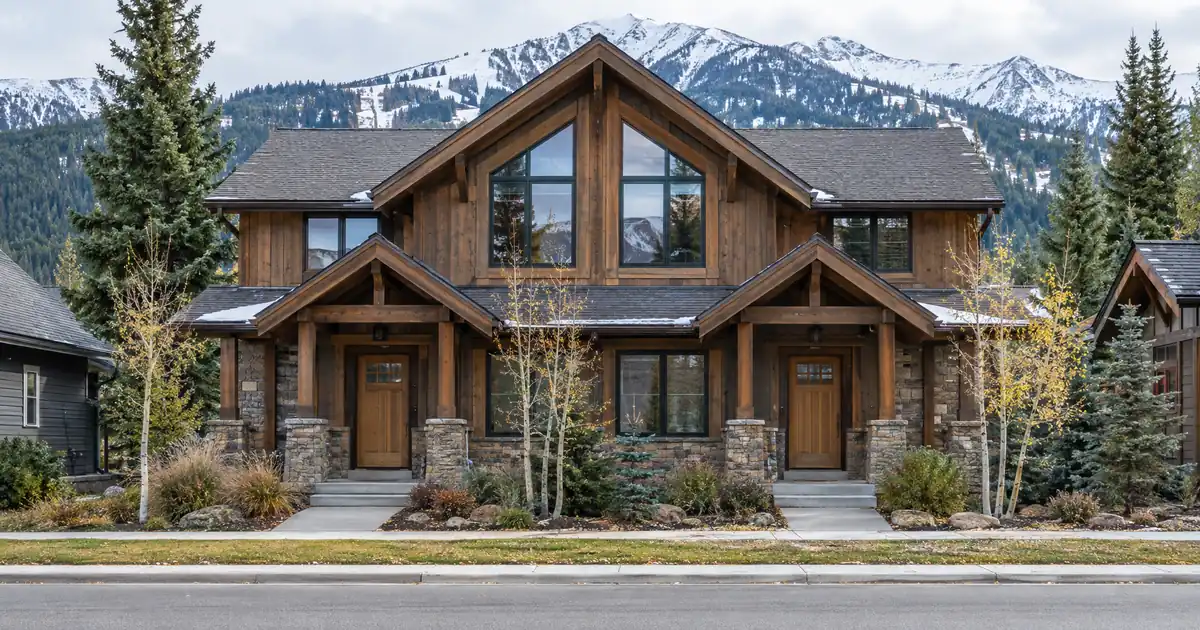
- Whitefish is a resort-style market, so seasonality and personal use matter more than they would in a plain workforce-rental town.
“Whitefish” here is a label for a resort-market buyer. The comparison below is national and written for anyone in that position.
What your deposits qualify you for.
Alt-doc programs read 12 months of business or personal bank deposits instead of tax returns. Enter your average monthly deposits and see the income a lender would credit you.
The expense factor is set by the lender from your business type and profit-and-loss statement; it is not a number you choose. This widget quotes no rate and no payment.
Program parameters shown update from Lendmire’s centralized guideline source.
Estimate
Illustrative estimate only — not a quote, Loan Estimate, approval, or commitment to lend. Deposit average, expense factor, and housing ratio are editable assumptions; the expense factor a lender applies is set from your business type and documentation. No interest rate or monthly payment is quoted here. Purchase capacity is a simplified illustration and does not account for taxes, insurance, HOA dues, or other debts. Alt-doc income documentation is available on consumer mortgages in the states where Lendmire is licensed for consumer lending; actual terms vary by lender, borrower, and property.
Who Each Loan Is Really For
Start with who you are and what you are buying. If the property is a rental you will not live in, DSCR is the natural starting point. If the property is your home or a second home, or if the rent is too thin to carry the payment, a bank statement loan is usually the one on the table.
DSCR stands for debt service coverage ratio. It divides the property’s monthly rent by its full monthly housing obligation: principal, interest, taxes, insurance, and any HOA dues. A result of 1.00x means rent equals cost. Higher is stronger.
A bank statement loan looks at 12 months of business or personal statements. The lender averages eligible deposits and applies an expense factor to business deposits. That figure then gets tested against your other debts. Across the wholesale network Lendmire works with, the expense factor varies by lender, so no universal formula exists.
Most DSCR programs don’t test your personal income. HousingWire’s non-QM guide describes the same split: bank statement loans for self-employed borrowers, DSCR for investors comparing rent to housing expense. Credit, reserves, and entity paperwork still apply on a DSCR file. “Easy” it is not.
Side-by-Side
The bank statement column below shows published industry norms and the Lendmire-network parameters where they apply. Every file is underwritten individually.
| Factor | DSCR Loan | Bank Statement Loan |
|---|---|---|
| What gets qualified | The property’s rent vs. its payment | Averaged deposits over 12 months |
| Best for | Investors buying rentals | Self-employed or variable-income borrowers |
| Occupancy | Non-owner-occupied investment property | Primary, second home, or investment |
| Personal income docs | Generally not the basis for approval | Statements are the income evidence |
| Personal debt test | Typically not the main test | Your debts are weighed against averaged income |
| Entity vesting | Often an LLC, subject to lender program eligibility | Often an individual borrower |
| Rent evidence | Lease or appraisal rent schedule | Not the main test on owner-occupied files |
| Reserves | Lender-set; varies by file | Commonly around 6 months of housing payment |
| Loan size | Varies by program | Roughly $125,000 to $3,500,000 |
| Typical weak spot | Rent that doesn’t cover the payment | Lumpy deposits or heavy existing debt |
Leverage differs by occupancy. On a primary residence, bank statement purchase and rate-term files go up to 90% LTV through select lenders, and stronger files earn the top of that range. On an investment-property cash-out, bank statement files top out around 75% LTV. Investment purchase leverage on bank statement documentation varies by lender. Investor leverage guidance generally sits on the DSCR side, so ask for it there. LTV is loan-to-value, the loan as a percentage of the property’s value.
When a DSCR Loan Is the Better Fit
DSCR wins when the property is the story. It fits best in these situations:
- You are buying a rental you will not occupy. This is the loan’s home turf.
- Your tax returns understate your cash flow. Write-offs can shrink taxable income. DSCR sidesteps that by qualifying on the property.
- You are scaling. Each new bank statement loan adds a payment to your personal debt picture. DSCR is property-level, so a growing portfolio doesn’t stack personal debt-to-income the same way.
- You buy through an LLC. DSCR programs are commonly designed for entity buyers, subject to lender program eligibility. Entity-held loans are often recourse to the members, so the borrower still stands behind the loan.
- The rent is strong and your documents are messy. Commingled accounts or irregular deposits matter less when the property carries the file.
A resort-market rental adds a wrinkle. Rent evidence for a long-term lease is simple: an appraisal rent schedule or a signed lease. Short-term rental income is harder to support, especially with no operating history. Short-term rental rules can vary by city, county, HOA, and property type, so investors should confirm local rules before relying on projected rental income. Also note that a seasonal property’s rent may look different at different times of year, so ask how the lender reads it before you pick a path.
Picture an investor buying a mountain-town rental at 75% LTV, with rent that clears the full payment at roughly 1.2x. That file is a DSCR file. The borrower’s tax returns never become the issue. Exact terms depend on the lender’s guidelines, property type, leverage, and a full review of the borrower’s file.
What if the number falls below 1.00x? Programs below 1.00 coverage are available through select lenders in the network, but LTV and terms adjust. The usual levers are a larger down payment, stronger credit, more reserves, or better rent evidence. Qualification stays subject to lender guidelines, credit approval, and property review.
For the full mechanics, see Lendmire’s complete DSCR loans guide.
When a Bank Statement Loan Is the Better Fit
Bank statement wins when the borrower is the story. Look at it first in these cases:
- You will live in the property. DSCR is for non-owner-occupied property. A primary residence points to bank statement or another documentation type.
- You want a second home you’ll use part of the year. On a second home, bank statement cash-out tops out at up to 75% LTV. A purchase has its own limits that depend on the lender.
- Your deposits are strong but the rent is thin. A property can fail the DSCR test and still be easy for a high-earning borrower to carry. In that case the borrower’s income becomes the better evidence, where the program allows investment property.
- You have no rental history. A brand-new rental with no lease or operating record can be hard to support on rent coverage.
- Your income is real but your returns don’t show it. Business owners and 1099 earners often have this problem.
Asset depletion is a related option. It qualifies from liquid assets rather than deposits, and it runs up to about 80% LTV on a primary residence. Every figure here varies by lender and program — guidelines, property type, leverage, and credit profile all apply.
Bank statement files run on judgment calls. Deposit consistency, expense factors, and your existing debts all matter. Income calculations, reserve standards, and overlays can vary significantly by lender. That matches what we see across the network: two lenders can read the same statements differently.
Lumpy income deserves a plain word. A tourism-driven business with big summer months and quiet winters can still average out over 12 months. A single outsized deposit can distort the picture, though, so be ready to explain it.
The Line Between Rental and Second Home
This is the part most buyers in a resort market miss. How you will use the property decides which loan is even available.
If you buy purely to rent, it’s an investment property and DSCR applies. If you plan to stay some weeks each year, the property may be a second home, and that changes the loan category. A bank statement loan on an owner-occupied home is a consumer mortgage. A bank statement loan on a non-owner-occupied rental, including a short-term rental, is business-purpose.
Say which one it is before you apply. Lenders ask, and the answer must be true. Out-of-state buyers get the same questions as everyone else, so settle your intended use early.
Same Buyer, Two Loans
Take one self-employed buyer eyeing a rental. On the DSCR path, the lender asks whether the property’s rent covers its full monthly obligation, and it reviews credit, reserves, and the entity. The buyer’s business deposits never come up as the basis for approval.
On the bank statement path, the lender totals 12 months of eligible deposits, strips out transfers and other non-income credits, applies an expense factor, and averages the result. Then it weighs the new payment against existing debts. HousingWire notes that income analysis is more than adding up deposits.
A buyer with thick deposits and thin rent might clear bank statement and miss DSCR. A buyer with strong rent and a messy income picture might do the reverse. Same person, different answer, because the loans test different things.
Using Both Together
Many investors don’t pick one. They finance their home on bank statement documentation and their rentals on DSCR. Each loan handles the thing it measures best. The home leans on your income, and each rental leans on its own rent.
A Short Decision Path
1. Will you live in it, even part-time? Think bank statement or another owner-occupied documentation type.
2. Is it a pure rental? Check the rent against the full payment. If coverage clears, start with DSCR.
3. Is coverage thin or the rental new? Ask about sub-1.00 DSCR programs, where LTV and terms adjust, or whether your deposits can carry a bank statement file.
4. Are you adding several properties? Lean DSCR to keep personal debt from stacking.
The Regulatory Frame, Briefly
Occupancy also changes the disclosure rules. Credit to buy a non-owner-occupied rental is treated as business-purpose under Regulation Z’s business-purpose exemption, which sits outside the consumer ability-to-repay regime. The CFPB’s ability-to-repay guide lists income or assets, debts, and credit history among the factors that lenders must weigh for consumer-purpose credit. Purpose controls, not the word “investment” in your application.
Tax treatment varies; consult a qualified professional.
Balanced Verdict
Neither loan is the winner. DSCR is the stronger tool for a rental buyer whose property earns its keep, especially as the portfolio grows. Bank statement is the stronger tool when the borrower’s income is the best evidence, or when the home will be lived in. The buyer who matches the loan to the property’s use usually has the smoother file. Lendmire’s piece Bank Statement Loan vs DSCR for a Self-Employed Rental Buyer goes deeper on that split.
If you are self-employed and want to see how the numbers work, Lendmire can help you compare bank statement loan options based on your deposits, the property, credit profile, leverage, and your goals. As a broker, Lendmire arranges financing through select lenders in its wholesale network. Any calculator on this site gives an illustrative estimate only.
Frequently Asked Questions
Can I use a DSCR loan on a home I live in?
No. DSCR programs are for non-owner-occupied investment property. A primary residence generally points to bank statement or another documentation type, which is reviewed on documented income under the applicable program, subject to lender guidelines.
Can a bank statement loan finance a rental property?
Sometimes. Investment purchase leverage on bank statement documentation varies by lender, and cash-out on an investment property tops out around 75% LTV. Many investors find DSCR the cleaner path for pure rentals, so compare both.
Does DSCR mean no documentation?
No. The property’s rent evidence, credit, entity papers, and asset sourcing still apply. DSCR skips personal income as the basis for approval, not paperwork in general.
What happens if my rent doesn’t cover the payment?
Select lenders in the network offer programs below 1.00 coverage, but LTV and terms adjust. You can also add down payment or reserves, or look at a bank statement file if the program allows the property type.
Do reserves differ between the two?
Bank statement files commonly ask for around 6 months of the housing payment. DSCR reserve expectations vary by lender and file. Either way, strong reserves can help a file, subject to lender guidelines.
About Lendmire
Lendmire — NMLS# 2371349 — is a mortgage broker that arranges bank statement, P&L-only, 1099-only and asset-based home financing in 16 states through wholesale lenders, on primary residences, second homes and investment properties. Every option is subject to the lender’s guidelines and full underwriting. Scotsman Guide named Lendmire a Top Mortgage Workplace in both 2025 and 2026.
Get Started
Ready to find the right loan for you?
See your offer in seconds. No credit pull, no obligation.
Informational only. Not a Loan Estimate, approval, or commitment to lend. Program availability and eligibility are subject to lender guidelines, credit approval, property review, and underwriting.
References
3. CFPB ATR/QM Small Entity Compliance Guide
This article is part of Lendmire’s bank statement loan program — full qualification details, guidelines, and scenarios live on the program page.
Related reading: DSCR Loan vs Bank Statement Loan for an Investor With No Paycheck · DSCR vs Bank Statement Loan for a Galena Rental Investor · DSCR vs Bank Statement Loan for a Broker-Owner Buying a Rental
Guides: Bank Statement Loans in Whitefish, MT · Bank Statement Loans in Montana
Brandon Miller
Founder & CEO, Mortgage Loan Originator, Lendmire LLC
- Mortgage Loan Originator · NMLS# 1129696 · Verify on NMLS Consumer Access
- North Carolina Real Estate Broker · License# 343312 · Verify on NCREC
- North Carolina Insurance Producer · License# 19053198 · Property, Casualty, Life, Health · Verify on NAIC SBS
- Lendmire LLC · Firm NMLS# 2371349 · Verify firm licensure
Legal disclosures. Lendmire (NMLS# 2371349) is a state-licensed mortgage brokerage that arranges financing through wholesale lender relationships. Lendmire is not a direct lender, depository institution, or registered financial advisor. The discussion above is general informational content about real estate financing — it is not financial, legal, or tax advice, and readers should consult licensed professionals for guidance on their individual circumstances. Loan inquiries are subject to lender underwriting; this article does not represent a commitment to lend. Loan terms, rates, and qualification standards vary by borrower, property, and state, and are subject to change at any time. Equal Housing Opportunity. NMLS Consumer Access: nmlsconsumeraccess.org.