
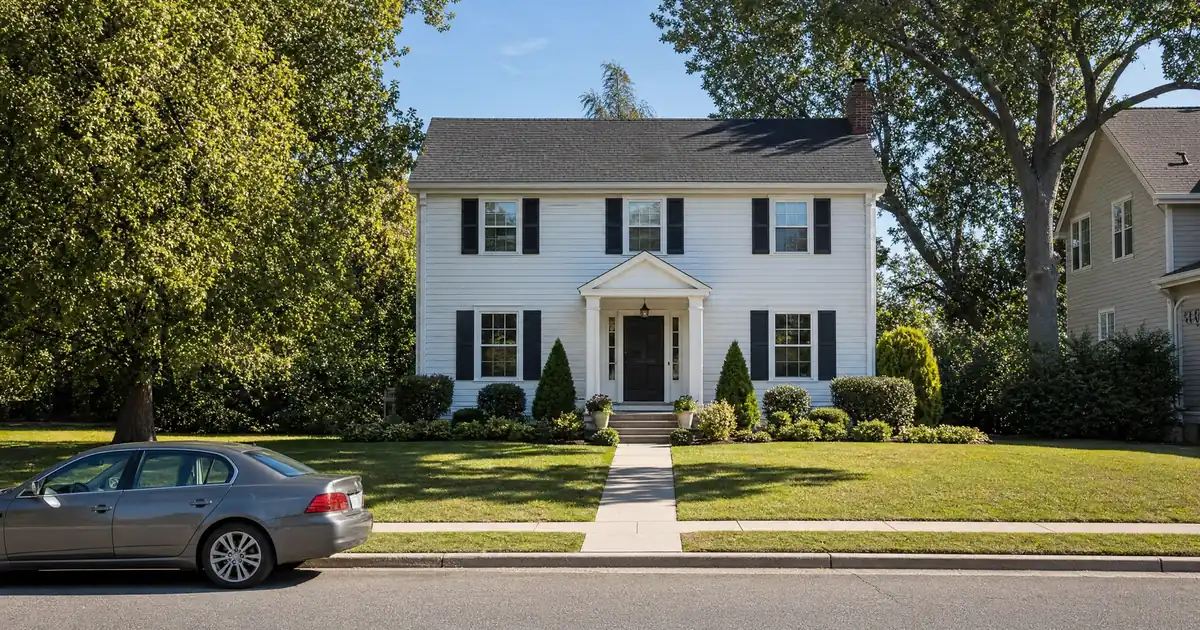
Eligible Property Types For A Bank Statement Loan — The Quick Read: Bank statement programs usually finance primary residences, second homes, and investment properties. This includes single-family homes, condos, and 2-4 unit buildings. Many programs also cover condotels and non-warrantable condos. Conventional loans won’t touch those two property types. Manufactured housing, raw land, and heavy mixed-use buildings usually fall outside the guidelines. Lenders review property type on a separate track from income documents. So a clean deposit history won’t automatically clear a hard-to-finance building. Some investors buy a property purely for rental income, with no plan to live there. For them, a DSCR loan is often the cleaner path. It qualifies on the property’s rent instead of personal cash flow.
Key Takeaways
- Most bank statement programs finance primary residences, second homes, single-family rentals, condos, and 2-4 unit buildings.
- Non-QM lenders often approve condotels and non-warrantable condos, even though agency loans turn them down.
- Manufactured homes, raw land, and buildings with 5 or more units fall outside most bank statement guidelines. They belong to different loan categories.
- Property eligibility and income documentation are two separate underwriting decisions. Both have to clear.
- Investors who buy pure rental property, with no personal income to document, often move to a DSCR loan instead.
Key Terms Defined
Bank statement loan — a mortgage that checks 12-24 months of bank deposits to verify income, instead of standard personal-income paperwork. It’s built for self-employed borrowers.
What your deposits qualify you for in your market.
Alt-doc programs read 12 months of business or personal bank deposits instead of tax returns. Enter your average monthly deposits and see the income a lender would credit you.
The expense factor is set by the lender from your business type and profit-and-loss statement; it is not a number you choose. This widget quotes no rate and no payment.
Program parameters shown update from Lendmire’s centralized guideline source.
Estimate
Illustrative estimate only — not a quote, Loan Estimate, approval, or commitment to lend. Deposit average, expense factor, and housing ratio are editable assumptions; the expense factor a lender applies is set from your business type and documentation. No interest rate or monthly payment is quoted here. Purchase capacity is a simplified illustration and does not account for taxes, insurance, HOA dues, or other debts. Alt-doc income documentation is available on consumer mortgages in the states where Lendmire is licensed for consumer lending; actual terms vary by lender, borrower, and property.
Non-QM (non-qualified mortgage) — a loan that falls outside the federal Qualified Mortgage rules. It usually uses alternative income documents or investment-property cash flow instead of standard W-2 underwriting. Lenders still check whether a borrower can reasonably handle the loan before approving it.
DSCR (debt-service coverage ratio) — a ratio that compares a property’s monthly rent to its monthly mortgage payment. Lenders use it to qualify investment properties based on their own income.
PITIA — principal, interest, taxes, insurance, and any association dues. This is the full monthly payment that a DSCR ratio measures against rent.
LTV (loan-to-value) — the loan amount shown as a percentage of the property’s value. A lower LTV means more equity down.
Business-purpose loan — a mortgage made on a property held for income or investment, not personal use. This changes how the loan gets reviewed and documented.
What Property Types Does a Bank Statement Loan Actually Finance?
Bank statement programs cover more property types than most borrowers expect. Trade coverage of the non-QM space describes these loans as available for primary residences and investment properties alike. Lenders document them through 12 to 24 months of deposit history instead of W-2s. That flexibility on income paperwork carries over to property types too. But the menu isn’t unlimited.
Primary Residences and Second Homes
Owner-occupied homes are the simplest case. The property gets a standard appraisal. The borrower’s occupancy plan drives the loan terms. Second homes work the same way. Lenders confirm the borrower uses the property personally, part-time, instead of renting it out full time.
Single-Family Rentals and Investment Properties
A single-family rental is where bank statement programs meet rental-income appraisal rules. When rental income factors into the deal, underwriters order a market-rent appraisal. This appraisal shows what the property could reasonably lease for. That step applies no matter where the borrower’s income comes from — a paycheck, a business, or bank deposits.
2-4 Unit Multifamily
The industry treats a 2-4 unit building as residential property. The line between “residential” and “commercial multifamily” sits at five units. LoopNet’s breakdown of property classification confirms this convention. An owner who lives in one unit and rents out the others can often count that rental income toward qualifying. That’s the house-hacking scenario covered further down.
Condos, Condotels, and Non-Warrantable Buildings
Condos add a project-level review on top of the unit-level appraisal. A building becomes non-warrantable when it fails to meet agency project standards. Enact’s underwriting explainer lists common triggers. These include commercial space that takes up more than roughly 35% of the project, pending litigation against the HOA or developer, or a building that hasn’t hit its minimum presale threshold. Condotels almost always fall into this category. Their hotel-style rental pools and nightly-use operations cause the problem. Bank statement programs frequently finance both non-warrantable condos and condotels. A standard agency loan would decline these property types outright, no matter the borrower’s income.
Rural and Acreage Properties
Rural parcels raise a different concern: marketability, not paperwork. A property on a large, undeveloped, or thinly-comped lot can be harder to resell or re-rent if the deal falls through. So lenders look more closely at comparable sales. This has nothing to do with how the borrower’s income was verified. It’s purely a property-side review.
What’s Usually Excluded: Land, Manufactured Homes, and Heavy Mixed-Use
Raw land, construction-only loans, and co-ops sit entirely outside most bank statement guidelines. Manufactured housing draws a harder line for many programs. The federal standard defines a manufactured home as a dwelling built on a permanent chassis, at least 320 square feet, with a HUD certification tag. Eligibility often depends on whether it’s titled as real property and permanently attached to a foundation. Heavy mixed-use buildings, where commercial space dominates the structure, run into the same project-review triggers that flag non-warrantable condos.
How Property Types Compare
| Property Type | Occupancy Requirement | Extra Review Step |
|---|---|---|
| Primary residence | Borrower lives there | Standard appraisal |
| Second home | Part-time personal use | Occupancy/use verification |
| Single-family rental | Non-owner occupied | Market-rent appraisal |
| 2-4 unit (owner-occupied) | Owner in one unit | Other-unit rent documented |
| Condo / condotel | Either | Project questionnaire; non-warrantable review |
| Rural / acreage | Either | Marketability and comp review |
Why Does Property Type Change the Underwriting?
Underwriters treat property type as a separate risk lane from income. Each property type carries its own resale and appraisal complexity, no matter who’s borrowing. A condo project can have solid owners and still fail review. Litigation or high commercial-space ratios can sink it, and neither has anything to do with the buyer. A rural parcel can have a financially strong borrower and still draw a marketability flag. There simply aren’t enough comparable sales nearby to support the appraisal with confidence. A short-term rental needs its own appraisal approach too. Nightly income doesn’t translate into a standard monthly rent comparable, so it can’t use the lease schedule built for long-term rentals. Short-term rental rules can also vary by city, county, HOA, and property type. Investors should confirm local rules before counting on projected rental income in any of these cases. None of this changes based on how the borrower documented income — traditional paperwork or bank statements. It’s a property question layered on top of an income question.
Which Category Fits Your Deal?
Run your scenario against these before assuming a program applies:
- Buying a duplex and living in one side? That’s the 2-4 unit owner-occupied lane. Rental income from the other units gets factored in.
- Buying strictly as a rental, never living there? That’s a straight investment-property file. It gets appraised on market rent.
- Looking at a resort-area condo with a rental-pool history? Expect a non-warrantable or condotel review. This happens even if the building looks financially healthy.
- Eyeing acreage outside a metro area? Expect extra comp scrutiny, not a documentation problem.
- Considering a manufactured home? Confirm with the specific lender early. Eligibility swings widely by program, and some non-QM investor products exclude it entirely.
What About the 2-4 Unit House-Hack?
The owner-occupied 2-4 unit is the main exception in this property-type framework. A borrower who lives in one unit and rents out the rest can often use that rental income to help qualify. The property still counts as residential, and it gets appraised with a rental-income schedule that covers the other units. Once the owner genuinely lives in one unit as a primary residence, the file behaves much like a standard owner-occupied purchase. The only difference is the rental income layered on top from the extra units.
This breaks down the moment the plan shifts to pure investment. If the borrower never plans to occupy any unit, the deal isn’t a house-hack anymore. It becomes a straight investment purchase, and it gets reviewed and priced that way.
Why Do Pure Rental Purchases Usually Move to DSCR Instead?
Once a property is a straight rental with no owner-occupancy angle, a DSCR loan usually fits better than a bank statement loan. A DSCR loan qualifies mainly on whether the property’s rental income covers the payment, subject to lender guidelines. It doesn’t look at personal deposit history. That’s the real difference: proving what you earn versus proving what the property earns. Bank statement loans still require the borrower to document meaningful personal cash flow through deposits. A DSCR file skips that step entirely and runs the qualification on the property’s own numbers. This distinction matters a lot for an investor with several rentals, inconsistent personal deposits, or income tied up in a business account rather than a personal one. Lendmire’s comparison of DSCR loans versus bank statement loans for investors walks through the decision in more detail.
Investment-property purchases are business-purpose loans. Lenders make them to the property, not to fund personal use. So they get reviewed differently than a standard owner-occupied mortgage.
What Does a DSCR Loan Require on the Property Side?
Across a wholesale network of DSCR lenders, most standard purchase programs land at 75%-80% loan-to-value. That means 20%-25% down. Select high-leverage programs reach 85% LTV for borrowers with roughly a 700 credit score. Cash-out refinances generally top out closer to 75% LTV. Most files also need roughly six months of ownership seasoning first. Coverage requirements vary by lender. Many standard programs use a 1.00x ratio as a baseline, since that’s the point where rent covers the full monthly obligation. This is a select-program floor, not a universal rule. Stronger coverage tends to unlock better leverage. Credit floors run as low as 620 on parts of the network. Most programs prefer something closer to 660, and a score of 700 or higher opens the strongest leverage tiers. Reserve requirements vary by lender, leverage, and loan size. They typically run around six months of PITIA. Some lenders waive reserves on conservative rate-term files under $1,500,000. Above that size, reserves can step up toward nine months. Review details are subject to lender overlays.
Some deals don’t clear a full 1.00x on long-term rent alone. Select lenders in the network will still review those files, though leverage and terms typically adjust. Lendmire’s breakdown of no-ratio DSCR loan eligible property types covers which properties still get looked at under those structures. Others restructure around an extended interest-only period to improve the coverage math. Lendmire’s guide to interest-only DSCR loan eligible property types covers this in detail. Others stretch amortization with a 40-year fixed term instead — see eligible property types for a 40-year DSCR loan for which properties qualify. A larger down payment lowers the monthly obligation and can lift the coverage ratio. But it never overrides leverage caps, credit floors, reserve rules, or property eligibility on its own. The strongest files clear both the equity test and the coverage test. Loan sizes on standard DSCR programs generally run up to $3,000,000. Amounts above roughly $2,500,000 are typically structured as 30-year fixed loans. A handful of overlay states — including Connecticut, Florida, Illinois, and New Jersey — generally cap purchase leverage near 75% LTV and hold larger deals closer to a $2,000,000 ceiling.
On the property side, manufactured homes — single- and double-wide — along with log homes and barndominiums fall entirely outside DSCR programs in this network. They’re simply not offered, not just harder to finance. Investors who prefer to hold rental property in an LLC or other entity can typically do so on DSCR files, subject to program eligibility. That’s one more reason pure rental purchases tend to gravitate toward DSCR over bank statement structures. Clearing a 1.00x coverage ratio also isn’t the same thing as positive cash flow. Repairs, vacancy, management fees, utilities, and capital expenses all sit outside that ratio, since DSCR only measures rent against PITIA.
Does Eligibility Change Between Purchase and Refinance?
Property-type eligibility itself generally doesn’t shift much between a purchase and a refinance. A non-warrantable condo that gets reviewed going in typically still gets reviewed on a later refinance. What does change is the leverage ceiling and the seasoning expectation. Cash-out refinances usually cap lower than purchases. They also carry an ownership-seasoning window before a lender will use a new appraised value. Investors planning to refinance a property they’re financing today should factor that leverage step-down into the long-term math from the start, not later.
Lendmire (NMLS# 2371349) arranges DSCR investor loans through a wholesale network of lenders spanning 40 states plus Washington, D.C. Lendmire works through property-type and coverage questions like these on a file-by-file basis. Investors weighing bank statement versus DSCR financing on a specific property can call 828-256-2183 or request a quote directly. That call can show how a particular building and rent profile pencil out.
Loan approval is never guaranteed. Nothing here is a commitment to lend. Every scenario described here is subject to lender approval. It depends on the borrower’s credit profile, the property itself, and the specific program’s guidelines — and these can change. This article is general information, not financial, legal, or tax advice. Investors should confirm current terms directly with a lender before making a purchase or refinance decision.
Frequently Asked Questions
Can I use a bank statement loan for a rental property I’ll never live in? Yes. Many bank statement programs finance pure investment properties, appraised on market rent through a standard rental-income appraisal. That said, an investor with no personal income to document at all often fits a DSCR loan better. That’s someone qualifying purely on the property’s cash flow, and DSCR skips personal deposit documentation entirely.
Do condotels qualify for bank statement financing? Often, yes, through non-QM lenders that specifically underwrite condotels and other non-warrantable buildings. Agency loans decline these property types no matter the borrower’s income. The building gets its own project-level review, separate from the borrower’s deposit history.
What happens if I want to buy a 5-unit building? A property with 5 or more units exits residential financing entirely. It moves into commercial multifamily underwriting instead. That means a different appraisal approach, different documentation, and a different loan structure than either bank statement or DSCR residential programs use.
Can a bank statement loan close in an LLC? It depends heavily on the specific lender and program. Entity-titled ownership is far more standard on the DSCR side of the market, where investment purchases already count as business-purpose loans. Investors planning to hold property in an LLC should ask this question upfront, rather than assume either program handles it the same way.
Is a manufactured home ever eligible? It depends on the lender. Bank statement program eligibility for manufactured housing varies widely and hinges on things like permanent foundation status and HUD certification. On the DSCR side, manufactured homes, along with log homes and barndominiums, simply aren’t offered in this network. Investors eyeing those property types should confirm eligibility with a specific lender before writing an offer.
Program availability, loan terms, and eligibility are subject to lender guidelines, credit approval, property review, and full underwriting. This article is educational. It is not a loan offer or a commitment to lend.
For current guidelines and terms, see Lendmire’s bank statement loan programs page.
About Lendmire
Lendmire, NMLS# 2371349, is a mortgage brokerage focused on investor financing. Lendmire arranges DSCR loans in 40 states plus Washington, D.C. — 41 markets total. Qualification is based on the property’s income rather than personal income documentation, subject to lender guidelines. That makes it a good fit for LLC-held rentals and growing portfolios. Scotsman Guide named Lendmire a Top Mortgage Workplace in both 2025 and 2026.
Get Started
Ready to find the right loan for you?
In about 30 seconds you can review financing options available for your home or investment property. No commitment required.
Informational only. Not a Loan Estimate, approval, or commitment to lend. Program availability and eligibility are subject to lender guidelines, credit approval, property review, and underwriting.
References
1. Scotsman Guide — Clear the Financing Hurdle
2. LoopNet — What Is a Multifamily Home?
3. Enact — What Makes a Condominium Non-Warrantable
4. HUD — Manufactured Housing Homeowner Resources
This article is part of Lendmire’s bank statement loan program — full qualification details, guidelines, and scenarios live on the program page.
Related reading: Eligible Property Types For A 12-month Bank Statement Loan · Non-warrantable Condos And The Super Jumbo Bank Statement Loan · How Many Bank Statements For FHA Loan?
Brandon Miller
Founder & CEO, Mortgage Loan Originator, Lendmire LLC
- Mortgage Loan Originator · NMLS# 1129696 · Verify on NMLS Consumer Access
- North Carolina Real Estate Broker · License# 343312 · Verify on NCREC
- North Carolina Insurance Producer · License# 19053198 · Property, Casualty, Life, Health · Verify on NAIC SBS
- Lendmire LLC · Firm NMLS# 2371349 · Verify firm licensure
Important disclosures. Lendmire (NMLS# 2371349) is a licensed mortgage brokerage. Lendmire is not a direct lender, depository institution, or financial advisor. All loan inquiries are subject to lender underwriting; this article does not constitute a commitment to lend. Rates, terms, and program guidelines are subject to change without notice and vary by borrower profile, property type, and state. Information in this article is general in nature and is not financial, legal, or tax advice. Equal Housing Opportunity. NMLS Consumer Access: nmlsconsumeraccess.org.