
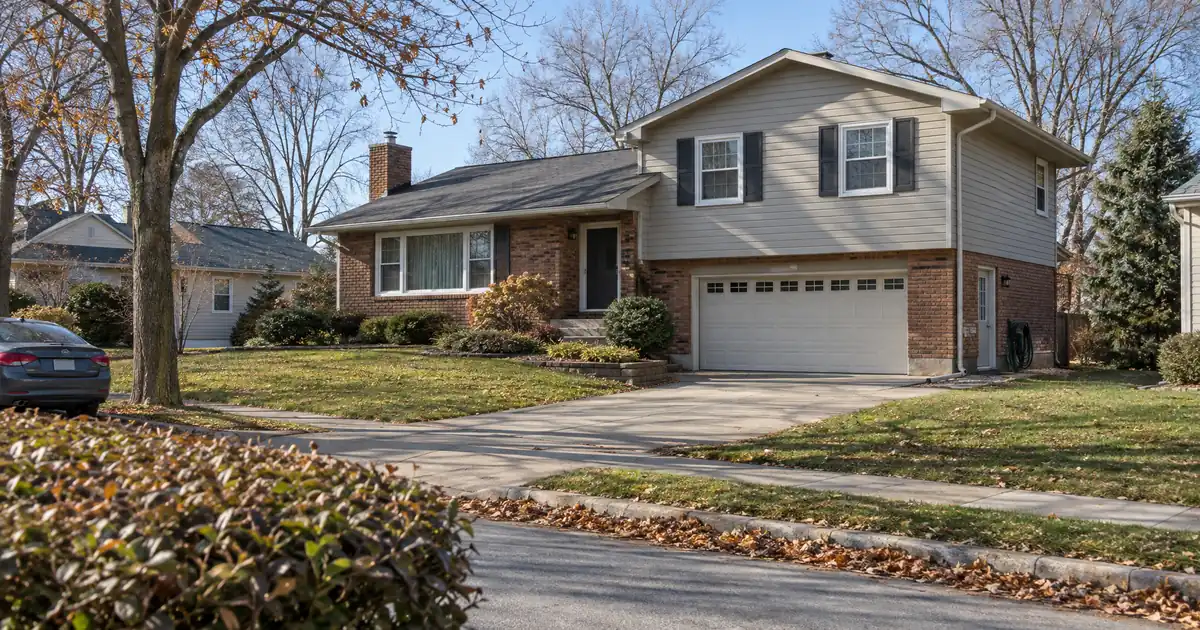
The Quick Read: For a pure rental property, DSCR is usually the steadier fit when deposits are falling, because a DSCR file is judged on the property’s rent against its debt, while a bank statement file is judged on averaged deposits that a downward trend pulls lower. The answer flips when the rent is thin or when the borrower will live in the property.
- Occupancy decides first. DSCR is an investor product for non-owner-occupied property; a home you live in points to a bank statement or other income-based program.
- Rent coverage decides second. If the property’s rent comfortably covers its full monthly obligation, the falling trend matters far less.
- Deposit direction decides third. Bank statement qualifying income comes from averaged deposits, so a decline lowers the number before any expense factor is applied.
- Neither product is automatically better. The cause of the decline and the property’s rent change the verdict.
- DSCR still reviews credit and reserves. It is not a documentation-free route.
Key Terms Defined
Qualifying income: the monthly income figure a lender uses to size a bank statement loan, built from averaged deposits.
Expense factor: the percentage a lender subtracts from business deposits to estimate what the borrower actually keeps; it varies by lender and can sometimes be replaced by a profit-and-loss statement or tax-professional expense statement.
DSCR (debt service coverage ratio): monthly rent divided by the full monthly housing obligation, including principal, interest, taxes, insurance, and any HOA dues. A ratio of 1.0 means rent exactly covers the payment.
Non-owner-occupied: a property the borrower does not live in, such as a long-term or short-term rental.
Seasoning of deposits: how long the deposits have sat in the account and what pattern they show across the statement window.
What your deposits qualify you for.
Alt-doc programs read 12 months of business or personal bank deposits instead of tax returns. Enter your average monthly deposits and see the income a lender would credit you.
The expense factor is set by the lender from your business type and profit-and-loss statement; it is not a number you choose. This widget quotes no rate and no payment.
Program parameters shown update from Lendmire’s centralized guideline source.
Estimate
Illustrative estimate only — not a quote, Loan Estimate, approval, or commitment to lend. Deposit average, expense factor, and housing ratio are editable assumptions; the expense factor a lender applies is set from your business type and documentation. No interest rate or monthly payment is quoted here. Purchase capacity is a simplified illustration and does not account for taxes, insurance, HOA dues, or other debts. Alt-doc income documentation is available on consumer mortgages in the states where Lendmire is licensed for consumer lending; actual terms vary by lender, borrower, and property.
What Does Each Loan Actually Test?
A bank statement loan tests the borrower. A DSCR loan tests the property. That one contrast explains nearly every decision below.
Across the wholesale network Lendmire works with, bank statement programs ask for 12 months of business or personal statements, with some lenders accepting a longer window. Scotsman Guide notes that statements typically cover one or two years and that average monthly deposits become the base income for qualifying. Credit, debt ratios, leverage limits, and reserves still apply on top of that.
A DSCR file leans on the lease or a market rent estimate, an appraisal with a rent schedule, credit, and proof of reserves and source of funds. Bank statements still show up, but as evidence of cash to close, not as income.
| Factor | Bank Statement | DSCR |
|---|---|---|
| What is tested | Averaged deposits | Rent vs. housing obligation |
| Occupancy | Primary, second home, some investment | Non-owner-occupied only |
| Personal debts | Reviewed | Not the qualifying basis |
| Reaction to falling deposits | Lowers qualifying income | Largely irrelevant to the ratio |
| Reaction to falling rent | Mostly irrelevant | Lowers the coverage ratio |
| Credit | Reviewed | Reviewed |
Qualification on either path depends on lender guidelines, credit profile, reserves, and property review.
How Does a Falling Deposit Trend Get Read?
A falling trend lowers qualifying income, and it can also invite more questions. Three things stack together: the average, the direction, and the expense factor.
Start with the average. A 12-month window blends strong early months with weak recent ones, so the number lands between the two. Then comes the expense factor. On business-account statements, most programs cut deposits by a percentage before calling the remainder income. The factor differs by lender, so no universal formula exists. Some lenders accept a profit-and-loss statement or a tax-professional expense statement in its place, which can help when real expenses run lower than the default.
Then comes the direction. In practice, an underwriter who sees a steady slide may ask for a written explanation, request business records, calculate income more conservatively, or decide the file does not fit that program. Which one happens depends on the lender and the file. None is guaranteed.
Window choice matters too. A shorter window helps if income grew recently. A longer one helps if the early months were strong and the dip came late. Falling deposits hurt under either, but the damage differs by file.
Why Are Your Deposits Down?
The cause of the decline often matters more than the decline itself. Four common causes lead to different answers.
| Cause | Bank Statement Read | DSCR Read |
|---|---|---|
| Seasonal pattern | Documentable with an explanation letter and records | Unaffected |
| Lost major client | Averaged lower; may need explanation | Unaffected |
| Prior-year spike rolling off | Average normalizes lower | Unaffected |
| Structural decline | Hardest case; may not fit | Unaffected if rent covers |
Uneven is not the same as declining. Seasonal income repeats every year, and a landscaper or a tax preparer can show that cycle in the records. A downward drift does not repeat. Underwriters distinguish the two, and a borrower who can prove the pattern is seasonal is in a much better spot than one who cannot explain it.
The Decision Flow
Work the decision in order: occupancy, rent coverage, then deposit trend.
1. Will you live in the property? If yes, DSCR is off the table. Falling deposits must be handled inside a bank statement or other income-based program, and the cause of the decline becomes the central question.
2. Is it a pure rental, including a short-term rental? Move to the next question.
3. Does the rent comfortably cover the full monthly obligation? If yes, DSCR is usually the steadier fit, since personal deposits are not the qualifying basis. Select lenders in the network also offer programs below 1.00 coverage, though leverage and terms adjust, and eligibility stays subject to lender guidelines.
4. Is the rent thin, but your deposits still strong on average? A bank statement route may work better, because the property does not have to carry itself.
5. Are both weak? Neither path is likely to work today. See the sections below on sequencing and alternatives.
A Worked Comparison
Run the numbers on a self-employed contractor buying a duplex to rent out, with deposits that were strong early in the statement window and have softened over the last several months. These are modeled assumptions, not market data.
Under the bank statement path, the averaged deposits sit well below the borrower’s peak months. After the lender’s expense factor, qualifying income shrinks again. The borrower’s other debts then compete for that smaller number.
Under the DSCR path, assume the rent schedule on the appraisal clears roughly 1.2x against the full housing obligation. The softening deposits do not enter the ratio. The lender still reviews credit, reserves, and the source of funds, and still expects entity documents if the property is held in an LLC, depending on program guidelines.
Same borrower, same dip, different result. Flip one input, though. Suppose the rent schedule comes in around 0.85x. Now DSCR gets harder: reduced leverage through a sub-1.00 program may be available through select lenders, but it is not a given. The bank statement file, even with softer deposits, might be the cleaner route if the average still supports the payment.
Where the General Rule Breaks
The rule “rentals go DSCR, falling deposits avoid bank statement” fails in a handful of situations.
Owner-occupied rentals. Buying a small multifamily and living in one unit is not a pure investment purchase. DSCR is built for non-owner-occupied property, so an owner-occupied file typically moves to a bank statement or other income-based lane.
Falling rents. If your deposits are falling because tenants are leaving or rents are dropping, the property is taking the hit directly. DSCR coverage falls with the rent, and the bank statement average falls with the deposits. Both files weaken, in different ways.
Commingled accounts. For bank statement files, mixed personal and business money makes deposits hard to classify, and transfers between your own accounts are stripped out. Cleaning up the accounts before the statement window starts helps.
Thin rent, strong cash flow. A property that does not cover its payment but sits in the portfolio of a borrower with strong average deposits is a bank statement candidate, not a DSCR one.
Entity borrowers. Loans to an LLC for investment property are business-purpose and typically handled on the DSCR side, subject to lender program eligibility.
DSCR vs. conventional financing
There are two common ways to finance an investment property, and they qualify you differently — here’s how investors weigh them.
Why investors choose it
- Qualifies on the property’s rental income — no personal tax returns, W-2s, or pay stubs needed to document income.
- No personal debt-to-income ceiling to clear, so existing mortgages and obligations don’t cap your borrowing the same way.
- Can be closed in an LLC, keeping the property inside a business entity.
- Built for scaling — not held to the limit on number of financed properties that conventional financing applies.
- Underwriting centers on the deal: generally qualifies when the rent covers the payment, a 1.00x coverage ratio being a common baseline (confirmed in underwriting).
- Designed specifically for investment property, including long-term and, where the program allows, short-term rentals.
Where it’s strong
- Often the lowest ongoing financing cost for a buyer who fully qualifies on personal income — a fit for a first property or a cost-first purchase.
Trade-offs for investors
- Requires full personal income documentation and must fit within a debt-to-income limit — salary, existing debts, and other mortgages all count.
- Typically held in your personal name rather than a business entity.
- Caps how many financed properties you can carry, which can become a ceiling as a portfolio grows.
- Evaluates you as a borrower as much as the property, which usually means more paperwork.
How investors usually choose: a first or single property often optimizes for the lowest financing cost; portfolio builders often optimize for leverage, vesting in an LLC, and scaling past conventional caps. The right answer depends on your goals, the property, and current guidelines — both paths run through select lenders in Lendmire’s wholesale network, with eligibility and terms confirmed in underwriting.
Why Occupancy Changes the Paperwork
A short note on why the occupancy question carries so much weight. An owner-occupied bank statement loan is a consumer mortgage, so full consumer disclosure rules apply and the lender must make a reasonable repayment determination. That is why lenders screen deposits so carefully and strip out transfers, refunds, and one-time items.
A loan on a non-owner-occupied rental is business-purpose. The CFPB’s Truth in Lending booklet says credit to acquire or improve non-owner-occupied rental property is business-purpose credit and falls outside Regulation Z, and the Federal Register final rule treats investment-purpose loans as business-purpose too. That is why DSCR files focus on the property rather than the borrower’s earnings, and why the exemption is not automatic for every property that happens to produce rent.
Leverage and Program Ranges to Know
On the bank statement side, select lenders in the network allow up to 90% LTV on a primary-residence purchase or rate-term refinance, with stronger files earning the top of that range. An owner-occupied cash-out on a primary residence or second home tops out at 80% LTV with a fixed expense ratio (75% with an accountant-prepared ratio), by loan size and credit. An investment-property cash-out tops out around 75% LTV. Investment purchase leverage on bank statement documentation varies by lender, and investor-focused leverage guidance belongs to the DSCR side. Loan sizes typically run from $125,000 to $3,500,000, with reserves commonly around 6 months of the housing payment. All of this is subject to lender guidelines.
A related option for borrowers with large liquid balances is asset depletion, which qualifies from assets rather than deposits and reaches about 80% LTV on a primary residence. The exact numbers vary by lender and program and follow a full review of property, leverage, and credit.
Term length follows individual lender program sheets. Extended terms and interest-only structures are generally DSCR-side offerings, so do not plan around a 40-year bank statement loan.
Consumer mortgage licensing for the bank statement lane covers 16 states, so availability depends on where the property sits. Bank statement loans qualify on documented income under the applicable program, subject to lender guidelines.
A Mixed or Sequential Strategy
You do not have to pick one product forever. An investor can use a bank statement loan on a primary home and DSCR on the rentals, since each product tests a different thing.
Sequencing is the second option. If deposits are down but recovering, a borrower might buy the rental on DSCR now and revisit a cash-out or a primary-home purchase after several stronger months build the average back up. The reverse also works: a borrower with strong deposits and an under-rented property may use bank statement now and refinance to DSCR after a lease-up.
Lendmire’s how to use a W-2 co-borrower on a bank statement mortgage covers one way to shore up a bank statement file when your own deposits are softer than you would like.
What to Do Before You Apply
A few steps strengthen either path.
- Separate business and personal deposits so the lender can classify them cleanly.
- Write a short explanation of why deposits dipped, with supporting records such as invoices, contracts, or a business license.
- Get a rent schedule or lease on the target property so you know the coverage ratio before you commit.
- Compare both paths side by side: the rent-to-obligation ratio on one hand, the averaged-deposit income after expense factor on the other.
- Check reserves and credit. Both products review them, and DSCR does not make credit irrelevant.
If you want the full mechanics of the investor side, Lendmire’s complete DSCR loans guide walks through coverage, leverage, and documents. Tax treatment can depend on how the funds are used and how the property is held; investors should keep clear records and speak with a qualified tax professional before relying on any deduction.
Common Misconceptions
“DSCR means no documentation.” It still needs a lease or rent estimate, an appraisal, credit, entity documents when applicable, and reserves. Qualification runs primarily on the property’s rental income covering the payment, subject to lender guidelines.
“Bank statement means any deposit counts.” Transfers, refunds, and one-time deposits are screened out.
“Non-QM means subprime.” Scotsman Guide describes many non-QM loans as quality mortgages that fall outside agency purchase guidelines.
“Switching to DSCR is always better.” It is not, when rent is thin or the property will be owner-occupied.
Frequently Asked Questions
Does a recent dip hurt more than an old one?
Usually, yes. A recent decline signals current direction, so an underwriter may question it, while an older dip that has since recovered mostly just lowers the average. A written explanation with records helps in both cases.
Does DSCR still need bank statements?
Yes, but not as income. Statements show source of funds and reserves, and the lender still reviews credit. Qualification rests on the property’s rent against its monthly obligation.
Can I use DSCR on my own home?
No. DSCR is an investor product for non-owner-occupied property. If you will live in the property, a bank statement or other income-based program is the path to compare.
Do 12 or 24 months help more with falling deposits?
It depends on the shape of the decline. A longer window helps if your early months were strong and the dip is recent. A shorter window helps if income recently grew. Falling deposits hurt either way, so the cause matters more than the window.
What if neither works?
Strengthen the file first: rebuild deposits, improve the rent roll, or add a W-2 co-borrower on a bank statement purchase. Asset depletion is another option for borrowers with large liquid balances.
Reach the team at 828-256-2183 or request a quote through the Lendmire quote page.
The practical test comes down to one question: which number is steadier right now, the property’s rent or your own deposits?
About Lendmire
Lendmire (NMLS# 2371349), a non-QM mortgage broker serving investors in 41 markets including Washington, D.C., helps structure DSCR scenarios commonly evaluated around a property’s rental income rather than personal income paperwork, subject to lender guidelines. A Scotsman Guide Top Mortgage Workplace in 2025 and 2026, Lendmire places loans through wholesale investor lenders and is not a direct lender.
Get Started
Ready to find the right loan for you?
In about 30 seconds you can review financing options available for your home or investment property. No commitment required.
Informational only. Not a Loan Estimate, approval, or commitment to lend. Program availability and eligibility are subject to lender guidelines, credit approval, property review, and underwriting.
References
1. Scotsman Guide, “Clear the Financing Hurdle”
2. CFPB, Truth in Lending Act booklet
3. Federal Register, ATR/QM final rule (CFPB)
This article is part of Lendmire’s bank statement loan program — full qualification details, guidelines, and scenarios live on the program page.
Related reading: Bank Statement vs DSCR Loan for a Vacation Rental Property · Bank Statement Loan vs DSCR for a Full-Time Airbnb Host · Bank Statement vs DSCR for an Owner Whose Deposits Dropped This Year
Brandon Miller
Founder & CEO, Mortgage Loan Originator, Lendmire LLC
- Mortgage Loan Originator · NMLS# 1129696 · Verify on NMLS Consumer Access
- North Carolina Real Estate Broker · License# 343312 · Verify on NCREC
- North Carolina Insurance Producer · License# 19053198 · Property, Casualty, Life, Health · Verify on NAIC SBS
- Lendmire LLC · Firm NMLS# 2371349 · Verify firm licensure
Compliance and disclosures. Lendmire (NMLS# 2371349) is a licensed mortgage broker and is not a direct lender, depository institution, financial advisor, or tax professional. Content in this article is general market analysis and educational information — not financial, legal, or tax advice for any specific situation. Lendmire does not guarantee loan approval; every transaction is subject to underwriting by the funding lender. Mortgage pricing and loan program guidelines are subject to change at any time without notice and vary by borrower characteristics, property type, and state regulations. Lendmire complies with Equal Housing Opportunity. Licensure verification: NMLS Consumer Access.