
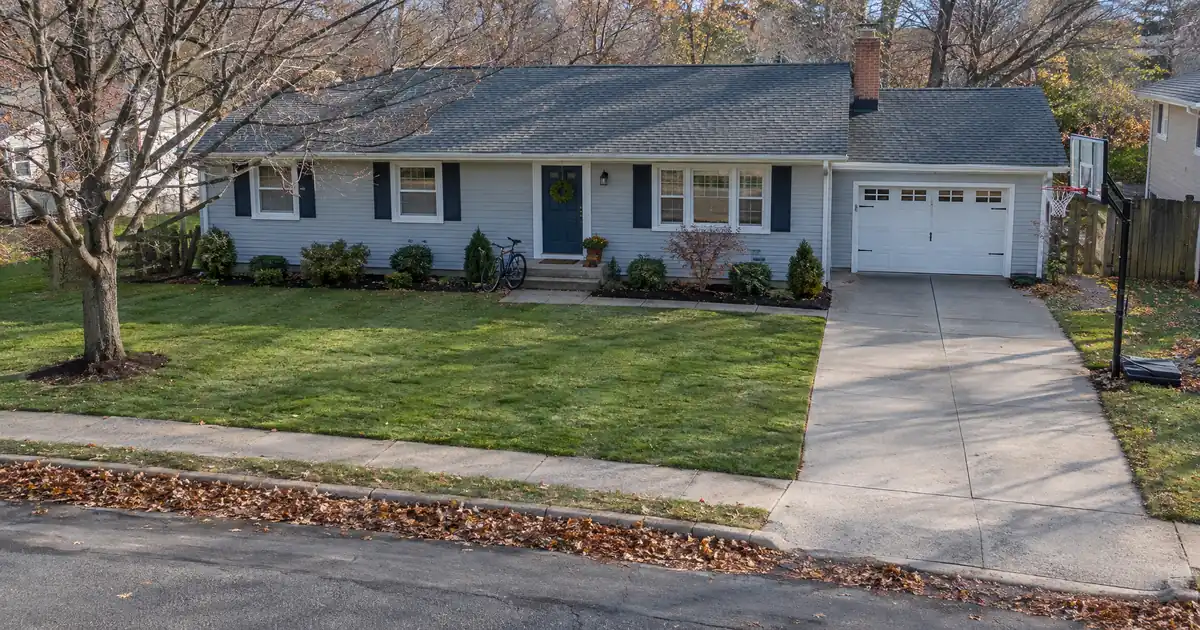
The Quick Read: A Fannie Mae cash-out refinance replaces your current first mortgage with a larger new one and hands you the difference. Three tests decide whether you get there: how much equity stays in the home (LTV), how long you have owned it and held your current loan (seasoning), and whether you have cash left over after closing (reserves). On a one-unit primary residence, the leverage cap is 80%, subject to lender guidelines and full file review.
What Counts as a Cash-Out Refinance?
A cash-out refinance is a new first mortgage that pays off your existing mortgage and puts the leftover money in your pocket. Fannie Mae’s Selling Guide topic B2-1.3-03 also treats a new mortgage on a home with no lien at all as cash-out. Own your house free and clear and borrow against it? That’s cash-out by definition.
Cash-out refinance estimate
The starting figures are an example value with a balance and a cash request in proportion. Replace them with yours.
Editable benchmark: 7.40% as of October 15, 2026 · Freddie Mac 30-year average via FRED®. A conventional market reference, not a cash-out refinance quote.
Illustrative starting assumptions: a $350,000 home value, a $193,000 current balance, the agency cap on a one-unit principal residence, a thirty-year term at the current Freddie Mac benchmark, and property taxes and insurance estimated at typical national rates. Every field is editable.
Illustrative estimate only — not a Loan Estimate, approval, quote, or commitment to lend. The rate field carries the weekly Freddie Mac thirty-year conventional benchmark, a market reference and not a cash-out refinance quote; a cash-out loan is priced by the lender at lock. The cash available is the loan the program cap allows less the balances paid off, before closing costs, which are not included. The HELOC line is the program’s combined loan-to-value ceiling applied to the same value and balance. Taxes and insurance are editable estimates. Licensed in sixteen states for consumer mortgages.
Fannie Mae keeps a separate category, limited cash-out, often called rate-and-term. That loan pays off the existing first mortgage, closing costs and a purchase-money second lien, with only incidental cash back. Across the wholesale programs Lendmire arranges, it carries higher leverage: 95% on a one-unit primary residence. The price of taking real cash is a lower cap and stricter seasoning.
Fannie Mae sets the guidelines. It does not lend to you directly. A lender originates the loan, and Lendmire is a mortgage broker that arranges these loans through wholesale lenders, which are licensed in 16 states for consumer lending.
How Is the Loan Underwritten, Step by Step?
Underwriting runs in a fixed order, and a file can fail at any step. Here is the sequence on a typical conventional cash-out.
1. Eligibility screen. The lender checks your title clock, the age of your current loan and whether the home is listed for sale.
2. Application and automated findings. Most files run through Fannie Mae’s automated underwriting system. Its findings drive the reserve requirement and the ratio limit.
3. Appraisal. The appraised value is the bottom number in the LTV math.
4. LTV test. The new loan amount, divided by appraised value, must fit under the cap for your occupancy and unit count.
5. Ratios and reserves. Your debt-to-income ratio and liquid assets are measured against the rules below.
6. Pricing. Fannie Mae applies risk-based adjustments tied to credit score, LTV and loan purpose. They are cumulative, and they are why cash-out pricing differs from a standard refinance. The Loan Estimate shows the real cost.
7. Closing and rescission. On a primary residence you get three business days to cancel after signing.
On credit, the wholesale conventional programs start at a 620 decision score. The automated finding governs most files, with a total ratio ceiling of 50%. Manually underwritten loans run tighter, at 36% or 45% depending on reserves and score factors.
How Does the LTV Cap Work?
The cap on a one-unit primary residence is 80% LTV. For two- to four-unit primary residences, second homes and investment property, it is 75%. The full table lives in the Fannie Mae Eligibility Matrix. Each figure is subject to lender guidelines and a complete review of property type, leverage, and credit.
Here is the logic in plain words. Take your home’s appraised value and apply the cap. That product is the largest loan allowed. Subtract your current payoff, the closing costs you finance and any second lien that gets paid off. What remains is the most cash you can take.
Picture a homeowner with a one-unit primary residence and a loan balance equal to about 55% of the appraised value. At the 80% cap, roughly 25 points of value sit between that balance and the ceiling. Financed closing costs eat into those points before any cash reaches the borrower. A weaker appraisal shrinks the room further.
Two wholesale variations matter:
- The 89.99% lane. One wholesale lane reaches 89.99% LTV with no mortgage insurance. It requires a 680 score, a 50% ratio ceiling, a thirty-year fixed rate, a primary residence and a conforming balance, plus its own six months of seasoning. Availability is narrower than the standard 80% program.
- Texas homesteads. A cash-out on a Texas homestead is capped by the state constitution at the agency figure, and the wholesale lane above is not written there. Leverage, reserves, and pricing vary by lender and program; the final terms follow the full file review.
What Are the Two Seasoning Clocks?
Seasoning is two separate waits, and both must be satisfied. Borrowers often confuse them.
Clock one: time on title. At least one borrower must have been on title for six months before the new loan’s disbursement date, per Fannie Mae’s Selling Guide. Time held in a revocable trust can count when the borrower is its primary beneficiary.
Clock two: age of your current first mortgage. The loan being paid off must be at least 12 months old. Fannie Mae’s capital markets notice measures this from the note date of the existing loan to the note date of the new loan.
| Test | What it measures | Threshold |
|---|---|---|
| Title clock | Your time as owner | 6 months |
| Loan-age clock | Existing first mortgage | 12 months, note to note |
| Listing rule | Home on the market | Off market by disbursement |
Say you bought your home two years ago but refinanced it five months ago. You clear the title clock easily. The loan-age clock still blocks you. That’s the trap behind the myth that six months is the only wait.
The exceptions are real but narrow. Delayed financing covers buyers who paid cash. It waives the title wait, but the loan is still cash-out, so cash-out LTV caps and pricing still apply. Inheritance and legal award, such as in a divorce, are the other common exceptions. Which ones apply varies by agency and lender, so confirm yours.
When Do Reserves Apply?
Reserves are liquid assets you still hold after closing, and on a one-unit primary residence Fannie Mae sets no general minimum. Fannie Mae’s Selling Guide adds a specific trigger: on an automated-underwriting file, if your DTI exceeds 45%, six months of reserves are required. The automated findings can also assign reserves on overall risk.
So “reserves are always required” is wrong, and so is “never.” The 45% DTI line is the pivot.
Counting rules matter:
- Funds to close come out first. Money needed at closing is subtracted from your assets before reserves are measured.
- Cash-out proceeds are not automatic reserves. Don’t assume the money you pull out counts as your cushion.
- Accepted sources. Checking, savings, stocks, bonds, mutual funds, CDs, the vested amount in retirement accounts and the cash value of vested life insurance.
- Rejected sources. Non-vested funds, personal unsecured loans and non-vested stock options.
Reserve rules get heavier for second homes, investment property and two- to four-unit primary residences, and for borrowers with several financed properties.
Where Does the General Rule Break?
Most surprises come from edge cases. These are the ones that come up most.
- Free-and-clear homes. No existing loan, but still cash-out.
- Delayed financing. It skips the title wait. Cash returned is tied to documented purchase cost, not appraised value. Details sit in the Selling Guide section above.
- Student loan cash-out. Fannie Mae lists a separate provision for paying off student loans with cash-out proceeds. Pricing treatment is spelled out there.
- Listed for sale. The home must be taken off the market on or before disbursement.
- Ineligible structures. A loan with a temporary interest rate buydown cannot be a cash-out refinance, and certain PACE-loan situations are restricted.
- Community Seconds. They are not permitted alongside a cash-out refinance.
- Manufactured homes. Fannie Mae sets much lower cash-out LTVs, restricts single-width homes and requires automated underwriting.
- Freddie Mac differences. Freddie Mac’s Guide §4301.5 is similar but not identical. It has its own exceptions and a special-purpose cash-out used to buy out a co-owner’s equity.
For fuller treatment of leverage on rentals, Lendmire’s piece Fannie Mae Cash Out Refinance LTV Investment covers it. For a homeowner refinancing the home they live in, the occupancy rule is simple: the 80% cap applies only to a one-unit primary residence.
What Does the Borrower’s Decision Look Like?
The decision comes down to cost, equity and timing. Run the loan through these questions.
Is cash-out the right structure? If you only want a different term or a lower payment on the same balance, limited cash-out carries higher leverage and fewer pricing add-ons. Cash-out earns its place when you need the equity itself.
What does the full balance cost? Pricing adjustments are based on gross LTV and are cumulative. They apply across the entire new loan, not just the cash portion. They are built into pricing or closing costs, so the Loan Estimate is where you compare them.
Can you keep enough equity? The cap means you must leave equity in the home. Above 80% LTV, conventional loans require mortgage insurance. It can be cancelled at 80% of original value and ends automatically at 78%. The standard cash-out cap sits at 80% for that reason.
Does the timing work? Check both clocks, the listing rule and the three-day rescission window before you plan around a closing date.
| Option | Best fit | Main tradeoff |
|---|---|---|
| Cash-out refinance | Large equity need, one new loan | Lower LTV cap, extra pricing |
| Limited cash-out | Better terms, little cash | Almost no cash back |
| Keep current loan | Existing terms are strong | No access to equity |
Tax treatment can depend on your situation; borrowers should speak with a qualified tax professional before relying on any deduction or credit.
Common Mistakes to Avoid
- Counting only the six-month title clock and forgetting the 12-month loan-age rule.
- Assuming the cash you take out will satisfy reserves.
- Ignoring that financed closing costs reduce your available cash.
- Assuming delayed financing converts the loan into a rate-and-term refinance. It doesn’t.
- Assuming you can cancel any refinance. The three-business-day right applies to a primary residence, per the CFPB.
Key Terms Defined
LTV (loan-to-value): the new loan amount divided by the home’s appraised value.
Seasoning: the minimum time you must have owned the home and held your current loan.
Reserves: liquid assets you still have after paying the costs of closing.
DTI (debt-to-income): your monthly debts divided by your monthly gross income.
Note date: the date you sign the loan’s promissory note, used to measure loan age.
Loan-level price adjustment: a risk-based pricing add-on tied to credit score, LTV and loan purpose.
Frequently Asked Questions
Can I do a cash-out refinance six months after buying my home?
Only if you also meet the loan-age rule or an exception applies. Six months on title satisfies the first clock. If you paid cash, delayed financing may waive the title wait, though cash-out limits and pricing still apply. If your purchase had a mortgage, that loan must generally be 12 months old, note date to note date.
Do I need reserves on a Fannie Mae cash-out refinance?
Not by a general rule on a one-unit primary residence. The specific trigger is a DTI above 45% on an automated-underwriting file, which requires six months of reserves. The automated findings can still add reserves based on risk, and other occupancies carry heavier rules.
What is the maximum LTV on a cash-out refinance?
It is 80% on a one-unit primary residence and 75% on two- to four-unit primary residences, second homes and investment property. One wholesale lane reaches 89.99% with no mortgage insurance, but it requires a 680 score and other conditions. All figures are subject to lender guidelines and full file review.
Is a free-and-clear home treated as cash-out?
Yes. A new mortgage on a home with no existing lien is cash-out by definition, so the cash-out cap and pricing apply even though there is no old loan to pay off.
Can I cancel after I close?
On a primary residence, you have three business days to cancel a refinance. That right does not extend to purchase loans, and it generally doesn’t apply to second homes or investment properties.
Weighing It Against the Loan You Have
If you are weighing a cash-out refinance against keeping the loan you have, Lendmire can help you compare the programs and the equity each one reaches. The cash-out refinance programs page lays out the options Lendmire arranges, and nothing here is a commitment to lend.
For your own numbers, request a scenario review with Lendmire.
About Lendmire
As a mortgage broker (NMLS# 2371349), Lendmire helps homeowners and home buyers in 16 states with FHA, VA, conventional and jumbo purchase and refinance loans arranged through wholesale lenders. Lendmire is never the lender; program terms are set by the lender and the agency guidelines. Scotsman Guide named Lendmire a Top Mortgage Workplace in both 2025 and 2026.
For the program’s current guidelines, see conventional loan programs.
Get Started
Ready to find the right loan for you?
In about 30 seconds you can review financing options available for your home or investment property. No commitment required.
Informational only. Not a Loan Estimate, approval, or commitment to lend. Program availability and eligibility are subject to lender guidelines, credit approval, property review, and underwriting.
References
1. Fannie Mae Selling Guide B2-1.3-03: Cash-Out Refinance Transactions
2. Fannie Mae Selling Guide B2-1.3-02: Limited Cash-Out Refinance Transactions
3. Fannie Mae Eligibility Matrix
4. Fannie Mae capital markets notice on cash-out eligibility
5. Freddie Mac Guide §4301.5: Cash-Out Refinance Mortgages
6. CFPB
This article is part of Lendmire’s cash-out refinance program — full qualification details, guidelines, and scenarios live on the program page.
Related reading: How to Pull Cash Out of a Home With a Conventional Cash-Out Refinance · How Much Cash a Fannie Mae Cash-Out Refinance Allows · Should a Cash-Out Refinance Over the Conforming Limit Be Split in Two?
Brandon Miller
Founder & CEO, Mortgage Loan Originator, Lendmire LLC
- Mortgage Loan Originator · NMLS# 1129696 · Verify on NMLS Consumer Access
- North Carolina Real Estate Broker · License# 343312 · Verify on NCREC
- North Carolina Insurance Producer · License# 19053198 · Property, Casualty, Life, Health · Verify on NAIC SBS
- Lendmire LLC · Firm NMLS# 2371349 · Verify firm licensure
Required disclosures. Lendmire (NMLS# 2371349) operates as a licensed mortgage broker, not a direct lender or depository. The discussion in this article is general in nature and should not be relied upon as financial, legal, or tax advice — every investment scenario is unique and should be reviewed by a qualified professional. Any loan inquiry is subject to lender underwriting, and this article is not a commitment to lend or a guarantee of approval. Mortgage rates, loan terms, and program guidelines vary by borrower, property, and state, and may change without notice. Equal Housing Opportunity. Verify licensure at NMLS Consumer Access.