
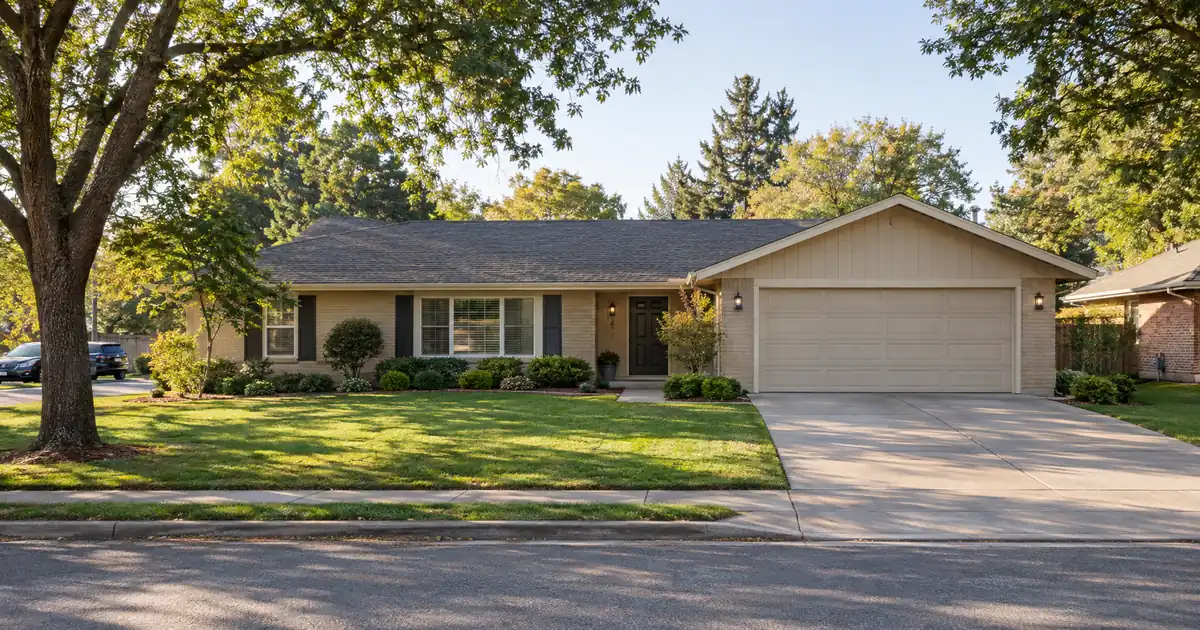
The Quick Read: An FHA refinance that pulls cash out qualifies a self-employed owner on the income your traditional personal-income documentation shows after deductions, not on bank deposits, so heavy write-offs shrink borrowing power, the loan only works on a home you live in, and a bank statement program or a property-based loan is the usual next step when the returns fall short. That mismatch is the whole story for deduction-heavy owners. Here are the points that matter most:
- FHA looks at tax-return income, not deposits or gross revenue.
- Real cash expenses stay subtracted. Non-cash items like depreciation are generally added back.
- Cash-out is capped at 80% of the adjusted value of the home.
- It is a primary-residence product. It cannot fund a loan against a rental.
- Bank statement programs and rental-income loans exist for owners whose returns understate what they earn.
Why Do Deduction-Heavy Owners Hit a Wall?
A good accountant lowers your taxable income, and an FHA underwriter reads that lowered figure as your income. The deductions that saved you tax last year are the same ones that cut the number an FHA lender can use.
Picture a business with strong deposits every month. Revenue is healthy, but vehicle costs, software, contractors, and a home office all reduce the bottom line. The return shows a thin profit. An FHA underwriter reviews income based on that thin profit, so a business that feels like it earns well can look small on paper.
Brokers see this constantly with contractors, consultants, and small-business owners. The income is real, but the paperwork tells a smaller story. FHA is a primary-residence program, so this article treats it as a tool for your own home. It is not a way to fund rentals directly.
How Does FHA Cash-Out for Self-Employed Owners Treat Your Returns?
Short answer: the lender starts with the net income line on your filed returns, adds back certain non-cash items, averages the result, and compares it to the new housing obligation. Deposits never enter the calculation. Here is the sequence, step by step.
1. Self-employment history. HUD’s mortgagee letter text on self-employment income allows self-employment income to count with at least two years of history. With one to two years, it counts only if you worked in the same or a related line of work for at least two years before.
2. Returns pulled. The lender collects two years of personal returns with all schedules. Business returns are generally required for the most recent two years too. The same HUD text waives them only if your individual returns show increasing self-employment income and your closing funds do not come from business accounts.
3. Add-backs. Depreciation and depletion are non-cash charges, so they may be added back. A legacy HUD handbook, 4155.1 Chapter 4-D, describes these add-backs. That handbook has been superseded, and the current handbook is updated periodically, so confirm details against the version in force.
4. Averaging. HUD’s text says gross self-employment income is the lesser of the two-year average or the one-year average. You do not get to pick the better year.
5. Trend check. Stable or rising income is fine. A decline of more than 20% over the analysis period forces the file into manual underwriting. If income trends down, the lower, more recent figure drives the result.
6. Appraisal and cap. A full appraisal sets the adjusted value, and the loan is capped against that value.
7. Debt-to-income test. Your qualifying income is compared with the new housing obligation plus other monthly debts. A bigger loan from taking cash out raises that obligation. FHA has its own ratio standards, and individual lenders may add overlays, so treat any single number you hear online as a starting point only.
The net result is simple. Real cash expenses stay deducted, and only non-cash items come back. That is why strong deposits and thin qualifying income can sit side by side.
Why Does Cash-Out Get Extra Scrutiny?
Cash-out files are underwritten more tightly than a purchase or a plain rate-and-term refinance. The lender is adding debt, removing equity, and relying on your income to carry a larger obligation.
The leverage cap shows this. A 2019 HUD mortgagee letter lowered the maximum LTV (loan-to-value, the loan as a share of the home’s value) and CLTV (combined loan-to-value, which counts every loan against the home) on FHA cash-out refinances to 80% of adjusted value. If you still see 85% quoted on a website, that page is out of date.
The paperwork also tightens. The older handbook language says the business-return waiver does not apply to a cash-out refinance. That is legacy language, so treat it as a strong signal and confirm it against the current handbook. In practice, expect to hand over business returns on a cash-out.
Put the waiver test in one place:
| Condition for skipping business returns | Cash-out effect |
|---|---|
| Individual returns show rising income | Must still hold |
| Closing funds not from business accounts | Must still hold |
| Transaction is not a cash-out | Cash-out removes the waiver |
What Does the Underwriter See? A Worked Example
The numbers below are indexed illustrations, not real data and not market figures. Revenue is set to 100 so you can follow the logic without dollar amounts.
Year one
| Line | Index |
|---|---|
| Gross business revenue | 100 |
| Cash expenses and write-offs | -55 |
| Depreciation (non-cash) | -10 |
| Net profit on the return | 35 |
| Depreciation added back | +10 |
| Qualifying income | 45 |
The underwriter ignores the revenue figure and works from 45, with the average and the trend still to come.
Same owner, down year
| Line | Year one | Year two |
|---|---|---|
| Qualifying income (index) | 45 | 34 |
| Change from prior year | n/a | about -24% |
Year two fell by more than 20%, so the file goes to manual underwriting. The two-year average would be about 39.5, but the lender takes the lesser of the two-year and one-year figures, which here is the lower recent year. The owner earns the same in cash terms, yet is reviewed on a smaller number.
That drop could come from a new equipment purchase, a one-time expense, or a real slowdown. The underwriter reads all three the same way until you explain and document the cause.
What If Your Returns Show Less Than You Really Earn?
Some things can change the result and some cannot. FHA will not substitute bank deposits for the return line, and a profit-and-loss statement does not override filed returns.
What can help:
- Confirming every legitimate add-back was counted. Depreciation, depletion, and, per a lender bulletin summarizing a later HUD update, business use of the home on a Schedule C may qualify. Verify that last item against HUD before relying on it.
- Waiting for a stronger filing year, if income is clearly rising.
- Paying down other monthly debts to improve the debt-to-income picture.
What generally does not help:
- Pointing to large deposits.
- Offering a P&L that shows higher income than the returns.
- Counting on a lender to ignore a falling trend.
Some owners think about amending returns or reducing deductions to qualify. Whether an underwriter accepts that depends on the lender and the file. Treat it as a long shot, not a plan.
A few other conditions matter. HUD’s 2022 text also allows income to be treated as stable after a drop in limited extenuating circumstances, but that is case-by-case and lender-dependent. Do not build a plan around it. A COVID-era averaging flexibility, described by Consumer Finance Monitor, has expired and is history, not current policy.
The practical differences between lenders come from their overlays, which matter on a file like yours.
Which Documents Should You Gather First?
Gather these before your first call, and you will get a realistic read much sooner. The right set depends on how your business is organized.
| Document | Why it is asked for | Applies to |
|---|---|---|
| Two years of personal returns | Starting income line | All |
| Two years of business returns | Check the business figures | Cash-out, corporations, partnerships |
| Year-to-date profit and loss | Shows current trend | Most files |
| Proof the business is operating | Confirms income continues | All self-employed |
| Mortgage statement and insurance | Payoff and obligations | All |
Entity type changes which forms generate your income. Sole proprietors use Schedule C. Partnerships and S corporations add their own business returns on top of your personal return. Ownership share also matters, because the lender wants to know whether the business income is truly yours. If you own a small minority stake, your treatment may differ.
What Does a Lower Qualifying Income Do to Cash-Out Size?
It limits how large the new loan can be. The 80% cap is a ceiling, not an entitlement. Your debt-to-income ratio often becomes the tighter limit.
The new loan is larger than the old one, so your obligation rises. Debt payoffs rolled into the refinance can help or hurt, depending on what they change. An FHA loan also carries mortgage insurance, which adds to the housing obligation and lengthens the true cost of holding the loan. Weigh that against the cash you are pulling out.
Before applying, ask three questions. Is the subject property your home or a rental? Does the cash need to go into rentals? Are you comfortable with mortgage insurance over the long run?
What Are Your Alternatives?
When tax-return income understates your earnings, bank statement lending is the closest alternative for a home you live in. Across Lendmire’s wholesale network, these programs review the file on documented income under the applicable program, subject to lender guidelines.
Here is how it generally works. The lender reviews 12 months of business or personal bank statements and averages the deposits. It then applies an expense factor that varies by lender, so there is no universal formula and no promise of one. Because the method starts from deposits rather than tax lines, the heavy write-offs that cut your FHA income do not have the same effect.
The leverage ranges differ from FHA, and the labels matter:
| Scenario | Typical ceiling |
|---|---|
| Primary residence purchase or rate-and-term | Up to 90% LTV |
| Owner-occupied cash-out (primary or second home) | Up to 80% LTV |
| Cash-out with accountant-prepared expense ratio | Up to 75% LTV |
| Investment property cash-out | Around 75% LTV |
| Primary residence, asset-depletion option | Up to 80% LTV |
These are typical ranges from select lenders, set by loan size and credit. Loan amounts generally run from $125,000 to $3,500,000, and reserves are commonly around six months of the housing payment. Every file is underwritten individually, so these are not promises.
Note the 80% figure for an owner-occupied cash-out. It is close to FHA’s own cash-out cap, so the real difference is how income is measured, not how much equity you can reach. Bank statement programs also tend to avoid the mortgage insurance that comes with FHA, though terms vary by lender program sheet.
Term length follows each lender’s program sheet, and alt-doc loans do not offer the extended structures that sit on the DSCR side.
Where Does a Rental Property Change the Answer?
FHA cash-out cannot be used on a non-owner-occupied rental. It is a primary-residence product. If the cash is going toward a rental, or the property being refinanced is a rental, you need a different tool.
A rental loan built on property income is a DSCR loan. DSCR stands for debt service coverage ratio: the property’s rent divided by its monthly debt obligation. That loan is reviewed primarily on property-level rental income covering the payment, subject to lender guidelines. Your traditional personal-income documentation matters far less. The complete DSCR loans guide explains how the ratio works and what select programs typically look for. Some select lenders in the network review coverage below 1.00, but leverage and terms adjust when they do.
A bank statement loan on a rental is also treated differently from one on your home. Owner-occupied files are consumer mortgages with consumer disclosure rules. A non-owner-occupied rental, including a short-term rental, is a business-purpose loan and is exempt from those consumer disclosure rules. The occupancy of the property decides which applies, and mixing them up is a common source of confusion.
If your main goal is funding more rentals, Lendmire’s piece DSCR Cash-Out Documentation When Self-Employed Returns Understate Income covers that path in depth.
Apply Now, Wait, or Switch? A Decision Path
| Your situation | Likely move |
|---|---|
| Income rising, clean returns | FHA may fit; apply |
| One down year, recovery in sight | Wait a filing cycle, or compare alt-doc |
| Heavy write-offs, strong deposits | Compare bank statement options |
| Cash is for rentals | Look at DSCR on the rental itself |
| Property is a rental | FHA is off the table |
The row owners most often misjudge is the second one. A single down year pushes you toward manual underwriting, and a second one can leave the lesser-of rule working against you for a while. Waiting can work if the trend is clearly turning, but only you know whether it is.
For a closer look at the FHA side of this problem, Lendmire’s article FHA Cash-Out Refinance for Homeowners Whose Tax Returns Understate Income walks through it from the homeowner’s side.
What If You Were Denied or Reduced?
Read the decision for the reason. A denial for income usually points to one of three things: a low average, a declining trend, or a debt-to-income ratio pushed up by the new loan. Each has a different fix.
If the average is the issue, the fix is more time or a different income method. If the trend is the issue, document the cause and show the recovery. If the ratio is the issue, a smaller cash-out amount or lower monthly debts can change the result. A reduced loan amount often means the lender found a smaller qualifying income than you expected, which is a signal to compare alternatives rather than push the same file again.
Tax treatment can depend on how the funds are used and how the property is held; investors should keep clear records and speak with a qualified tax professional before relying on any deduction.
Key Terms Defined
Adjusted value: HUD’s handbook term for the value the FHA cash-out cap is measured against, which is not simply the appraised value.
Add-back: A non-cash expense, such as depreciation, that a lender adds back to net profit when calculating qualifying income.
Manual underwriting: A file review by a person rather than an automated system, triggered here by a decline of more than 20% in income.
Bank statement loan: A mortgage that is reviewed on documented income from 12 months of statements, with deposits averaged and an expense factor applied.
DSCR: Property rent divided by the monthly debt obligation, used to qualify rental properties.
Debt-to-income ratio: Your monthly debts as a share of your qualifying monthly income.
Frequently Asked Questions
Can a self-employed owner qualify for an FHA cash-out refinance?
Yes, if you have at least two years of self-employment, or one to two years with a prior two-year track record in the same or a related line of work. Eligibility review depends on tax-return income, the 80% cap, and the debt-to-income test. The lender will generally want business returns too.
Does FHA use gross revenue or net income?
FHA uses net income from the returns, with non-cash add-backs such as depreciation. Gross revenue and bank deposits are not the basis. The lender uses the lesser of the two-year average or the one-year average.
When can the lender skip my business returns?
Only when your individual returns show increasing self-employment income and your closing funds do not come from business accounts. Older handbook language also says a cash-out refinance removes the waiver, so confirm that against the current handbook and plan to provide business returns.
What happens if my income dropped more than 20%?
The file goes to manual underwriting, and the lender uses the lower, more recent figure. Some extenuating circumstances can be considered case by case. Documentation of the cause and a recovery in income help the most.
Can I use FHA cash-out to buy a rental?
Not directly. FHA cash-out is for the home you live in, and it cannot be placed on a non-owner-occupied rental property. If you plan to put the cash into a rental, that usually calls for a different tool, and a DSCR loan on the rental itself is the common path.
Next Step
Lendmire is a mortgage broker that arranges financing through select lenders in its wholesale network, and its consumer mortgage licensing covers 16 states. Program details are subject to lender guidelines, and nothing here is a commitment to lend. A rental-focused investor can also request a DSCR quote at 828-256-2183.
A deeper walk-through of investment-property equity extraction lives in Lendmire’s guide to cash-out refinance on an investment property.
For current guidelines and terms, see Lendmire’s DSCR loan programs page.
About Lendmire
Lendmire (NMLS# 2371349) is a mortgage brokerage focused on DSCR investor financing, helping arrange programs through wholesale and investor-lending channels in 41 markets, including Washington, D.C. DSCR loans are evaluated by the lender on property cash flow rather than personal income, subject to lender guidelines, supporting LLC closings and accommodating investors with four or more financed properties. Scotsman Guide Top Mortgage Workplace in both 2025 and 2026.
Get Started
Ready to find the right loan for you?
In about 30 seconds you can review financing options available for your home or investment property. No commitment required.
Informational only. Not a Loan Estimate, approval, or commitment to lend. Program availability and eligibility are subject to lender guidelines, credit approval, property review, and underwriting.
References
1. HUD Mortgagee Letter text on self-employment income
2. HUD Handbook 4155.1 Chapter 4-D (legacy)
This article is part of Lendmire’s bank statement loan program — full qualification details, guidelines, and scenarios live on the program page.
Related reading: VA Cash-Out for Self-Employed Veterans Whose Returns Understate Income · VA Cash-Out Without Tax Returns vs. a Bank for a Self-Employed Owner · FHA Cash-Out vs Bank Full Documentation for a Self-Employed Owner
Brandon Miller
Founder & CEO, Mortgage Loan Originator, Lendmire LLC
- Mortgage Loan Originator · NMLS# 1129696 · Verify on NMLS Consumer Access
- North Carolina Real Estate Broker · License# 343312 · Verify on NCREC
- North Carolina Insurance Producer · License# 19053198 · Property, Casualty, Life, Health · Verify on NAIC SBS
- Lendmire LLC · Firm NMLS# 2371349 · Verify firm licensure
Important disclosures. Lendmire (NMLS# 2371349) is a licensed mortgage brokerage. Lendmire is not a direct lender, depository institution, or financial advisor. All loan inquiries are subject to lender underwriting; this article does not constitute a commitment to lend. Rates, terms, and program guidelines are subject to change without notice and vary by borrower profile, property type, and state. Information in this article is general in nature and is not financial, legal, or tax advice. Equal Housing Opportunity. NMLS Consumer Access: nmlsconsumeraccess.org.