
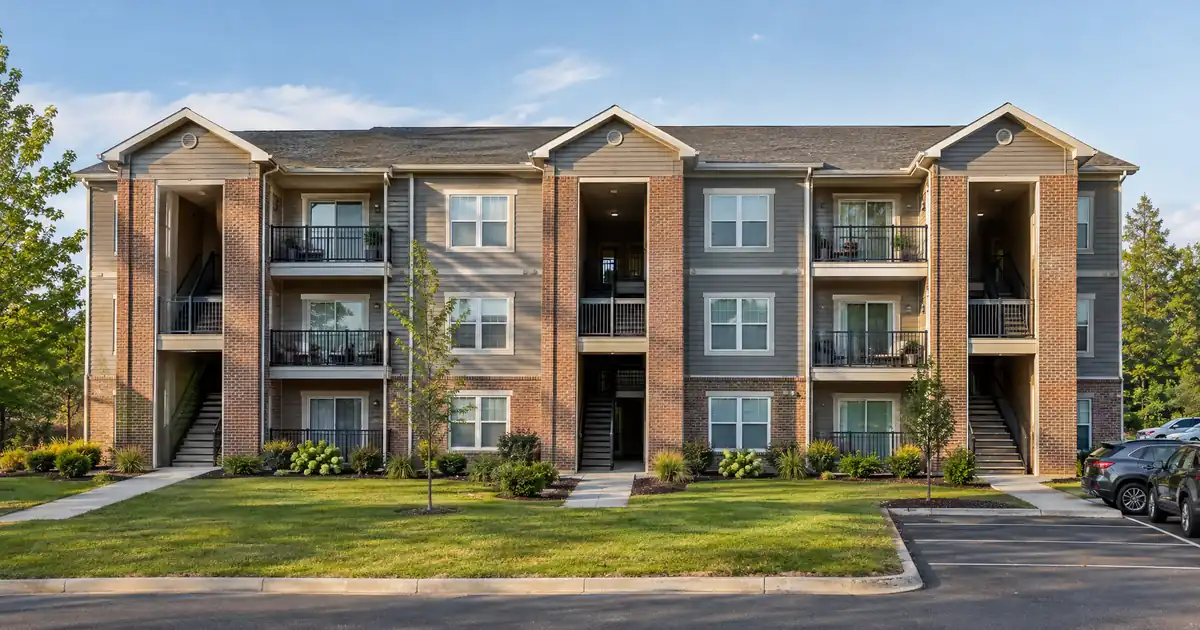
The Quick Read: A lawsuit involving your condo association can block an FHA cash-out refinance even when your own credit and equity are strong. FHA reviews the building as well as you. Whether the suit stops the file depends on what it is about, whether insurance covers it, and how it affects the association’s finances. Some lawsuits are routine, and some are not.
Think of an FHA cash-out on a condo as two separate tests. You take the first. The building takes the second. You control only one of them, and that is the part that surprises people.
Key Takeaways
- FHA reviews the condo project, not only the borrower, and that review applies to cash-out refinances as well as purchases.
- Pending lawsuits, and some recently concluded ones, are a named factor in that review.
- The nature of the suit matters most: structural or safety claims are the red flags.
- Lawsuits to collect past-due assessments or foreclose are excluded from HUD’s definition of litigation.
- On the borrower side, the FHA cash-out reaches 80% LTV on a home you have owned and occupied for 12 months before the case number.
- If the building fails the review, you have options, but you cannot fix the building yourself. Final terms depend on lender guidelines, property type, leverage, and the borrower’s complete credit picture.
The Two Tests: You and the Building
Your test covers the usual borrower items. The lender looks at your credit, your debt ratios, your payment history, and how long you have lived in the home. The building’s test covers the project: its insurance, its finances, its title, and any pending legal action.
| Factor | Borrower test | Building test |
|---|---|---|
| What is reviewed | Credit, ratios, occupancy | Insurance, finances, litigation |
| Who supplies the facts | You | The association or manager |
| Who can fix a problem | You | Only the association |
| Can it block the loan | Yes | Yes |
Federal rules back this up. Under 24 CFR 203.43b, a condominium unit must sit in a project approved by HUD or by a lender under HUD’s delegated process. The alternative is meeting the requirements for Single-Unit Approval or Site Condominium status. A cash-out refinance is still an insured mortgage on that unit, so the same rule applies.
What Is the Cash-Out Side of the Loan?
Across the wholesale programs Lendmire places FHA files with, an FHA cash-out replaces your current mortgage with a larger one and hands you the difference. It is for your principal residence. The FHA cash-out refinance program reaches 80% LTV on a home you have owned and occupied for the 12 months before the case number is assigned. LTV, or loan-to-value, is the loan balance as a percentage of the home’s appraised value. These specifics are subject to lender guidelines and a full review of property, leverage, and credit.
Two other pieces matter for a condo owner:
- Mortgage insurance. FHA charges an upfront premium of 1.75% of the base loan, which can be financed. It also charges an annual premium between 0.15% and 0.75% of the balance, depending on term, loan amount, and LTV. On a thirty-year loan above 90% LTV, the annual premium lasts for the term. At or below 90% LTV, it ends after eleven years.
- Ratios. The base pair is 31/43 (housing to total income) with no compensating factors. Documented compensating factors reach 40/50 at the top tier. The automated underwriting finding governs most files.
County loan limits apply, and they change every year. Everything here is subject to lender guidelines and full file review.
How FHA Reviews a Condo Building
A building gets into FHA’s good graces by one of two routes.
Project approval means the building is on HUD’s approved condo list, or a lender has approved it under HUD’s delegated process. Approval is about the whole building and it covers every unit.
Single-Unit Approval is the route for a building that is not FHA-approved. HUD’s condominium page says it applies only to projects that are complete and ready for occupancy, have at least five dwelling units, and are not manufactured homes. The lender reviews the building for your one unit.
Here is the catch people miss. Single-Unit Approval is not a loophole. HUD describes it as a subset of the project requirements, and the litigation questions are still on the form.
A streamline refinance can skip the condo approval question, but it cannot put cash in your hand. Cash-out cannot skip it.
Why Litigation Matters to FHA
FHA insures the loan for the life of the loan. A lawsuit that could drain the association’s money, or that points to a building defect, raises the odds that the project’s finances weaken. Weak project finances put every unit’s value and every insured loan at risk.
HUD’s condominium page lists pending legal action among the project factors reviewed, alongside insurance coverage, financial condition, nature of title, and physical condition. So the lawsuit is not a side issue. It is in the approval test by name.
HUD also defines the term. The HUD Handbook 4000.1 Glossary says litigation covers a current or pending lawsuit or proceeding in court, arbitration, or mediation involving the project or the association. It also covers one concluded within 12 months of the application date. It does not include foreclosure or actions the association brings to collect past-due assessments. Confirm the wording against the current handbook before relying on it.
Which Lawsuits Stop the File?
The kind of lawsuit decides the outcome. HUD’s project questionnaire, Form HUD-9992, shows how the review works. If the association answers “Yes” to pending litigation, it must give a signed and dated explanation. The form then asks:
- Does the suit relate to safety, structural soundness, habitability, or functional use of the project?
- What is the anticipated settlement or judgment date?
- Is insurance enough to pay a settlement or judgment without hurting the project’s financial stability?
- Is there any other litigation risk not covered by insurance, or beyond the coverage?
That list tells you what the lender is weighing. Here is how those factors tend to play out. Treatment depends on the lender and the file.
| Type of suit | Typical concern | Likely read |
|---|---|---|
| Safety, structural, habitability | Core building condition | Biggest red flag |
| Construction defect | Cost and building condition | Serious, file-specific |
| Financial or mismanagement claims | Association solvency | Serious if uninsured |
| Routine insured claim | Covered by insurance | Often manageable |
| Association collecting dues or foreclosing | Excluded from HUD’s definition | Not counted as litigation |
| Recently settled suit | Inside the 12-month look-back | Still counts |
Some lenders add their own restrictions on top of HUD’s. For example, some treat any safety or structural suit, pending or recently concluded, as a restriction. Others are more flexible. A building one lender declines may look different to another.
How the Lender Finds Out
You cannot see the file from the outside, so here is how it moves.
1. The lender checks the approval path. Is the building on HUD’s approved list? If not, the lender looks at Single-Unit Approval.
2. The lender requests documents. HUD’s required documentation list for Single-Unit Approval includes Form HUD-9991, recorded legal documents and CC&Rs, financial distress documentation if applicable, and a litigation item.
3. The association fills out its sections. The association or management company completes its part of Form HUD-9991 and returns it to the lender. The form collects FHA insurance concentration, owner-occupancy percentage, units in arrears, reserves, and special assessments. It also asks about pending litigation, and “Yes” requires a signed, dated explanation.
4. The lender reviews the answers. The factors are the subject of the suit, the insurance coverage, the expected resolution, and the effect on project finances.
5. The appraisal comes in. A cash-out needs a full appraisal. The appraiser’s value sets the loan cap, and known building problems can show up in the report.
The document-gathering stage is where files stall. You are depending on a property manager or board for answers, and they have no deadline of their own. Good practice is to ask early and in writing.
Walkthrough Scenarios
These are plain-language examples, not predictions. Every file is decided on its own facts.
An approved building gets sued after you bought. The building’s approval and the new suit are both in play. The lender will ask about the suit’s subject and insurance, and the answer drives the outcome.
An unapproved building with a minor, insured claim. The lender can look at Single-Unit Approval. The association’s explanation and proof of insurance carry the file.
An unapproved building with a structural suit. This is the hard one. The questionnaire’s structural and safety question points straight at the problem, and many lenders will not move forward while the case is open.
A settled suit. You may think the problem ended with the settlement. Under HUD’s glossary, a suit concluded within 12 months of the application date still counts.
An existing FHA borrower who wants cash. Your current FHA loan does not exempt the building. A streamline would not give you cash, and a cash-out sends the project back through review.
If the Building Does Not Pass
You have options. None are guaranteed.
| Option | Upside | Downside |
|---|---|---|
| Wait and re-check | Suit may end, look-back may run out | No control over timing |
| Ask for an exception | Possible in limited cases | Not something you can count on |
| Another loan program | Different project rules | Own reviews and terms |
| Home equity loan or HELOC | Leaves first mortgage alone | Own condo review, own terms |
On exceptions, the 2019 Federal Register final rule created a case-by-case exception authority at § 203.43b(g). Treat that as a narrow door. Ask a loan officer how a given lender handles it before you plan around it.
Another program is not a loophole either. Conventional, HELOC, and home equity products carry their own project reviews. Compare them before you assume the grass is greener.
Before You Apply: A Short Checklist
Ask your association or manager these questions first.
- Is the association a party to any pending lawsuit, arbitration, or mediation?
- Has any case ended in the past 12 months?
- What is the suit about? Does it involve safety, structure, or habitability?
- Is insurance expected to cover a settlement or judgment?
- Are there special assessments or dues increases tied to the case?
- Is the building on HUD’s approved condo list?
Special assessments and higher dues tied to a lawsuit also matter for your own budget. They show up in the project review too, because both HUD forms ask about dues, special assessments, and reserves.
Cash-out has costs of its own: closing costs, the mortgage insurance premiums above, and a larger loan balance. Small cash-out amounts can be hard to justify once those are counted.
Key Terms Defined
Litigation: Under HUD’s glossary, a current or pending lawsuit or proceeding involving the project or association, or one concluded within 12 months of the application date.
Project approval: HUD or a lender approving the whole condo building for FHA loans.
Single-Unit Approval: A review of one unit in a building that is not FHA-approved.
Cash-out refinance: A new, larger mortgage that pays off the old one and gives you the difference in cash.
LTV: Loan-to-value, the loan balance as a percentage of the home’s appraised value.
Look-back: The period after a lawsuit ends, 12 months under HUD’s definition, during which it still counts.
Frequently Asked Questions
Can I do an FHA cash-out in an unapproved condo?
Possibly, through Single-Unit Approval, if the building is complete, has at least five units, and passes the review. Cash-out needs that approval in place. Approval depends on the lender and the file, and litigation questions are still part of it.
Does any lawsuit disqualify the building?
No. HUD’s definition excludes association foreclosures and actions to collect past-due assessments. For other suits, the questions are the subject, the insurance, and the effect on project finances. Structural and safety suits are the biggest concern.
Does a settled lawsuit still count?
Yes, for a time. HUD’s glossary counts litigation concluded within 12 months of the application date. After that window, it generally drops out of the definition.
Can I use a streamline refinance instead?
Only if your goal is not cash. An FHA Streamline refinances an existing FHA loan with no appraisal and a limited credit review, and it must show a net tangible benefit. It does not pay out cash, so it does not solve a cash-out need.
What if my HOA will not cooperate?
Single-Unit Approval depends on the association completing its part of Form HUD-9991. Without those answers, the lender cannot finish the review. Put your request in writing, and ask a loan officer whether another route fits.
If you are weighing a cash-out refinance on the condo you live in against keeping the loan you have, Lendmire can help you compare the programs and the equity each one reaches. Tax treatment can depend on your situation; borrowers should speak with a qualified tax professional before relying on any deduction or credit. All program details are subject to lender guidelines and full file review, and nothing here is a commitment to lend.
For your own numbers, request a scenario review with Lendmire.
About Lendmire
Lendmire is a mortgage brokerage (NMLS# 2371349) licensed for consumer mortgage lending in 16 states, arranging FHA, VA, conventional and jumbo purchase and refinance loans through a wholesale lending network. Eligibility is determined by the lender on each file. Scotsman Guide named Lendmire a Top Mortgage Workplace in both 2025 and 2026.
For the program’s current guidelines, see FHA loan programs.
Get Started
Ready to find the right loan for you?
In about 30 seconds you can review financing options available for your home or investment property. No commitment required.
Informational only. Not a Loan Estimate, approval, or commitment to lend. Program availability and eligibility are subject to lender guidelines, credit approval, property review, and underwriting.
References
3. HUD Handbook 4000.1 Glossary
5. HUD: FHA Sua Condo Required Docs
6. Federal Register, Project Approval for Single-Family Condominiums
This article is part of Lendmire’s FHA Loan series — every loan program’s qualification details, guidelines, and scenarios live on the loan options page.
Related reading: FHA Cash-Out vs. 203k Refinance for a Condo Remodel · FHA Cash-Out Requirements for a Duplex Owner With a Locked-in Mortgage · FHA Cash-Out Requirements for an FHA Homeowner Who Wants Cash
Brandon Miller
Founder & CEO, Mortgage Loan Originator, Lendmire LLC
- Mortgage Loan Originator · NMLS# 1129696 · Verify on NMLS Consumer Access
- North Carolina Real Estate Broker · License# 343312 · Verify on NCREC
- North Carolina Insurance Producer · License# 19053198 · Property, Casualty, Life, Health · Verify on NAIC SBS
- Lendmire LLC · Firm NMLS# 2371349 · Verify firm licensure
Disclosures. The information presented in this article is general market commentary, not financial, legal, or tax advice. Lendmire is a mortgage brokerage (NMLS# 2371349) — not a direct lender or depository institution — and loan placement is subject to lender underwriting. Nothing in this content represents a commitment to lend. Loan terms, pricing, and program availability vary based on borrower qualifications, property characteristics, and state of subject property, and are subject to change at any time. Lendmire complies with Equal Housing Opportunity requirements. Consumer access: nmlsconsumeraccess.org.