
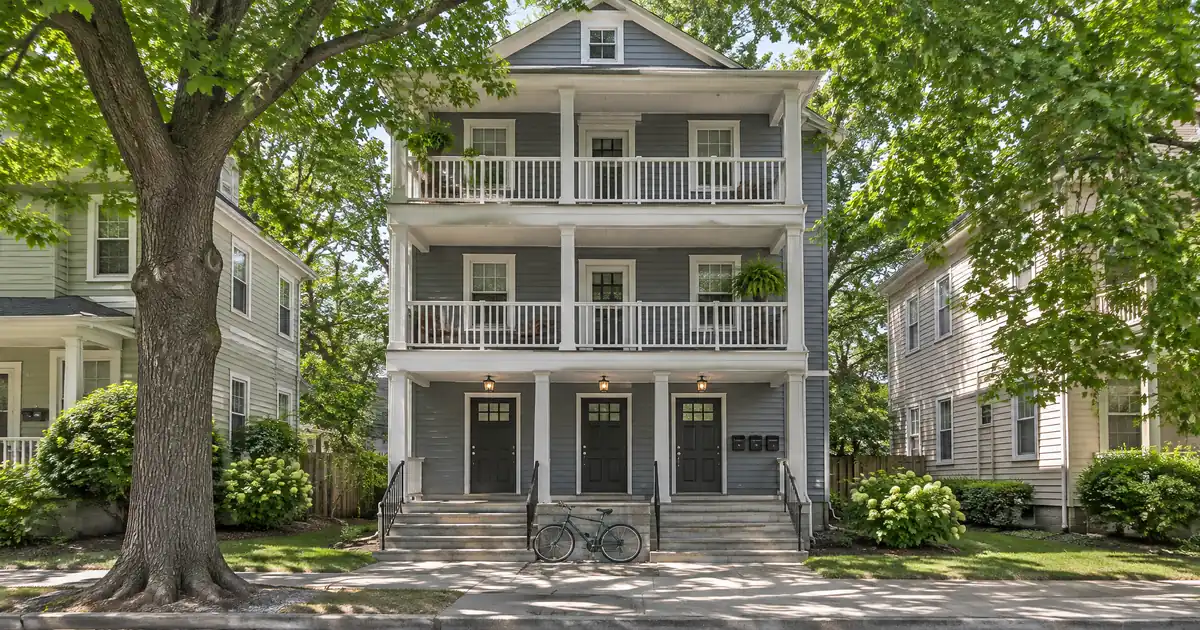
The Quick Read: FHA lets you pull out more equity and accepts more flexible credit, but a triplex adds a rent test the building has to pass. Conventional asks less of the building, yet it caps cash-out lower on a three-unit home and won’t count rent from the unit you live in. FHA is built around the highest cash-out limit and the more flexible credit floor. Conventional leans on strong credit and plenty of equity left in the home.
The rest of this article referees the two options for a specific situation: you live in one unit of a triplex, and the other two are leased.
FHA cash-out estimate
Seeded with an example value, a balance to match, and a round cash request; change any field.
Editable benchmark: 7.18% as of November 5, 2026 · Freddie Mac 30-year average via FRED®. A conventional market reference, not an FHA cash-out refinance quote.
Illustrative starting assumptions: a $350,000 home value, a $193,000 current balance, the FHA cap on a principal residence with the upfront premium financed, a thirty-year term at the current Freddie Mac benchmark, and property taxes and insurance estimated at typical national rates. Every field is editable.
An illustration, not a Loan Estimate, an approval, a quote, or a commitment to lend. The rate shown is the weekly Freddie Mac thirty-year conventional benchmark, used as a market reference; an FHA cash-out is priced by the lender at lock, and this is not an FHA cash-out refinance quote. HUD’s cap limits the base loan; the upfront premium is financed on top of the capped base loan; the monthly premium for the first year follows the snapshot’s schedule. Cash available means the base loan the cap permits less the balances retired, before closing costs, which this calculator leaves out. The line figure applies the line program’s combined loan-to-value ceiling to the same value and balance. Taxes and insurance are estimates you can edit. Licensed in sixteen states for consumer mortgages.
Side-by-Side
Here is how the two loans compare on a triplex you occupy. Program figures are subject to lender guidelines and full file review. Nothing here is a commitment to lend.
| Factor | FHA cash-out | Conventional cash-out |
|---|---|---|
| Maximum leverage | Up to 80% LTV | Lower on 2–4 units than on one unit |
| Credit floor | Programs we see start at 580 | Generally higher |
| Mortgage insurance | 1.75% upfront plus annual premium | Private insurance, tied to leverage and credit |
| Occupancy | Live in one unit; 12 months owned and occupied | Live in one unit |
| Rent from your own unit | Counts only in the 3-unit rent test | Generally can’t be used to qualify |
| Rent from other units | Counted in income at a discount | Counted when documented, per lender |
LTV means loan-to-value: the new loan as a percentage of the home’s appraised value. A cash-out refinance replaces your current mortgage with a larger one and hands you the difference.
Two notes on the table. First, FHA county loan limits apply and change every year, so the loan has to fit under your county’s limit as well as the 80% cap. Second, the FHA credit floor is a decision score, which is the credit result the lender’s automated review produces. Individual lenders can set stricter floors on cash-out files.
When FHA Cash-Out Is the Better Fit
FHA is the better fit when you want maximum equity out of the building, your credit is middling, or your debt load is on the heavier side. It is also the better fit when the property can pass the rent test comfortably.
You want the most cash out. FHA cash-out reaches 80% LTV on a home you have owned and occupied for 12 months before the case number. The case number is the FHA’s file identifier, assigned early in the process. HUD’s Handbook 4000.1 is the rulebook for FHA single-family loans. It cut the cash-out cap to 80% in a past revision, and that cap has held since. Conventional cash-out on a 2–4 unit home generally sits lower, so the same triplex typically yields less cash.
Your credit is not pristine. The wholesale programs that handle FHA files start at a 580 decision score. Many conventional programs ask for more. A recent late payment or a high card balance hurts less on an FHA file, though lenders still review recent payment history on cash-out.
Your debt-to-income ratio runs high. Debt-to-income (DTI) compares your monthly debts to your monthly income. FHA’s base pair is 31/43: housing costs at 31% of income and total debts at 43%. Documented compensating factors, such as cash reserves or a strong payment record, can stretch that to 40/50 at the top tier. The automated finding governs most files. So the guideline is flexible, not fixed.
Your leases are solid. With documented rent and a building that clears the rent test, FHA treats the other two units as real income. The next section explains how.
The costs of that flexibility are real, and they belong in your math. FHA charges an upfront mortgage insurance premium of 1.75% of the base loan, which is usually financed into the balance. It also charges an annual premium that runs between 0.15% and 0.75% of the balance, depending on term, loan amount and LTV. Because FHA cash-out stops at 80% LTV, the annual premium on a thirty-year loan ends after eleven years. Mortgage insurance is a program mechanic, not a price quote.
When Conventional Is the Better Fit
Conventional wins when your credit and income are strong and the cash-out amount you need is modest. It can also win when the building might struggle with FHA’s rent test.
You don’t need to reach 80% leverage. If you need a smaller slice of equity, the lower conventional cap on a triplex may not matter at all. You would still be borrowing well within what the program allows. Terms depend on the lender’s guidelines, the property type, the leverage, and a full review of the credit profile.
Your credit is strong. Private mortgage insurance on conventional loans is tied to leverage and credit. Strong credit and lower leverage usually mean the insurance cost is smaller or doesn’t apply. FHA’s upfront premium, by contrast, applies to every FHA loan. A borrower with excellent credit and ample equity can come out ahead on conventional.
You’d rather not depend on appraiser rent figures. A conventional file still uses an appraisal. But it doesn’t run the FHA self-sufficiency test on a three-unit building, because the borrower’s own income and debts carry the qualification. If an appraiser’s rent estimate comes in thin, that matters less here. (It’s a quiet advantage, and plenty of borrowers miss it.)
Your income is strong on its own. Fannie Mae’s Selling Guide says rent from the unit you occupy generally can’t be used to qualify. It also requires the lender to count the full payment on the principal residence as your obligation. If your wages or business income carry that payment without help from the building, this rule costs you nothing.
The trade-off is plain. Conventional gives up some cash-out and some flexibility on credit. In return you skip the FHA premium structure and the three-unit rent test.
How Each Loan Counts the Leased Units
This is where triplex files get decided, so it deserves a slow walkthrough. FHA runs two separate tests, and people blur them together.
Test one: is the building self-sufficient? On three- and four-unit properties, HUD’s reference guide says net rental income must equal or exceed the projected mortgage payment. “Net rental income” starts with the appraiser’s market-rent estimate for all units, including yours. It then subtracts allowances for vacancy, collection and maintenance. Rent can’t be used as a direct offset to the payment. Duplexes are exempt, so the triplex carries the extra hurdle.
Test two: do you qualify on personal income? Here the lender follows HUD’s rental income guidance for two- to four-unit homes. The net rent from the other units is added to your gross income. It is not subtracted from your payment. With rental history since your last tax filing, the lender averages the rent shown on Schedule E, adding back items such as depreciation, interest, taxes and insurance. With limited or no history, the lender uses the appraiser’s market rent plus any leases. It counts 75% of the lesser of market rent or lease rent.
Picture how this plays out. Say you live in one unit of a triplex and the other two are leased on standard leases. Test one asks whether the appraiser’s rent for all three units, after vacancy and upkeep allowances, covers the full payment. Test two asks whether your income, plus a discounted share of the two leased units’ rent, supports your debt load.
Two details trip people up:
- A below-market lease. The self-sufficiency test uses the appraiser’s figure, not your lease. The income calculation uses the lesser of the two. A friendly lease to a relative therefore hurts test two, not test one.
- Your own unit’s rent. It helps the building pass test one. It never becomes your income.
Conventional is simpler at the surface. Your unit’s rent is excluded, and the full payment counts against you. Rules for the other units’ rent sit in separate sections of the guide, and lenders apply their own documentation requirements. Expect leases and the appraiser’s rent schedule either way.
A vacant unit, a month-to-month tenant, or a brand-new lease is where underwriters ask questions on both loan types. Bring whatever lease exists and the appraiser’s rent figure. Then let the underwriter tell you how it will be counted.
On 3–4 unit FHA loans, lenders also expect cash reserves left after closing. Those are funds you could draw on if rent stops. The exact requirement is lender-specific, so ask early.
What Happens If the Triplex Fails the FHA Rent Test?
The FHA path usually closes for that building, because the self-sufficiency test applies to the property regardless of your income. Strong wages don’t override a failed property test. Nobody likes hearing that. It is still better to hear it before you pay for an appraisal.
Here are the realistic paths:
- Switch to conventional. Your income and credit carry the file. Expect lower cash-out leverage on a three-unit home.
- Take less cash. A smaller loan shrinks the payment that rent must cover. That can help a borderline file, depending on the lender’s treatment of the test.
- Wait for a stronger rent picture. A renewed lease at a higher rent or a unit that gets leased can change the appraiser’s view.
- Keep your current loan. A cash-out replaces your whole mortgage. If your existing loan has terms you value, compare before you trade it.
FHA may offer more cash, while conventional may offer a simpler road. A lender who can run both on the same appraisal is the quickest way to see which one holds.
One more note on occupancy. FHA cash-out is only available on a principal residence. If you move out of the triplex, that loan is no longer an option, because occupancy decides the program and its leverage.
The Cost Side of a Cash-Out
Both loans share the same basic mechanics. The CFPB’s home equity guide explains that a cash-out refinance replaces your mortgage with a larger one. The monthly payment may rise, other terms reset, and the payoff period may lengthen.
Closing costs can be financed within the LTV cap. Doing so reduces the cash you take out. So a loan that reaches 80% on paper delivers less in your hand.
Counted rent is not received rent. The lender credits only a discounted share, but vacancies and turnover cost you the full amount. Treat the lender’s rent figure as the ceiling of what to count on.
Key Terms Defined
Cash-out refinance: a new, larger mortgage that pays off the old one and gives you the difference in cash.
Self-sufficiency test: FHA’s rule that a three- or four-unit building’s net rent must at least equal its projected payment.
Market rent: the rent an appraiser estimates a unit would earn, whether or not a lease says otherwise.
Seasoning: the waiting period a lender wants, such as owning and living in the home for 12 months before FHA cash-out.
Reserves: money left in your accounts after closing, which a lender may require on multi-unit loans.
A Balanced Verdict
Neither loan is the winner on every triplex. The right answer depends on three things: how much cash you need, how strong your credit and income are, and how comfortably the building clears the FHA rent test.
Choose FHA when you want the highest cash-out, your credit has some dings, and the appraiser’s rent figures look healthy. Choose conventional when your credit and income are strong, you need a moderate amount of cash, or the rent test looks shaky. If you sit between the two, price both on the same appraisal. A comparison on paper beats a guess every time.
Tax treatment can depend on your situation; borrowers should speak with a qualified tax professional before relying on any deduction or credit.
If you are weighing a cash-out refinance against keeping the loan you have, Lendmire can help you compare the programs and the equity each one reaches. Lendmire is a mortgage broker licensed for consumer lending in 16 states, and it arranges these loans through wholesale lenders.
Frequently Asked Questions
Can I do an FHA cash-out refinance on a triplex I live in?
Yes, if you occupy one unit as your principal residence and meet the program’s ownership and occupancy seasoning. The loan can reach 80% LTV, subject to county loan limits. Because it is a three-unit property, it must also pass the self-sufficiency test. Final eligibility depends on lender guidelines and full file review.
Does the rent from my own unit count as income?
No, not as your income on either loan. Under FHA, your unit’s rent enters only the building’s self-sufficiency test. Under conventional guidelines, rent from the unit you occupy generally can’t be used to qualify. Only the other leased units can add to your qualifying income.
What if one tenant pays less than the appraiser’s market rent?
The FHA self-sufficiency test uses the appraiser’s market rent, so a low lease doesn’t change that test. The income calculation uses the lesser of lease rent and market rent, so a below-market lease can lower the rent that counts toward your income.
Can I refinance out of FHA into conventional later?
Often, yes, if the new loan is reviewed on its own. You would need enough equity to fit the lower conventional cash-out cap and the credit and income the lender wants. Moving to conventional can also end the FHA annual premium, which is one reason to consider it once your equity grows and your credit improves.
What if I move out of the triplex after the refinance?
The loan stays in place, but the next cash-out would not qualify as FHA. FHA cash-out requires a principal residence, and occupancy decides which program and leverage apply. Talk with your lender before changing how you use the property.
For your own numbers, request a scenario review with Lendmire.
About Lendmire
As a mortgage broker (NMLS# 2371349), Lendmire helps homeowners and home buyers in 16 states with FHA, VA, conventional and jumbo purchase and refinance loans arranged through wholesale lenders. Lendmire is never the lender; program terms are set by the lender and the agency guidelines. Scotsman Guide named Lendmire a Top Mortgage Workplace in both 2025 and 2026.
Get Started
Ready to find the right loan for you?
See your offer in seconds. No credit pull, no obligation.
Informational only. Not a Loan Estimate, approval, or commitment to lend. Program availability and eligibility are subject to lender guidelines, credit approval, property review, and underwriting.
References
2. Fannie Mae Selling Guide B3-3.8-01, Rental Income
3. HUD Archives, HOC Reference Guide: Rental Income
4. CFPB, Using Home Equity to Meet Financial Needs
This article is part of Lendmire’s FHA cash-out refinance program — full qualification details, guidelines, and scenarios live on the program page.
Related reading: FHA Cash-Out Refinance vs Conventional Cash-Out When Child Support Counts as Income · FHA Cash-Out vs Conventional Cash-Out for a Homeowner on a Deadline · FHA Cash-Out Refinance vs Conventional Cash-Out to Build an Emergency Fund
Brandon Miller
Founder & CEO, Mortgage Loan Originator, Lendmire LLC
- Mortgage Loan Originator · NMLS# 1129696 · Verify on NMLS Consumer Access
- North Carolina Real Estate Broker · License# 343312 · Verify on NCREC
- North Carolina Insurance Producer · License# 19053198 · Property, Casualty, Life, Health · Verify on NAIC SBS
- Lendmire LLC · Firm NMLS# 2371349 · Verify firm licensure
Compliance and disclosures. Lendmire (NMLS# 2371349) is a licensed mortgage broker and is not a direct lender, depository institution, financial advisor, or tax professional. Content in this article is general market analysis and educational information — not financial, legal, or tax advice for any specific situation. Lendmire does not guarantee loan approval; every transaction is subject to underwriting by the funding lender. Mortgage pricing and loan program guidelines are subject to change at any time without notice and vary by borrower characteristics, property type, and state regulations. Lendmire complies with Equal Housing Opportunity. Licensure verification: NMLS Consumer Access.