
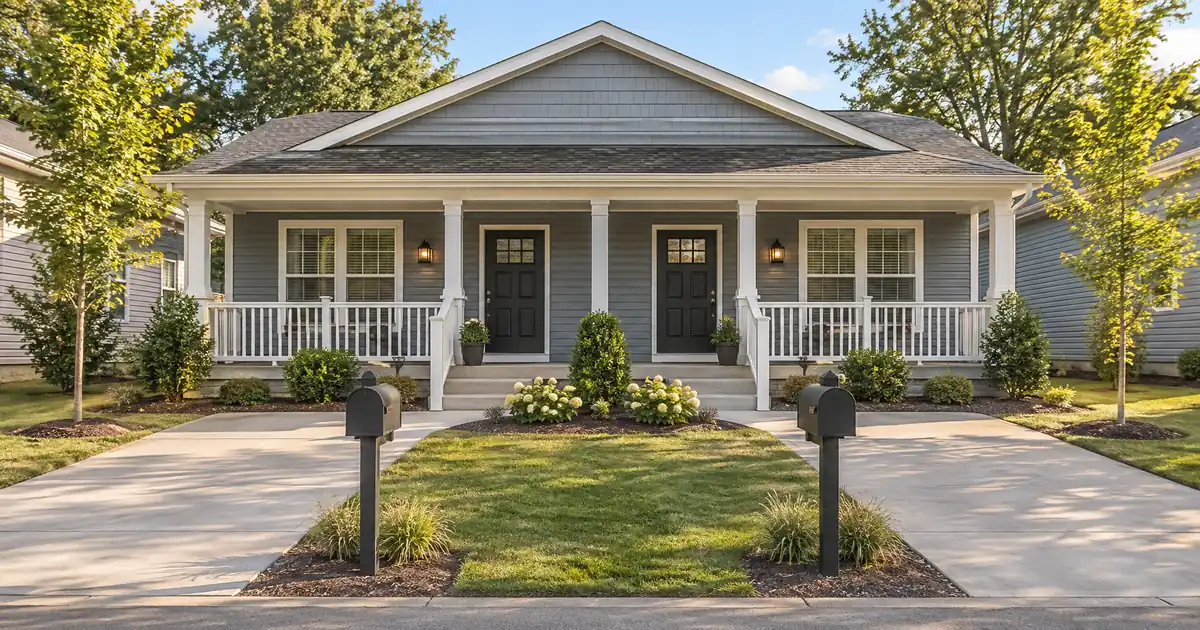
The Quick Read: An empty unit does not block an FHA cash-out on a duplex, as long as you own the building and live in the other unit. The occupancy test looks at your unit, not at whether both units are rented. The vacancy matters in two places: the rent on the empty unit can only count toward your income in a limited way, and the appraisal sets the value that the 80% loan-to-value cap applies to. Program details are subject to lender guidelines and full file review.
Key Takeaways
- The duplex must be your principal residence. You live in one unit, and the vacant unit does not change that.
- Across the wholesale programs Lendmire works with, FHA cash-out reaches 80% LTV on a home you have owned and occupied for the 12 months before the case number.
- Rent from the empty unit is optional income. If you use it, it is discounted, and the appraiser’s rent estimate is the evidence.
- Your own unit’s rent never counts as your income.
- Payment history on your current mortgage can end the file before any of the math matters. Final terms depend on lender guidelines, property type, leverage, and the borrower’s complete credit picture.
What Is an FHA Cash-Out on a Duplex?
An FHA cash-out refinance replaces your current mortgage with a new, larger FHA-insured loan. You take the difference, after payoff and costs, as cash. A duplex is a two-unit building, and FHA allows one to four units on its owner-occupied programs.
FHA cash-out estimate
Seeded with an example value, a balance to match, and a round cash request; change any field.
Editable benchmark: 7.18% as of November 5, 2026 · Freddie Mac 30-year average via FRED®. A conventional market reference, not an FHA cash-out refinance quote.
Illustrative starting assumptions: a $350,000 home value, a $193,000 current balance, the FHA cap on a principal residence with the upfront premium financed, a thirty-year term at the current Freddie Mac benchmark, and property taxes and insurance estimated at typical national rates. Every field is editable.
An illustration, not a Loan Estimate, an approval, a quote, or a commitment to lend. The rate shown is the weekly Freddie Mac thirty-year conventional benchmark, used as a market reference; an FHA cash-out is priced by the lender at lock, and this is not an FHA cash-out refinance quote. HUD’s cap limits the base loan; the upfront premium is financed on top of the capped base loan; the monthly premium for the first year follows the snapshot’s schedule. Cash available means the base loan the cap permits less the balances retired, before closing costs, which this calculator leaves out. The line figure applies the line program’s combined loan-to-value ceiling to the same value and balance. Taxes and insurance are estimates you can edit. Licensed in sixteen states for consumer mortgages.
It helps to separate three products that often get mixed up. The FHA Streamline refinances an existing FHA loan with no appraisal and a limited credit review, and it needs a net tangible benefit. The FHA rate-and-term refinance uses an appraisal and reaches 97.75% on a principal residence you have occupied for the previous twelve months. The cash-out is the one that pulls equity out, and it is capped lower, at 80% LTV, because the lender is lending against equity you still hold.
This article covers the duplex-with-a-vacancy case in particular.
Does a Vacant Unit Disqualify a Duplex?
No. The rule is owner occupancy of the property, not full rental of the building. Cash-out is permitted only on an owner-occupied principal residence, and the 80% LTV and CLTV caps are laid out in HUD’s refinance rules in Handbook 4000.1. In practice the test looks at the borrower’s unit. These specifics are subject to lender guidelines and a full review of property, leverage, and credit.
The edge is a different question: what if the empty unit is the one you are supposed to live in? That is an occupancy problem, not a vacancy problem. If you have moved out, the property is no longer your principal residence, and a standard FHA cash-out is not available.
How Is the Loan Underwritten, Step by Step?
Here is the sequence a duplex cash-out follows.
1. Eligibility screen. The lender confirms the duplex is your principal residence and that you owned and occupied it for the 12 months before the case number was assigned. The lender also checks your mortgage payment record. Late payments in the past year can end the file here.
2. Case number and appraisal. Because the building has two units, the appraiser uses the small residential income property report, which gives a market value and a fair-market-rent estimate for each unit. That is the form HUD points to in Mortgagee Letter 2023-17.
3. Loan sizing. The base loan can be no more than 80% of the appraised, adjusted value. It must also fit within the county loan limit for a two-unit property. County loan limits apply and change every year, so check HUD’s lookup tool for your county.
4. Income and ratios. Your income is documented in full. The base ratio pair is 31/43 (housing to total) with no compensating factors, and documented compensating factors can reach 40/50 at the top tier. Most files are decided by the automated finding, which weighs the whole picture: credit, income, reserves, and the new payment.
5. Vacant-unit treatment. If you want the empty unit’s rent to help you qualify, the lender needs evidence of it. More on that below.
6. Closing. The new loan closes, the cancellation window runs, and funds are disbursed after it ends.
What decides the outcome is short: the appraised value, the appraiser’s rent estimate if you need the rent, your payment history, and the 12-month ownership and occupancy test.
How Does the Empty Unit’s Rent Count?
It counts only partly, and only if you need it. HUD allows rental income from the subject property to count as effective income on a two- to four-unit dwelling, under Mortgagee Letter 2023-17. With no rental history on the property, the lender uses 75% of the lesser of two figures: the market rent the appraiser reports, or the rent in a lease or rental agreement.
For an empty unit there is no lease and no history, so the appraiser’s market-rent estimate is the evidence. If you have a signed lease for the vacant unit with a tenant who has not moved in, that lease can be the second figure, and the lender takes the lesser of the two.
A unit you rented earlier is a separate case, since it has a rental history. That history is documented with your two most recent years of tax returns, including Schedule E. A building with one leased unit and one empty unit would take the lease figure for the leased one and the appraiser’s figure for the empty one. That is how lenders read the rule in practice, not a sentence out of HUD’s text.
Two points often surprise borrowers:
- The 75% is an underwriting figure. It is not a prediction of what you will collect. It builds in a vacancy and maintenance cushion.
- Your own unit’s rent does not count as your income. You cannot rent to yourself on paper.
If you qualify on your own income alone, the vacant unit’s rent never enters the file. That is the cleanest path.
Vacancy Scenarios Compared
| Situation | How it is treated | What helps the file |
|---|---|---|
| Empty, rent-ready | Appraiser’s market rent estimate, 75% if used | Clean appraisal, no lease needed |
| Signed lease, tenant not moved in | Lesser of lease or market rent, 75% if used | Copy of the lease |
| Under renovation | Appraiser may flag condition or completion | Repair status and scope of work |
| Your own unit empty | Occupancy question, not a vacancy question | Proof you live there |
| Long-term vacant | No rent history; market rent only | Explanation letter |
The appraisal is where a gutted or unfinished unit causes trouble. A unit with a missing kitchen or unsafe systems can draw an appraisal condition, and the value used for the 80% cap may reflect it. Rent-ready and empty is a much easier file than half-finished and empty.
A Duplex With and Without the Vacant Unit’s Rent
Run the logic with no dollar figures. Picture a borrower with a duplex, strong payment history, and income that comfortably carries the new payment. The vacant unit’s rent is not needed. The file is decided on the borrower’s income, credit, and the 80% cap. The empty unit changes nothing in the ratios.
Now picture a borrower whose income is tight against the 43% total ratio. Counting 75% of the appraiser’s market rent on the empty unit may bring the ratio into range. The lender relies on a number that depends on the appraiser, so the borrower is exposed to a low rent estimate. If the estimate comes in light, the file may have to be restructured with a smaller loan or documented compensating factors.
Then picture the same borrower after cash-out, with the unit still empty. The full payment continues and the empty unit pays nothing toward it. A larger loan means a larger payment, so the cushion that mattered at underwriting matters again every month. A cash-out that works only if the vacancy fills is a risk the borrower carries, not the lender.
Where the General Rule Breaks
These are the named edge cases.
Three- and four-unit properties. A self-sufficiency test applies to three- and four-unit buildings, comparing the payment to net rental income across all units.
Inherited homes. The 12-month occupancy rule can be waived for an inherited property. If you rented the home out after inheriting it, you must occupy it for 12 months before a cash-out.
Non-occupant co-borrower. On a purchase, a non-occupant co-borrower is allowed. On a cash-out, that person’s income cannot be used to qualify.
Accessory dwelling units. For a one-unit home with an ADU, rent from the ADU cannot count as income in a cash-out. A legal duplex is a different property type, but whether an ADU on a duplex lot would be treated the same way is an open question. Ask the lender before you plan around it.
Boarders. Income from a boarder is separate HUD policy, covered in Mortgagee Letter 2025-04. It is not the same as rent from a vacant unit.
Moved out. If you moved out and the duplex is no longer your principal residence, the standard cash-out is off the table.
Is the Cash-Out Cap the Same as It Used to Be?
No. Older sources cite 85%. That cap came from Mortgagee Letter 2009-08, and HUD has since lowered it to 80%. The 12-month ownership concept in that letter still stands. Treat any page that quotes 85% as out of date.
The 80% cap means roughly one-fifth of the appraised value stays in the property as equity. Treat that as an approximation, since the lender’s figure is built on the adjusted value.
What Does FHA Cost on a Duplex Cash-Out?
FHA mortgage insurance applies. The upfront premium is 1.75% of the base loan and can be financed. The annual premium runs between 0.15% and 0.75% of the balance depending on term, loan amount and LTV. On a thirty-year loan above 90% LTV, the annual premium lasts for the term. At or below 90% it ends after eleven years. Because a cash-out tops out at 80% LTV, the lower tier can apply, subject to the lender’s review of the file. Your Loan Estimate will show the actual costs.
What Should You Gather Before Applying?
Documents that keep a vacancy file clean:
- Proof of ownership and occupancy for the past 12 months
- Your mortgage payment history
- Income documents
- A lease for the vacant unit, if you have one
- A short explanation letter if the unit has been empty for a while
- Repair status, if the unit is under renovation
- Prior tax returns with Schedule E, if you rented the unit earlier
One honest trade-off: if you plan to use the cash to renovate the empty unit and then rent it, the loan still has to qualify on the rules above at application. Do not count on rent that does not exist.
When Is FHA Not the Right Fit?
FHA is not always the best tool. If you are not taking cash out, the rate-and-term refinance reaches 97.75%, and an existing FHA loan can use the Streamline. If you want more equity than 80% allows, FHA cash-out will not reach it. And if the duplex is not your home, this program does not apply.
Right of Rescission After Closing
On a cash-out against your principal residence, you generally have three business days to cancel after closing. Business days include Saturdays but not Sundays or legal public holidays, and the clock does not start until you have received the required notice and disclosures, per the CFPB’s explanation of the right of rescission. If you rescind a refinance, you still owe the original loan. Funds are disbursed after the window ends.
Key Terms Defined
Cash-out refinance: A new, larger mortgage that pays off the old one and gives you the difference in cash.
Owner-occupied principal residence: The home where you live as your main address.
Adjusted value: The appraised value as adjusted under FHA rules, used for the loan-to-value cap.
Fair market rent: The rent the appraiser estimates a unit would bring on the open market.
Effective income: Income a lender is allowed to count when qualifying you, after any required discount.
Seasoning: The length of time you must own and occupy the home before a cash-out is allowed.
Frequently Asked Questions
Can I qualify on my income alone and ignore the empty unit?
Yes, if your income carries the new payment within the ratios. The vacant unit’s rent is optional. Leaving it out means no dependence on the appraiser’s rent estimate, and tax-return history of the unit does not come into the file.
Does a vacancy change how much cash I can take out?
Not directly. The cap is 80% of the appraised value, and the empty unit affects that figure only through the appraisal, for instance if the unit’s condition lowers the value. Vacancy mainly affects your qualifying ratios when you try to use its rent.
Is a signed lease helpful if the tenant moves in after closing?
It can be. For a unit with no rental history, the lender uses 75% of the lesser of the lease rent or the appraiser’s market rent. A lease gives the lender a second figure to compare against the appraisal. The lender’s review decides how it is used.
What if the unit is empty because of repairs?
The appraiser may note the condition, and the lender may require repairs or a completion condition. A rent-ready empty unit is simpler than one under renovation. Share the scope of work early.
Can I refinance first and rent the unit afterward?
Yes, if you qualify without that rent. The cash-out is reviewed on what is documented at application. Plans to rent later do not add income to the file.
If you are weighing a cash-out refinance against keeping the loan you have, Lendmire can help you compare the programs and the equity each one reaches. Lendmire is a mortgage broker, and every figure here is subject to lender guidelines and a full file review. Tax treatment can depend on your situation; borrowers should speak with a qualified tax professional before relying on any deduction or credit.
For your own numbers, request a scenario review with Lendmire.
About Lendmire
Lendmire (NMLS# 2371349) is a mortgage brokerage serving homeowners and home buyers in 16 states. FHA, VA, conventional and jumbo purchase and refinance loans are arranged through wholesale lending channels; Lendmire brokers the financing and the lender underwrites each application. Scotsman Guide named Lendmire a Top Mortgage Workplace in both 2025 and 2026.
Get Started
Ready to find the right loan for you?
See your offer in seconds. No credit pull, no obligation.
Informational only. Not a Loan Estimate, approval, or commitment to lend. Program availability and eligibility are subject to lender guidelines, credit approval, property review, and underwriting.
References
2. HUD Mortgagee Letter 2023-17
3. HUD Mortgagee Letter 2025-04
4. HUD Mortgagee Letter 2009-08
This article is part of Lendmire’s FHA cash-out refinance program — full qualification details, guidelines, and scenarios live on the program page.
Related reading: How an FHA Cash-Out Lender Reads an Inherited 2-4 Unit Home · How an FHA Cash-Out Works With a Non-Borrowing Spouse · How the FHA Cash-Out Seasoning Period Works for an Heir
Brandon Miller
Founder & CEO, Mortgage Loan Originator, Lendmire LLC
- Mortgage Loan Originator · NMLS# 1129696 · Verify on NMLS Consumer Access
- North Carolina Real Estate Broker · License# 343312 · Verify on NCREC
- North Carolina Insurance Producer · License# 19053198 · Property, Casualty, Life, Health · Verify on NAIC SBS
- Lendmire LLC · Firm NMLS# 2371349 · Verify firm licensure
Compliance and disclosures. Lendmire (NMLS# 2371349) is a licensed mortgage broker and is not a direct lender, depository institution, financial advisor, or tax professional. Content in this article is general market analysis and educational information — not financial, legal, or tax advice for any specific situation. Lendmire does not guarantee loan approval; every transaction is subject to underwriting by the funding lender. Mortgage pricing and loan program guidelines are subject to change at any time without notice and vary by borrower characteristics, property type, and state regulations. Lendmire complies with Equal Housing Opportunity. Licensure verification: NMLS Consumer Access.