
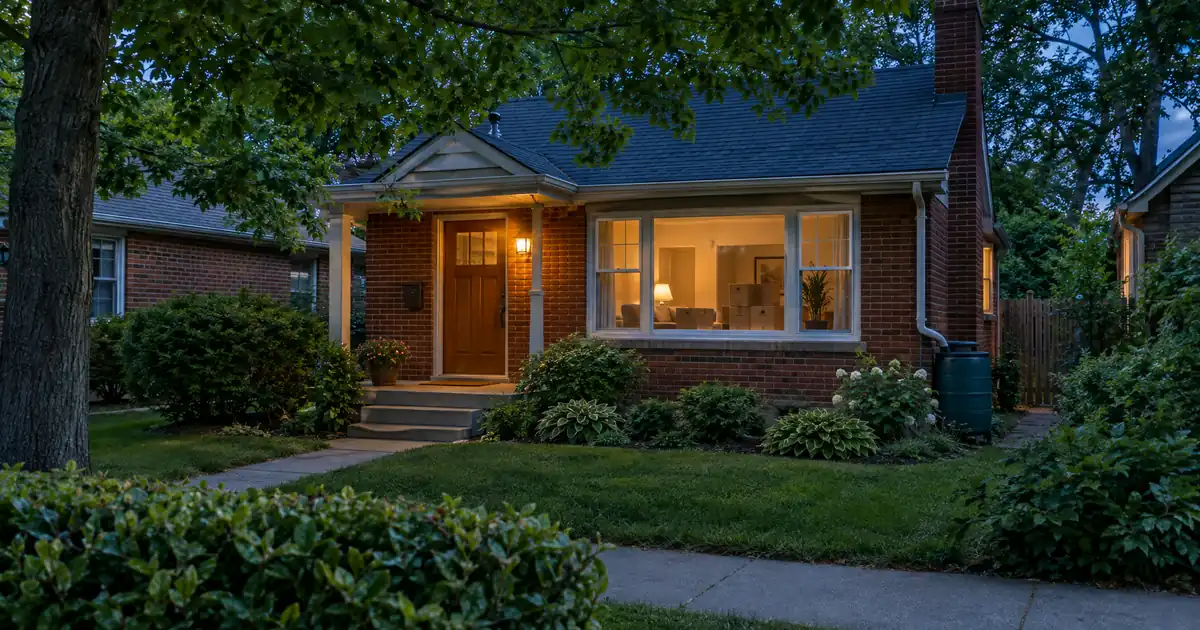
The Quick Read: A gift is the simpler tool when a willing donor exists, because it adds no lien and no payment. Assistance is the better tool when no donor exists, or when the donor can cover only part of the gap. A gift is money nobody expects back. Assistance is either a grant with nothing to repay or a second loan secured against the home. Many buyers use one, and some use both. Whether the two can be stacked depends on the specific program and the lender.
Who Each Option Is Really For
A gift fits a buyer whose family or close contacts can write a check and document where it came from. Assistance fits a buyer with no donor, or one who needs more than the donor can give. That is the honest split.
Neither option is limited to first-time buyers, so repeat and move-up buyers can qualify for the assistance options the wholesale network arranges. The grant is 2% or 3.5% of the purchase price with nothing to repay. It requires a 620 credit score, an FHA first lien, homebuyer education, and an income test at 140% of area median unless a category applies. The forgivable second is 3.5% of the purchase price and is forgiven after 36 or 60 on-time first-lien payments. Both are for an owner-occupied primary residence only. Not a second home. Not a rental. Exact terms depend on lender and investor guidelines, credit profile, reserves, and property review.
The FHA minimum is the starting point. HUD calls it the Minimum Required Investment, at least 3.5 percent of the adjusted value. Both a gift and an assistance program can fund that piece. They just do it in different legal forms.
Lendmire is a mortgage broker licensed for consumer lending in 16 states. It arranges FHA, USDA and HUD-184 first mortgages, paired with assistance options, through wholesale lenders. The brokerage’s down payment assistance programs page lays out the structures in more detail.
Side-by-Side
The table compares a gift with the three assistance structures the wholesale network offers on a purchase. Credit floors apply to assistance, not to gifts. Program terms are subject to lender guidelines and full underwriting.
| Factor | Gift Funds | Grant | Forgivable Second | Repayable Second |
|---|---|---|---|---|
| Repayment | None | Nothing to repay | Forgiven after 36 or 60 on-time payments | Repaid; balloon in year 10 |
| New lien | No | No | Yes | Yes |
| Added monthly payment | No | No | No | Yes |
| Credit floor | None from the gift itself | 620 | 640 (660 blended) | 660 (670 blended) |
| Income test | None | 140% of area median, unless a category applies | None beyond USDA’s on a USDA first lien | None beyond USDA’s on a USDA first lien |
| First lien pairing | FHA, USDA, HUD-184 | FHA only | FHA, USDA, HUD-184 | FHA, USDA, HUD-184 |
| Counseling | Not required | HUD-approved course required | Not required | Not required |
| Size | Whatever the donor gives | 2% or 3.5% of price | 3.5% of price or value | 3.5% or 5% of price or value |
A few notes on the table. The gift row has no credit floor of its own, but your first mortgage still has one. The grant is not offered in Washington. The grant and the second liens cannot be combined with another assistance program.
What Counts as a Gift, and What Does Not
A gift is cash or equity with no expectation of repayment. That is the definition in HUD Handbook 4000.1, which is posted on HUD’s handbook page. For FHA, acceptable donors include a family member, an employer or labor union, a close friend with a clearly documented interest in the buyer, a charitable organization, or a public entity running a homeownership program.
Gifts of equity are narrower. Only family members can give equity as a gift on a property sold to other family members, per HUD’s FHA FAQ. The same page lists what the gift letter must contain. It is signed and dated by donor and borrower. It names the donor, gives an address and phone, states the relationship and the dollar amount, and says no repayment is required.
Here is where a second loan gets confused with a gift. An older HUD handbook says lien-based financing is not a gift, even if it is a “soft” or “silent” second with forgiving features. A forgivable second can end up costing you nothing. But it is still a loan until the conditions are met. That is why the assistance structures are described here as loans where they are loans.
Seller-funded money is out. HUD has long barred funds that trace back to the seller for the minimum investment. If the donor was repaid by anyone with a stake in the sale, the gift is not a gift.
When a Gift Is the Better Fit
A gift is the stronger choice when the donor is eligible and the money is documented. There is no second lien, no recapture, no counseling requirement, and no added payment to count in your debt ratios.
Consider a renter buying a first home with a parent able to cover the full 3.5% minimum. The gift letter, the donor’s withdrawal and the deposit trail do the work. The file stays simple. Nothing gets recorded against the home beyond the first mortgage.
Gifts also help when your credit score is below an assistance floor. The grant starts at 620. The forgivable second starts at 640, and the repayable second at 660. A buyer under those numbers may still use a gift, though the FHA first mortgage still has to be approved on its own terms.
Gifts work on USDA and HUD-184 loans, too. No down payment is required and there is no limit on gift funds. That means a gift on a USDA loan usually goes to closing costs or to a voluntary down payment. For HUD-184, anything that does not have to be repaid while the borrower lives in the home generally counts as a gift.
The catch is paperwork. A gift needs a clean paper trail. Typically the file needs the donor’s withdrawal and the deposit into your account, or a transfer straight to the settlement agent. A line on the closing statement does not prove the money moved. Gifts that surface late are a common reason files stall.
One more point. Under USDA’s underwriting system, gift funds do not count toward cash reserves. A gift covers the cash to close. It does not make you look like you have savings.
When Assistance Is the Better Fit
Assistance is the stronger choice when no donor exists, or when the donor’s check falls short. Across the wholesale programs the brokerage places files with, there are four shapes, and each solves a different problem.
The grant. It runs 2% or 3.5% of the purchase price toward the FHA minimum investment. Nothing to repay. It is released at closing with no lien, no payment and no interest. It pairs with FHA first mortgages only, and the buyer needs a 620 score. Eligibility rests on one of two things: household income at or below 140% of area median income, or a qualifying category. Those categories include first responders, educators, medical workers, civil servants, military personnel, first-time buyers, and buyers in underserved census tracts. An HUD-approved homebuyer education course is required. The buyer pays for it up front and the cost is credited back at closing.
The forgivable second. It is 3.5% of the lesser of price or appraised value, with no interest and no monthly payment. It is forgiven after 36 or 60 on-time first-lien payments, depending on the version. Until then, it sits as a lien. It requires a 640 score, or 660 blended, and pairs with FHA, USDA and HUD-184 first mortgages.
The repayable second. It is 3.5% or 5% of price or value. At 5%, it also covers closing costs and prepaids. This is a real loan. It carries interest, a monthly payment, a 30-year amortization and a balloon due in year 10. It has its own disclosure. Credit floor is 660, or 670 blended.
The refinance-cost second. This one is for FHA refinances, not purchases, so it matters only if you already own.
Consider a buyer with steady income, a 650 score, and no family help. A gift is off the table. The grant is not out on credit, since a 650 score clears the 620 floor, but a forgivable second may still be the better fit. The cost of that choice is a lien that stays on the home until the payment count is met. If the buyer sells or refinances before that, the unforgiven balance is the issue to ask about.
The repayable second works best when a buyer needs closing-cost help and can absorb a second payment. That payment counts in qualifying ratios. The principle: combined payments on the first and second liens cannot exceed the borrower’s ability to repay. The same principle applies under the Section 184 program. Subordinate financing is included in the ratios.
Most public programs work differently from these. The vast majority of housing finance agency programs must be used with that agency’s own first mortgage. Assistance arranged through the wholesale network is paired with the FHA, USDA or HUD-184 first lien instead. Program rules differ, so the file decides which fits.
Can You Use Both?
Sometimes. Programs differ on stacking, and the answer comes from the program and the lender, not from a general rule.
The common pattern is assistance for part of the minimum investment and a gift for closing costs. But the options the wholesale network arranges cannot be combined with another assistance program. They are programs of their own. Whether a particular program accepts a gift on top depends on its terms, so ask before you build a plan around it.
Where stacking fails, it usually fails for one of these reasons:
- The donor is not an acceptable source.
- The gift arrives after the file needs it documented.
- The combined financing exceeds the agency’s limits.
- The program disallows another source of funds.
Monthly Budget and Debt Ratios
A gift adds no payment and is not a debt in qualifying. That is its main advantage.
Assistance varies. A grant adds no payment. A forgivable second carries no monthly payment either. A repayable second adds a payment that counts against your ratios. FHA manual underwriting uses 31/43 ratios, though automated approvals often allow more. The assistance options follow the automated finding.
Underneath all of it sits the FHA loan itself. First-lien leverage is 96.5% with the 3.5% minimum. An upfront mortgage insurance premium is financed into the loan, and annual mortgage insurance applies by tier. One-unit FHA loan limits for 2026 run from $541,287 to $1,249,125 depending on the county. These are the same whether the cash comes from a gift or from assistance.
Where These Files Go Wrong
Most failures are about documentation, not about the buyer.
1. The donor is not acceptable. An agent, builder or seller cannot fund the gift, directly or by reimbursement.
2. The paper trail is thin. A gift letter without the transfer evidence is not enough.
3. A “soft” second is treated like a gift. It is a lien. It has to be disclosed, and it changes your closing documents.
4. The credit floor is missed. The grant starts at 620, the forgivable second at 640, and the repayable second at 660. A score just under the line closes the option.
5. The buyer plans to rent the home out. Assistance is for a primary residence only. Occupancy is a condition, not a suggestion.
Counseling helps before any of this. HUD-approved counselors can give independent advice, often at little or no cost, on whether a set of loan terms fits you.
Key Terms Defined
Gift funds: Cash or equity given to a buyer by an acceptable donor with no expectation of repayment.
Minimum Required Investment: The buyer’s own contribution on an FHA loan, at least 3.5 percent of the adjusted value.
Grant-style assistance: Money toward the minimum investment that carries nothing to repay and no lien.
Forgivable second lien: A second loan with no interest or payment that is forgiven after a set number of on-time first-lien payments.
Repayable second lien: A second loan with interest, a monthly payment and a balloon due in year 10.
Blended score: A credit score that averages in a lower-scoring co-borrower when the primary earner has the higher score and at least 60% of household income.
The Balanced Verdict
Pick the gift if a qualified donor can cover the gap and document it. It is cleaner and cheaper in every structural way. Pick assistance if no donor exists, or if the donor’s money covers only part of the need. Within assistance, the grant leaves the least behind, the forgivable second asks for time in the home, and the repayable second asks for a payment.
Stacking is a case-by-case question. Ask early, so the plan is built on rules and not on hope.
If you are buying a primary home and want to see whether a down payment assistance option fits your file, Lendmire can help you compare the grant, forgivable and repayable structures alongside an FHA, USDA or HUD-184 first mortgage. For another angle on the same decision, see Lendmire’s piece Down Payment Assistance vs Gift Funds From Family. All options are arranged through wholesale lenders, subject to program guidelines and full underwriting. This is not a commitment to lend.
Frequently Asked Questions
Can a friend give me gift money for an FHA loan?
Yes, if the friend has a clearly defined and documented interest in you and the money is truly a gift. FHA’s acceptable donors also include family, employers, labor unions, charities and public entities with homeownership programs. The donor cannot be the seller or anyone who benefits from the sale.
Does a forgivable second count as a gift?
No. It is a loan secured by a lien, even though it carries no interest or monthly payment. It is forgiven only after 36 or 60 on-time first-lien payments, depending on the version. Until then the lien stays on the home.
Will assistance raise my monthly payment?
Only the repayable second does. It carries interest and a 30-year amortization with a balloon in year 10, and the payment counts in your ratios. The grant and the forgivable second add no monthly payment.
Do I have to be a first-time buyer?
No. Repeat and move-up buyers qualify. For the grant, first-time status is only one of several qualifying categories. The second-lien options have no first-time requirement and no income limit beyond USDA’s on a USDA first lien.
Can I use assistance on a rental or second home?
No. These options are for an owner-occupied primary residence only.
About Lendmire
Lendmire, NMLS# 2371349, is a mortgage brokerage with consumer lending licenses in 16 states. Down payment assistance options are arranged alongside FHA, USDA and HUD-184 first liens through wholesale lending partners, and each application is reviewed individually by the lender. Scotsman Guide named Lendmire a Top Mortgage Workplace in both 2025 and 2026.
Get Started
Ready to find the right loan for you?
In about 30 seconds you can review financing options available for your home or investment property. No commitment required.
Informational only. Not a Loan Estimate, approval, or commitment to lend. Program availability and eligibility are subject to lender guidelines, credit approval, property review, and underwriting.
References
1. HUD FHA FAQ – Minimum down payment
This article is part of Lendmire’s down payment assistance program — full qualification details, guidelines, and scenarios live on the program page.
Related reading: Can A Repeat Buyer Get Down Payment Assistance On A Primary Home? · Does Down Payment Assistance Have an Income Limit? · Can You Get Down Payment Assistance While Still Owning a Home?
Brandon Miller
Founder & CEO, Mortgage Loan Originator, Lendmire LLC
- Mortgage Loan Originator · NMLS# 1129696 · Verify on NMLS Consumer Access
- North Carolina Real Estate Broker · License# 343312 · Verify on NCREC
- North Carolina Insurance Producer · License# 19053198 · Property, Casualty, Life, Health · Verify on NAIC SBS
- Lendmire LLC · Firm NMLS# 2371349 · Verify firm licensure
Required disclosures. Lendmire (NMLS# 2371349) operates as a licensed mortgage broker, not a direct lender or depository. The discussion in this article is general in nature and should not be relied upon as financial, legal, or tax advice — every investment scenario is unique and should be reviewed by a qualified professional. Any loan inquiry is subject to lender underwriting, and this article is not a commitment to lend or a guarantee of approval. Mortgage rates, loan terms, and program guidelines vary by borrower, property, and state, and may change without notice. Equal Housing Opportunity. Verify licensure at NMLS Consumer Access.