
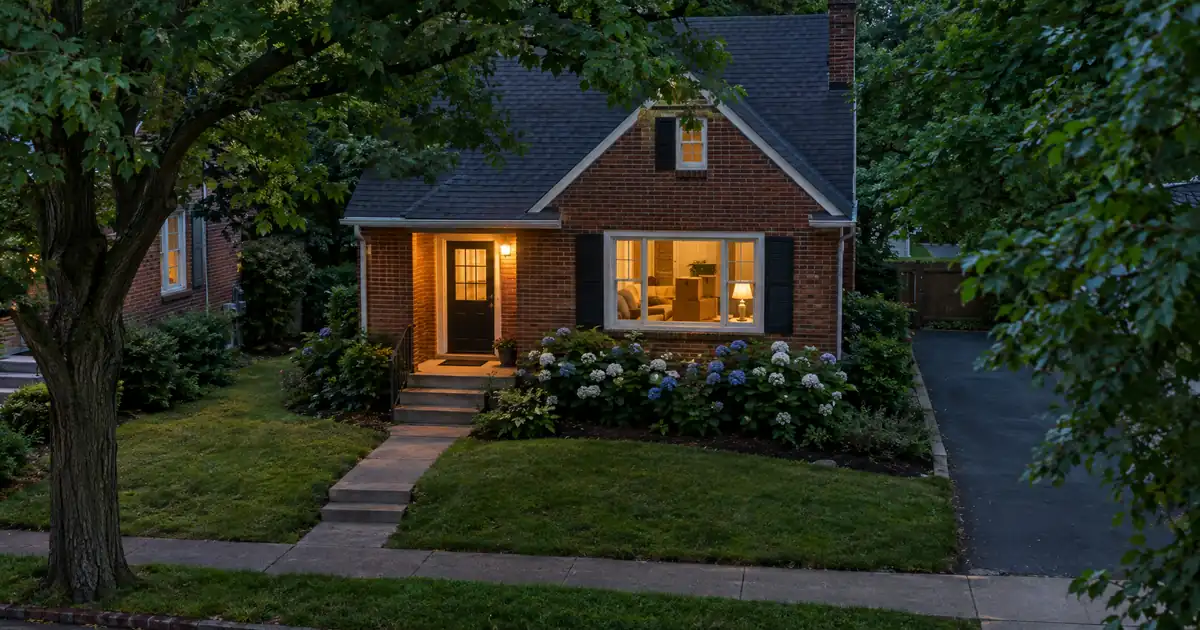
The Quick Read: Paying cash suits the buyer who can cover the price, closing costs, repairs, and a cushion afterward. An FHA loan suits the buyer who would be drained by that. On a low-priced home, the gap between the two is smaller than most people expect, and the property’s condition often decides it. Neither path is the “smart” one in the abstract. It depends on what you have left after closing.
Key Takeaways
- Cash buys simplicity and freedom from lender rules. It also ties up your savings in one asset.
- FHA keeps more cash in your pocket (as little as 3.5% of the price goes in) but adds mortgage insurance, file review, and property standards.
- FHA is for homes you will live in. Cash has no occupancy rule.
- On a cheaper home, the real question is often whether a lender will make a small loan, not whether FHA allows one.
- You can buy with cash now and borrow against the home later, though FHA cash-out has its own waiting period.
Side-by-Side
Here is how the two paths compare on the points that decide most purchases. Program figures reflect the wholesale FHA programs Lendmire places files with, subject to lender guidelines and full file review.
FHA payment estimate
Starting assumptions reflect an example price and the FHA minimum investment. Replace them with your own figures.
Editable benchmark: 7.32% as of October 22, 2026 · Freddie Mac 30-year average via FRED®. A conventional market reference, not an FHA loan quote.
Illustrative starting assumptions: a $350,000 price, the FHA minimum investment as the down payment, a thirty-year term at the current Freddie Mac benchmark, and property taxes and insurance estimated at typical national rates. Every field is editable.
Illustrative estimate only — not a Loan Estimate, approval, quote, or commitment to lend. The rate field carries the weekly Freddie Mac thirty-year conventional benchmark, a market reference and not an FHA loan quote; your rate is set by the lender at lock. FHA mortgage insurance follows HUD’s published schedule for the term, leverage and loan size entered; taxes, insurance and dues are editable estimates; closing costs are not included; county loan limits are not checked here. Licensed in sixteen states for consumer mortgages. Lendmire is not affiliated with or acting on behalf of FHA, HUD, or the federal government.
| Factor | FHA Loan | Paying Cash |
|---|---|---|
| Financing level | Up to 96.5% of price or value | None; you fund the full price |
| Minimum investment | 3.5% of price or appraised value | 100% of the price |
| Credit floor | 580 decision score or higher | None; no lender review |
| Mortgage insurance | 1.75% upfront, plus annual premium | None |
| Occupancy | Owner-occupied principal residence, 1-4 units | Any use you choose |
| Documentation | Income, credit, assets, full file review | Proof of funds and title work |
| Property condition | Must meet FHA condition standards | Your own call |
| Appraisal | Required | Optional |
| Cash left after closing | Usually more | Usually less |
Two rows deserve a closer look. The first is mortgage insurance. The second is property condition. Both matter more on a low-priced home than people expect.
How an FHA Loan Works in Plain Terms
An FHA loan is a mortgage made by a private lender and insured by the federal government. The insurance protects the lender if you stop paying. That protection is why lenders accept lower credit scores and smaller down payments.
Lendmire’s FHA loan programs follow that structure. Across the wholesale programs Lendmire places files with, the basics look like this:
- Financing: up to 96.5% of the price or appraised value (whichever is less), with a 3.5% minimum investment.
- Credit: programs start at a 580 decision score. Some lenders set a higher floor.
- Ratios: the base pair is 31/43 (housing costs and total debts as a share of income). Documented compensating factors can stretch that to 40/50 at the top tier. The automated finding governs most files.
- Seller help: seller or interested-party contributions can reach 6% of the price.
- Co-borrowers: a non-occupant co-borrower is allowed.
Mortgage insurance is the cost people forget. There is an upfront premium of 1.75% of the base loan, which is usually financed into the loan. Then there is an annual premium, between 0.15% and 0.75% of the balance, depending on term, loan amount, and LTV. LTV (loan-to-value) is the loan balance divided by the home’s value.
How long the annual premium lasts matters. On a thirty-year loan above 90% LTV, it lasts the whole term. At or below 90% LTV, it ends after eleven years. The exact numbers vary by lender and program and follow a full review of property, leverage, and credit.
One more point matters for this comparison. Mortgage insurance is a percentage of the loan. It does not shrink to nothing just because the home is cheap.
Does FHA Even Work on a Cheap Home?
Yes, in principle. HUD’s research office reports that FHA programs impose no minimum loan amount. It also finds that FHA insures a disproportionate share of lower-priced homes compared with the rest of the mortgage market. Final terms depend on the lender’s guidelines, the property type, and the borrower’s complete credit picture.
So why is it hard to find a small FHA loan? The same report points mainly to lender profitability. Making a loan costs a fair amount to originate and service, whatever its size. On a small balance, the revenue may not cover those costs. It is a lender-appetite problem, not an FHA rule.
In practice, this means the first call matters. Before you plan around FHA, ask whether the lender will take a small loan on your price range. Some will. Some will not. That answer can settle the question before the math starts.
HUD’s report also notes that small-loan borrowers often put in a lot of their own money. The typical combined LTV on loans under a small-balance threshold was 64%. Many of these buyers were already close to a cash purchase. They borrowed the rest.
County loan limits apply to FHA, but HUD sets the ceiling far above small-loan territory. The limit is rarely your constraint on a low-priced home.
When an FHA Loan Is the Better Fit
FHA wins when preserving cash matters more than avoiding a loan. Here are the situations where that tends to be true.
You would be left with almost nothing. The CFPB’s planning guidance says to subtract moving costs, repairs, furnishings, and an emergency cushion (usually three to six months of expenses) from your savings. What remains is your real cash limit. A home that is cheap on paper can still use every dollar you have.
Your credit or documentation is thin. The CFPB notes that FHA allows lower credit scores than most conventional loans. Where credit is imperfect and the down payment is small, it says FHA can often be a more affordable option. It adds that there are no hard-and-fast rules. A cash buyer skips credit review entirely, so this point only matters if you are borrowing.
You want to keep your savings working elsewhere. Say you hold a retirement cushion, a business reserve, or funds earmarked for a child’s tuition. Putting 3.5% down instead of 100% leaves those funds untouched. That is liquidity, and it has real value. Each figure is subject to lender guidelines and a complete review of property type, leverage, and credit.
Help is available for the cash to close. The CFPB says many down payment assistance programs can be paired with a regular FHA or conventional loan. Seller contributions of up to 6% of the price may also be allowed. Both can shrink the cash you bring.
You will live there for years. Mortgage insurance and financing cost less per year the longer you stay, relative to what the cash could do elsewhere. That calculation is personal, and a loan officer can walk through it with your numbers.
Now the tradeoffs. FHA means a mortgage payment, a premium, and an appraisal that must pass FHA’s property standards. HUD’s minimum property requirements say an insured home must be “safe, sound, and secure.” A cheap home that needs work may not meet that on day one.
If it needs repairs, a rehab option may help. HUD’s 203(k) program comes in a Standard version for major rehabilitation and a Limited version for smaller repairs. It lets you fold repair costs into the loan. Standard 203(k) adds a consultant and extra paperwork.
When Paying Cash Is the Better Fit
Cash wins when the property or the buyer does not fit the FHA box, or when you can fund the purchase without strain.
The home fails FHA condition rules. A low-priced house may have a failing roof, no working heat, or other hazards. A cash buyer is not bound by FHA’s condition standards. You can buy first and repair after. The tradeoff is that you cannot finance the repairs into one loan, so you need cash for both.
You are not buying a primary residence. FHA is limited to owner-occupied principal residences with one to four units. If you plan a second home, a vacation property, or a rental, FHA does not fit. Occupancy decides the financing. A cash buyer faces no such rule.
You have plenty of cash left after the purchase. If paying the full price still leaves a comfortable cushion, there is little reason to take on mortgage insurance and a loan. Cash removes the monthly loan payment. Taxes, insurance, and upkeep remain either way.
Lenders will not touch a small loan. If no lender near you will write a loan that small, cash may be the only path. That is a market limit, not a flaw in your file.
You want fewer moving parts. A cash purchase has no lender underwriting, no lender appraisal, and no loan conditions that can stall a deal, and sellers sometimes prefer that. A DSCR loan, by contrast, qualifies primarily on property-level rental income covering the payment, subject to lender guidelines.
Now the myths, because cash is oversold in a few ways:
- Cash does not mean no closing costs. You skip lender fees. You still pay for title work, recording, and transfer. The CFPB’s own 2%–5% closing-cost range is a general figure for mortgage purchases, so a cash deal usually lands below it, but not at zero.
- Cash does not mean no inspection. The FHA appraisal is not an inspection, and neither is a cash purchase. Get an independent inspection either way.
- Cash does not guarantee a discount. A seller may like a clean deal. That does not mean they will cut the price.
- Owner’s title insurance is optional with cash. Lenders usually require a lender’s policy. If you pay cash, no one requires an owner’s policy. It still protects your own investment, so many buyers choose it anyway.
A Few Buyer Profiles
These are percentages and plain words, not dollar examples.
The inheritance buyer. She has cash from a family estate and finds a modest home at a low price. Cash covers the full price with a cushion left over. She prefers no payment and no insurance. Cash fits.
The first-time buyer with limited savings. He has steady income and fair credit, but his savings would vanish at 100%. Putting 3.5% down keeps a repair fund. He lives in the home. FHA fits, if a lender will write a loan that small. Leverage, reserves, and pricing vary by lender and program; the final terms follow the full file review.
The retiree with a nest egg. She can pay cash, but the money also funds her monthly expenses. She is better off asking both questions: what does a loan cost, and what does draining savings cost? A split may fit her, with a large cash down payment and a small loan. That is a conventional-style structure, and her loan officer can compare it with FHA.
The fixer-upper buyer. The home needs serious work. FHA condition standards may block the loan. A rehab loan may help, or cash plus a repair budget may be simpler.
Buy With Cash Now, Borrow Later?
It is possible, but it is not a free option. An FHA cash-out refinance reaches 80% LTV, and the home generally must have been owned and occupied for 12 months before the case number is assigned. Cash-out has its own equity limits and exceptions, so confirm the details with a loan officer before relying on this route.
A quicker route is a rate-and-term refinance. It can reach 97.75% on a principal residence occupied for the previous twelve months. It does not pay you cash, though. It only replaces an existing loan.
If you live in a multi-unit home, the options shift again. Lendmire’s piece FHA vs Conventional Cash-Out When You Live in a 2-4 Unit Primary Home covers that case.
The Balanced Verdict
Cash and FHA are not rivals so much as tools for different situations. Here is the honest summary.
Pick cash if you can pay the full price, keep a real cushion, and the home needs work FHA would not accept. Pick FHA if paying cash would leave you thin, you will live in the home, and a lender is willing to write the loan at your price. Consider a hybrid if you have a lot of cash but would still like to keep some of it. Many borrowers on small loans already do this.
The cleanest test is to compare both on paper. Run the cash-left-after-closing number for each path. If one leaves you exposed, that is your answer.
Key Terms Defined
FHA loan: a mortgage from a private lender that is insured by the Federal Housing Administration, which lets lenders accept smaller down payments and lower credit scores.
LTV (loan-to-value): the loan balance divided by the home’s price or appraised value.
Mortgage insurance premium: the FHA charge that protects the lender, paid as an upfront amount and an annual amount collected monthly.
Minimum property requirements: FHA’s standards that an insured home be safe, sound, and secure.
Cash to close: the money you actually bring to closing, which is different from total closing costs.
Frequently Asked Questions
Can I use an FHA loan on a very inexpensive home?
Usually, but it depends on the lender. FHA sets no minimum loan amount. Some lenders decline small loans because the work costs about the same whatever the size. Ask early whether your lender will write a loan at your price.
Does paying cash mean I skip the appraisal and inspection?
You can skip the appraisal, since no lender requires one. Skipping the inspection is a mistake. An FHA appraisal is not an inspection either, so a home inspection protects you under both paths.
Do I still pay closing costs if I buy with cash?
Yes, but fewer. You avoid lender fees. You still pay for title work, recording, and transfer costs. Many cash buyers also choose an owner’s title policy, which a lender would not require of them.
Can I buy a fixer-upper with an FHA loan?
Sometimes. The home must meet FHA condition standards. A 203(k) rehab loan can fold repairs into the purchase. If the home needs more work than FHA allows, cash may be simpler.
Is FHA only for people who cannot afford a conventional loan?
No. FHA suits borrowers with smaller down payments or lower credit scores, but others choose it too. The CFPB says cost depends on your credit and down payment. A loan officer can compare FHA with conventional options on your file.
If you are buying a home and want to see whether an FHA loan fits your file, Lendmire can help you compare the options and what each one asks of the file. Program figures are subject to lender guidelines and full file review, and nothing here is a commitment to lend.
When the price is low, the property’s condition and your cash cushion usually matter more than the financing label.
For your own numbers, request a scenario review with Lendmire.
About Lendmire
Lendmire — NMLS# 2371349 — is a mortgage broker that arranges FHA, VA, conventional and jumbo home purchase and refinance financing in 16 states through wholesale lenders. Every option is subject to the lender’s guidelines and full underwriting. Scotsman Guide named Lendmire a Top Mortgage Workplace in both 2025 and 2026.
Get Started
Ready to find the right loan for you?
In about two minutes you can review financing options available for your home or investment property. No commitment required.
Informational only. Not a Loan Estimate, approval, or commitment to lend. Program availability and eligibility are subject to lender guidelines, credit approval, property review, and underwriting.
References
1. HUD PD&R – Financing Lower-Priced Homes: Small Mortgage Loans
2. HUD – FHA Lenders (mortgage limits)
3. CFPB – Figure out how much you want to spend
5. HUD’s minimum property requirements
This article is part of Lendmire’s FHA loan program — full qualification details, guidelines, and scenarios live on the program page.
Related reading: Can an LLC Get an FHA Loan to Buy a Home? · FHA Loan Limits by County for a Home Purchase · How to Close an FHA Cash-Out Refinance on a Primary Home
Brandon Miller
Founder & CEO, Mortgage Loan Originator, Lendmire LLC
- Mortgage Loan Originator · NMLS# 1129696 · Verify on NMLS Consumer Access
- North Carolina Real Estate Broker · License# 343312 · Verify on NCREC
- North Carolina Insurance Producer · License# 19053198 · Property, Casualty, Life, Health · Verify on NAIC SBS
- Lendmire LLC · Firm NMLS# 2371349 · Verify firm licensure
Disclosures. The information presented in this article is general market commentary, not financial, legal, or tax advice. Lendmire is a mortgage brokerage (NMLS# 2371349) — not a direct lender or depository institution — and loan placement is subject to lender underwriting. Nothing in this content represents a commitment to lend. Loan terms, pricing, and program availability vary based on borrower qualifications, property characteristics, and state of subject property, and are subject to change at any time. Lendmire complies with Equal Housing Opportunity requirements. Consumer access: nmlsconsumeraccess.org.