
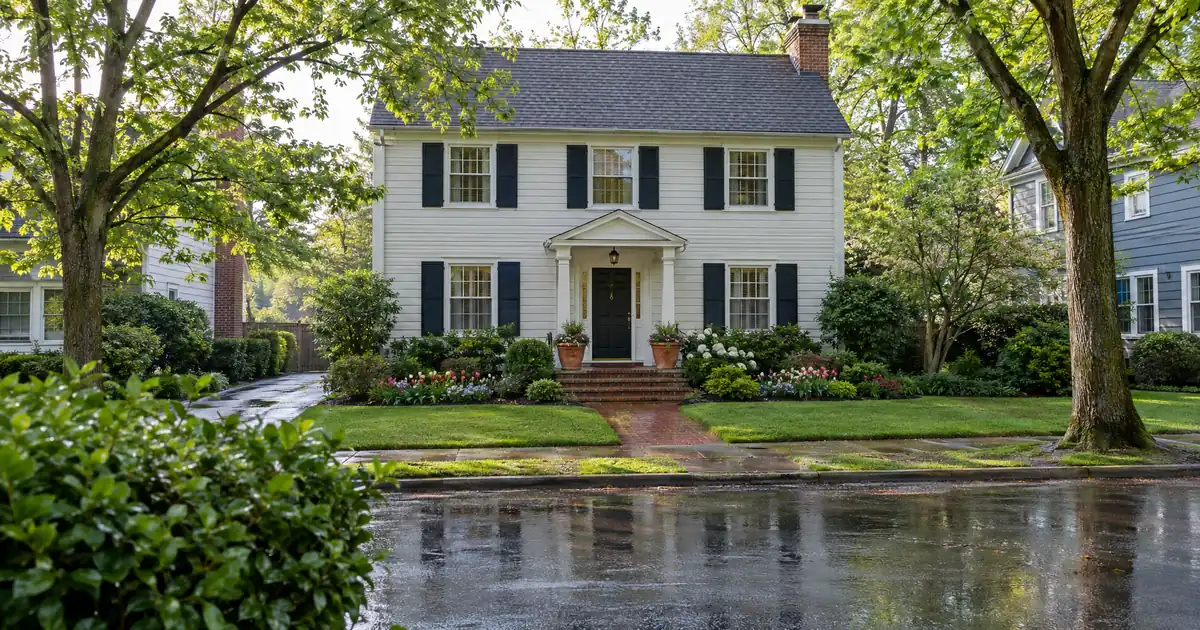
The Quick Read: FHA financing works well on modest, lower-priced homes, and the county loan limit almost never gets in the way. What decides the file is the home’s condition, the appraised value against the contract price, and whether the monthly cost fits. Across the wholesale programs Lendmire places FHA files with, the base is a 580 decision score and 3.5% down, subject to lender guidelines and full file review.
What Counts as a Starter Home and a Low-Cost Area?
A starter home is an entry-level house, condo, or small multi-unit property that a first or early buyer can afford. A low-cost area is a county where prices sit well below the national picture. FHA does not define either term. It sets loan limits by county, and “low-cost” only means your county lands on the low end of that scale.
FHA payment estimate
Starting assumptions reflect an example price and the FHA minimum investment. Replace them with your own figures.
Editable benchmark: 7.32% as of October 22, 2026 · Freddie Mac 30-year average via FRED®. A conventional market reference, not an FHA loan quote.
Illustrative starting assumptions: a $350,000 price, the FHA minimum investment as the down payment, a thirty-year term at the current Freddie Mac benchmark, and property taxes and insurance estimated at typical national rates. Every field is editable.
Illustrative estimate only — not a Loan Estimate, approval, quote, or commitment to lend. The rate field carries the weekly Freddie Mac thirty-year conventional benchmark, a market reference and not an FHA loan quote; your rate is set by the lender at lock. FHA mortgage insurance follows HUD’s published schedule for the term, leverage and loan size entered; taxes, insurance and dues are editable estimates; closing costs are not included; county loan limits are not checked here. Licensed in sixteen states for consumer mortgages. Lendmire is not affiliated with or acting on behalf of FHA, HUD, or the federal government.
That matters because many buyers assume a cheap market means a cheap-market rulebook. It doesn’t. The same FHA rules apply in a rural county and a mid-sized town. The difference is in how the numbers behave on a small purchase and how often older housing stock runs into property standards.
Lendmire is a mortgage broker licensed for consumer lending in 16 states, and it arranges these loans through wholesale lenders. Its FHA loan programs cover owner-occupied purchases and refinances.
Key Takeaways
- Maximum financing is 96.5% of value, with a 3.5% minimum investment, from a 580 decision score.
- County loan limits apply, but in low-cost counties the limit is far above typical starter prices.
- The appraisal checks value and basic safety, soundness, and security of the property. It is not an inspection.
- The upfront premium is 1.75% of the base loan. The annual premium depends on term, amount, and LTV.
- Occupancy is required: it must be your principal residence.
Is the Loan Limit a Problem on a Cheap House?
No. FHA sets a “floor” limit that applies in lower-cost counties, and HUD publishes it each year. HUD’s FHA lender page lists a nationwide one-unit floor of $541,287 and a ceiling of $1,249,125 for case numbers assigned on or after January 1, 2026. Those numbers change annually, and your county’s limit is what counts.
For a starter home in a low-cost county, the floor is the working limit. Most entry-level purchases sit well below it. So the limit is a non-issue here. Property condition, appraised value, and monthly cost are where files succeed or stall.
Special areas such as Alaska, Hawaii, Guam, and the U.S. Virgin Islands carry different, higher limits. Ask your loan officer which county limit applies to the property you’re buying.
How Is an FHA Purchase Underwritten, Step by Step?
An FHA purchase moves through six checkpoints: credit, case number, appraisal, repairs, underwriting, and closing. Each one has a documentation task, and the gaps usually show up at the appraisal and underwriting steps, not at the start.
1. Credit and score. The lender pulls credit and sets your decision score. Across the wholesale programs Lendmire places files with, 580 is the starting point for maximum financing. HUD’s rules also describe a 500–579 tier that caps leverage at 90%, but the network does not reach below 580. Some lenders set a higher floor than HUD does. These specifics are subject to lender guidelines and a full review of property, leverage, and credit.
2. Contract and case number. The lender orders an FHA case number once you have a signed contract. The loan limit, premium schedule, and appraisal clock key off that date.
3. Appraisal. An FHA-roster appraiser estimates market value and reports on the property’s condition. More on this below.
4. Repairs and re-check. If the appraiser flags a required repair, it gets completed, or handled under a repair program, and the property is checked again.
5. Underwriting. The lender weighs credit, income, assets, and debt ratios, plus the automated finding. The base ratio pair is 31/43 (housing to total debt) with no compensating factors. Documented factors can stretch that to 40/50 at the top tier. The automated finding governs most files. Per HUD’s announcement on premiums, mortgage insurance counts toward the costs used to figure your debt-to-income ratio.
6. Closing and occupancy. Under HUD’s owner-occupancy rule, you move in within 60 days of signing and stay at least one year. Your Loan Estimate and Closing Disclosure arrive on the standard consumer schedule.
Fresh paperwork is the quiet fix on most of these files. Pay stubs, bank statements, and gift letters that match the file’s story keep the underwriter from asking twice.
What Does the Appraisal Look At on an Older, Lower-Priced Home?
The appraisal does two jobs. It estimates value, and it reports whether the property meets HUD’s minimum property requirements, which exist so insured loans are secured by homes that are safe, sound, and secure. Starter homes tend to be older, so deferred maintenance is the usual friction point.
Typical flags on this housing stock include:
- Peeling or chipping paint on older homes
- Roof surfaces near the end of their life
- Failed or missing handrails and stairs
- Exposed wiring or missing safety devices
- Water damage, active leaks, or wood rot
- Missing or broken heating
When a flag appears, the usual outcomes are a repair before closing, a seller credit toward the fix, a repair escrow, or a walk-away. Pull permits where the work requires them.
Two points trip buyers. First, the appraisal is not a home inspection. HUD’s borrower disclosure says FHA does not perform home inspections, and an inspection only happens if you arrange one. Hire an inspector. On an older house, it is an affordable protection to have. Second, neither FHA nor your lender will buy the home back if problems surface later.
The appraised value also controls the loan. The LTV is measured against the lesser of price or appraised value, as HUD’s premium letter lays out. If the value lands under the contract price, the loan shrinks and you cover the gap, renegotiate, or walk. Lendmire’s piece Can You Waive or Reuse an FHA Loan Appraisal That Came In Low? covers that situation in more detail.
Flipped homes carry one more wrinkle. The CFPB notes that some flipped properties require a second appraisal, at no charge to the buyer, with exemptions for rural flips and certain agency-owned homes. Investor-renovated starter homes are the ones most likely to trigger it.
How Do Down Payment and Mortgage Insurance Work on a Small Loan?
On a purchase, the minimum investment is 3.5%, and maximum financing is 96.5% of the lesser of price or appraised value. Seller or interested-party contributions can run up to 6% of the price on the programs Lendmire works with. Gift funds are generally acceptable when documented, and that documentation is where files slow down.
Mortgage insurance has two parts:
| Premium | What it is | How it behaves |
|---|---|---|
| Upfront | 1.75% of the base loan | Financed into the loan |
| Annual | 0.15% to 0.75% of the balance | Set by term, amount, and LTV |
| Duration, 30-year loan above 90% LTV | Full term | Does not drop off on its own |
| Duration, 90% LTV or less | 11 years | Ends after eleven years |
Those are program facts, not prices. The structure is what matters for planning. A buyer putting 3.5% down lands above 90% LTV, so the annual premium runs for the term. A buyer with 10% or more down gets the shorter run. Later appreciation does not change the duration, so a refinance is the usual way out of it. Terms depend on the lender’s guidelines, the property type, the leverage, and a full review of the credit profile.
On a low-priced home, the percentage-based premiums shrink with the loan. Fixed third-party costs, like the appraisal and an inspection, do not. They take a bigger bite out of a small purchase. Budget for them separately.
What If the House Needs Work?
The 203(k) rehabilitation loan rolls purchase and repair money into one mortgage. HUD’s 203(k) page describes it as insuring the purchase and rehabilitation of a home at least a year old, with repair funds held in escrow and released as work is completed.
There are two versions. The Standard 203(k) has a minimum repair cost of $5,000 and requires a 203(k) consultant. The Limited 203(k) covers minor, non-structural repairs, with total rehabilitation cost capped at $75,000, and HUD reviews that cap annually. The full mortgage, repairs included, has to stay within the county limit.
For a starter home, that cap math is a real check. A cheap house plus a big rehab can still sit well under the county floor. The binding constraint is usually whether the contractor bids, permits, and draw schedule can be documented. Ask your loan officer whether a given lender offers 203(k) at all, because not every lender does.
Where Does the General Rule Break?
Most of the program is uniform. These edge cases are where files diverge:
- Low decision score. HUD’s tiers allow 500–579 at lower leverage, but the wholesale programs Lendmire places with start at 580. A borrower below that needs another path or a score repair plan.
- No traditional credit. HUD allows maximum financing for borrowers with thin or non-traditional credit, but the file goes to manual underwriting. Expect more documentation.
- Non-occupant co-borrower. A non-occupant co-borrower is allowed. If only the non-occupying co-borrower has a credit score, the file must be manually underwritten.
- Multi-unit starter homes. One to four units qualify, and you live in one of them. Unit-count limits run higher than the one-unit limit.
- Existing FHA loan. HUD’s general rule is one FHA principal residence per borrower, with listed exceptions. FHA will not insure a loan designed to buy investment property. Lendmire’s article VA Loan Rules for Combining With an FHA Loan on Two Homes covers a common version of this.
- Military. Active-duty borrowers who can’t physically occupy may still meet the occupancy rule in some cases, such as a family member living there. Keep this one to a direct conversation with the loan officer.
- Credit events. HUD’s waiting periods are two years from a Chapter 7 discharge and three years from a foreclosure. Those are HUD rules, not network promises.
- Rentals and flips. FHA is for your principal residence. Buying to rent or resell does not fit.
Is FHA Only for First-Time Buyers?
No. FHA has no first-time-buyer requirement and no income cap. It just happens that many first-time buyers use it. HUD reports that 538,642 first-time buyers received FHA-insured mortgages in a recent fiscal year, 83.03 percent of FHA’s forward purchase volume. Repeat buyers qualify too if they meet occupancy and credit rules.
Key Terms Defined
Adjusted value: the lesser of the sale price or appraised value, used to size the loan.
Minimum required investment: the borrower’s own money at closing, 3.5% on a maximum-financing purchase.
Decision score: the credit score the lender uses to set your leverage tier.
Upfront premium: a one-time mortgage insurance charge, 1.75% of the base loan, usually financed.
Annual premium: the ongoing mortgage insurance charge, collected monthly, tied to term, amount, and LTV.
Minimum property requirements: HUD’s standards for a home’s safety, soundness, and security.
Overlay: a lender’s own rule that is stricter than HUD’s.
203(k): an FHA loan that finances a home purchase and repairs together.
What Does the Decision Look Like in Practice?
Picture a buyer eyeing a one-story house in a low-cost county, priced well under the county floor. The buyer has a 600-range score, a stable job, and 3.5% saved. On paper, FHA fits. Three checks decide the rest.
First, does the home pass minimum property standards as is? If not, will the seller fix it, credit it, or does the buyer need a 203(k)? Second, will it appraise at or above the contract price? Third, do the monthly costs, including the annual premium, taxes, and insurance, fit inside the 31/43 base ratios or the stretch up to 40/50 with documented factors?
If all three clear, the file is straightforward. If the appraisal flags repairs the seller won’t touch, that’s a hard stop on this house, not on FHA. A conventional loan with more down might still work on a house that fails FHA standards, but that depends on the lender and the property.
One thing worth weighing: a buyer with 10% or more down might compare FHA against conventional financing, since the premium duration and structure differ. It’s a genuine toss-up for some files, and the right answer depends on credit and the length of time you plan to stay.
Frequently Asked Questions
Can I use an FHA loan on a very cheap house?
Yes. County loan limits apply, but in low-cost counties the floor limit is far above typical starter prices, so the limit rarely restricts you. The home still has to meet HUD’s minimum property requirements and appraise at or above the contract price.
Does the FHA appraisal replace a home inspection?
No. The appraisal estimates value for the lender and reports on property condition standards. HUD states that FHA does not perform inspections and that you arrange one yourself. On an older starter home, an inspection often finds issues the appraiser doesn’t list.
How long does FHA mortgage insurance last?
It depends on your down payment. On a thirty-year loan above 90% LTV, the annual premium lasts for the full term. At 90% LTV or below, it ends after eleven years. The upfront premium is 1.75% of the base loan and is typically financed.
What if the house needs repairs to pass the appraisal?
The repair gets done before closing, the seller credits it, or it is handled through a repair program. For larger work, a 203(k) loan can fold repair costs into the mortgage, with funds held in escrow and released as work is completed. Not every lender offers it.
Can I buy a duplex or fourplex with FHA and rent out the other units?
Yes, if you live in one unit as your principal residence. FHA covers one to four units on owner-occupied purchases. It does not cover buying a property mainly to rent.
All program figures are subject to lender guidelines and full file review, and nothing here is a commitment to lend.
If you are buying a home and want to see whether an FHA loan fits your file, Lendmire can help you compare the options and what each one asks of the file. Call 828-256-2183 or request a quote.
About Lendmire
As a mortgage broker (NMLS# 2371349), Lendmire helps homeowners and home buyers in 16 states with FHA, VA, conventional and jumbo purchase and refinance loans arranged through wholesale lenders. Lendmire is never the lender; program terms are set by the lender and the agency guidelines. Scotsman Guide named Lendmire a Top Mortgage Workplace in both 2025 and 2026.
Get Started
Ready to find the right loan for you?
In about two minutes you can review financing options available for your home or investment property. No commitment required.
Informational only. Not a Loan Estimate, approval, or commitment to lend. Program availability and eligibility are subject to lender guidelines, credit approval, property review, and underwriting.
References
1. HUD FHA Lenders – Maximum Mortgage Limits
2. HUD press release 23-041, FHA premium schedule
3. HUD, For Your Protection: Get a Home Inspection
4. HUD premium letter (hosted by FHFA)
5. CFPB – Flipped-home second appraisal
This article is part of Lendmire’s FHA loan program — full qualification details, guidelines, and scenarios live on the program page.
Related reading: Can You Get an FHA Loan and What Decides Approval? · VA Loan Rules for Combining With an FHA Loan on Two Homes · FHA Mortgage Insurance Premium Requirements for Primary Home Buyers
Brandon Miller
Founder & CEO, Mortgage Loan Originator, Lendmire LLC
- Mortgage Loan Originator · NMLS# 1129696 · Verify on NMLS Consumer Access
- North Carolina Real Estate Broker · License# 343312 · Verify on NCREC
- North Carolina Insurance Producer · License# 19053198 · Property, Casualty, Life, Health · Verify on NAIC SBS
- Lendmire LLC · Firm NMLS# 2371349 · Verify firm licensure
Compliance and disclosures. Lendmire (NMLS# 2371349) is a licensed mortgage broker and is not a direct lender, depository institution, financial advisor, or tax professional. Content in this article is general market analysis and educational information — not financial, legal, or tax advice for any specific situation. Lendmire does not guarantee loan approval; every transaction is subject to underwriting by the funding lender. Mortgage pricing and loan program guidelines are subject to change at any time without notice and vary by borrower characteristics, property type, and state regulations. Lendmire complies with Equal Housing Opportunity. Licensure verification: NMLS Consumer Access.