
Finance A Condotel As A Second Home On Asset-Based Income — The Quick Read: A condotel purchase runs through non-QM channels, not agency loans, because the project itself gets flagged for hotel-style operation before your income even enters the picture. Asset-based qualification then converts liquid assets into a monthly income figure using a fixed divisor, letting a buyer with strong reserves and thin traditional personal-income documentation qualify without pay stubs. Two separate reviews decide the file: a building screen, then a borrower screen. Miss either one and the deal stalls.
Why Condotels Fall Outside Normal Financing
Condotels sit outside agency financing by design. Fannie Mae’s own guide rules out any project “operated or managed as a hotel, motel, or similar commercial entity.” The agency’s Condo Status Finder lists condotel characteristics and short-term rental activity as common reasons a project gets flagged ineligible. This is a building-level problem, not a borrower problem. It applies the same way no matter how you plan to document income — whether that’s traditional personal-income documentation, bank statements, or assets.
This is why the loan lives in non-QM territory. Programs built for condotels — bank-statement, DSCR, and asset-based products — exist specifically because the agency selling guide closes the door on this property type. Once you accept that the building screen comes first, the rest of the strategy makes more sense.
Key Terms Defined
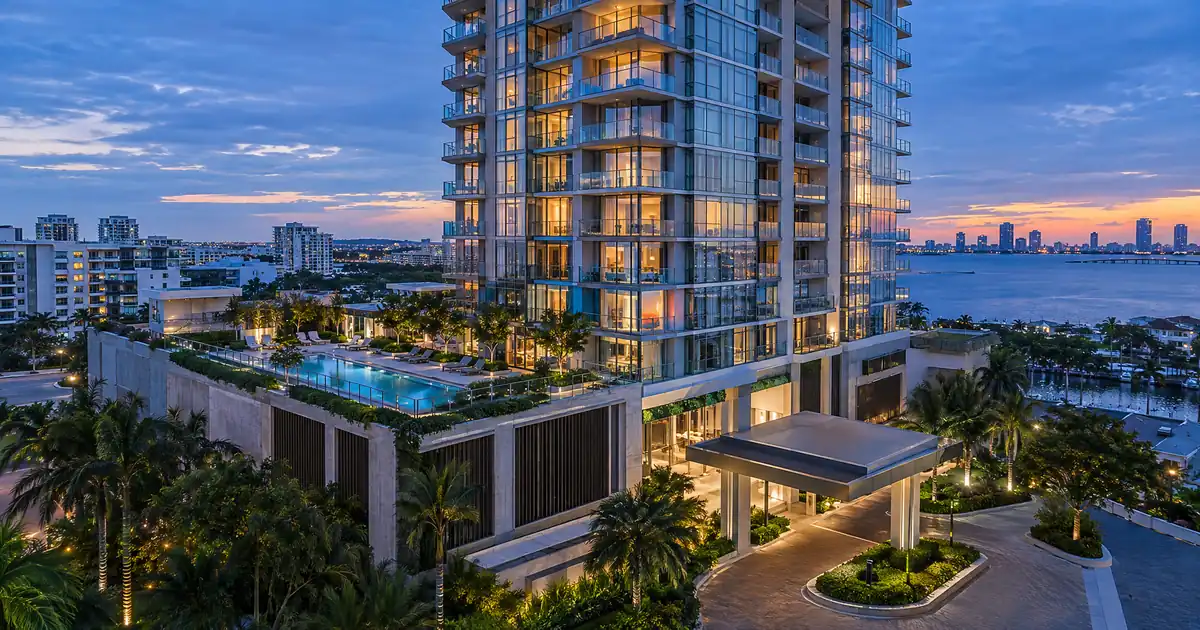
Condotel: A condominium unit inside a building that also runs hotel-style operations — front desk, housekeeping, or a rental-management pool — blurring the line between residence and commercial property.
Asset-based qualification (asset depletion): A documentation method that turns liquid assets into a monthly income figure by dividing the eligible balance by a set number of months, instead of using traditional personal-income documentation or pay stubs.
Second home vs. investment property: A second home is one you personally use; an investment property is bought mainly to produce rental income. The distinction changes leverage, documentation, and long-term loan structure.
HOA questionnaire: A disclosure form covering owner-occupancy percentage, pending litigation, reserve balances, and whether the building runs a mandatory or voluntary rental pool — central to the building screen.
The Two-Step Screen: Building First, Then Borrower
Every condotel file gets reviewed twice, independently. First the project, then the person.
The building screen looks at HOA budgets, reserve balances, litigation history, and rental-pool terms. A weak HOA questionnaire — thin reserves, an active lawsuit, a mandatory rental program — can stop a file even when the borrower’s financial picture is spotless. This is a common surprise for buyers who assume a strong balance sheet guarantees approval. It doesn’t. The two reviews run on separate tracks, and a clean asset picture never overrides a broken building file.
Second comes borrower qualification. This is where asset-based income enters. For a self-employed buyer, a retiree living off a portfolio, or someone whose traditional income documentation understate real cash flow, asset-based math replaces the traditional income test.
How the Asset-Based Math Actually Works
Across the wholesale network Lendmire places files with, asset-based qualification runs two distinct paths, and they solve different problems.
Asset allowance is the supplemental version. Liquid assets get divided by 36 months when the borrower’s overall debt-to-income comes in at or below 60%, by 60 months when it runs above that, or by 84 months when the loan stands on its own or the loan amount exceeds $3,500,000. This applies to primary residences and second homes only — never investment property — and it caps at 80% loan-to-value.
Assets-only is the stronger version, and it drops debt-to-income from the equation entirely. It requires U.S.-based liquid assets equal to the loan amount, plus closing costs, plus sixty months of any net loss carried on other residential property. That’s a high liquidity bar, but it removes income testing altogether.
A few details matter across both paths. Retirement accounts count at 70% of value, rising to 80% once the borrower passes 59.5. Business funds, gift funds, trusts other than a revocable living trust, unvested stock, and cryptocurrency never count toward the asset total. And funds used for the depletion calculation can’t double as income from the same accounts — you don’t get to count both the divided asset balance and the dividends those assets throw off.
One pattern shows up constantly in files like this: a borrower with strong liquid assets clears the asset test cleanly, then the building’s HOA questionnaire turns up a mandatory rental pool that reclassifies the intended use. The asset math was never the problem. The project was.
Occupancy: The Line That Decides Everything
Second-home financing requires that you actually intend to live in the unit — not full-time, but genuinely, for personal use. Federal guidance sets a specific test here: under CFPB Regulation Z, if the owner expects to occupy the property more than 14 days during the coming year, the property can’t be treated as non-owner-occupied. That 14-day line is not a lender preference. It’s a bright-line federal test.
This matters because DSCR loans are structurally the opposite product. They’re built for rental-only properties, not personal use. You can’t casually swap between second-home and investment framing on the same unit just because one type of paperwork is more convenient. Loan documents typically include a second-home rider. This is a signed promise to personally use the property for a set period — usually a year — unless the lender agrees otherwise. Some condotels have a mandatory rental program instead of a voluntary one. If that’s the case, this pooling requirement can itself push the unit toward investment-property treatment, regardless of what you intend.
Getting this classification wrong causes more than paperwork headaches. Some people treat a personal-use property as an investment purchase to force it through business-purpose underwriting. This can trigger a consumer-purpose reclassification down the line. That’s a real compliance headache for everyone attached to the file.
What Leverage Actually Looks Like
Second-home leverage on files like this steps down as loan size climbs, through select wholesale programs and subject to full underwriting. On a $300,000 to $1,000,000 second home, purchase leverage typically runs to 85%, with credit profiles around 700 supporting the top of that range. Move into the $1,000,000 to $1,500,000 band and purchase leverage typically runs to 80%, generally with credit in the high-600s or better. From $2,500,000 to $3,000,000, purchase leverage steps down again, to roughly 75%, with stronger credit expected.
Above $3,000,000, condotel-specific overlays apply on top of the standard ladder: a 700 credit floor, a clean 24-month housing-payment history, 48-month seasoning after any credit event, and no non-occupant co-borrowers. Every file above $4,000,000 goes to case-by-case manual review before submission — never a flat “up to” number at that size.
Condotels themselves carry their own property-level ceiling regardless of income documentation: purchase leverage typically tops out around 75%, cash-out around 65% through the portfolio program (and lower, near 50%, on the bank-portfolio program). That ceiling holds whether the borrower is reviewed on conventional personal-income paperwork, bank statements, or assets — asset-based qualification is a documentation path, not a way around the property’s own leverage cap.
| Loan Element | Typical Range (Second Home, Condotel) |
|---|---|
| Purchase LTV, $300K-$1M | Up to ~85% |
| Purchase LTV, $2.5M-$3M | Up to ~75% |
| Condotel property ceiling (purchase) | Around 75% |
| Condotel cash-out ceiling | Around 65% (portfolio program) |
| Asset allowance divisor | 36, 60, or 84 months |
| Reserves | 3-9 months, scaled by loan size |
Documentation And Credit Realities
Credit floors on the portfolio program typically start around 660, moving to 700 above the $3,000,000 super-jumbo threshold on second homes. Debt-to-income can run as high as 50% on the income-based path, though assets-only qualification removes that ratio entirely.
Reserve requirements scale with loan size: typically 3 months of housing payment on loans to $500,000, 6 months to $1,500,000, and 9 months above that, plus additional reserves for other financed properties. Cash-out proceeds can’t be counted toward satisfying reserves — that’s a hard rule on files above the super-jumbo line.
Documentation for non-QM condotel files is fairly standard. You’ll need the HOA questionnaire and rental-policy disclosures, asset statements or verification of deposits, a purchase contract, entity documents (if you’re closing in an LLC), and a signed second-home occupancy declaration. For appraisals, there’s a catch: the standard 1007 rent schedule wasn’t built for short-term rental analysis. It assumes month-to-month lease comparables, not nightly rates. Some people multiply a nightly rate by 30 to estimate market rent. But this shortcut ignores vacancy, business expenses, and furnishing costs that are part of short-term operations. So even though this method comes up in casual conversation, it doesn’t hold up in underwriting.
Where This Path Breaks Down
A few scenarios routinely derail otherwise-clean files. Take a branded condotel that loses its hotel affiliation. This doesn’t just change marketing — it changes how the building operates. That shift can resurface at the next refinance, even if it didn’t matter at purchase. A voluntary rental program reads completely differently from a mandatory pooling clause buried in the HOA documents. Underwriters weigh this distinction heavily — more than the “condotel” label itself.
There’s also a tax wrinkle worth flagging without turning this into a tax lecture: the lender’s occupancy test and the IRS’s personal-use test aren’t the same test, and a property can clear one while tripping the other.
Sometimes the plan shifts from personal use toward full-time rental income. When that happens, you’ll typically need to refinance into an investment-property structure. This is different from simply changing the use under your original second-home terms. A DSCR refinance is often the cleaner path once a unit becomes rental-dependent. Lendmire’s complete DSCR loans guide walks through how that structure works if the unit’s role changes down the road. Some buyers are weighing a related self-employed income path on a similar property type. For them, Lendmire’s coverage of bank-statement second-home financing on asset-based income lays out the parallel bank-statement route.
This isn’t legal or tax advice. Condotel classification questions can carry real consequences. If you’re unsure how a specific building’s HOA structure or rental program affects your tax or legal position, talk to a qualified attorney or CPA. Do this before you commit to a purchase contract.
Frequently Asked Questions
Can I use asset-based income if I’m self-employed and buying a condotel as a second home?
Yes, through select non-QM programs, subject to underwriting. Asset allowance or assets-only qualification replaces tax-return income entirely, which fits self-employed buyers whose returns understate real cash flow. The building still has to clear its own eligibility screen first.
Does rental income from the condotel help me qualify on the asset-based path?
No. Asset depletion is a personal-balance-sheet calculation — it ignores property rental income by design. That’s the opposite of how a DSCR loan works, where the property’s own rent is the qualifying factor.
If the HOA has litigation or weak reserves, does that kill the financing?
It can end the deal. The HOA questionnaire discloses litigation, reserve balances, and rental-pool structure, and a weak file here stops the loan regardless of how strong the borrower’s assets look. The two reviews — building and borrower — run independently.
How do I prove I’ll actually use the unit as a second home and not a rental?
Loan documents typically include a signed second-home rider committing to personal use for a set period, often a year. A mandatory rental-pool requirement in the HOA documents can undercut that intent regardless of what the borrower states.
Can I refinance later and pull cash out once the property’s role changes?
Generally yes, but converting from personal use to rental-dependent income usually means refinancing into an investment-property structure rather than adjusting the original second-home terms. A DSCR cash-out refinance is the typical route once the unit is functioning as a rental.
For current guidelines and terms, see Lendmire’s super jumbo bank statement loan programs page.
Self-employed borrowers can compare both super jumbo programs on Lendmire’s self-employed mortgages page.
About Lendmire
Lendmire, NMLS# 2371349, is a non-QM mortgage broker serving real estate investors in 40 markets, including Washington, D.C., through DSCR investor loan programs. Qualification is generally reviewed around the subject property’s rental income, not the borrower’s W-2 history — a practical fit for LLC-titled portfolios and self-employed investors. All scenarios remain subject to lender review and program guidelines. Two consecutive Scotsman Guide Top Mortgage Workplace recognitions (2025, 2026).
Lendmire’s Top Mortgage Workplace recognition is documented by Scotsman Guide 2025 Top Mortgage Workplace and Scotsman Guide 2026 Top Mortgage Workplace.
Get Started
Ready to find the right loan for you?
In about 30 seconds you can review financing options available for your home or investment property. No commitment required.
Informational only. Not a Loan Estimate, approval, or commitment to lend. Program availability and eligibility are subject to lender guidelines, credit approval, property review, and underwriting.
References
1. Fannie Mae Condo Status Finder
2. Fannie Mae Selling Guide – Ineligible Projects (B4-2.1-03)
Brandon Miller
Founder & CEO, Mortgage Loan Originator, Lendmire LLC
- Mortgage Loan Originator · NMLS# 1129696 · Verify on NMLS Consumer Access
- North Carolina Real Estate Broker · License# 343312 · Verify on NCREC
- North Carolina Insurance Producer · License# 19053198 · Property, Casualty, Life, Health · Verify on NAIC SBS
- Lendmire LLC · Firm NMLS# 2371349 · Verify firm licensure
Compliance and disclosures. Lendmire (NMLS# 2371349) is a licensed mortgage broker and is not a direct lender, depository institution, financial advisor, or tax professional. Content in this article is general market analysis and educational information — not financial, legal, or tax advice for any specific situation. Lendmire does not guarantee loan approval; every transaction is subject to underwriting by the funding lender. Mortgage pricing and loan program guidelines are subject to change at any time without notice and vary by borrower characteristics, property type, and state regulations. Lendmire complies with Equal Housing Opportunity. Licensure verification: NMLS Consumer Access.


