
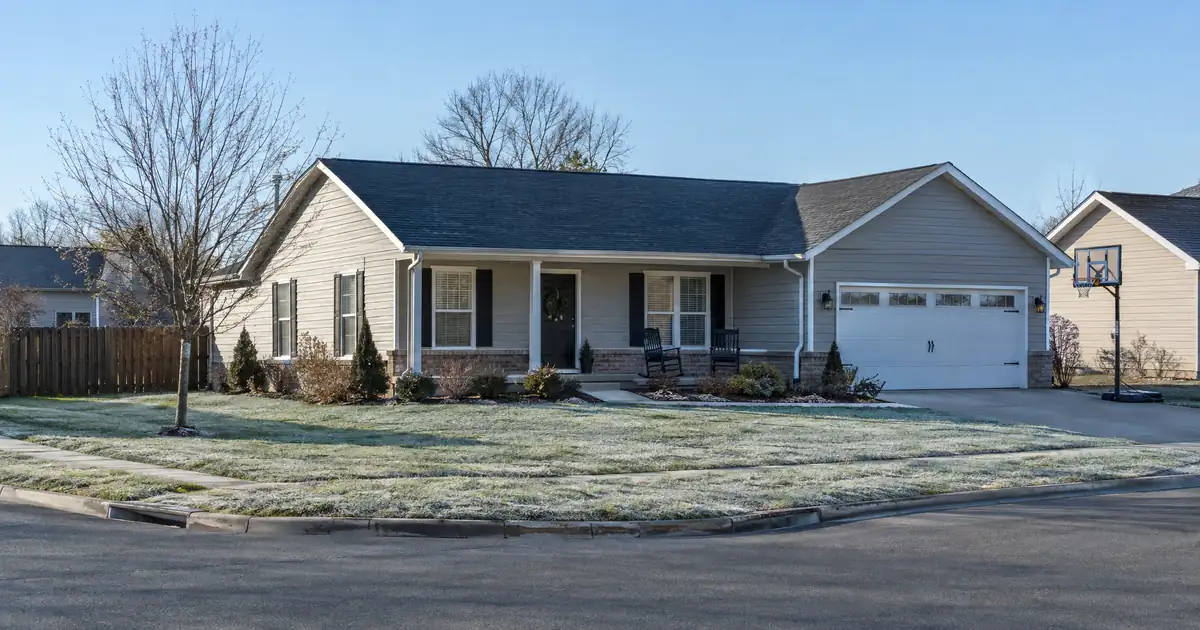
The Quick Read: FHA works on a low-priced home, and the loan size is rarely the obstacle. The house has to pass FHA’s condition standards, appraise at or above the contract price, and leave you with enough cash for the down payment and closing costs. On the wholesale programs Lendmire places FHA files with, a score of 580 or higher with a 3.5% minimum investment is the standard entry point, subject to lender guidelines and full file review.
Key Takeaways
- FHA does not set a minimum purchase price. The practical limits are property condition, the appraisal, and your cash.
- FHA loan limits are ceilings set by county. On a low-priced home they almost never come into play.
- Fixed costs such as the appraisal, title work and prepaid items do not shrink with the price. Closing costs can take a bigger share of a cheap home.
- Cheaper homes often need repairs, and repairs can decide whether the loan works at all.
- A 203(k) rehab loan can fold repairs into the mortgage, but it adds process that may not pay off on a small loan.
Does FHA Work on a Cheap Home?
Yes. Pricing and available terms vary by lender, borrower profile, property type, and full underwriting review. FHA does not lend the money. An approved lender does, and FHA’s insurance is why that lender can accept a smaller down payment.
FHA payment estimate
Starting assumptions reflect an example price and the FHA minimum investment. Replace them with your own figures.
Editable benchmark: 7.32% as of October 22, 2026 · Freddie Mac 30-year average via FRED®. A conventional market reference, not an FHA loan quote.
Illustrative starting assumptions: a $350,000 price, the FHA minimum investment as the down payment, a thirty-year term at the current Freddie Mac benchmark, and property taxes and insurance estimated at typical national rates. Every field is editable.
Illustrative estimate only — not a Loan Estimate, approval, quote, or commitment to lend. The rate field carries the weekly Freddie Mac thirty-year conventional benchmark, a market reference and not an FHA loan quote; your rate is set by the lender at lock. FHA mortgage insurance follows HUD’s published schedule for the term, leverage and loan size entered; taxes, insurance and dues are editable estimates; closing costs are not included; county loan limits are not checked here. Licensed in sixteen states for consumer mortgages. Lendmire is not affiliated with or acting on behalf of FHA, HUD, or the federal government.
Nothing in the agency material sets a price floor. That is not the same as saying every lender will write any loan. Lenders have their own preferences and can be stricter than FHA. Across the wholesale programs we arrange files through, the question is rarely “is the price too low?” It is “does this property pass, and does the borrower have the cash?”
Many buyers confuse two different numbers. The county loan limit is the most FHA will insure. It is a ceiling, not a minimum. County loan limits apply and change every year, so on a modest home you will seldom be anywhere near one.
What You Need to Qualify
Qualification is built on a few pieces, all subject to lender guidelines:
- Credit. The wholesale programs Lendmire works with start at a decision score of 580. HUD itself has a lower tier with a larger required investment, but the network does not reach below 580. Some lenders set a higher floor than the network does.
- Down payment. 3.5% of the lesser of the price or the appraised value, at 580 or above. That means maximum financing of 96.5%.
- Occupancy. The home must be your principal residence, one to four units. A non-occupant co-borrower is allowed.
- Ratios. The base pair is 31/43, housing cost and total debt as a share of income, when there are no compensating factors. Documented strengths such as reserves or a strong payment history can stretch that to 40/50 at the top tier. The automated underwriting finding governs most files.
- Gift money. HUD says gift funds for the down payment can come from a family member, an employer or a charitable organization.
- Seller help. Seller or other interested-party contributions are allowed up to 6% of the price.
Lendmire is a mortgage broker, not a lender. Its FHA loan programs are arranged through wholesale lenders, and nothing here is a commitment to lend.
How the Loan Is Underwritten, Step by Step
1. Application and case number. An FHA-approved lender takes the application. The lender is responsible for confirming you and the property are eligible.
2. Credit, income and debt review. The lender weighs your score, income, debts and reserves under HUD Handbook 4000.1, the rulebook for FHA single-family loans. Qualification is ratio-based, with room for compensating factors.
3. The appraisal. An appraiser values the home and checks it against FHA’s property standards. This is the step where cheap homes meet the most friction.
4. Final review. The lender confirms the appraisal supports the price, the property meets standards, and your cash covers the down payment, closing costs and prepaid items.
5. Disclosures and closing. You receive a Loan Estimate and later a Closing Disclosure. The CFPB’s Owning a Home tools help you compare those documents across lenders.
Three things decide the outcome on a low-priced home: whether the appraisal supports the price, whether the home meets FHA’s safety, soundness and security standards, and whether your cash covers everything due at closing.
Why Closing Costs Feel Heavier on a Low Price
A down payment is a percentage of the price, so a lower price means a smaller down payment. Many closing costs do not work that way. The appraisal, credit report, title work and the prepaid taxes and insurance do not drop in proportion to a lower price.
The result is that closing costs can be a larger share of the purchase on a modest home. This is reasoning from how the costs work, not a published statistic. The practical move is to read the Loan Estimate line by line and ask what scales with the loan and what does not.
Seller contributions can help here, up to the 6% limit in the parameters above. A seller who agrees to a credit toward closing costs reduces the cash you need at the table.
What FHA Mortgage Insurance Does on a Small Loan
Every FHA loan carries mortgage insurance. The CFPB confirms it is required on all FHA loans and costs the same regardless of your credit score. It has two parts.
- Upfront premium. 1.75% of the base loan amount. HUD’s Mortgagee Letter 2023-05 sets this figure, and it can be financed into the loan rather than paid in cash.
- Annual premium. Collected monthly as part of the payment. On the programs we place, it runs between 0.15% and 0.75% of the balance, depending on term, loan amount and LTV. On a thirty-year loan above 90% LTV it lasts for the term. At or below 90% it ends after eleven years.
Because both pieces are percentages, a smaller loan carries a smaller dollar premium. Taxes and homeowners insurance behave differently. They follow the property and the county, not just the price, so they can weigh more on a small payment. This is mechanics, not a price quote, and the Loan Estimate shows the actual figures for your file.
The Appraisal and Condition Test
An FHA appraisal does two jobs. It gives an opinion of value, and it checks the home against minimum property requirements, meaning the home must be safe, sound and secure. HUD’s glossary defines those requirements and notes the appraiser’s observations are limited to readily observable conditions.
That last point matters. An FHA appraisal is not a home inspection. A separate inspection is still wise, especially on an older or inexpensive house.
Cheaper homes more often have deferred maintenance, so they fail this test more often. Practical issues to screen for before you write an offer:
- Roof condition and visible leaks
- Peeling or chipping paint on older homes
- Broken or missing handrails, steps or windows
- Working heat, plumbing and electrical systems
- Safe access, with no obvious structural movement or standing water
If the appraisal flags a problem, repairs are typically a condition of the loan. You can negotiate with the seller to fix it, pay for it yourself, or walk away if your contract allows. If the appraisal comes in below the price, you generally have to renegotiate, cover the gap in cash, or end the deal. Lendmire’s piece Can You Waive or Reuse an FHA Loan Appraisal That Came In Low? covers that situation in more detail.
One more thing to know. HUD has posted proposed updates to its property standards for comment. Treat that as a proposal, not a final rule, and confirm current requirements with your lender.
When the House Needs Real Work: 203(k)
The FHA 203(k) is HUD’s one-loan option for buying and repairing a home. It combines the purchase with the rehab in a single mortgage and building permits must be in place before work starts. It comes in two versions.
| Factor | Limited 203(k) | Standard 203(k) |
|---|---|---|
| Type of work | Minor, non-structural | Structural or major remodel |
| Repair cost | Capped at $75,000 | $5,000 minimum |
| Consultant | Optional | Required |
| Rehab period | 9 months | 12 months |
The $75,000 Limited cap comes from HUD’s Mortgagee Letter 2024-13. Some older federal pages still show a $35,000 figure. That is outdated. The same letter ties the maximum loan to the lesser of the pre-rehab value plus repair costs, or 110% of the after-improved value.
Does it make sense on a small loan? That is a real tradeoff. Renovation financing adds a consultant on the Standard version, plan and draw steps, and more paperwork. On a very small loan, that overhead can outweigh the benefit. If the repairs are modest, a seller repair, a negotiated credit, or paying cash for a few items may be simpler. If the home truly cannot pass as-is and you want to keep the purchase and repairs in one loan, 203(k) is worth a look.
Where FHA May Not Fit
FHA is one option, not the only one. It tends to fit when your credit or savings are modest and the home is in decent shape. It may be the wrong tool in these situations:
- The home has major condition problems and you do not want a rehab loan.
- You plan to buy it as a rental or second home. Occupancy decides the leverage, and FHA is for a principal residence.
- You have a larger down payment and strong credit, where other loan types may cost less over time.
- A particular lender will not write very small loans, even if FHA allows them.
The last point is a practical one. A program with no minimum price does not oblige each lender to fund every loan. If one lender passes, another may not. For a broader look at the occupancy question, see Lendmire’s article Can an FHA Loan Finance a Second Home or Investment Property?.
A Simple Path From Budget to Keys
1. Set a ceiling for the monthly payment you are comfortable with, including taxes, insurance and mortgage insurance.
2. Check your credit and gather income, bank and gift-fund documents.
3. Get a pre-approval and confirm the lender will write a loan of the size you want.
4. Screen homes for the condition issues above before you offer.
5. Ask for seller help toward closing costs when the contract allows.
6. Order a separate inspection alongside the FHA appraisal.
7. Compare your Loan Estimate and Closing Disclosure line by line.
Key Terms Defined
Minimum required investment. The cash you must put into the purchase, 3.5% of the lesser of price or appraised value on the programs described above.
Minimum property requirements. FHA’s baseline that a home be safe, sound and secure before the loan can be insured.
Upfront mortgage insurance premium. A one-time charge of 1.75% of the base loan that can be financed into the mortgage.
Compensating factor. A documented strength, such as reserves, that lets a lender accept higher debt ratios.
Loan limit. The maximum loan FHA will insure in a county. It is a ceiling, not a floor.
Frequently Asked Questions
Is there a minimum price for an FHA loan?
None of the agency sources reviewed sets one. What you will run into is the property’s condition, the appraisal result, and whether a particular lender is willing to write a small loan. Ask a prospective lender about its own minimums before you fall in love with a house.
Will my loan limit stop me from buying a cheap house?
No. County loan limits are the most FHA will insure, and they change each year. A low-priced home sits well below them. HUD’s national one-unit limits are set in its published mortgagee letters if you want to see how the ceiling works.
Does a lower price mean lower closing costs?
Partly. Percentage-based items, including the down payment and mortgage insurance premiums, shrink with the price. Fixed items such as the appraisal and title work do not, so they can take a bigger share of a small loan. Your Loan Estimate shows exactly which is which.
What happens if the home fails the FHA appraisal?
Required repairs generally have to be completed before the loan can proceed. The seller may fix them, you may negotiate a credit or pay for the work, or you may use a 203(k) loan if the work is significant. If the property cannot meet standards, you may need to walk away within your contract terms.
Do I have to be a first-time buyer to use FHA?
No source reviewed makes that a requirement. HUD’s 203(k) materials say existing homeowners can use the rehab program too. The home must be your principal residence.
If you are buying a home and want to see whether an FHA loan fits your file, Lendmire can help you compare the options and what each one asks of the file.
For your own numbers, request a scenario review with Lendmire.
About Lendmire
Lendmire is a mortgage brokerage (NMLS# 2371349) licensed for consumer mortgage lending in 16 states, arranging FHA, VA, conventional and jumbo purchase and refinance loans through a wholesale lending network. Eligibility is determined by the lender on each file. Scotsman Guide named Lendmire a Top Mortgage Workplace in both 2025 and 2026.
Get Started
Ready to find the right loan for you?
In about two minutes you can review financing options available for your home or investment property. No commitment required.
Informational only. Not a Loan Estimate, approval, or commitment to lend. Program availability and eligibility are subject to lender guidelines, credit approval, property review, and underwriting.
References
1. HUD FHA Answers – Who is insured by FHA Mortgage Insurance and what are the benefits
4. CFPB – What is mortgage insurance and how does it work
5. HUD’s Mortgagee Letter 2023-05
7. HUD Mortgagee Letter 2024-13
This article is part of Lendmire’s FHA loan program — full qualification details, guidelines, and scenarios live on the program page.
Related reading: Do Both You and the Home Have to Qualify for an FHA Loan? · How a Low Appraisal Changes a Refinance of an Existing FHA Loan · FHA Cash-Out Refinance vs Texas Home Equity Loan on a Primary Home
Brandon Miller
Founder & CEO, Mortgage Loan Originator, Lendmire LLC
- Mortgage Loan Originator · NMLS# 1129696 · Verify on NMLS Consumer Access
- North Carolina Real Estate Broker · License# 343312 · Verify on NCREC
- North Carolina Insurance Producer · License# 19053198 · Property, Casualty, Life, Health · Verify on NAIC SBS
- Lendmire LLC · Firm NMLS# 2371349 · Verify firm licensure
Disclosure information. Lendmire is a state-licensed mortgage brokerage under NMLS# 2371349. Lendmire is not a depository institution, direct lender, or financial advisor — all loans referenced are placed through wholesale lender partners and are subject to each lender's underwriting standards. This article is provided for general informational purposes and is not a commitment to lend, nor does it constitute financial, legal, or tax advice. Loan programs, terms, rates, and qualification standards change without notice and depend on borrower profile, property type, and the state in which the subject property is located. Equal Housing Opportunity provider. NMLS Consumer Access: nmlsconsumeraccess.org.