
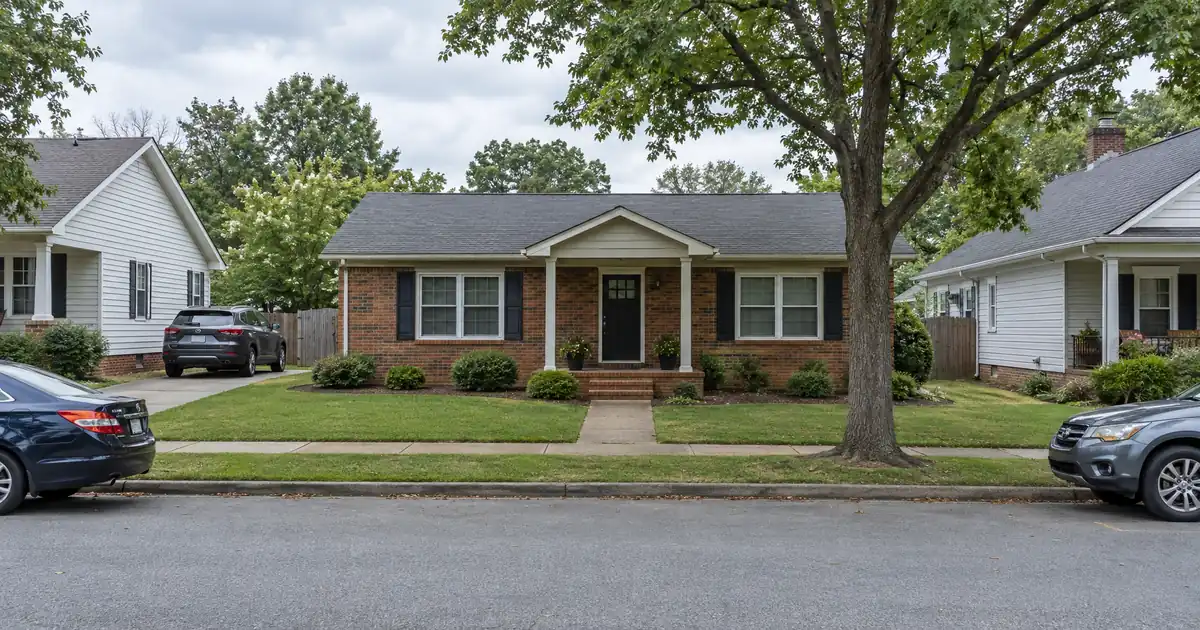
The Quick Read: A Tennessee vacation home can be financed on assets instead of paycheck income, either by letting eligible balances cover the whole loan or by turning them into monthly qualifying income, and the right path depends on how large your balances are and whether you plan to rent the home out. Both paths run through select lenders in Lendmire’s wholesale network, subject to underwriting.
- The asset qualifier path counts eligible assets against the entire loan amount and documents no employment or income.
- The asset depletion path divides usable assets by 60 months to create qualifying income for the debt-to-income test.
- A borrower is reviewed on one path at a time, never a blend of the two.
- Assets are always documented. Only the income documentation drops away.
- A cabin bought mainly to rent usually belongs in a DSCR loan, not an asset-based mortgage.
What an Asset Qualifier Mortgage Is
An asset qualifier mortgage lets a borrower with large balances and thin documented income qualify on the balances themselves. Lenders and brokers use several names for this idea: asset depletion, asset utilization, asset-based. The terms are not standardized. This article uses two precise labels and sticks to them.
The asset qualifier path asks one question. After the credit percentages below, do your eligible assets equal or exceed the entire loan amount? If yes, the file is reviewed on assets alone. No employment or income is documented.
The asset depletion path asks a different question. It converts usable assets into a monthly qualifying income by dividing them by 60 months. That income must carry the full housing payment and your other debts through the debt-to-income test.
This is a consumer mortgage for a principal residence or second home. Most Tennessee vacation buyers fit the second-home label, provided they use the home personally and do not run it as a rental business.
Which Path Fits Which Buyer?
Choose the qualifier path when your liquid balances are large compared with the loan. Choose the depletion path when your assets are large but you want the lender to treat them as an income stream.
Think of a retiree living on a portfolio, a business owner who recently sold a company, or a household that received an inheritance. Their balances are large. Their tax-return income may show very little. Across Lendmire’s network, these are the borrowers for whom asset-based files make sense.
Here is the practical split.
| Factor | Asset qualifier path | Asset depletion path |
|---|---|---|
| Core test | Usable assets cover the whole loan | Usable assets ÷ 60 = monthly income |
| Income documented | None | Derived income, run through DTI |
| Purchase leverage | Up to 80% | Up to 80% (second home) |
| Refinance leverage | Up to 75% | 80% rate-and-term, 60% cash-out |
| Loan amounts | Up to $4,000,000 | $125,000 to $3,500,000 |
| Credit | 600 minimum | The lender’s score matrix |
These figures are ceilings and floors, not offers. Every file is underwritten individually, and programs change.
How Underwriting Treats the Numbers, Step by Step
Underwriting follows a set order. First the lender confirms occupancy and purpose. Next it verifies assets. Then it subtracts what you will spend, applies the path’s test, and finishes with credit, leverage, appraisal and title.
1. Occupancy is declared. You state on the application that the home is a second home. That statement is a material representation, so it must match your real plan.
2. Assets are identified and documented. Each qualifying account needs statements. Nothing about these programs is undocumented.
3. Cash to close is separated out. Your down payment and closing costs come from somewhere. The same dollars cannot be counted twice, so the lender looks at what remains in the pool.
4. The path’s test runs. Either assets cover the loan, or assets divided by 60 months become income.
5. Credit, appraisal and title run as usual. The property still has to appraise and carry clean title.
The qualifier path in numbers
Take an $800,000 loan request. The borrower holds $330,000 in brokerage accounts (counted at 100%, so $330,000), $300,000 in a 401(k) while under 59½ (counted at 90%, so $270,000), and $200,000 in savings (100%, so $200,000). Usable assets total $800,000, which equals the loan. The file is reviewed on assets alone. That arithmetic is illustrative, and the lender’s own calculation governs.
The depletion path in numbers
Now take $1,500,000 in securities counted at 80%, which is $1,200,000, plus $300,000 in cash at 100%. Usable assets are $1,500,000. Divided by 60 months, that is $25,000 of monthly qualifying income. That income then carries the housing payment and other debts through the debt-to-income test. Again, illustrative only.
Which Assets Count
On the qualifier path, most liquid accounts count in full. Retirement balances depend on age. On the depletion path, haircuts are steeper and more varied.
| Asset | Qualifier path | Depletion path |
|---|---|---|
| Savings, money market | 100% | Cash accounts 100% |
| Certificates of deposit | 100% | 100% |
| Brokerage accounts | 100% | Securities 80% |
| Private stock | Not published | 75% |
| 401(k) and IRA | 90% under 59½, 100% after | 70% at any age |
| Real-estate equity | Not published | 60% |
On the depletion path, several items are not eligible at all: custodial accounts, deferred compensation, escrow accounts, foreign funds, cash on hand, stock options and non-vested restricted stock units.
Cryptocurrency, precious metals, collectibles and pledged or borrowed funds are not published as eligible on either path. The documented route is to convert them into a seasoned cash balance in a regulated account. The lender then reviews the source. Business accounts count only for the borrower’s ownership share.
Seasoning matters too. The qualifier path wants 60 days of seasoning and two months of statements for each qualifying account. The depletion path wants statements at least 120 days old at application, plus the most recent statement within 45 days. Funds from a business sale, inheritance or legal settlement are excused from that seasoning on the depletion path.
Where the Rule Breaks: Rental Plans
An asset-based mortgage assumes you will use the home yourself. If rental income is part of your plan, the label can break.
Lenders classify a property by how it will actually be used, not by what the borrower calls it. Frequent rental use, a management company controlling the home, or a need for rental income to qualify all push a file toward investment treatment. That changes the program, the leverage and the pricing.
Do not try to game occupancy. The occupancy declaration is a representation you sign.
Here is how the choice usually shakes out.
- Personal use, occasional rental: a second-home asset-based mortgage may fit. Short-term rental rules can vary by city, county, HOA, and property type, so investors should confirm local rules before relying on projected rental income.
- Bought mainly to rent: DSCR is the cleaner tool. These loans are designed for non-owner-occupied investment properties. Because they are business-purpose investor loans, they are reviewed differently from a standard owner-occupied mortgage. The loan is reviewed primarily on property-level rental income covering the payment, subject to lender guidelines. Lendmire’s complete DSCR loans guide covers that path in full.
- Investment property on the depletion path: this is possible, but leverage drops to 65% on a purchase or rate-and-term refinance and 60% on a cash-out. A first-time investor on that path needs a 700 score.
Tax treatment varies; consult a qualified professional.
Tennessee Property Types That Complicate Financing
The loan terms do not change by state. The property can. Tennessee’s vacation inventory runs from mountain cabins to lake homes to resort condos, and each type raises its own file questions.
Great Smoky Mountains National Park logged 11,527,939 recreation visits in its latest annual count, the most of any national park. That demand explains why cabin buyers think about rentals. It does not guarantee a rental income stream, and visitation moves from year to year.
Watch for these file issues:
- Condos and condo-hotels. Buildings with rental pools or management-company control can conflict with second-home rules. The lender reviews the association’s documents.
- Private roads, wells and septic. Cabin properties often have them. Access and utility questions can affect the appraisal and the lender’s property review.
- HOA rules. Rental restrictions and fee structures matter for both occupancy and cost.
- Insurance. Mountain and lake properties can carry unusual coverage needs. Get a quote early.
If you live out of state, qualification still follows lender guidelines, not a Tennessee-specific rulebook. Lendmire’s consumer mortgage lending is licensed in Tennessee, and it works as a broker, arranging loans through select lenders rather than lending directly.
Protecting the Asset Pool Before You Apply
The biggest mistakes happen before the application. Moving money carelessly can shrink the pool or stall seasoning.
- Do not shuffle balances at random. Large transfers between accounts create paper trails that underwriters must trace.
- Do not count borrowed money. Pledged or borrowed funds are not published as eligible assets on either path. On the depletion path, cash-out proceeds never count as qualifying assets.
- Plan the down payment. Decide which account funds it, and know what that leaves behind.
- Convert unusual assets early. If you hold crypto or collectibles, turning them into seasoned cash in a regulated account takes planning.
- Keep statements complete. Two months per account on the qualifier path, and the age-and-recency pair on the depletion path.
On the qualifier path, no reserves are required at or below 75% loan-to-value. Above that, the lender sets them. The depletion path publishes no reserve months.
If you plan to buy a second property later, see Lendmire’s article How to Finance a Second Vacation Home on Asset Depletion.
Where Files Stall
Across a wholesale network, the same file problems come up repeatedly. Large recent deposits with no explanation top the list. Next come retirement balances counted at the wrong percentage and business assets listed at full value. Lenders still review every statement.
The depletion path also has a floor. Qualified assets must be at least the lesser of $1,000,000 or 1.25 times the loan balance. They must never fall below $250,000 liquid when asset depletion is the only income source. Asset-derived income can also supplement documented income up to a 45% debt-to-income ratio. When it does, the minimum-assets rule is waived.
Key Terms Defined
Asset qualifier path: The route where eligible assets, after credit percentages, must equal or exceed the entire loan amount.
Asset depletion path: The route where usable assets divided by 60 months become monthly qualifying income.
Usable assets: The portion of each balance the program counts after its percentage or haircut.
Seasoning: The length of time funds have sat in an account before you apply.
Second home: A home you occupy for personal use and control yourself, without running it as a rental business.
DSCR loan: A business-purpose investor loan that qualifies primarily on the property’s rental income covering its payment.
Why Asset-Based Rules Exist
Asset-based qualification has a legal footing. The CFPB’s ability-to-repay compliance guide lists income or assets as the first of eight factors a lender weighs. A lender may rely on assets, but it must verify them with reliable records. That is why a clean statement trail matters more than any sales pitch.
Second-home lending is also a shrinking niche nationally. A Redfin analysis of mortgage disclosure data found 86,604 second-home mortgages in its most recent full-year count, the lowest since records began. They were 2.6% of all mortgages. Borrowers who qualify on assets are therefore working in a thin lane, and it pays to compare programs.
How to Decide
Use this quick filter.
- Assets cover the loan, and you want no income documented: the qualifier path.
- Assets are large but you want them treated as income: the depletion path.
- You will rent the home heavily: DSCR.
- You have steady documented income: a standard mortgage may cost less, and you should compare.
- Your assets are mostly crypto, business accounts or borrowed funds: plan to convert or restructure first.
Frequently Asked Questions
Can I use retirement accounts to qualify for a Tennessee vacation home?
Yes, subject to the path. On the qualifier path, 401(k) and IRA balances count at 90% under age 59½ and 100% at 59½ or older. On the depletion path, retirement accounts count at 70% at any age. You do not have to cash them out to use them, though the lender reviews the statements.
Does an asset qualifier mortgage mean no documentation?
No. It means no employment or income documentation on the qualifier path. Assets are fully documented on both paths, with statements for each qualifying account. The lender’s own review of those records governs the outcome.
What happens if I rent the cabin part of the year?
Rental use can change how a lender classifies the property. Occasional rental alongside real personal use may stay within second-home treatment, depending on program guidelines. If you buy mainly to generate rent, DSCR is usually the better fit. Always declare your true intent.
What credit score do I need?
The qualifier path publishes a 600 minimum. The depletion path follows the lender’s score and loan-amount matrix, and a first-time investor on that path needs 700. Housing history is typically reviewed at 0x30x12, with one recent 30-day late considered case by case. Nothing is approved in advance, and every file is underwritten individually.
Can I cash out on a refinance with assets?
On the depletion path, cash-out is available at 60% leverage on a principal residence, second home or investment property, subject to underwriting. On the qualifier path, cash-out terms are set by the lender and not published. Cash-out proceeds never count as qualifying assets. Leverage, reserves, and pricing vary by lender and program; the final terms follow the full file review.
If you are qualifying on assets rather than income and want to see how the numbers work, Lendmire can help you compare asset-based mortgage options based on your statements, the property, credit profile, leverage, and your goals. Reach the team at 828-256-2183 or request a quote.
Smokies demand rises and falls with annual visitor counts, so a buyer qualifying on assets should size the purchase around personal use first and treat any rental income as a bonus.
Lendmire’s asset-based mortgage program is available to Tennessee borrowers.
About Lendmire
As a mortgage broker (NMLS# 2371349), Lendmire helps self-employed and high-net-worth borrowers in 16 states qualify on bank statements, a profit-and-loss statement, 1099s or liquid assets instead of tax returns, through wholesale lenders. Lendmire is never the lender; program terms are set by the lender and its guidelines. Scotsman Guide named Lendmire a Top Mortgage Workplace in both 2025 and 2026.
Get Started
Ready to find the right loan for you?
In about 30 seconds you can review financing options available for your home or investment property. No commitment required.
Informational only. Not a Loan Estimate, approval, or commitment to lend. Program availability and eligibility are subject to lender guidelines, credit approval, property review, and underwriting.
References
1. National Park Service 2025 visitation release
2. CFPB ATR/QM Compliance Guide
3. Redfin second-home mortgage analysis
This article is part of Lendmire’s asset-based mortgage program — full qualification details, guidelines, and scenarios live on the program page.
Related reading: Asset Qualifier vs Asset Depletion for a FIRE Household · Is an Asset Qualifier Mortgage Harder to Get Than an Asset Depletion Loan? · Asset Qualifier vs Asset Depletion for an Heir
Guides: Asset-Based Mortgage in Tennessee
Brandon Miller
Founder & CEO, Mortgage Loan Originator, Lendmire LLC
- Mortgage Loan Originator · NMLS# 1129696 · Verify on NMLS Consumer Access
- North Carolina Real Estate Broker · License# 343312 · Verify on NCREC
- North Carolina Insurance Producer · License# 19053198 · Property, Casualty, Life, Health · Verify on NAIC SBS
- Lendmire LLC · Firm NMLS# 2371349 · Verify firm licensure
Disclosure information. Lendmire is a state-licensed mortgage brokerage under NMLS# 2371349. Lendmire is not a depository institution, direct lender, or financial advisor — all loans referenced are placed through wholesale lender partners and are subject to each lender's underwriting standards. This article is provided for general informational purposes and is not a commitment to lend, nor does it constitute financial, legal, or tax advice. Loan programs, terms, rates, and qualification standards change without notice and depend on borrower profile, property type, and the state in which the subject property is located. Equal Housing Opportunity provider. NMLS Consumer Access: nmlsconsumeraccess.org.