
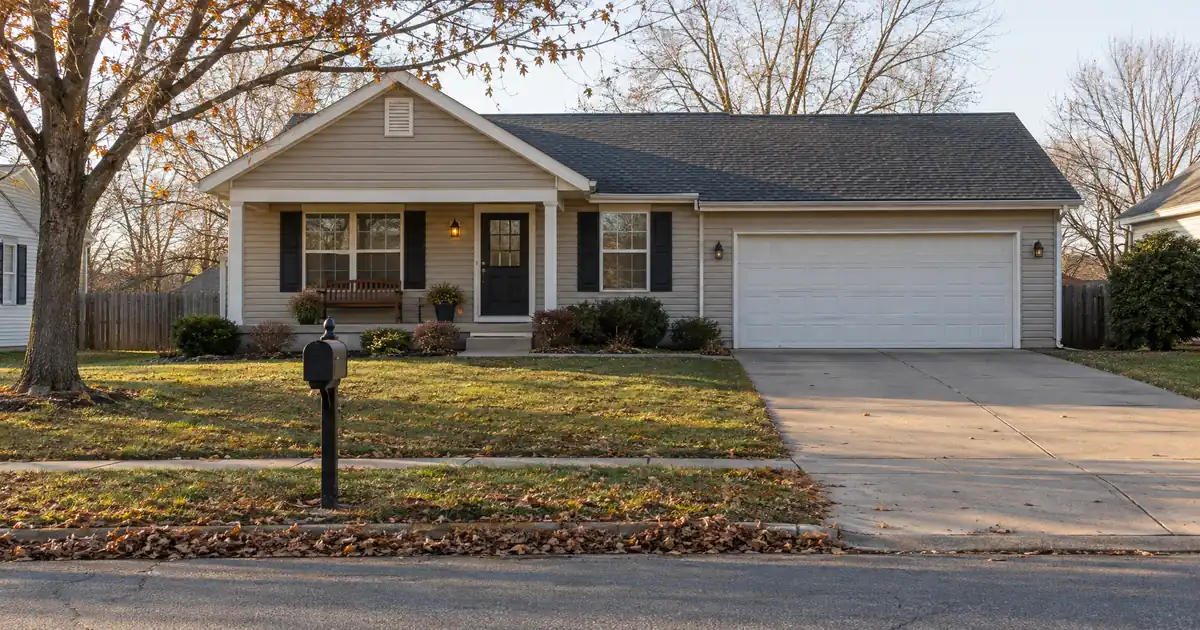
The Quick Read: A conventional loan can pay for a vacation home when the loan is written as a second home. That means a one-unit property you will use mainly for yourself, kept under your own control. On a purchase, second homes can reach 90% loan-to-value (a 10% down payment), subject to lender guidelines and full file review. Mortgage insurance applies above 80%, and the full payment on the new home counts against your income. Rent from the property cannot be used to qualify.
Key Takeaways
- Lenders call it a “second home.” “Vacation home” is the everyday term for the same thing.
- Second-home purchases run to 90% LTV on the programs Lendmire arranges. A primary residence can go higher.
- The new home’s whole payment goes into your debt-to-income ratio. Expected rent does not offset it.
- The property must be one unit, livable year-round, and not tied to a rental pool or a management company that controls occupancy.
- Declaring the occupancy honestly matters. The paperwork you sign carries legal weight. These specifics are subject to lender guidelines and a full review of property, leverage, and credit.
What Is a Conventional Second-Home Loan?
A conventional second-home loan is a standard conforming mortgage, meaning it follows the rules set by Fannie Mae and Freddie Mac. It is not a special vacation product. It is the same family of loan used for a primary residence, with tighter terms because lenders see a second home as a bit riskier.
Conventional payment estimate
The starting figures are an example price at the first-time buyer’s minimum down payment. Replace them with yours.
Editable benchmark: 7.32% as of October 22, 2026 · Freddie Mac 30-year average via FRED®. A conventional market reference, not a conventional loan quote.
Estimate seeded at the low end of Fannie Mae’s published range (0.58%–1.86% a year); the insurer prices the actual premium on the score and the leverage. Applies only above 80% loan-to-value.
Illustrative starting assumptions: a $350,000 price, the first-time buyer’s minimum down payment, a thirty-year term at the current Freddie Mac benchmark, mortgage insurance at the low end of Fannie Mae’s published range, and property taxes and insurance estimated at typical national rates. Every field is editable.
Illustrative estimate only — not a Loan Estimate, approval, quote, or commitment to lend. The rate field carries the weekly Freddie Mac thirty-year conventional benchmark, a market reference and not a conventional loan quote; your rate is set by the lender at lock. The mortgage insurance figure is an editable estimate seeded from Fannie Mae’s published typical range, not a premium quote; the insurer prices the actual premium, and the cancellation month assumes scheduled payments with no extra principal and no change in value. Taxes, insurance and dues are editable estimates; closing costs are not included. Conforming loan limits apply by county. Licensed in sixteen states for consumer mortgages.
If money gets tight, most people protect the house they live in first. The vacation home is the payment that gets missed. Lenders price and size the loan with that in mind.
Lendmire is a mortgage broker. It arranges conventional loan programs through wholesale lenders in the 16 states where it holds consumer licensing. Lendmire does not lend directly. The lender reviews the file and makes the decision.
One more point on terms. Agency guides say “second home.” Your loan officer will use that phrase. So will the application. Do not let the label throw you.
What Counts as a Second Home? (The Pass/Fail Test)
A property passes as a second home when it is one unit, suitable for year-round living, available mainly for your own use, and under your exclusive control. Fail any one of those and the loan moves to a different category, with different terms.
Freddie Mac’s Seller/Servicer Guide sets out the test. You must occupy the home for some part of the year. It must be available mainly for personal use, meaning more than half the calendar year. It cannot be a timeshare. Here is how that plays out:
| Feature of the property | Passes | Fails |
|---|---|---|
| Unit count | One unit | Two units or more |
| Year-round livability | Heated, insulated, usable in winter | Seasonal shack, no year-round suitability |
| Control of occupancy | You decide who stays | Management firm controls bookings |
| Rental program | None required | Mandatory rental pool |
| Ownership type | Full ownership | Timeshare or shared-ownership interest |
The seasonal row has an exception. If the home has natural limits, such as winter access, it can still qualify when the appraiser finds at least one comparable sale with similar seasonal limits. A mountain cabin with a closed road in January is not automatically out.
The two-unit row surprises people. Freddie Mac treats a two-unit property used as a second home as an investment property. Fannie Mae’s second-home rule also covers one unit only. A duplex does not work as a vacation home on this loan.
How Is the Loan Underwritten, Step by Step?
Underwriting a second home follows a set order: declare the use, screen the property, run the file through automated underwriting, check credit and ratios, then appraise. Each step can send the file somewhere else, so it helps to know the sequence before you apply.
Step 1: Declare how you will use the home. The application asks whether the property is a primary residence, a second home, or an investment property. You sign that declaration. A second-home rider in the mortgage documents repeats it. These are not formalities.
Step 2: Property screen. The lender confirms the pass/fail items above. Condos can work within the project’s rules, but a condo hotel or a building with a mandatory rental program usually will not.
Step 3: Automated underwriting. Fannie Mae requires second-home loans to receive an Approve/Eligible finding from its Desktop Underwriter system. Freddie Mac requires an Accept finding from its own system. With the automated finding driving most files, manual underwriting is rarely available on second homes. Per Fannie Mae’s Selling Guide, the second-home route runs through that system.
Step 4: Credit and ratios. Across the wholesale programs Lendmire places files with, conventional loans start at a 620 decision score. The automated finding governs most files, with a total debt-to-income ceiling of 50%. Some lenders set a higher floor on their own. A score at the minimum does not mean the file clears; the system weighs score, ratios, reserves and down payment together.
Waiting periods after credit events are agency rules, not broker rules. They run four years from a chapter 7 discharge, seven years from a foreclosure, and four years from a short sale or deed-in-lieu. Documented extenuating circumstances can shorten them.
Step 5: Down payment and mortgage insurance. Second homes run to 90% LTV on a purchase. That is a lower ceiling than a primary home, which reaches 95% (and 97% for a first-time buyer on a fixed rate). Above 80% LTV, mortgage insurance applies. Terms depend on the lender’s guidelines, the property type, the leverage, and a full review of the credit profile.
Step 6: Appraisal. Covered in its own section below, because vacation markets make it harder than usual.
What Does the Down Payment Look Like Next to a Primary Home?
Here is how occupancy changes the maximum leverage on a purchase. The figures come from the programs Lendmire arranges and are subject to lender guidelines.
| Occupancy | Max LTV on purchase | Down payment |
|---|---|---|
| Primary residence (one unit) | 95%, or 97% for first-time buyers on a fixed rate | 5% or 3% |
| Second home | 90% | 10% |
| Investment, one unit | 85% | 15% |
| Investment, two to four units | 75% | 25% |
Occupancy decides the leverage: the more the property is treated as an investment, the more the lender expects the borrower to put down.
Notice the second-home row. A 10% down payment sounds light compared with the old “20% down” rule of thumb. It is a ceiling, though, not a promise. A thin file, a lower score, or a pricey area can push the lender toward asking for more. The exact numbers vary by lender and program and follow a full review of property, leverage, and credit.
How Does Mortgage Insurance Work on a Vacation Home?
Mortgage insurance applies on a second home whenever the loan exceeds 80% of the value. It protects the lender, not you. Put 10% down and you will carry it, at least for a while. Final terms depend on the lender’s guidelines, the property type, and the borrower’s complete credit picture.
The good news is that it ends. You may request cancellation once your balance reaches 80% of the home’s original value, if you have a good payment history, no second liens, and no decline in the home’s value. The servicer must end it automatically at 78%. That comes from the Homeowners Protection Act.
Published typical annual premiums run from 0.58% to 1.86% of the loan balance. Treat that as a range, not a quote. Your score, down payment and loan structure set your actual number, and your Loan Estimate will show it.
A bigger down payment, hitting 80% or less, avoids the insurance entirely. That is often the cleanest path if you have the cash.
How Is Your Income Measured With Two Homes?
Your debt-to-income ratio (DTI) is your total monthly debt payments divided by your gross monthly income. With a vacation home, the new home’s whole payment goes in: principal, interest, taxes, insurance and any HOA dues. Your primary residence payment stays in too.
Rental income cannot rescue the ratio. Per Fannie Mae’s occupancy rules, a loan can still be delivered as a second home if the lender notices rental income, but only when that income is not used to qualify. In plain terms: you qualify on your own earnings.
Picture a buyer whose primary home and car loan already take a moderate share of income. Add a vacation home and flood or wind coverage, and the ratio climbs well past that. The 50% ceiling is where automated findings usually run out of room. Many files that look fine on a primary-home budget get squeezed here.
Self-employed borrowers and people with several mortgages deserve an early conversation. Income documentation and the count of financed properties both change the file.
Reserves: How Much Cash Must You Keep?
Reserves are cash or liquid assets you hold after closing, measured in months of housing payments. Second homes generally ask for fewer months than investment properties, but more than many first-time buyers expect.
If you own other financed properties, the lender adds extra reserves based on the balances of those loans. The principal residence and the subject property are excluded from that calculation. Fannie Mae’s rule on multiple financed properties also sets a cap on how many financed properties a second-home borrower can carry. Only 1-4 unit properties on which you are personally obligated count. A property financed in an LLC’s name with no personal obligation does not.
Where does the down payment cash come from? Freddie Mac requires funds to close and reserves on a second home to be the borrower’s own, with narrow exceptions. Gift funds are a question to put to your loan officer up front, not at the last minute.
Why Is the Appraisal Harder in Vacation Markets?
Vacation markets have thin sales data. A lake town may see a handful of sales a year, and each home can be quite different. That makes the appraisal harder than in a busy suburb.
Fannie Mae’s guide asks appraisers to use comparable sales from the subject’s market area. If similar sales are scarce, the appraiser may widen the search, but must explain why. For a unique property, the appraiser picks the best indicators of value and makes adjustments the market supports.
What does that mean for you? An appraisal can land below your contract price. If it does, you renegotiate, bring more cash, or walk. Build that possibility into your offer terms before you fall in love with the view.
Where the Rule Breaks: Edge Cases
Most second-home surprises come from a handful of situations. Here are the ones that matter.
The “rent it when I’m away” plan. Freddie Mac allows short-term renting on a second home. The limits are firm, though. No mandatory rental pool. No management company controlling occupancy. No revenue sharing with a developer or other party. Properties in resort rental programs usually fail that test, and they drift into other loan categories.
The honest-occupancy problem. Declaring a second home when you actually plan to rent it year-round is occupancy misrepresentation. The declaration is material to the lender. Don’t shade it. If your plans are mixed, say so at application and let the lender sort out which category fits.
Seasonal and limited-access homes. Covered above. You need a comparable with similar seasonal limits.
Several mortgages already. The cap on financed properties, plus the added reserves, can stop a borrower with a large portfolio. Homes held in an LLC with no personal obligation fall outside the count.
“It’s a second home because I say so.” Not quite. The agencies’ tests apply, and Freddie Mac’s determination of whether a property is a second home is conclusive. Your label does not override it.
Distance myths. No fixed mileage rule decides whether a home “makes sense” as a second home. Underwriters judge whether the location is reasonable for personal use, given where you live and what the area offers. A ski cabin four hours away makes sense. A house two blocks from your primary home does not.
What Are Your Options for Funding It?
Conventional is the main route, but the down payment itself can come from several places. The right pick depends on your equity, your DTI, and how long you plan to keep both homes.
| Funding route | What it does | Watch for |
|---|---|---|
| Savings and investments | Cleanest source | Reserves must remain after closing |
| Cash-out refinance on your primary home | Turns equity into cash for the down payment | 80% max LTV on a one-unit primary; adds to your primary payment |
| Gift funds | Family help with cash to close | Second-home gift rules are tight; ask first |
| Sale of other assets | Liquidates holdings | Must be documented and sourced |
If you take the refinance route, seasoning applies. The first mortgage being paid off must be at least 12 months old, and you must have been on title for six months. A bigger primary-home payment also raises your DTI before the vacation home loan even starts. Lendmire’s piece How Much a Second Home Conventional Refinance Can Finance covers the cash-out side when you already own the vacation home.
The stronger play for many buyers is simply more down payment from savings. It avoids the mortgage insurance and reduces the second payment. The tradeoff is less cash left over, which matters if repairs hit in the first year.
Can You Use Conventional if the Home Is Already in Mind but Rules Seem Tight?
Often yes, and Lendmire’s article Can You Use a Conventional Loan to Buy a Vacation Home? walks through the eligibility question in more depth. The short version is this: if the property passes the table above and your file clears the ratios, the structure is straightforward.
Where borrowers get stuck is usually one of three things. The home has a rental program attached. The DTI runs over 50% once both payments are in. Or the reserves are thinner than expected. Each of those can often be fixed before you apply, by choosing a different property, paying down debt, or building cash.
What Does Your Decision Look Like in Practice?
Work from a simple order of questions.
1. Will you use the home more than half the year? If it is mainly a rental, this is the wrong loan category.
2. Is it one unit and livable in winter? If not, check the exceptions or change the property.
3. What is your DTI with both full payments? Run it before you shop. If the ratio sits near the ceiling, pick a lower price.
4. How much cash will remain after closing? Down payment, closing costs and reserves all come from your own funds.
5. What does the appraisal risk look like? In a thin market, plan for it.
Once you apply, the lender must send a Loan Estimate, and you should compare it line by line against the final paperwork. The Closing Disclosure is a five-page form that you must receive at least three business days before closing. Use that window to compare it with the Loan Estimate. Look at the bottom-line costs, not just single items.
Key Terms Defined
Second home: A one-unit property you occupy part of the year and keep available mainly for personal use, with a loan written under second-home rules.
LTV (loan-to-value): The loan amount as a percentage of the home’s value. A 90% LTV means a 10% down payment. Each figure is subject to lender guidelines and a complete review of property type, leverage, and credit.
DTI (debt-to-income ratio): Your total monthly debt payments divided by your gross monthly income.
Mortgage insurance: Coverage that protects the lender when your down payment is under 20%. It can be cancelled at 80% and ends automatically at 78%.
Reserves: Cash or liquid assets you still hold after closing, counted in months of housing payments.
Conforming loan: A mortgage that follows Fannie Mae or Freddie Mac rules and loan limits.
Occupancy declaration: The statement on your application, and in your mortgage documents, of how you will use the property.
Frequently Asked Questions
Is a vacation home loan harder to get than a primary-home loan?
Usually somewhat, yes. The maximum leverage is lower, the reserves are higher, and the full payment on the new home counts in your DTI. The property also has to pass the second-home test. A strong file with solid credit and cash can still work, subject to lender guidelines and full file review.
Can I rent the home out and use that income to qualify?
No. Rental income cannot be used to qualify on a second-home loan. Short-term renting is allowed under Freddie Mac’s rules only if there is no mandatory rental pool, no management control of occupancy, and no revenue sharing. Plan to qualify on your own income alone.
What credit score do I need?
Lendmire’s wholesale conventional programs start at a 620 decision score, and the automated finding governs most files. Individual lenders may set higher floors. A higher score generally improves how the file is viewed and how mortgage insurance is structured.
Can I put a vacation home in an LLC to get around the property cap?
Not as a shortcut. A property financed in an LLC’s name with no personal obligation does not count toward the financed-property count, but conventional second-home loans are normally made to individuals. Ask your loan officer how ownership structure affects the file before you change anything.
What if I plan to use it for a while and later rent it full-time?
Say so at application. Occupancy is declared at the time of the loan and carries legal weight. If your plan is mainly rental, the loan belongs in a different category with different terms, and a straight second-home loan is the wrong fit.
Next Step
If you are buying a home and want to see whether a conventional loan fits your file, Lendmire can help you compare the options and what each one asks of the file. Program figures are subject to lender guidelines and full file review, and nothing here is a commitment to lend.
For your own numbers, request a scenario review with Lendmire.
About Lendmire
Lendmire — NMLS# 2371349 — is a mortgage broker that arranges FHA, VA, conventional and jumbo home purchase and refinance financing in 16 states through wholesale lenders. Every option is subject to the lender’s guidelines and full underwriting. Scotsman Guide named Lendmire a Top Mortgage Workplace in both 2025 and 2026.
Get Started
Ready to find the right loan for you?
In about two minutes you can review financing options available for your home or investment property. No commitment required.
Informational only. Not a Loan Estimate, approval, or commitment to lend. Program availability and eligibility are subject to lender guidelines, credit approval, property review, and underwriting.
References
1. Freddie Mac Seller/Servicer Guide §4201.12, Second Home Mortgages
2. Fannie Mae Selling Guide B2-1.1-01, Occupancy Types
3. Fannie Mae Selling Guide B2-2-03, Multiple Financed Properties for the Same Borrower
4. Fannie Mae Selling Guide B4-1.3-08, Comparable Sales
This article is part of Lendmire’s conventional loan program — full qualification details, guidelines, and scenarios live on the program page.
Related reading: Can You Finance Closing Costs Into a Conventional Loan? · Conventional Loan Requirements for a Primary Home Purchase · Interest-Only vs Amortized Conventional Loan for a Home Buyer
Brandon Miller
Founder & CEO, Mortgage Loan Originator, Lendmire LLC
- Mortgage Loan Originator · NMLS# 1129696 · Verify on NMLS Consumer Access
- North Carolina Real Estate Broker · License# 343312 · Verify on NCREC
- North Carolina Insurance Producer · License# 19053198 · Property, Casualty, Life, Health · Verify on NAIC SBS
- Lendmire LLC · Firm NMLS# 2371349 · Verify firm licensure
Disclosure information. Lendmire is a state-licensed mortgage brokerage under NMLS# 2371349. Lendmire is not a depository institution, direct lender, or financial advisor — all loans referenced are placed through wholesale lender partners and are subject to each lender's underwriting standards. This article is provided for general informational purposes and is not a commitment to lend, nor does it constitute financial, legal, or tax advice. Loan programs, terms, rates, and qualification standards change without notice and depend on borrower profile, property type, and the state in which the subject property is located. Equal Housing Opportunity provider. NMLS Consumer Access: nmlsconsumeraccess.org.