
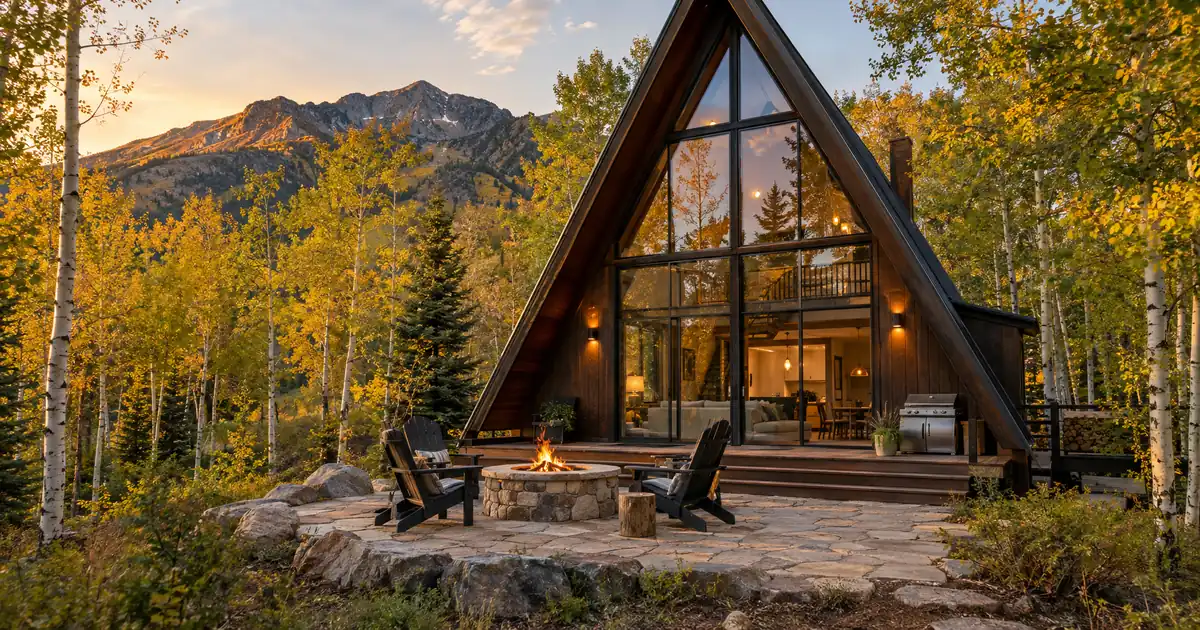
Financing A Mountain Home With Bank Statements: Complete Guide — The Quick Read: Bank statement loans let self-employed buyers qualify using deposits instead of traditional personal-income documentation, and they work for mountain homes bought as a primary residence, a second home, or a rental. Loan sizes through select wholesale programs run from $300,000 to $30,000,000, with leverage stepping down as the price climbs. The real complexity with mountain property isn’t the income documentation — it’s the appraisal, since remote lots, log construction, and seasonal road access all narrow the pool of comparable sales an appraiser can use.
Key Takeaways
- Bank statement loans qualify borrowers on 12 or 24 months of deposits, not adjusted gross income from a tax return.
- Mountain and rural properties face a heavier appraisal lift because comparable sales are scarcer and construction is often non-standard.
- Loan sizes through select wholesale programs range from $300,000 to $30,000,000, with leverage declining in steps as the loan amount rises.
- A rental mountain property usually fits better under a DSCR loan, which is reviewed on the property’s own rental income rather than the owner’s bank deposits.
- Acreage caps, unpermitted structures, and winter access all get underwritten as marketability factors, separate from the income documentation path.
What Bank Statement Financing Actually Is
A bank statement loan lets a self-employed borrower prove income with deposit history instead of a tax return. That distinction matters more in mountain towns than almost anywhere else, because so many buyers in ski and resort areas run a business, freelance, or draw seasonal income that a standard tax return understates.
Here’s the core problem this program solves. A guiding business or a small hospitality operation might gross $400,000 a year and write off most of it in legitimate expenses. A traditional underwriter looking only at the bottom line of the tax return sees a much smaller number and denies the loan, even though real cash flow supports the payment. Bank statement underwriting sidesteps that by looking at what actually moved through the account. DSCR loans are designed for non-owner-occupied investment properties. Because they are business-purpose investor loans, they are reviewed differently from a standard owner-occupied mortgage. That’s a separate track from the bank statement path described here, and it matters for anyone buying a mountain property purely as a rental — more on that below.
Key Terms Defined
Bank statement loan: a mortgage that verifies income from 12 or 24 months of deposit history rather than traditional personal-income documentation.
Expense factor: a percentage the lender subtracts from business deposits to estimate real take-home income, since gross deposits aren’t the same as profit.
LTV (loan-to-value): the loan amount as a percentage of the property’s appraised value or purchase price, whichever is lower.
DSCR (debt-service coverage ratio): a measure of whether a property’s rental income covers its own monthly obligation, used on investment-property loans instead of personal income.
Non-QM (non-qualified mortgage): a loan that documents income or assets in a way that falls outside standard agency underwriting rules, reviewed on the lender’s own guidelines instead.
Cost Approach: an appraisal method that values land separately from the building and estimates replacement cost, used when there aren’t enough comparable sales to rely on.
How Underwriting Treats Your Deposits, Step by Step
The mechanics are the same whether the property sits at 9,000 feet or at sea level — it’s the property side of the file that changes in the mountains, not the income math.
Step 1: Deposits get totaled and averaged. Underwriting adds up eligible deposits across 12 or 24 consecutive months and divides by the number of months. Transaction summaries or printouts don’t count; the file needs actual consecutive statements.
Step 2: Business deposits get an expense factor applied. Gross deposits into a business account aren’t treated as pure income. Across the programs Lendmire places files with, a fixed expense ratio typically applies, scaling with employee count and whether the business sells a physical product — lower for a small service business with no employees, higher as staffing and product sales increase. Some files use an accountant-provided ratio instead, or a profit-and-loss method capped at a set percentage of stated income. Transfers the borrower moves from their own business account into a personal account generally count in full.
Step 3: The lender screens for consistency. Large or irregular deposits get flagged and typically need a written explanation. Declining income trends and excessive overdrafts get scrutinized too — this is manual, line-by-line underwriting, not an automated pass.
Step 4: Ownership percentage matters on business accounts. Most programs want at least 25% ownership in the business tied to the account before those deposits count toward qualifying income.
Step 5: The property gets appraised on a separate track entirely. Income documentation tells the lender whether the borrower can pay. The appraisal tells the lender what the property is actually worth — and for mountain real estate, that second step is where files most often slow down or need restructuring.
Where Mountain Properties Complicate the File
Mountain and rural markets create real appraisal friction, and it has nothing to do with how the borrower’s income is documented. Fewer transactions, unconventional construction, and seasonal access all narrow the data an appraiser has to work with. This is a non-QM product, which just means it sits outside the standard “qualified mortgage” underwriting box built by federal ability-to-repay rules.
Rural markets simply produce fewer sales. According to McKissock Learning, the lack of comparable transactions in rural areas often forces appraisers to widen their search. They may pull sales from neighboring towns, or even different regions, to support their value opinion.
Construction type compounds the problem. Log and timber-frame homes are common in mountain markets, and lenders typically want at least one true log-home comp within a reasonable distance and time window. If none exist nearby, some underwriters read that as evidence there’s no established market for that construction type in the area. An appraiser without specific log-home experience can struggle to support value even when comps do exist, which is why finding a specialist appraiser — even if it takes longer to schedule — tends to produce a cleaner file.
Sometimes appraisers genuinely can’t find comparable sales. When that happens, some lean on the Cost Approach instead. This means valuing the land using comparable land sales, then estimating and depreciating the cost to replace the structure. You’ll see this approach more often with one-of-a-kind cabins, brand-new custom builds, and properties with major outbuildings.
Winter access matters for underwriting too, separate from valuation. Appraisers check who maintains the road, how steep the driveway is, and whether you effectively need four-wheel drive to reach the property year-round. All of this affects how marketable the appraiser thinks the home is. Unpermitted additions — like an older guest cabin or an unpermitted bonus room — generally don’t count toward finished square footage or value at all. Conservation easements, restrictive covenants, and reserved mineral rights can also hurt value and marketability.
The Structures and Variations
Bank statement loans come through select wholesale programs. They come in many sizes. As the loan amount goes up, leverage goes down. This is true for primary homes, second homes, and investment properties. But second homes and investment properties typically run about five points lower than a similar primary-residence file at every size band.
On a primary residence, leverage typically runs up to 90% for loans up to $1,000,000, stepping to 85% up to $2,000,000, 80% up to $3,000,000, and 75% at the top credit tier up to $4,000,000. Above $4,000,000, files move to case-by-case review rather than a fixed leverage figure, all the way through $6,000,000. Above $6,000,000, a separate bank portfolio program picks up files documented with 12 months of statements, on its own leverage ladder: typically 65% up to $5,000,000, 60% up to $10,000,000, and 55% up to $30,000,000, with interest-only structuring capped at 60% or the band’s ceiling, whichever is lower.
Second homes and investment properties follow a similar shape at lower leverage — for example, purchase leverage on an investment property in the $1,000,000 to $1,500,000 band typically tops out around 80%, compared with 85% on a comparable primary residence. Every figure above $4,000,000 is reviewed case by case before submission, regardless of occupancy type.
Credit requirements typically start around a 660 floor on the portfolio program, rising to 700 above the super-jumbo threshold — which sits at $3,500,000 on a primary residence and $3,000,000 on a second home or investment property. Debt-to-income up to 50% is common. Reserve requirements, meaning liquid funds set aside after closing, typically run 3 months of payments on loans up to $500,000, 6 months up to $1,500,000, and 9 months above that.
Some buyers don’t have clean bank statement patterns at all — a recent liquidity event, a business sale, or simply a preference not to document deposits. For those files, an asset-based path exists: liquid assets divided by a set number of months (36, 60, or 84, depending on the file) can stand in for income, or an assets-only path can qualify a borrower with no debt-to-income calculation at all, provided liquid assets cover the loan amount plus closing costs. Lendmire’s complete guide to buying a luxury home with bank statements walks through that asset-based structure in more depth for higher-value purchases.
If the mountain property is a straight rental rather than a home the owner lives in, a DSCR loan is usually the cleaner tool. DSCR loans qualify primarily on the property’s own rental income covering the payment, subject to lender guidelines — the owner’s personal deposits or traditional personal-income documentation generally aren’t part of the calculation at all. That matters for seasonal mountain rentals, where an owner’s personal cash flow can look erratic even when the property itself performs well. Lendmire’s complete DSCR loans guide covers how that qualification path works in full.
Where the General Rule Breaks: Named Edge Cases
A few specific situations routinely knock a mountain file off the standard path, and knowing them ahead of time saves a lot of back-and-forth mid-underwriting.
The neighborhood isn’t built up enough. Appraisers generally need to see the surrounding area at least a quarter developed with structures. A property surrounded entirely by open, undeveloped land in every direction often can’t clear that threshold, regardless of how strong the borrower’s file is.
Acreage exceeds the program cap. Bank statement and non-QM programs typically carve out land above a set acreage limit — often somewhere in the 5-to-10 acre range depending on the specific program — rather than declining the loan outright. It complicates the appraisal, but it isn’t automatically disqualifying.
Construction is genuinely unusual. Geodesic domes, earth-berm homes, and converted barns can break the comp process entirely if there’s simply nothing similar nearby to compare against. That’s a different problem from a log cabin, which at least has an identifiable category of comps to search for — it’s just a smaller pool.
Short-term rental income needs a different verification path. A mountain or ski-area property that operates as a nightly rental doesn’t fit a standard long-term lease schedule, and rental projections get built differently as a result. Short-term rental rules can vary by city, county, HOA, and property type, so investors should confirm local rules before relying on projected rental income.
Private road access has loosened, but easements still matter. Many files no longer require a formal private road maintenance agreement — a recorded permanent easement and confirmed all-weather access are often enough. That said, this varies by lender, and it’s worth confirming early rather than assuming.
Documentation quality can sink an otherwise strong file. On profit-and-loss-supported files, the statement must be current, signed, on official letterhead, and cover the same period as the bank statements. Even a mismatched business name between the two documents can trigger a red flag.
Files above the super-jumbo threshold come with extra overlays you should know about upfront. These include a 700 credit floor, a clean housing-payment history, and 48-month seasoning on any credit event. There’s also a hard rule against non-occupant co-borrowers or rural properties over ten acres. On top of that, you can’t use cash-out proceeds to satisfy reserve requirements at that size. Every figure here varies by lender and program — guidelines, property type, leverage, and credit profile all apply.
Across the mountain-property files Lendmire’s team has structured, the pattern that shows up most is this: the income side of the file rarely causes the delay. It’s almost always the appraisal — either the comp search takes longer than expected, or the appraiser needs a second opinion on a construction type they haven’t valued before. Building extra time into the appraisal step, rather than assuming it moves at the same pace as a suburban tract-home file, tends to prevent the most common mountain-property surprises.
What the Investor Decision Looks Like in Practice
The decision usually comes down to occupancy first, then income documentation second. Will the mountain home be a primary residence, or a second home the owner actually uses? If so, bank statement financing is often the right fit. It lets the file skip a tax return that likely understates real income. Is the property purely a rental? Then DSCR financing typically gives a cleaner underwriting path. That’s because the property’s own income drives lender review, rather than the owner’s deposit history.
Cash-out and reserve planning deserve attention too. Above 60% LTV, the portfolio bank statement program caps cash-in-hand around $1,500,000; beyond that threshold, the file needs a different structure. Reserve requirements also climb with loan size — first-time investors on an investment-property file typically need a full 12 months of reserves rather than the standard tiered amount, which is worth budgeting for well before an offer goes in on a property with a longer appraisal timeline.
Tax treatment can depend on how the funds are used and how the property is held; investors should keep clear records and speak with a qualified tax professional before relying on any deduction.
Are you thinking about buying a mountain home? Lendmire is a mortgage broker. It arranges financing through select lenders in its wholesale network. Lendmire works through the details of income documentation, leverage, and property review. It does this before sending a file to underwriting.
For deeper background on the mechanics discussed here, see AppraisersForum.com — Log Cabin Appraisal FHA Issues.
Frequently Asked Questions
Do mountain homes need a different bank statement program than a home in a regular subdivision?
No — the income documentation math is identical. What changes is the appraisal, which has to work harder to find comparable sales in a market with fewer transactions and more unconventional construction.
Can a log cabin or timber-frame home get financed with a bank statement loan?
Generally yes, but the appraisal typically takes longer. Lenders usually want at least one true log-home comp within a reasonable distance, and an appraiser with specific log-home experience produces a more reliable value opinion.
What happens if the mountain property sits on more acreage than the program allows?
Most programs carve the excess acreage out of the appraisal rather than declining the loan outright, though acreage caps and the exact treatment vary by program.
Is a bank statement loan the right choice for a mountain vacation rental?
Often not the best fit if the property is purely a rental — a DSCR loan, which is reviewed on the property’s own rental income rather than the owner’s personal deposits, is usually the cleaner structure for a pure investment purchase.
Does winter road access affect whether a mountain home can get financed?
It can affect the appraisal’s marketability opinion rather than the loan program itself. Appraisers look at road maintenance, driveway grade, and whether four-wheel drive is effectively required, and a recorded easement with confirmed all-weather access is typically what underwriting wants to see.
If you’re weighing whether a mountain purchase fits better as a bank statement file or a rental-income DSCR structure, Lendmire can help compare the options based on the property, the income documentation available, and the leverage the file needs.
For current guidelines and terms, see Lendmire’s super jumbo bank statement loan programs page.
Self-employed borrowers can compare both super jumbo programs on Lendmire’s self-employed mortgages page.
About Lendmire
Lendmire (NMLS# 2371349) is a mortgage brokerage built around DSCR investor lending, with programs available in 40 markets, including Washington, D.C. DSCR lenders commonly evaluate rental-income coverage instead of personal income paperwork — a practical fit for LLC-owned and multi-property investors. Terms vary by lender, property, leverage, and program. Scotsman Guide named Lendmire a Top Mortgage Workplace in both 2025 and 2026.
Get Started
Ready to find the right loan for you?
In about 30 seconds you can review financing options available for your home or investment property. No commitment required.
Informational only. Not a Loan Estimate, approval, or commitment to lend. Program availability and eligibility are subject to lender guidelines, credit approval, property review, and underwriting.
References
1. McKissock Learning — Appraising Rural Properties
2. AppraisersForum.com — Log Cabin Appraisal FHA Issues
Brandon Miller
Founder & CEO, Mortgage Loan Originator, Lendmire LLC
- Mortgage Loan Originator · NMLS# 1129696 · Verify on NMLS Consumer Access
- North Carolina Real Estate Broker · License# 343312 · Verify on NCREC
- North Carolina Insurance Producer · License# 19053198 · Property, Casualty, Life, Health · Verify on NAIC SBS
- Lendmire LLC · Firm NMLS# 2371349 · Verify firm licensure
Required disclosures. Lendmire (NMLS# 2371349) operates as a licensed mortgage broker, not a direct lender or depository. The discussion in this article is general in nature and should not be relied upon as financial, legal, or tax advice — every investment scenario is unique and should be reviewed by a qualified professional. Any loan inquiry is subject to lender underwriting, and this article is not a commitment to lend or a guarantee of approval. Mortgage rates, loan terms, and program guidelines vary by borrower, property, and state, and may change without notice. Equal Housing Opportunity. Verify licensure at NMLS Consumer Access.


