
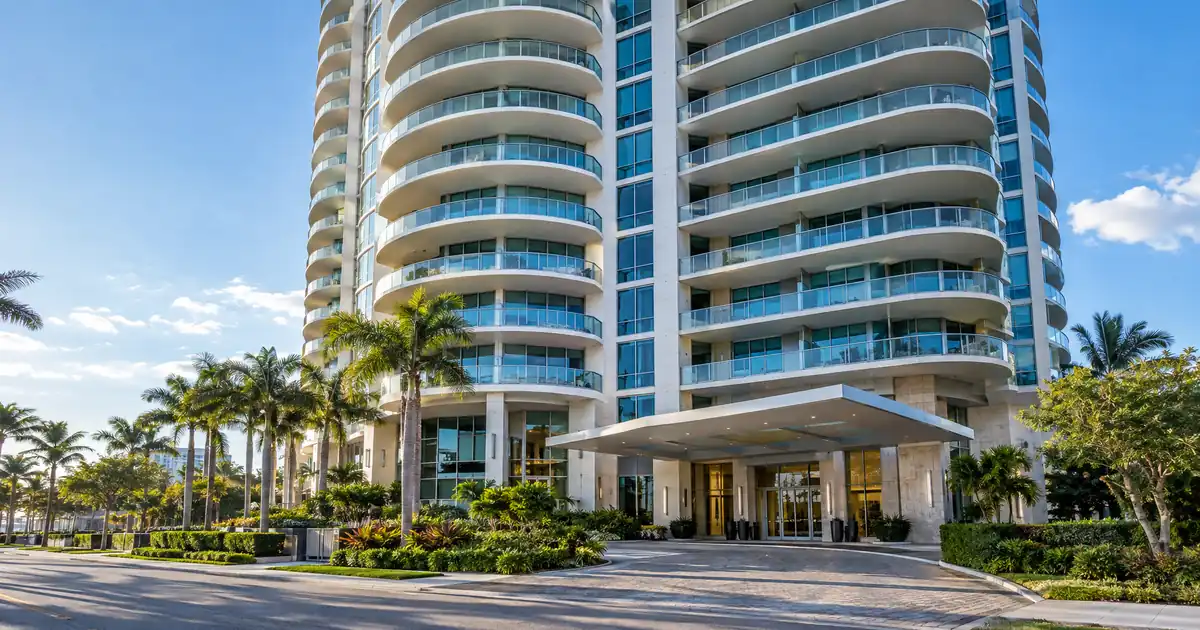
Founder Finance a Condotel on Business Bank Statements — The Quick Read: Yes, a founder can qualify using business bank statements instead of traditional personal-income documentation, but that only solves half the problem. A condotel also has to clear project-level underwriting, separate from how the founder documents income. Both boxes have to check out before a lender will move forward. This article walks through both sides, plus the size and leverage a founder can typically expect through select wholesale programs.
That two-part structure trips people up constantly. Founders assume “bank statement loan” is a single approval. It isn’t. One track qualifies the person. A different track qualifies the building. Miss either one, and the deal stalls.
Key Terms Defined
Bank statement loan — a non-QM mortgage that uses deposit history from personal or business bank accounts to calculate qualifying income, instead of traditional personal-income documentation or W-2s.
Condotel — a condominium unit inside a building that operates with hotel-style services, a rental-pool requirement, or hospitality licensing, which typically pulls it outside standard financing rules.
Non-warrantable project — a condo project that doesn’t meet standard agency eligibility rules, usually due to commercial use, litigation, high investor concentration, or a hotel-style operating structure.
Expense ratio — a percentage subtracted from business deposits to estimate real income, since gross deposits include money that goes right back out to cover business costs.
LTV (loan-to-value) — the loan amount expressed as a percentage of the property’s value; an 80% LTV loan means 20% down. Exact terms depend on the lender’s guidelines, property type, leverage, and a full review of the borrower’s file.
Why This Is Two Separate Underwriting Questions
A condotel can’t get standard agency financing. This is about how the building operates, not about the borrower. Fannie Mae’s Selling Guide excludes projects run like a hotel, motel, or similar commercial business. This includes buildings with mandatory rental-pooling agreements, where a management company controls occupancy. This rule has nothing to do with income documentation. It’s about the building itself.
Fannie Mae’s own data backs up how narrow this exclusion actually is: only 3.6% of reviewed projects carry an ineligible status, and condotel characteristics are one of the more common reasons a project lands there, according to Fannie Mae’s Condo Status Finder. So it’s not that every hotel-adjacent building fails. It’s that a specific set of operating features — hotel licensing, mandatory pooling, front-desk services — trips the flag.
The building sits outside agency rules by design. Because of this, the loan is automatically non-QM. This holds true no matter what income documentation the founder uses — traditional personal income, bank statements, or something else. Non-QM loans still require lenders to make a reasonable, good-faith determination that the borrower can repay. The difference is that the loan isn’t underwritten to a fixed government-set formula, the way a standard mortgage is.
On the income side, a founder using business deposits instead of traditional income documentation is solving a completely different problem: the fact that legitimate write-offs make a profitable business look thin on a return. Both problems can exist on the same file. Neither one solves the other.
Step One: Does the Founder’s Income Qualify?
Bank statement programs qualify a founder based on deposit history instead of adjusted gross income. They typically use 12 or 24 consecutive months of statements. On most files through select wholesale programs, personal transfers from the founder’s own business into a personal account count at full value. No discount applies.
When business account statements are used directly, an expense ratio gets applied first. Across the wholesale network, this usually runs on a set schedule: 20% for a service business with no employees, 40% for a business with one to five employees, 50% for a business with six or more employees or any product-based business, or a ratio an accountant provides in writing. A profit-and-loss method exists too, capped at 80% of stated income. The founder doesn’t get to pick whichever ratio produces the best number — the ratio follows the business type.
Ownership matters here. A founder generally needs at least 25% ownership in the business supplying the deposits for those statements to count toward income at all. A minority stakeholder with a 10% stake in a company can’t lean on that company’s bank statements the same way a majority owner can.
Statements need to be consecutive. A transaction history export or a summary printout doesn’t substitute — underwriters want the actual monthly statements, month after month, with no gaps. Large unexplained deposits, NSF activity, or a rough month with overdrafts typically triggers a letter of explanation request. This isn’t a lighter form of underwriting. It’s a different form of underwriting, still fully documented, still reviewed line by line.
Step Two: Does the Building Qualify?
This runs independently of the founder’s income file, and it’s the piece most founders don’t see coming. Underwriting looks at how the building actually operates — not the word “condotel” itself. A management agreement gets pulled and reviewed. So does the HOA’s governing documentation.
The single biggest variable is this: is short-term rental participation voluntary or mandatory? A building where owners can choose to join a rental program looks very different from one where the HOA legally requires participation and hands a management company control over occupancy. Fannie Mae’s guide treats mandatory pooling as a disqualifying feature for agency loans. That’s because it strips the owner of control over how the unit is used. Non-QM underwriting cares about this same distinction, since it changes who actually controls the income stream and the property.
Naming quirks matter less than people assume. A building with “resort” or “hotel” in its name isn’t automatically treated as a condotel if that name reflects historical use and the building currently operates as a standard residential condo. The operational facts control, not the marquee out front.
Short-term rental rules can also vary by city, county, HOA, and property type, so investors should confirm local rules before relying on projected rental income from the unit.
How Big Can a Condotel File Get?
Loan sizes on this side of the wholesale network run from $300,000 to $30,000,000, but not on a single ladder. A portfolio non-QM bank-statement program carries files to $6,000,000. A separate bank portfolio jumbo program carries twelve-month-statement files to $30,000,000 on its own scale — 65% at or below $5,000,000, stepping to 60% through $10,000,000, and 55% up to $30,000,000, with interest-only capped at 60% or the band’s ceiling, whichever is lower. These two programs overlap between $4,000,000 and $6,000,000, then the bank program stands alone above that.
Every file above $4,000,000 gets reviewed case by case before submission. That’s not boilerplate — it means the leverage figures at that size are a starting point for the conversation, not a guaranteed number.
Here’s where the condotel piece narrows things further. Regardless of loan size, condotels carry their own property-type ceiling that sits on top of the size-based ladder: purchase financing runs to 75% on the portfolio program, cash-out to 65% on that same program, and cash-out drops to 50% on the bank program specifically. A founder gets whichever number is lower — the size-based ceiling or the property-type ceiling. On a mid-size condotel deal, the property-type cap is usually the one that actually applies.
What Leverage Actually Looks Like
A founder buying a condotel as a second home or an investment property should expect meaningfully lower leverage than a founder buying a standard condo, because two overlays stack: the property type and, often, the loan size.
On investment property and second-home files through select wholesale programs, leverage steps down as loan size climbs — roughly 85% purchase in the lowest bands, dropping through the mid-$2 million to $3 million range, and falling further above $3.5 million to $4 million, where credit-score floors also rise. Above $3,000,000 on a second home or investment property, and above $3,500,000 on a primary residence, a set of super-jumbo overlays kicks in: a 700 credit floor, clean housing history, 48-month seasoning on any past credit event, U.S. citizenship or permanent residency, and no non-occupant co-borrowers.
Layer the condotel cap over that, and the effective number for most founders lands in the 65-75% range on a purchase, tighter on a cash-out refinance. A founder with a $700,000 condotel purchase is a very different conversation than a founder with a $4,000,000 one — not just in dollars, but in which cap actually governs the deal.
Credit sits at a 660 floor on the portfolio program, 680 on the bank program, and 700 above the super-jumbo threshold. Debt-to-income can run to 50%. Reserves scale with loan size — three months of payments up to $500,000, six months through $1,500,000, nine months above that — plus two additional months for every other financed property the founder owns, capped at twelve months total. A founder buying a first investment property with no rental history elsewhere should plan on the full twelve-month reserve requirement.
Cash-out on the portfolio program runs unlimited at or below 60% LTV, then caps at $1,500,000 in proceeds above that threshold. The bank program carries no published cap on cash-out proceeds, but its condotel ceiling of 50% keeps the practical number in check anyway. Every figure here varies by lender and program — guidelines, property type, leverage, and credit profile all apply.
Bank Statements, DSCR, or Something Else?
A bank statement loan is reviewed for the founder. A DSCR loan is reviewed for the property, based on whether its rental income covers the payment. These solve different problems, and a founder buying a condotel needs to think through which one actually fits.
Some founders want to buy a condotel purely as an investment. If you don’t want your personal or business deposits examined closely, a DSCR loan may fit better. With DSCR loans, qualification mainly depends on whether the unit’s rental income covers the payment, subject to lender guidelines. It doesn’t depend on the founder’s business cash flow. Lendmire’s complete DSCR loans guide explains how this qualification model works, property by property. DSCR loans are built for non-owner-occupied investment properties. Because they’re business-purpose loans, lenders review them differently than a standard owner-occupied mortgage.
For a founder who wants the condotel as a second home, or whose income genuinely tells a stronger story than the property’s projected rental income would, business bank statements often make more sense. A third path — asset-based qualification, where liquid assets divide across a set number of months instead of counting income at all — can work for founders sitting on substantial cash or investments but thin recent deposit activity. Which path fits depends on the borrower’s profile, the property’s income potential, and the specific lender’s guidelines on that file.
This office reviews many files. Founders with irregular but strong deposits tend to do better on the bank statement path. For example, a services business with lumpy client payments often works well here. Founders who rely on one or two large annual distributions may not do as well. That’s because deposit-averaging math doesn’t capture their real financial picture as cleanly.
Where Founders Get This Wrong
The most common mistake is treating the bank statement approval as the whole approval. A founder gets pre-qualified on income, falls in love with a specific unit, and only then finds out the building’s rental-pool agreement is mandatory — which means the building itself needs a different underwriting path entirely, if it qualifies at all.
The second mistake is submitting the wrong months of statements — skipping a slow month, or submitting a transaction summary instead of the actual bank-issued statement. Underwriters want consecutive, unedited statements. Gaps get questioned.
The third is assuming a nightly short-term-rental rate can just be multiplied by thirty to produce a monthly rent figure for appraisal purposes. Fannie Mae’s own appraisal guidance is explicit that the standard rent-schedule form isn’t built for that math, and that appraisers shouldn’t convert nightly income into a monthly figure that way. Non-QM lenders reviewing a condotel’s income typically look at actual booking history or management-company statements instead — a different evidence trail than a standard rental appraisal.
The fourth is not knowing which cap governs the deal — loan size or property type. A founder shopping for 80% leverage on a $2,000,000 condotel purchase is shopping for a number that isn’t on the table once the condotel ceiling applies. Final terms depend on lender guidelines, property type, leverage, and the borrower’s complete credit picture.
Tax treatment on any of this can depend on how the funds are used and how the property is held; founders should keep clear records and talk to a qualified tax professional before relying on any deduction.
Frequently Asked Questions
Does a founder need 24 months of bank statements, or will 12 work? Either can work, depending on the program. The portfolio bank-statement program can use 12 or 24 months of statements; the bank portfolio jumbo program specifically runs on 12 months. Fewer months of statements sometimes means less flexibility elsewhere on the file, so it’s worth discussing both options before choosing.
Can a minority owner in a company use that company’s bank statements? Generally not on their own — most programs require at least 25% ownership in the business before its deposits count toward the founder’s qualifying income. A founder below that threshold would typically need to rely on personal accounts or a different documentation path.
Will a condotel with a voluntary rental program underwrite differently than one with a mandatory pool? Yes, and it’s often the single biggest factor in how a condotel file gets reviewed. A voluntary program leaves the owner in control of occupancy; a mandatory pool hands that control to a management company, which most lenders treat as a materially different risk.
Is there a maximum loan amount for a condotel bought on business bank statements? Loan sizes run from $300,000 up to $30,000,000 through two separate wholesale programs, but the condotel property type carries its own leverage ceiling that typically applies well before the size cap becomes the limiting factor. Every file above $4,000,000 goes through case-by-case review before submission.
What if the condotel building doesn’t have a rental-pool agreement at all? That’s actually a simpler review — no mandatory pooling means less risk from the lender’s perspective, though the building still gets evaluated for hotel-style services, licensing, and overall operating structure before it clears as an eligible non-QM property.
Are you weighing a condotel purchase against your income documentation options? Lendmire can help you compare bank statement, DSCR, and asset-based paths side by side. The right choice depends on the specific building, your credit profile, and the leverage you’re targeting. Investors can also compare a related purchase by reading Lendmire’s guide on how to finance a condotel on business bank statements.
Lendmire doesn’t lend money directly. Instead, it arranges financing through select lenders in its wholesale network. Its consumer mortgage licenses currently cover 16 states, including California, Florida, Texas, and Georgia. All figures above show typical ranges on select wholesale programs. They’re subject to full underwriting, credit approval, and property review — not a promise to lend.
For current guidelines and terms, see Lendmire’s super jumbo bank statement loan programs page.
Self-employed borrowers can compare both super jumbo programs on Lendmire’s self-employed mortgages page.
About Lendmire
As a non-QM mortgage broker (NMLS# 2371349), Lendmire facilitates DSCR investor loans across 40 markets, including Washington, D.C. DSCR eligibility is generally reviewed around property-level rental income instead of personal income documentation, subject to lender guidelines, serving LLC-structured portfolios and self-employed borrowers who don’t fit conventional boxes. A two-time Scotsman Guide Top Mortgage Workplace (2025, 2026).
Lendmire’s Top Mortgage Workplace recognition is documented by Scotsman Guide 2025 Top Mortgage Workplace and Scotsman Guide 2026 Top Mortgage Workplace.
Get Started
Ready to find the right loan for you?
In about 30 seconds you can review financing options available for your home or investment property. No commitment required.
Informational only. Not a Loan Estimate, approval, or commitment to lend. Program availability and eligibility are subject to lender guidelines, credit approval, property review, and underwriting.
References
1. Fannie Mae Selling Guide — Ineligible Projects (B4-2.1-03)
2. Fannie Mae Condo Status Finder
Brandon Miller
Founder & CEO, Mortgage Loan Originator, Lendmire LLC
- Mortgage Loan Originator · NMLS# 1129696 · Verify on NMLS Consumer Access
- North Carolina Real Estate Broker · License# 343312 · Verify on NCREC
- North Carolina Insurance Producer · License# 19053198 · Property, Casualty, Life, Health · Verify on NAIC SBS
- Lendmire LLC · Firm NMLS# 2371349 · Verify firm licensure
Important disclosures. Lendmire (NMLS# 2371349) is a licensed mortgage brokerage. Lendmire is not a direct lender, depository institution, or financial advisor. All loan inquiries are subject to lender underwriting; this article does not constitute a commitment to lend. Rates, terms, and program guidelines are subject to change without notice and vary by borrower profile, property type, and state. Information in this article is general in nature and is not financial, legal, or tax advice. Equal Housing Opportunity. NMLS Consumer Access: nmlsconsumeraccess.org.


