
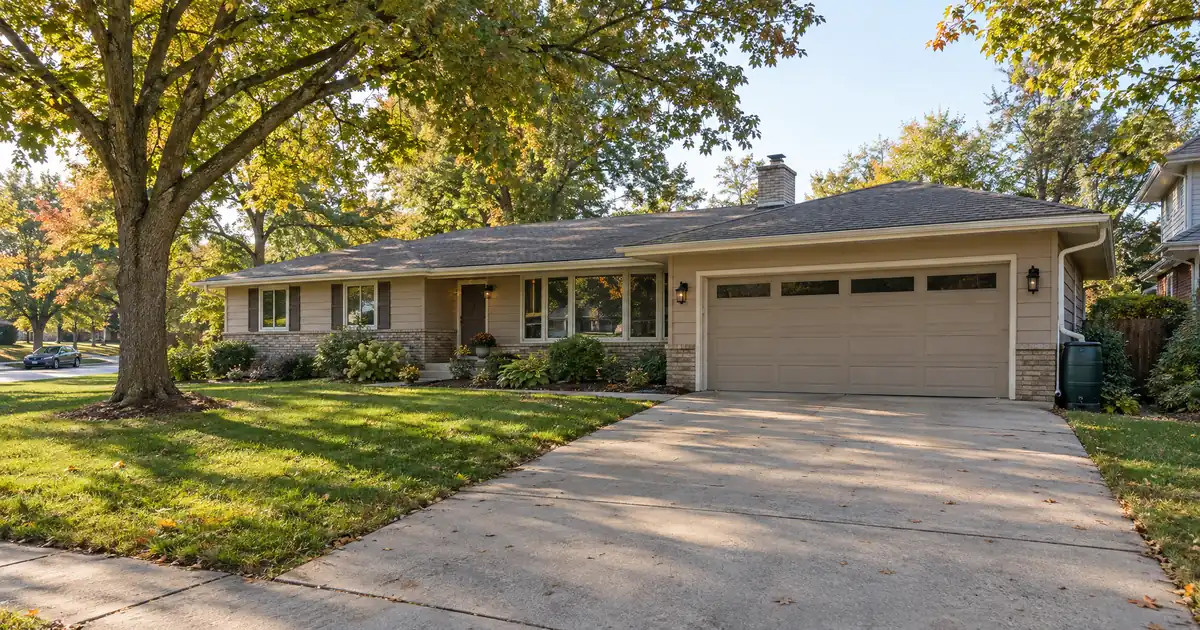
The Quick Read: You get a bank statement loan after a former rental was lost by documenting twelve months of deposits, proving the date the loss was completed, and applying once the lender’s waiting period and your credit recovery fit the program, usually at lower leverage than a clean file. The lost property is a housing-history issue, not an income-documentation problem.
- The type of loss sets the clock. Foreclosure, short sale, deed-in-lieu, tax foreclosure and a voluntary sale are each treated differently.
- Seasoning starts at the completion date. That means the recorded transfer or final settlement, not move-out and not the first missed payment.
- Credit reports and lenders keep separate clocks. A foreclosure can sit on your report for seven years, and the lender’s wait is a different number.
- Earlier re-entry usually costs leverage. Select lenders in the wholesale network Lendmire works with will look at shorter waits, typically with lower LTV and pricing adjustments.
- Occupancy changes the product. The same documented income can support an owner-occupied purchase, a second home, or an investment cash-out, each with its own ceiling.
You lost a rental. That does not end your financing options, but it does change the order of operations. Lenders ask two separate questions: what happened to the housing obligation, and what does your income look like now? A bank statement loan answers the second question. Time, credit repair and clean paperwork answer the first.
What your deposits qualify you for.
Alt-doc programs read 12 months of business or personal bank deposits instead of tax returns. Enter your average monthly deposits and see the income a lender would credit you.
The expense factor is set by the lender from your business type and profit-and-loss statement; it is not a number you choose. This widget quotes no rate and no payment.
Program parameters shown update from Lendmire’s centralized guideline source.
Estimate
Illustrative estimate only — not a quote, Loan Estimate, approval, or commitment to lend. Deposit average, expense factor, and housing ratio are editable assumptions; the expense factor a lender applies is set from your business type and documentation. No interest rate or monthly payment is quoted here. Purchase capacity is a simplified illustration and does not account for taxes, insurance, HOA dues, or other debts. Alt-doc income documentation is available on consumer mortgages in the states where Lendmire is licensed for consumer lending; actual terms vary by lender, borrower, and property.
What Does “Lost” Actually Mean?
“Lost” covers at least five different events, and underwriters do not treat them alike. Pin down yours before you talk to anyone, because a mislabeled event sends a file in the wrong direction.
| Event | What the lender examines | Likely path |
|---|---|---|
| Foreclosure | Recorded transfer date, credit recovery | Longest wait, lowest leverage |
| Short sale | Settlement date, mortgage lates, deficiency | Often easier than foreclosure |
| Deed-in-lieu | Recording date, other derogatory items | Between the two, file-specific |
| Voluntary sale | Payoff proof, final settlement statement | Usually no housing event |
| Lost tenant or income | Current deposits, reserves, vacancy | An income question, not credit |
A few patterns hold across most programs we see. A short sale with no late mortgage payments often reads better than a deed-in-lieu with other credit damage. A completed foreclosure usually reads worse than either. A voluntary sale where the loan was paid off is not a housing event at all. If you simply lost the tenant but still own the property, you have an income problem, and the lender will want to see what your deposits look like now.
Tax foreclosures and recorded liens can surface on title even when they are absent from your credit report. Expect the title search to find them.
Key Terms Defined
Housing event: A foreclosure, short sale, deed-in-lieu or similar loss of a property that a lender treats as a major credit event.
Seasoning: The waiting period between the completion of the housing event and the date of your new loan.
Qualifying deposits: The deposits a lender counts as income after removing transfers between your own accounts, loan proceeds and one-time windfalls.
Expense factor: The percentage a lender subtracts from business-account deposits to estimate what the business spent. The lender sets it, not you.
DSCR (debt service coverage ratio): Monthly rent divided by the full monthly obligation on a property, used to qualify investment loans on the property rather than on you.
Business-purpose loan: A loan made for investment or business use, as opposed to a home you will live in.
How Underwriting Treats the File, Step by Step
A bank statement loan is reviewed on documented income under the applicable program, subject to lender guidelines. Here is how the deal works.
1. Date the event correctly. Use the recorded deed for a foreclosure or the final settlement statement for a short sale. Bankruptcy, if part of your story, runs from discharge, not filing. Wrong dates are a common reason files get sent back.
2. Separate the loss from the income file. The lost property is judged on credit and housing history. Your income is judged on deposits.
3. Pick the statement window. Across the network, the base documentation is twelve months of business or personal bank statements. Some lenders ask for more.
4. Scrub the deposits. Transfers between your accounts, loan proceeds and one-time windfalls come out. Business accounts get an expense factor. Personal accounts generally do not.
5. Average and run debt-to-income. Qualifying deposits are averaged across the months. That income must still support the new housing payment plus your other debts.
6. Apply the housing-event overlay. Each program sets its own seasoning, maximum LTV, credit minimum and reserves for borrowers with a recent loss.
7. Check reserves and down payment. Reserves commonly run around six months of the housing payment. After a loss, the lender wants proof you are not stretched.
One point trips up people who hear bank statement loans described as easy. They are not no-doc. The lender still verifies every dollar it counts, just from a different record. Alternative documentation changes the evidence, not the standard.
The Credit Clock Is Not the Lender’s Clock
A foreclosure stays on your credit report for seven years, counted from the first missed payment. A short sale carries the same seven years, and the sale itself typically takes three to six months to finish, compared with 30 to 45 days for a normal sale. Nolo reports the same seven-year window for negative marks.
None of that tells you how long a lender will make you wait. Seven years on your report does not mean seven years before you can borrow. It means the item is visible to anyone who pulls your credit for that long.
Lender waiting periods are set program by program. Non-QM loans cannot be bought by the federal housing agencies or the government, so each lender or investor writes its own housing-event rules. That is why the same borrower gets different answers from different lenders. Agency-backed loans generally impose longer, multi-year waits. Non-QM windows are usually shorter, but the shorter wait comes with lower LTV and pricing adjustments.
This is also where the advice you find online contradicts itself. One page says non-QM has no waiting period. Another says several years. Both can be true for different programs, event types, leverage levels and occupancies. Treat any single number as one lender’s rule, not the market’s.
What Happens to Rental Deposits and Income After the Loss?
If the lost rental fed your personal or business account, those deposits stop. The lender looks at the statement window and sees the drop. Underwriters care about sustainability, so deposits from a property you no longer own generally will not carry forward as income.
Tenant rent landing in a personal account is not automatically income in a personal-income program. Depending on the program, it may be counted, discounted or excluded. A cleaner file comes from income that does not depend on the lost asset.
If your deposits changed mid-window, write a letter of explanation. Keep it short and factual:
- What the property was and when the loss was completed.
- Which deposits in the statements came from it and when they ended.
- What replaced that income, if anything.
- Your housing payment history since the event.
- Whether any other properties or obligations were tied to the loss.
Do not argue your case in the letter. State the sequence and attach documents.
Gather the paperwork before you apply: the statements, proof of self-employment, the deed or final settlement statement for the lost property, any cancelled-debt form, and the letter. If a lender cancelled debt in a foreclosure or short sale, it may issue a 1099-C, which the IRS instructions for Forms 1099-A and 1099-C cover, and underwriters may ask about it, so tax treatment varies and a qualified tax professional should review it.
How Much Leverage Can You Expect?
Leverage depends on occupancy more than on the loss itself. These are typical ranges from select lenders in Lendmire’s wholesale network, and every file is underwritten individually.
On a primary residence purchase or rate-term refinance, bank statement programs go up to 90% LTV, with the strongest files earning the top of the range. After a recent housing event, expect to land lower. If you qualify from liquid assets instead of deposits, the asset-depletion alternative reaches about 80% LTV on a primary residence. Every figure here varies by lender and program — guidelines, property type, leverage, and credit profile all apply.
On an owner-occupied cash-out, a primary residence goes up to 80% LTV using a fixed expense ratio, or 75% with an accountant-prepared ratio. A second home tops out at 75% LTV, set by loan size and credit. Neither reaches the purchase ceiling. Final terms depend on lender guidelines, property type, leverage, and the borrower’s complete credit picture.
On an investment property cash-out, the ceiling is around 75% LTV. Investment purchase leverage on bank statement documentation varies by lender, so there is no single figure to quote. Loan sizes generally run from $125,000 to $3,500,000.
Occupancy also decides how the loan is disclosed. An owner-occupied bank statement loan is a consumer mortgage, so TRID disclosures apply. A bank statement loan on a non-owner-occupied rental, including a short-term rental, is a business-purpose loan and exempt from TRID. The two do not mix on one file.
Owner-occupied bank statement files are arranged within the 16 states where Lendmire’s consumer mortgage licensing applies.
Bank Statement, DSCR or Asset Depletion?
If the property you want to buy is a rental, a different product may fit better than a bank statement loan. The deciding question is whether your deposits or the property’s rent make the stronger case.
| Factor | Bank statement | DSCR | Asset depletion |
|---|---|---|---|
| What qualifies | Your deposits | The property’s rent | Your liquid assets |
| Best for | Owner-occupied homes | Pure rentals | Cash-rich borrowers |
| Personal DTI | Yes | Not the basis | Yes |
| Housing event | Seasoning applies | Seasoning applies | Seasoning applies |
DSCR loans qualify primarily on property-level rental income covering the payment, subject to lender guidelines. Our complete DSCR loans guide walks through the mechanics. DSCR loans are designed for non-owner-occupied investment properties. Because they are business-purpose investor loans, they are reviewed differently from a standard owner-occupied mortgage.
Here is why that matters after a loss. If the lost rental damaged your personal income, a DSCR loan on a different property takes your personal income and DTI out of the main calculation. Seasoning still applies, so DSCR is not a shortcut around the housing event. Select lenders in the network will review coverage below 1.00, but LTV and terms adjust when they do.
Say you want a short-term rental next. Lendmire’s piece Short-Term Rental DSCR vs Bank Statement Loan After a Liquidity Event covers that choice.
The two products qualify different things. Bank statements qualify the person. DSCR qualifies the property.
Where the General Rule Breaks
Multiple events. Some programs treat more than one housing event as a longer wait or an ineligible file. One event with clean credit since is a very different story from two.
Deficiency reporting. A short sale that reports a deficiency can read closer to a foreclosure on your credit report. Deficiency rules vary by state, so a general rule is not safe here.
Blanket loans. If the lost rental sat inside a blanket loan covering several properties, a default can reach the others. That makes the housing event bigger than one address.
LLC or personal name. Whether the lost rental sat in an LLC or in your own name matters to how the lender reads the history. Programs that lend to borrowers with an LLC-held loss differ, subject to lender program eligibility. Personal guarantees often pull the loss onto your credit anyway.
Title-only records. A tax foreclosure or lien may not show on credit but can appear on title. Surprises are better found before you apply.
A rental that was also your residence. If you lived in the property, lenders treat the loss as a primary-residence housing event, which is usually the more heavily scrutinized kind.
When this is the wrong tool. If your traditional personal-income documentation shows strong income, a fully documented loan may be priced better. Bank statement loans suit borrowers whose taxable income understates their cash flow. They can be priced above fully documented loans, so try standard documentation first if you qualify.
What the Timeline Looks Like in Practice
Picture an investor who sold a rental through a short sale and now wants to buy a primary residence on a bank statement loan. The sequence looks like this.
| Stage | What to do |
|---|---|
| Loss date | Record the settlement date and get the final statement |
| Early recovery | Pay every obligation on time; rebuild credit |
| Seasoning | Keep business deposits steady and consistent |
| Pre-application | Pull twelve months of statements; draft the letter |
| Application | Match the program’s seasoning, leverage and reserves |
The investor does not wait for a magic number of months. They wait until the file fits a specific program, meaning enough time since the completion date, enough credit recovery and enough reserves. Applying earlier can work, but leverage drops and pricing adjusts. Waiting buys a wider menu.
If the investor needs to keep buying in the meantime, a DSCR loan on a different property is the interim path, subject to the same seasoning review.
Common Mistakes
- Counting from the wrong date. Move-out and first missed payment are not the start. Completion is.
- Assuming a no-wait claim applies to you. Near-zero waits exist in some programs, only with conditions like a single event and lower LTV.
- Treating tenant deposits as income. Once the property is gone, those deposits usually do not count going forward.
- Picking your own expense factor. The lender sets it. An accountant-prepared ratio may support a different figure in some programs.
- Mixing up the products. Bank statement and DSCR loans are not interchangeable.
- Ignoring title. A tax foreclosure invisible on credit can still stop a file.
Frequently Asked Questions
Can I get a bank statement loan right after a short sale?
It depends on the program and your credit since. Some lenders in the network will review a short sale with a short wait, but expect lower LTV and pricing adjustments. A short sale with no mortgage lates generally reads better than a foreclosure.
Does my former rental’s mortgage still count against me?
If it was paid off or released through the sale, the debt generally leaves your file. A deficiency, a recorded lien or lates before the event can still count. The lender will check credit and title.
Do I need twelve months of statements if my income changed?
Twelve months is the base documentation. If your deposits shifted when the rental ended, the lender will see it in the window. A short letter of explanation and steady deposits afterward help the file.
Is a DSCR loan easier to get after losing a rental?
It removes personal DTI from the main calculation, which helps if your own income was hurt. Seasoning still applies. It only works for non-owner-occupied investment properties.
Does it matter whether the lost rental was in an LLC?
Often, yes. Lenders look at the guarantor’s housing history, and personal guarantees can pull an LLC-held loss onto your credit. How each program treats it varies, so state the ownership structure up front.
Next Step
Reach the team at 828-256-2183 or request a quote. A lost rental slows your next purchase, but with the right dates, the right documents and the right product, the loss becomes a seasoning schedule instead of a dead end.
About Lendmire
Lendmire (NMLS# 2371349) is a mortgage brokerage serving self-employed and high-net-worth borrowers in 16 states. Bank statement, P&L-only, 1099-only and asset-based mortgages are arranged through wholesale lending channels; Lendmire brokers the financing and the lender underwrites each application. Scotsman Guide named Lendmire a Top Mortgage Workplace in both 2025 and 2026.
Get Started
Ready to find the right loan for you?
In about 30 seconds you can review financing options available for your home or investment property. No commitment required.
Informational only. Not a Loan Estimate, approval, or commitment to lend. Program availability and eligibility are subject to lender guidelines, credit approval, property review, and underwriting.
References
1. NerdWallet: How Long Does Foreclosure Stay on Your Credit Report
2. NerdWallet: What Is a Short Sale
3. Nolo: Foreclosure, Short Sale and Credit Score Effects
4. Scotsman Guide: These Loans Should Take Center Stage
5. IRS Instructions for Forms 1099-A and 1099-C
This article is part of Lendmire’s bank statement loan program — full qualification details, guidelines, and scenarios live on the program page.
Related reading: Can You Get a Bank Statement Loan in Michigan With 12 Months of Statements? · DSCR vs Bank Statement Loan for a Part-Time Resort Rental · Can a Contractor Get a Bank Statement Loan From a Big Bank?
Brandon Miller
Founder & CEO, Mortgage Loan Originator, Lendmire LLC
- Mortgage Loan Originator · NMLS# 1129696 · Verify on NMLS Consumer Access
- North Carolina Real Estate Broker · License# 343312 · Verify on NCREC
- North Carolina Insurance Producer · License# 19053198 · Property, Casualty, Life, Health · Verify on NAIC SBS
- Lendmire LLC · Firm NMLS# 2371349 · Verify firm licensure
Disclosure information. Lendmire is a state-licensed mortgage brokerage under NMLS# 2371349. Lendmire is not a depository institution, direct lender, or financial advisor — all loans referenced are placed through wholesale lender partners and are subject to each lender's underwriting standards. This article is provided for general informational purposes and is not a commitment to lend, nor does it constitute financial, legal, or tax advice. Loan programs, terms, rates, and qualification standards change without notice and depend on borrower profile, property type, and the state in which the subject property is located. Equal Housing Opportunity provider. NMLS Consumer Access: nmlsconsumeraccess.org.