
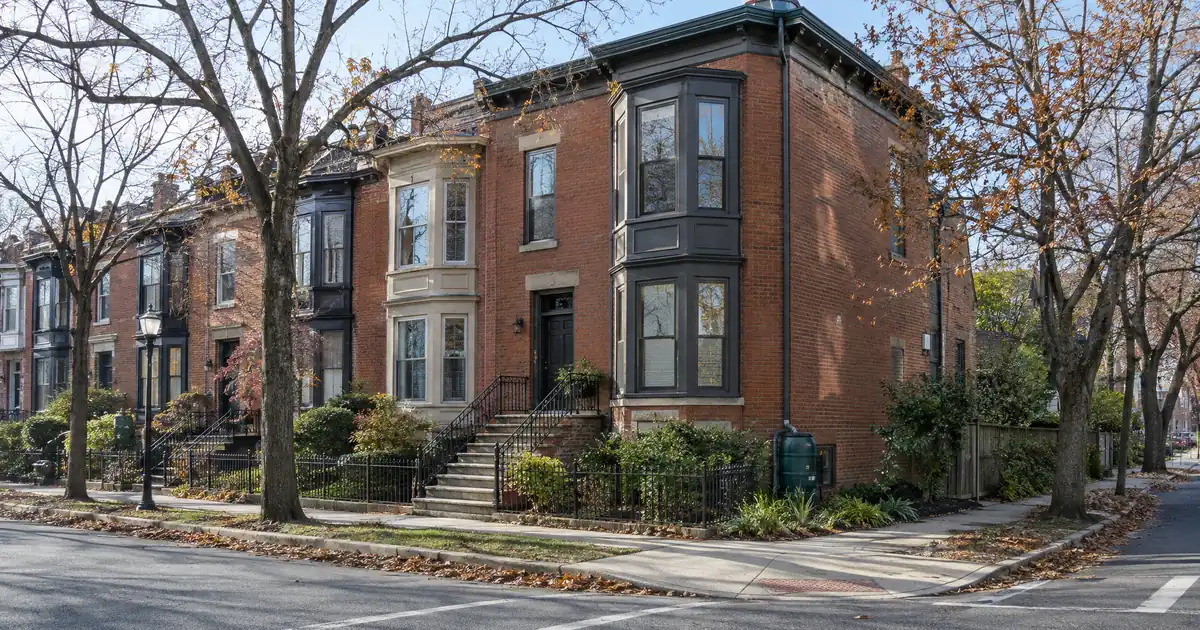
The Quick Read: Buying a townhouse on bank statements means documenting twelve months of deposits, letting the lender convert them into qualifying income, and confirming the townhouse is legally a fee-simple or planned-community home rather than a condo, because that ownership structure decides the appraisal form and the project review. The loan is reviewed on documented income under the applicable program, subject to lender guidelines. The townhouse adds a second layer of review on top of your income file.
- Income side: a lender reads 12 months of business or personal statements and averages eligible deposits, applying its own expense factor to business accounts.
- Property side: townhouse describes a building style. The recorded legal structure decides whether it underwrites like a single-family home or like a condo.
- Leverage: on a primary residence purchase or rate-term refinance, select lenders in Lendmire’s wholesale network go up to 90% LTV. Investment cash-out tops out around 75% LTV.
- Occupancy: whether you will live in the townhouse or rent it out changes the disclosure rules and can influence which loan type may be a better fit.
- Alternative: if your deposits are uneven but the rent comfortably covers the payment, a DSCR loan may fit better.
Key Terms Defined
Bank statement loan: a non-QM mortgage (a loan outside standard agency guidelines) that qualifies a borrower from deposit history instead of traditional personal-income documentation or W-2s.
Expense factor: the percentage of business deposits the lender treats as operating costs, so only the remainder counts as income.
DTI (debt-to-income ratio): your monthly debts, including the new housing payment, divided by your qualifying monthly income.
Fee-simple: you own the structure and the land under it outright.
PUD (planned unit development): a community where you own your home and lot, and an HOA runs shared areas.
Condo-form ownership: you own the interior of a unit and share ownership of the building and grounds, as set out in a recorded declaration.
LTV (loan-to-value): the loan amount as a percentage of the property’s value.
DSCR (debt service coverage ratio): a rental property’s monthly rent divided by its full monthly debt payment.
What your deposits qualify you for.
Alt-doc programs read 12 months of business or personal bank deposits instead of tax returns. Enter your average monthly deposits and see the income a lender would credit you.
The expense factor is set by the lender from your business type and profit-and-loss statement; it is not a number you choose. This widget quotes no rate and no payment.
Program parameters shown update from Lendmire’s centralized guideline source.
Estimate
Illustrative estimate only — not a quote, Loan Estimate, approval, or commitment to lend. Deposit average, expense factor, and housing ratio are editable assumptions; the expense factor a lender applies is set from your business type and documentation. No interest rate or monthly payment is quoted here. Purchase capacity is a simplified illustration and does not account for taxes, insurance, HOA dues, or other debts. Alt-doc income documentation is available on consumer mortgages in the states where Lendmire is licensed for consumer lending; actual terms vary by lender, borrower, and property.
What Is a Bank Statement Loan, and Who Uses One?
A bank statement loan is built for borrowers whose real cash flow does not show up on a tax return. Scotsman Guide lists typical borrowers as insurance agents, contractors, attorneys, doctors, accountants and property investors. They often have substantial wealth but must show income differently. The same article argues lenders should stay flexible on the expense factor, because a one-size approach can wrongly turn away owners of asset-heavy businesses.
Across Lendmire’s wholesale network, the pattern is consistent. Write-offs push taxable income well below what actually lands in the account. A standard lender sees the low number. A bank statement program sees the deposits.
Lenders ask about your business type, number of employees and whether you have a physical location when setting the expense factor. If you qualify for a conventional or government-backed loan, try that first. Not every lender offers bank statement loans, which is one reason borrowers use a broker to find a program that fits.
Does a Townhouse Change How the Loan Works?
Yes, but only on the property side. Your income file looks the same on a townhouse as on a single-family home. What changes is how the lender classifies the building, which sets the appraisal form, the project review and the documents you need.
A townhouse is an architectural style: attached homes, usually sharing one or two walls. It is not a legal category. Governing Docs makes the point plainly: townhouse describes architecture, condo describes legal ownership, and the recorded declaration decides which one you are buying. A listing that says townhome can still be a condo on paper.
| Ownership type | What you own | Underwriting effect |
|---|---|---|
| Fee-simple townhouse | Structure and lot | Reviewed like a single-family home |
| PUD townhouse | Structure and lot; HOA runs common areas | Usually reviewed like a single-family home |
| Condo-form townhouse | Unit interior; shared building and land | Condo project review applies |
In practice, a fee-simple or PUD townhouse is generally appraised on the single-family form, the 1004. A unit that is legally a condo uses the condo form, the 1073. The appraiser picks the form from the legal structure, not the listing label.
A condo-form townhouse is where files get stuck. The lender may review the project itself: owner-occupancy mix, HOA finances, litigation and insurance. Some projects fail that review. Select lenders in the network will look at those files, but expect different terms and a longer checklist.
How to Find Out Which Type You Are Buying
Do this before you write an offer, not after the appraisal comes back.
1. Pull the deed or recorded plat. It shows whether you receive title to the lot.
2. Read the recorded declaration and the CC&Rs (the community’s covenants, conditions and restrictions). Look for the words condominium or unit ownership.
3. Ask for the HOA budget, current dues and any pending special assessments.
4. Read the rental restrictions if you might ever rent the home.
5. Request the master insurance policy and see what it covers on the building exterior.
If the documents say condo, treat the purchase as a condo for financing purposes, whatever the listing says.
How Underwriters Turn Deposits Into Qualifying Income
Underwriting is a sequence, and each step has a place where files lose ground.
Step 1: Pick the statement set. Programs most often use 12 months of statements, from either personal or business accounts. Personal accounts generally count deposits closer to face value. Business accounts get an expense factor.
Step 2: Screen the deposits. Underwriters strip out transfers between your own accounts, loan proceeds and one-time asset sales. Owner draws and distributions are not revenue either. Deposits need a visible source. A pattern of declining or unexplained deposits is a common reason a file loses income.
Step 3: Apply the expense factor. The lender sets this number, not you. Programs differ, so no universal formula exists. An accountant-prepared ratio or letter can support a lower factor on some programs. Lendmire’s guide on how to write a CPA letter for a super jumbo bank statement loan covers what that letter needs to say.
Step 4: Average the result. Eligible deposits, net of the expense factor and adjusted for your ownership share, are divided by the number of months. That is your qualifying monthly income.
Step 5: Test DTI. The new housing payment joins your existing debts and is measured against that income. On a townhouse, HOA dues sit inside the housing payment. Two townhouses with the same price and loan size can therefore produce different DTI results if one carries higher dues.
Step 6: Underwrite the property. The lender reviews the appraisal, title and, where it applies, the HOA documents.
A Worked Comparison
Run the logic on two buyers with identical statements. Each shows deposits that average out cleanly after the expense factor. Buyer one purchases a fee-simple townhouse with no HOA. Buyer two purchases a PUD townhouse with monthly dues.
Their income is the same. Buyer two carries a higher housing payment, so a larger share of income goes to debt. That buyer can still qualify. The cushion is just thinner. If the file is borderline, a larger down payment or fewer other debts is what restores it.
Declining deposits would change the picture. If the last six months run well below the first six, the average drops, and the file can fall short even when the year looks strong overall.
Leverage, Reserves and Loan Size by Occupancy
Leverage depends on how you will use the townhouse. The table shows typical ranges from select lenders in Lendmire’s wholesale network. Final terms depend on credit, loan size, the property and each lender’s guidelines.
| Use of the townhouse | Typical maximum LTV |
|---|---|
| Primary residence, purchase or rate-term | Up to 90% |
| Primary residence, asset-depletion qualification | Up to 80% |
| Owner-occupied cash-out (primary or second home) | Up to 80%; 75% with accountant-prepared ratio |
| Investment property, cash-out | Around 75% |
| Investment property, purchase | Varies by lender |
The 90% figure applies to purchase and rate-term loans on a primary residence only. It does not carry over to cash-out or to rentals. Stronger files earn the top of each range.
Loan amounts generally run from $125,000 to $3,500,000. Reserves are commonly around six months of the housing payment, held in liquid funds after closing. Asset depletion is a related route: it is reviewed against liquid assets instead of deposits, which can suit a borrower whose business income is lumpy but whose savings are deep.
Term length follows each lender’s program sheet. Do not assume a bank statement loan offers the long or interest-only structures sometimes seen on the investor side.
Documents: What You Bring and What the Townhouse Adds
The borrower file and the property file run in parallel. Starting the second one early prevents most surprises.
| Borrower documents | Townhouse and HOA documents |
|---|---|
| 12 months of bank statements | Deed or plat showing ownership structure |
| Business verification, if self-employed | Recorded declaration and CC&Rs |
| Credit authorization | HOA budget and current dues |
| Proof of down payment and reserves | HOA questionnaire, if the lender requires one |
| Explanation letters for large deposits | Master insurance policy |
| CPA or tax-preparer letter, where used | Rental restrictions, if relevant |
Statement hygiene matters as much as the checklist. Keep personal and business funds separate where possible. Commingled accounts force the underwriter to sort every deposit. Seasonal businesses should expect questions about the low months, so a short written explanation helps. If you pay yourself from your own company, Lendmire’s explainer on whether your own payroll deposits count on a bank statement loan shows how underwriters treat them.
The Step-by-Step Path
1. Compare loan types first. If your traditional personal-income documentation shows enough income, a conventional loan is usually the simpler choice. Bank statement financing earns its place when returns understate your cash flow.
2. Review your statements. Check 12 months for transfers, one-time deposits and gaps. Fix what you can before a lender sees it.
3. Identify the townhouse’s legal structure. Use the checklist above before you commit to a contract.
4. Choose the right program. Occupancy, credit profile, leverage and property type all steer which lenders fit. A broker with several wholesale lenders can compare them side by side.
5. Submit the income file and the HOA documents together. The underwriter reviews both. Delays on the HOA side hold up the whole file.
6. Order the appraisal. The appraiser selects the form from the legal structure.
7. Clear conditions. Expect follow-up requests for deposit explanations or insurance details.
Lendmire is a mortgage broker. It arranges these loans through select lenders and does not approve or fund them. For owner-occupied loans, its consumer mortgage licensing covers 16 states, so availability depends on where the townhouse sits.
Where Townhouse Deals Get Stuck
Most townhouse problems come from the shared structure, not from the borrower. A few patterns come up repeatedly in files like these:
- HOA litigation. An active lawsuit against the association can make a condo-form project ineligible with some lenders.
- Investor concentration. If too many units in the community are rented rather than owner-occupied, project review can become harder.
- Special assessments. A pending assessment raises your real carrying cost and draws underwriter attention to the HOA’s finances.
- Insurance gaps. Attached homes raise questions about who insures what. The master policy and your own policy have to fit together.
- Appraisal comps. Attached comparable sales are the norm, but the appraiser still needs similar ownership structures to compare.
- Party walls and exterior maintenance. Shared-wall agreements and who maintains the exterior both show up in the review.
Run the HOA questionnaire and read the budget before you spend money on an appraisal.
Occupancy Decides the Rules You Operate Under
Whether you will live in the townhouse changes the paperwork. An owner-occupied purchase, including a primary residence or second home, is a consumer mortgage, and the full set of consumer disclosure rules, including TRID, applies. A bank statement loan on a non-owner-occupied townhouse, including one used as a short-term rental, is a business-purpose loan and exempt from TRID. Short-term rental rules can vary by city, county, HOA, and property type, so investors should confirm local rules before relying on projected rental income.
The federal source for that business-purpose carve-out is Regulation Z, section 1026.3, which exempts credit extended primarily for a business purpose. Keep the two cases separate in your planning. Do not assume a rental loan follows consumer disclosure rules, and do not assume a primary-residence loan avoids them.
Tax treatment can depend on how the funds are used and how the property is held; investors should keep clear records and speak with a qualified tax professional before relying on any deduction.
Bank Statement or DSCR? A Decision Table for Townhouse Buyers
If you are buying the townhouse as a pure rental, a different loan may fit better. Home Business Magazine compares DSCR and bank statement loans and notes the core trade-off. Bank statement loans are limited by personal income, which suits investors buying a small number of properties. DSCR loans scale better because each property is reviewed on its own.
| Factor | Bank statement | DSCR | Conventional |
|---|---|---|---|
| What qualifies you | Deposit history | Property rent vs. payment | Personal-income documents and W-2s |
| Best fit | Strong personal cash flow | Rentals and larger portfolios | Documented, stable income |
| Personal DTI | Central | Not the focus | Central |
| Occupancy | Primary, second home, investment | Non-owner-occupied | Primary, second, investment |
Think of it as choosing which side gets underwritten. Bank statement underwriting looks at you. DSCR underwriting looks at the property, with qualification resting primarily on rental income covering the payment, subject to lender guidelines. Programs below a 1.00 coverage ratio are available through select lenders in the network, though leverage and terms adjust.
Each financed property adds a payment to your DTI. That is why investors with growing portfolios often move to DSCR. A bank statement loan makes the most sense when you will live in the townhouse, or when your income is strong and steady but the rent would not cover the payment. For the investor side, see the complete DSCR loans guide.
Common Mistakes
- Assuming every deposit counts. Transfers, loan proceeds and one-time sales are screened out.
- Trying to set your own expense factor. The lender sets it. Only third-party documentation can support a lower one.
- Trusting the listing label. A townhome in the ad can be a condo in the declaration.
- Ignoring HOA dues in the DTI. Dues belong in the housing payment from the first estimate.
- Skipping the conventional check. If standard documentation works, it is usually the simpler route, and pricing on non-QM programs can run higher.
- Letting deposits slide before applying. A declining trend lowers the average and raises underwriting questions.
You can reach the team at 828-256-2183.
Frequently Asked Questions
Can I use a bank statement loan to buy a townhouse I will live in?
Yes, on a primary residence purchase, select lenders in the network go up to 90% LTV. The townhouse needs to clear the property review, which depends on whether it is fee-simple, PUD or condo-form.
Does a townhouse need condo approval?
Only if it is legally a condo. A fee-simple or PUD townhouse is usually reviewed like a single-family home. A condo-form townhouse faces project review, which can include an HOA questionnaire and checks on litigation and insurance. The recorded declaration decides, not the listing.
Can I get cash out of a townhouse with bank statements?
Yes, with lower leverage than a purchase. Owner-occupied cash-out on a primary residence or second home goes up to 80% LTV, or 75% with an accountant-prepared expense ratio. Investment-property cash-out tops out around 75% LTV. Final limits depend on credit, loan size and lender guidelines.
How do HOA dues affect qualification?
HOA dues are part of the housing payment, so they raise your DTI. They also signal how the association runs its budget. Higher dues do not rule you out, but they shrink the cushion on a borderline file.
Should I use a bank statement loan or DSCR to buy a townhouse as a rental?
If rent comfortably covers the payment, DSCR is often the better fit because it qualifies the property instead of your personal income. Bank statement financing fits when your personal income is strong but the rent alone would not carry the loan.
About Lendmire
Lendmire (NMLS# 2371349) is a DSCR-focused mortgage broker that helps arrange investor financing across 41 markets, including Washington, D.C., through wholesale and investor-lending channels. DSCR eligibility is generally reviewed by the lender around the property’s rental income rather than personal income documentation, subject to lender guidelines, which works for self-employed investors, LLC operators, and portfolios above four financed properties. Scotsman Guide named Lendmire a Top Mortgage Workplace in both 2025 and 2026.
Get Started
Ready to find the right loan for you?
In about 30 seconds you can review financing options available for your home or investment property. No commitment required.
Informational only. Not a Loan Estimate, approval, or commitment to lend. Program availability and eligibility are subject to lender guidelines, credit approval, property review, and underwriting.
References
1. Scotsman Guide, “Don’t Shut the Door on Quality Borrowers”
2. Governing Docs, condo vs. townhouse HOA differences
3. CFPB, Regulation Z section 1026.3
4. Home Business Magazine, DSCR vs. bank statement loans
This article is part of Lendmire’s bank statement loan program — full qualification details, guidelines, and scenarios live on the program page.
Related reading: How to Get a Bank Statement HELOC When Heirs Will Not Sell · How Counties Count Recordation on a Bank Statement HELOC · Can Loan-Out Company Deposits Qualify for a Bank Statement Cash-Out?
Brandon Miller
Founder & CEO, Mortgage Loan Originator, Lendmire LLC
- Mortgage Loan Originator · NMLS# 1129696 · Verify on NMLS Consumer Access
- North Carolina Real Estate Broker · License# 343312 · Verify on NCREC
- North Carolina Insurance Producer · License# 19053198 · Property, Casualty, Life, Health · Verify on NAIC SBS
- Lendmire LLC · Firm NMLS# 2371349 · Verify firm licensure
Legal disclosures. Lendmire (NMLS# 2371349) is a state-licensed mortgage brokerage that arranges financing through wholesale lender relationships. Lendmire is not a direct lender, depository institution, or registered financial advisor. The discussion above is general informational content about real estate financing — it is not financial, legal, or tax advice, and readers should consult licensed professionals for guidance on their individual circumstances. Loan inquiries are subject to lender underwriting; this article does not represent a commitment to lend. Loan terms, rates, and qualification standards vary by borrower, property, and state, and are subject to change at any time. Equal Housing Opportunity. NMLS Consumer Access: nmlsconsumeraccess.org.