
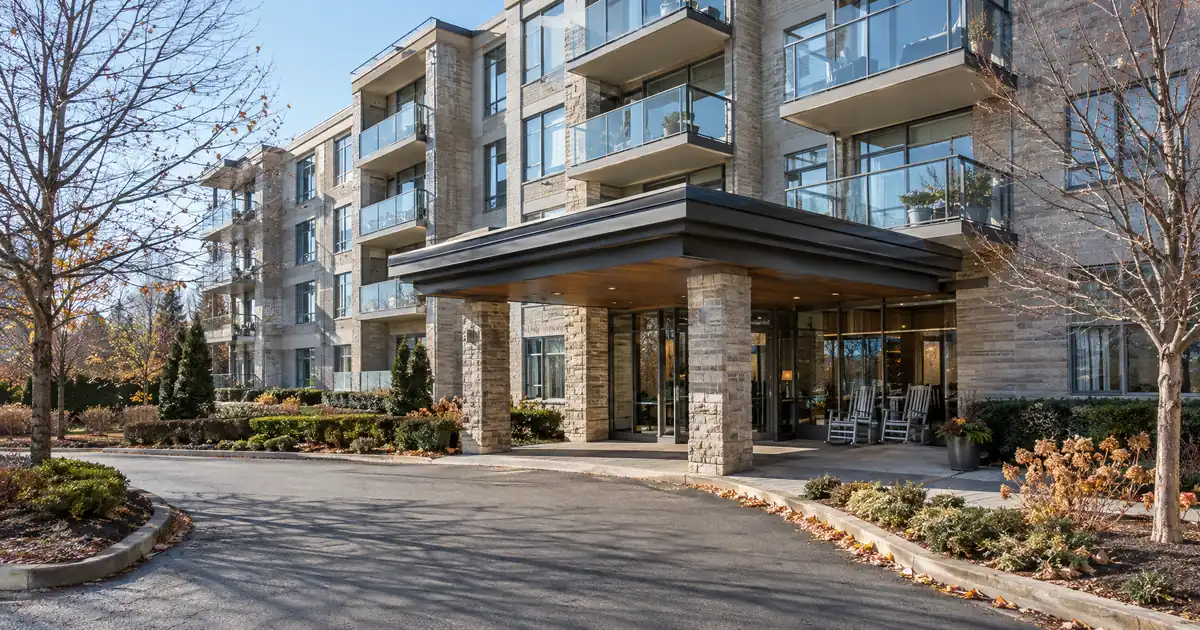
The Quick Read: Single-unit approval lets an FHA lender approve one unit in a condo building that is not on the FHA-approved list. The lender submits the request, the HOA or management company supplies the building data, and HUD’s project tests decide the outcome. Your own credit and income are underwritten separately. A condo that passes both can be financed with FHA, subject to lender guidelines and full file review.
What Is Single-Unit Approval?
Single-unit approval (often called SUA, and once nicknamed “spot approval”) is approval of one condo unit in a project that has no FHA approval. HUD’s Handbook 4000.1 glossary defines it in nearly those words.
FHA payment estimate
Starting assumptions reflect an example price and the FHA minimum investment. Replace them with your own figures.
Editable benchmark: 7.32% as of October 22, 2026 · Freddie Mac 30-year average via FRED®. A conventional market reference, not an FHA loan quote.
Illustrative starting assumptions: a $350,000 price, the FHA minimum investment as the down payment, a thirty-year term at the current Freddie Mac benchmark, and property taxes and insurance estimated at typical national rates. Every field is editable.
Illustrative estimate only — not a Loan Estimate, approval, quote, or commitment to lend. The rate field carries the weekly Freddie Mac thirty-year conventional benchmark, a market reference and not an FHA loan quote; your rate is set by the lender at lock. FHA mortgage insurance follows HUD’s published schedule for the term, leverage and loan size entered; taxes, insurance and dues are editable estimates; closing costs are not included; county loan limits are not checked here. Licensed in sixteen states for consumer mortgages. Lendmire is not affiliated with or acting on behalf of FHA, HUD, or the federal government.
Why does it exist? Before HUD’s 2019 condo rule, “spot loans” on non-approved buildings were largely unavailable. The National Association of Realtors said that sharply cut the condo supply open to FHA buyers. SUA reopened the door to many more buildings.
Here is the key point. SUA approves a unit, not the building. Approval of your unit does not carry over to the next buyer down the hall, and it does not put the building on the approved list.
Across the wholesale lenders whose FHA loan programs I arrange, the pattern is consistent. Buyers fall in love with a condo first and ask about financing second. Reverse that order, and you avoid most of the heartbreak.
Key Takeaways
- SUA works for existing, completed projects that are not FHA-approved.
- The building must pass project-level tests, and so must you.
- Only the lender can file the request, but the HOA must cooperate.
- A building already at its FHA limit cannot approve another unit.
- Check eligibility before you pay for an appraisal or inspections.
Which Condos Qualify for SUA?
A unit qualifies only if the building clears four gates. HUD’s FHA Condominiums page lists them:
- The project is not already FHA-approved.
- The project is complete and ready for occupancy.
- The project has at least five dwelling units.
- The unit is not a manufactured home.
Clear those and the building still has to meet a subset of the full project-approval tests. These cover how many units already carry FHA insurance, how many units are owner-occupied, and the project’s financial health.
The FHA concentration limit is the one that surprises people. In a project with 10 or more units, no more than 10 percent of the units may be FHA-insured. In a project with fewer than 10 units, the limit is two FHA-insured units. HUD’s FHA Connection help page confirms both limits. Compare that to approved projects, where HUD’s 2019 announcement set the FHA cap at 50 percent. The generous cap belongs to approved buildings, not SUA.
Some buildings also fail on the numbers HUD collects: units behind on dues, one owner holding too many units, thin reserves, or heavy commercial space. Details vary by lender, since lenders may add their own rules on top of HUD’s.
How Does the SUA Process Work, Step by Step?
The process runs in a set order, and each person has a job. Here is the sequence.
1. You pick a condo and the lender checks its status. The lender looks for an existing FHA approval. If there is none, it tests SUA eligibility.
2. The lender requests the FHA case number and submits Form HUD-9991. The lender files it with the case number request. Per HUD’s help page, a project record is created for the unit if one does not exist. You, your agent and the HOA cannot file it.
3. The HOA or management company completes its part. The questionnaire is filled out by the association. The lender must use information gathered within the last 90 days from verifiable sources, per HUD’s form instructions.
4. The lender gathers the document package. HUD’s required documentation list includes the signed form. It collects FHA concentration, owner-occupancy, individual owner concentration, units in arrears, the reserve balance and the association’s prior-year income and expense statement. HUD notes a project may face further requirements.
5. Insurance is reviewed. HUD has a dedicated section for the added hazard and flood insurance requirements on SUA files.
6. You are underwritten and the unit is appraised. Your file runs through the automated findings or manual review, as with any FHA loan. The unit must meet FHA property standards.
7. The file closes only if the package stays valid. The approval depends on the paperwork holding up and the building staying under its FHA limit.
Who does what? The lender files and verifies. The HOA supplies the building facts. You and your agent keep the HOA moving. HUD’s Handbook update stresses that the lender is responsible for verifying all SUA requirements, so a lender cannot simply wave a file through.
Does Your Own Loan Change Under SUA?
Yes, in one way that matters. A HUD transmittal states that a manually underwritten SUA mortgage has a maximum 90 percent loan-to-value (LTV), which is the loan amount as a share of the home’s value. The takeaway is that higher leverage generally needs an automated approval. Confirm exact wording with your lender.
Now the program envelope. Across the wholesale programs I place FHA files with, purchase financing reaches 96.5% LTV with a 3.5% minimum investment, starting at a 580 decision credit score. HUD has a lower tier for scores of 500 to 579, but the network I work with does not reach below 580. That is the standard purchase envelope; an SUA file still has to clear the project tests on top of it. Leverage, reserves, and pricing vary by lender and program; the final terms follow the full file review.
Mortgage insurance works as it does on any FHA purchase. There is an upfront premium of 1.75% of the base loan, which can be financed. There is also an annual premium between 0.15% and 0.75% of the balance, depending on term, loan amount and LTV. On a thirty-year loan above 90% LTV, the annual premium lasts for the term. At or below 90%, it ends after eleven years.
Ratios start at 31/43 (housing to total debt) with no compensating factors. Documented factors can reach 40/50 at the top tier. The automated finding governs most files. County loan limits apply, and they change every year.
All of this is subject to lender guidelines and full file review, and none of it is a commitment to lend.
What Should You Check Before Making an Offer?
Test the building before you spend money on it. A quick triage saves the most grief.
| Check | What the lender looks at | Fixable? |
|---|---|---|
| Already FHA-approved? | Existing FHA Condo ID | Not an issue if yes |
| Unit count | Five or more units | No |
| Completion | Project complete, ready for occupancy | No |
| FHA concentration | 10% of units, or two if under 10 units | Only if other FHA units sell |
| Owner-occupancy | Share of owner-occupied units | Rarely |
| HOA finances | Reserves, arrears, income and expenses | Sometimes |
Ask your agent to get the HOA’s contact details for the questionnaire early. Then ask your lender to run eligibility before the appraisal and inspections. A building at its FHA cap cannot approve another unit, and finding that out after you have paid for an appraisal is an expensive lesson.
Also write your purchase contract with the uncertainty in mind. Ask your agent about a financing contingency and about deadlines that allow time for the HOA to respond. Approval is not guaranteed, so the contract should not assume it.
How Do You Work With the HOA?
The HOA is the most common bottleneck. The questionnaire is filled out by the association or its management company, and they have no obligation to rush a stranger’s loan. A slow or incomplete response can stall the file.
Make it easy for them:
- Ask your agent to contact the manager as soon as you are under contract.
- Have your lender send the form and a clear list of what is needed.
- Follow up politely and often. Managers handle many requests at once.
- Ask whether there is a fee for the paperwork. HOA documents may carry fees, so budget for the possibility.
If the HOA refuses outright, SUA is dead for that building. Your options then are another building, a different loan type, or walking away.
What Does SUA Mean for Your Monthly Budget?
HOA dues, special assessments and reserves all feed into your housing expense and debt ratios. The same figures HUD collects for project eligibility also signal how stable those dues may be. A building with thin reserves and many units behind on dues may be one to question even if it passes.
Where the General Rule Breaks
The basic rule has named exceptions worth knowing.
- Small buildings. Under 10 units, the limit is two FHA-insured units rather than a percentage.
- Ineligible buildings. Projects with fewer than five units and manufactured-home condos are out.
- Already-approved buildings. If the project is FHA-approved, the loan-level path applies and there is no SUA cap to worry about.
- FHA-to-FHA streamlines. When you refinance an existing FHA loan with a streamline, the questionnaire is not required, per HUD’s help page. The same is true for HUD REO purchases.
- Lender overlays. HUD allows lenders to be stricter. Some lenders do not process SUA at all, and others add their own conditions. Ask early.
Related reading: Lendmire’s piece Does an FHA Loan Work on a Condo Without Project Approval? covers the same ground from the buyer’s side.
What If Single-Unit Approval Is Denied?
You have four paths. A denial does not mean you cannot buy.
1. Fix it. If the problem is a missing document or an incomplete HOA response, resubmit.
2. Switch lenders. A different lender may process SUA differently, though the HUD limits stay the same.
3. Use another loan type. A conventional loan has its own condo rules and may fit better, depending on your down payment and credit.
4. Walk away. If the building is at its FHA cap or fails the project tests, no amount of effort fixes it.
This is why the contract matters. A financing contingency lets you exit cleanly.
A Worked Example
Picture a first-time buyer with a 640 decision score who wants a unit in a 40-unit building not on the FHA list. At 40 units, the 10 percent limit means no more than four FHA-insured units.
Her lender checks eligibility first. The building has two FHA loans, so there is room. The lender sends the questionnaire to the management company, which returns it with reserve and arrears data. The lender reviews it and runs her file through the automated findings. At 96.5% financing, the file clears both the project tests and her own underwriting.
Now change one fact. If four units already carried FHA insurance, her unit could not be approved. Same buyer, same credit, different answer. That is the difference between borrower approval and building approval.
What Does SUA Mean When You Sell?
When you sell, the next FHA buyer will need a fresh review. Your approval does not transfer. Whether that buyer can use FHA depends on the building’s FHA count at that time. That is general reasoning, not a HUD rule, but it is worth weighing if you may sell within a few years.
Key Terms Defined
Single-unit approval (SUA): FHA approval of one condo unit in a building that is not on the FHA-approved list.
HUD-9991: The condo questionnaire the lender submits, with part of it completed by the HOA or management company.
FHA concentration: The share of units in a building that carry FHA-insured loans.
LTV: Loan-to-value, the loan amount as a percentage of the home’s value.
Decision credit score: The score the lender uses to decide your FHA eligibility.
How Do You Choose a Lender for SUA?
Not every lender handles SUA, and some add stricter rules. Ask these questions:
- Do you process single-unit approvals on this loan type?
- Will you check the building’s eligibility before I pay for an appraisal?
- Do you add rules beyond HUD’s?
- Who contacts the HOA, and what do you need from me?
A mortgage broker can compare how different wholesale lenders treat SUA files. Lendmire is a broker, not a lender, so the lender’s own review decides each file.
If you are buying a home and want to see whether an FHA loan fits your file, Lendmire can help you compare the options and what each one asks of the file.
Frequently Asked Questions
Can I apply for single-unit approval myself?
No. Only the lender can submit the request. You and your agent can help by contacting the HOA early, but the lender files the form and verifies the information.
Does approval carry over to the next buyer?
No. SUA approves one unit for one loan. The next buyer needs a new review, and the building’s FHA count at that time decides the result.
What if the condo is already FHA-approved?
Then SUA is not needed. The loan-level path applies, and the higher FHA concentration cap for approved projects governs instead of the SUA limit.
Can a condo fail even if my credit is strong?
Yes. Building approval and borrower approval are separate. A building at its FHA limit, with too many units behind on dues or too little owner-occupancy, can fail no matter how strong you are.
Does a lower credit score change anything?
Yes, it can. HUD ties lower scores to lower maximum leverage, which means a larger down payment. The wholesale programs I place FHA files with start at a 580 decision score, subject to lender guidelines.
For your own numbers, request a scenario review with Lendmire.
About Lendmire
Lendmire (NMLS# 2371349) is a mortgage brokerage serving homeowners and home buyers in 16 states. FHA, VA, conventional and jumbo purchase and refinance loans are arranged through wholesale lending channels; Lendmire brokers the financing and the lender underwrites each application. Scotsman Guide named Lendmire a Top Mortgage Workplace in both 2025 and 2026.
Get Started
Ready to find the right loan for you?
In about 30 seconds you can review financing options available for your home or investment property. No commitment required.
Informational only. Not a Loan Estimate, approval, or commitment to lend. Program availability and eligibility are subject to lender guidelines, credit approval, property review, and underwriting.
References
2. National Association of Realtors
4. HUD – FHA Connection Condominiums Help
5. HUD Archives – 2019 Condo Rule Press Release
6. HUD – Form HUD-9991 Instructions
7. HUD: FHA Sua Condo Required Docs
This article is part of Lendmire’s FHA loan program — full qualification details, guidelines, and scenarios live on the program page.
Related reading: Can a 2-4 Unit Primary Home Get an FHA Streamline Without an Appraisal? · FHA Non-Occupant Co-Borrower Rules on a 2-4 Unit Home · Can You Buy a Condo With an FHA Loan and Minimum Down?
Brandon Miller
Founder & CEO, Mortgage Loan Originator, Lendmire LLC
- Mortgage Loan Originator · NMLS# 1129696 · Verify on NMLS Consumer Access
- North Carolina Real Estate Broker · License# 343312 · Verify on NCREC
- North Carolina Insurance Producer · License# 19053198 · Property, Casualty, Life, Health · Verify on NAIC SBS
- Lendmire LLC · Firm NMLS# 2371349 · Verify firm licensure
Legal disclosures. Lendmire (NMLS# 2371349) is a state-licensed mortgage brokerage that arranges financing through wholesale lender relationships. Lendmire is not a direct lender, depository institution, or registered financial advisor. The discussion above is general informational content about real estate financing — it is not financial, legal, or tax advice, and readers should consult licensed professionals for guidance on their individual circumstances. Loan inquiries are subject to lender underwriting; this article does not represent a commitment to lend. Loan terms, rates, and qualification standards vary by borrower, property, and state, and are subject to change at any time. Equal Housing Opportunity. NMLS Consumer Access: nmlsconsumeraccess.org.