
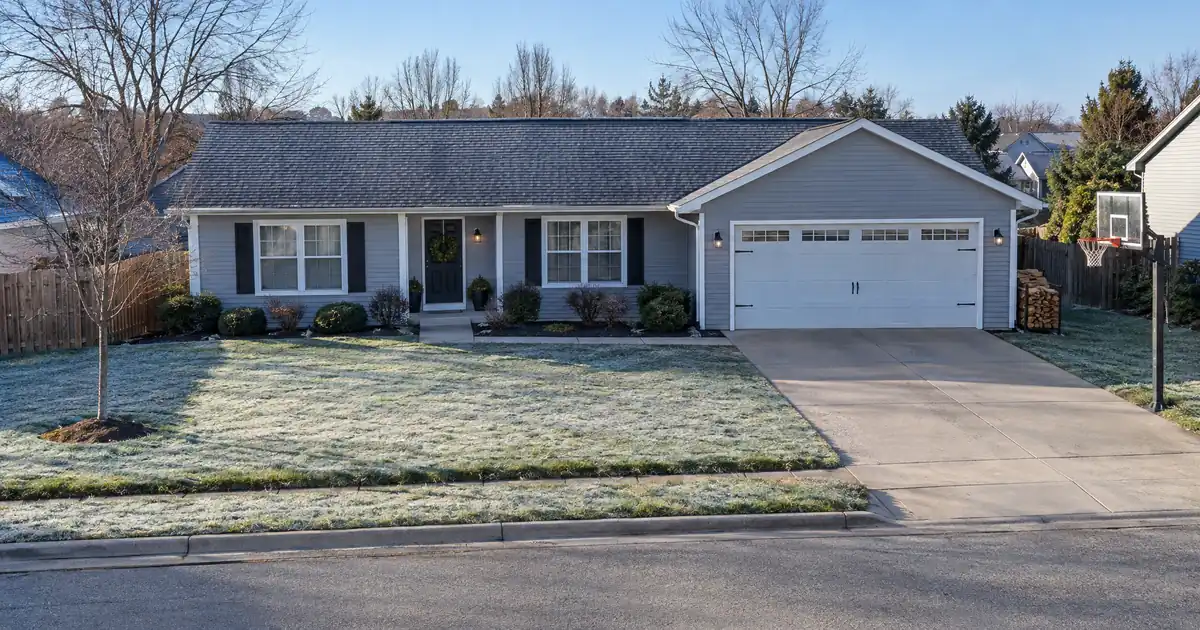
The Quick Read: Yes. A primary home is the occupancy type conventional loans treat most favorably, with the highest allowed leverage of any property use. You qualify on credit, debt-to-income ratio, down payment, the appraised value, and a promise to live in the home. Loan size matters too, because the loan must stay at or under the conforming limit for your county, subject to lender guidelines and full file review.
What Do “Conventional” and “Primary Home” Mean?
A conventional loan is a mortgage that is not part of a government program like FHA, VA, or USDA. Most follow the standards set by Fannie Mae and Freddie Mac, the two companies that buy mortgages from lenders. Loans that meet those standards are called conforming.
Conventional payment estimate
The starting figures are an example price at the first-time buyer’s minimum down payment. Replace them with yours.
Editable benchmark: 7.32% as of October 22, 2026 · Freddie Mac 30-year average via FRED®. A conventional market reference, not a conventional loan quote.
Estimate seeded at the low end of Fannie Mae’s published range (0.58%–1.86% a year); the insurer prices the actual premium on the score and the leverage. Applies only above 80% loan-to-value.
Illustrative starting assumptions: a $350,000 price, the first-time buyer’s minimum down payment, a thirty-year term at the current Freddie Mac benchmark, mortgage insurance at the low end of Fannie Mae’s published range, and property taxes and insurance estimated at typical national rates. Every field is editable.
Illustrative estimate only — not a Loan Estimate, approval, quote, or commitment to lend. The rate field carries the weekly Freddie Mac thirty-year conventional benchmark, a market reference and not a conventional loan quote; your rate is set by the lender at lock. The mortgage insurance figure is an editable estimate seeded from Fannie Mae’s published typical range, not a premium quote; the insurer prices the actual premium, and the cancellation month assumes scheduled payments with no extra principal and no change in value. Taxes, insurance and dues are editable estimates; closing costs are not included. Conforming loan limits apply by county. Licensed in sixteen states for consumer mortgages.
A primary home, also called a principal residence, is the place you live most of the year. Freddie Mac’s guide treats a loan as secured by a primary residence when at least one borrower occupies all or part of the property as a primary residence. Note the words “all or part.” That detail matters for duplexes and house hacking, which come up below.
Lenders sort every loan into three occupancy types: primary home, second home, and investment property. Occupancy decides the leverage you can use and how the loan is priced. The other two types get less leverage because the agencies see more risk in them.
Why Does a Primary Home Get the Best Terms?
Because it is the lowest-risk use. People tend to protect the roof over their own heads. The agencies reward that with higher loan-to-value limits (LTV, the loan as a percentage of the home’s value) and lower pricing adjustments.
Here is how the purchase limits stack up across the wholesale programs I place files with:
| Occupancy | Max LTV on purchase |
|---|---|
| Primary, first-time buyer, 1 unit, fixed | 97% |
| Primary, other buyers, 1 unit | 95% |
| Primary, 2-4 units | 95% |
| Second home | 90% |
| Investment, 1 unit | 85% |
| Investment, 2-4 units | 75% |
The 97% line applies when at least one borrower has had no ownership interest in a residence in the previous three years. These figures line up with the Fannie Mae Eligibility Matrix, which sets limits by occupancy, unit count, and transaction. Details and footnotes apply, so every figure is subject to lender guidelines.
Read the table again and you see the point. Occupancy alone moves the maximum from the highest loan-to-value line down to the lowest in the worst case. That gap is exactly why lenders check it. Every figure here varies by lender and program — guidelines, property type, leverage, and credit profile all apply.
How Much Do You Need Down?
You do not need 20%. That is probably the most persistent myth in home buying. Twenty percent down avoids mortgage insurance, but it is not an entry requirement.
On a one-unit primary home with a fixed rate, a first-time buyer can go to 97% LTV, which is 3% down. Everyone else on a primary home can typically go to 95% LTV, or 5% down. A two- to four-unit primary home also reaches 95% LTV on a purchase.
HomeReady and Home Possible are the agencies’ affordable-lending programs, and both are for primary residences only. They carry an income limit of 80% of area median income.
What Does Mortgage Insurance Do?
Mortgage insurance applies on conventional loans above 80% LTV. It protects the lender, not you. It adds to your monthly cost, so it belongs in your budget from day one. Final terms depend on lender guidelines, property type, leverage, and the borrower’s complete credit picture.
Here is the good news. It does not last forever, unlike the insurance on an FHA loan. You can request cancellation when your balance reaches 80% of the home’s original value. You need a good payment history, no second liens, and no drop in the home’s value. The servicer must end it automatically at 78%. That is the Homeowners Protection Act at work, and the CFPB explains the cancellation conditions.
Published typical annual premiums run from 0.58% to 1.86% of the loan balance. That is a range, not a quote. Your actual cost depends on your credit score, your down payment, and the loan itself.
Some lenders offer a no-mortgage-insurance option at a higher interest rate. Which one costs less depends partly on how long you plan to stay. A loan officer can lay both side by side.
What Do You Need to Qualify?
Four things drive most files: credit, debt-to-income ratio, reserves, and the appraised value.
| Factor | What the lender looks at |
|---|---|
| Credit | Decision score of 620 or higher on wholesale programs |
| Debt-to-income (DTI) | Total monthly debts versus income |
| Reserves | Savings left after closing, set by the matrix |
| Value | Appraisal, or value acceptance on some loans |
Credit. Across the wholesale conventional programs, the floor is a 620 decision score. That rises to 640 on an adjustable rate under manual underwriting. Some lenders set a higher floor. A higher score also lowers your mortgage insurance cost.
Debt-to-income. DTI compares your total monthly obligations, including the new mortgage payment, to your qualifying income. Per the Fannie Mae Selling Guide on debt-to-income ratios, loans run through automated underwriting can go to 50%. Pricing and available terms vary by lender, borrower profile, property type, and full underwriting review.
Automated versus manual. Most files go through automated underwriting, and its finding governs. Manual underwriting is the backup path for files the system will not approve, and it is stricter.
Reserves. The matrix sets reserves by transaction type and unit count. Cash left over after closing helps most on the borderline files.
Past credit trouble. The agencies set waiting periods. They are four years from a chapter 7 discharge, seven from a foreclosure, and four from a short sale or deed-in-lieu. Documented extenuating circumstances can shorten them.
Does the Home Need an Appraisal?
Usually, yes. Fannie Mae requires a signed, complete appraisal on most loans. The appraiser reports market value, condition, and marketability.
Some loans qualify for value acceptance, where the lender skips the appraisal, per the Selling Guide on lender responsibilities. It generally depends on a usable earlier appraisal in the agency’s data. If that prior appraisal was flagged as overvalued or could not be scored, you are back to a full appraisal. You cannot count on it, so do not plan around it.
What Are the Occupancy Rules?
You must move in within 60 days of closing and then live there for at least one year. That comes from the security instrument, the mortgage document you sign, which carries the agencies’ standard clause. Exceptions exist. Freddie Mac’s occupancy waiver chapter covers the clause and a waiver process.
Two clocks run here. One is the move-in deadline. The other is the minimum stay. Keep them separate.
You declare your intent on the application. The lender checks occupancy during quality control after closing. Claiming a primary home to get better terms when you plan to rent it out is misrepresentation. Do not do it. If your plans are truly uncertain, say so to your loan officer before you apply, because another loan type may fit better.
A few related points:
- One borrower must occupy. Fannie Mae requires only one borrower to occupy and take title, with exceptions where guarantors or co-signers are involved.
- Military service is covered. A service member who cannot occupy because of orders can still count as an owner-occupant when the lender documents it.
- Family buying for family. A child buying for a parent who cannot qualify alone is treated as the owner-occupant. So is a parent buying for a disabled adult child. These specifics are subject to lender guidelines and a full review of property, leverage, and credit.
Can You Buy a Duplex, Condo, or Mixed-Use Home?
Yes to all three, with conditions.
Two- to four-unit homes. You live in one unit and rent the others. That is still a primary home, and purchase leverage reaches 95%. Freddie Mac’s 2-4 unit page says rental income from the other units can count toward qualifying. It also lists a 45% maximum DTI for manual underwriting. Lendmire’s piece Conventional Cash-Out Refinance Requirements on a 2-4 Unit Primary Home covers what changes if you refinance later.
Condos. They are eligible, but the building’s own finances and rules get reviewed alongside yours. A condo file has two things to approve instead of one.
Home with a business space. Fannie Mae allows it when the home is a one-unit principal residence you occupy, you own and run the business, and the property is primarily residential.
Manufactured homes. Leverage is lower on a primary residence, and single-width homes are not eligible for cash-out. Check current rules before counting on one.
How Big Can the Loan Be?
Each county has a conforming limit. The FHFA sets a baseline limit and raises the ceiling in high-cost areas, to as much as 150% of the baseline. Limits also rise with unit count.
Stay at or under your county’s limit and the loan fits the standard program. Go over and it becomes a jumbo loan. On the wholesale jumbo lanes, the floor is a 660 decision score, leverage runs to 90%, loans reach $5,000,000, and the ratio ceiling is 50% on fixed lanes. Check your county’s figure before you shop.
When Is Conventional the Wrong Choice?
Conventional is not the only owner-occupied path. FHA, VA, and USDA are separate programs, and one may fit better.
| Your situation | What to compare |
|---|---|
| Credit score near the floor | FHA may be more forgiving |
| Veteran or active duty | VA, with its own funding fee |
| Strong credit, 5%+ down | Conventional, with cancellable mortgage insurance |
| Plan to rent the home within a year | Talk first; occupancy rules apply to all of these |
The CFPB’s shopping guide suggests asking about a conventional loan with 5% or more down, and about an FHA loan for a small down payment. Brokers earn their keep here. I can put several programs in front of the same file, which a single lender cannot. If you are a veteran weighing options, Lendmire’s article VA Cash-Out vs Staying Conventional on a 2-4 Unit Primary Home shows how that trade works.
What If Life Changes After You Buy?
Plans change. Here is how common cases play out.
- A job relocation in year one. The one-year clause has stated exceptions, and a waiver process exists. Talk to your servicer before you move, not after.
- A co-borrower who won’t live there. Often fine under the Fannie Mae rule.
- Buying before you sell. Your old mortgage counts in your DTI. That is where most of these files get tight.
- Renting it out later. After the occupancy period, many owners do. Lenders look at what you said at application and what you did after.
- House hacking. Live in one unit of a duplex, as covered above.
What Can Go Wrong on a Primary-Home File?
Denials usually come from a short list. DTI runs over the ceiling once the new payment is added. A credit event sits inside the waiting period. The appraisal comes in under the price. The property fails a condition standard. Or the occupancy story does not match the paperwork. Most are fixable early and painful late.
Key Terms Defined
- Conforming loan: a mortgage that meets Fannie Mae and Freddie Mac standards, including the county loan limit.
- LTV (loan-to-value): the loan amount as a percentage of the home’s value.
- DTI (debt-to-income): your total monthly debt payments as a percentage of your gross monthly income.
- Mortgage insurance: coverage that protects the lender on loans above 80% LTV.
- Value acceptance: an option on some loans where the lender skips the appraisal.
- Security instrument: the mortgage or deed of trust you sign, which contains the occupancy promise. Terms depend on the lender’s guidelines, the property type, the leverage, and a full review of the credit profile.
Frequently Asked Questions
Do I need 20% down for a conventional loan on my primary home?
No. A first-time buyer on a one-unit home with a fixed rate can go to 97% LTV, which is 3% down. Other buyers typically go to 95% LTV. Putting 20% down only removes mortgage insurance. All figures are subject to lender guidelines and full file review.
Can I move out and rent the home right after closing?
Not without an exception. You must occupy within 60 days and generally stay at least a year. Waivers exist for situations like relocation, but misrepresenting your plans at application is a serious problem.
Does every borrower have to live in the home?
Not always. Fannie Mae requires one borrower to occupy and take title. The exact numbers vary by lender and program and follow a full review of property, leverage, and credit.
Is an appraisal always required?
No. Some loans qualify for value acceptance, which skips it. That depends on a usable prior appraisal, so most buyers should plan for a full appraisal.
Can I deduct my mortgage interest?
Tax treatment can depend on your situation; borrowers should speak with a qualified tax professional before relying on any deduction or credit.
If you are buying a home and want to see whether a conventional loan fits your file, Lendmire can help you compare the options and what each one asks of the file. Our conventional loan programs page is a good place to start. Nothing here is a commitment to lend.
For your own numbers, request a scenario review with Lendmire.
About Lendmire
Lendmire is a mortgage brokerage (NMLS# 2371349) licensed for consumer mortgage lending in 16 states, arranging FHA, VA, conventional and jumbo purchase and refinance loans through a wholesale lending network. Eligibility is determined by the lender on each file. Scotsman Guide named Lendmire a Top Mortgage Workplace in both 2025 and 2026.
Get Started
Ready to find the right loan for you?
In about two minutes you can review financing options available for your home or investment property. No commitment required.
Informational only. Not a Loan Estimate, approval, or commitment to lend. Program availability and eligibility are subject to lender guidelines, credit approval, property review, and underwriting.
References
2. Fannie Mae Eligibility Matrix
3. CFPB: When Can I Remove PMI
4. Fannie Mae Selling Guide B3-6-02, Debt-to-Income Ratios
5. Fannie Mae Selling Guide B4-1.1-02, Lender Responsibilities
7. FHFA 2026 Conforming Loan Limits
This article is part of Lendmire’s conventional loan program — full qualification details, guidelines, and scenarios live on the program page.
Related reading: How Much Down Payment a Conventional Loan Needs by Buyer and Home Type · How to Remove PMI Without Refinancing a Conventional Loan · How a Low Appraisal Hits a Conventional Loan on a Home Needing Repairs
Brandon Miller
Founder & CEO, Mortgage Loan Originator, Lendmire LLC
- Mortgage Loan Originator · NMLS# 1129696 · Verify on NMLS Consumer Access
- North Carolina Real Estate Broker · License# 343312 · Verify on NCREC
- North Carolina Insurance Producer · License# 19053198 · Property, Casualty, Life, Health · Verify on NAIC SBS
- Lendmire LLC · Firm NMLS# 2371349 · Verify firm licensure
Important disclosures. Lendmire (NMLS# 2371349) is a licensed mortgage brokerage. Lendmire is not a direct lender, depository institution, or financial advisor. All loan inquiries are subject to lender underwriting; this article does not constitute a commitment to lend. Rates, terms, and program guidelines are subject to change without notice and vary by borrower profile, property type, and state. Information in this article is general in nature and is not financial, legal, or tax advice. Equal Housing Opportunity. NMLS Consumer Access: nmlsconsumeraccess.org.