
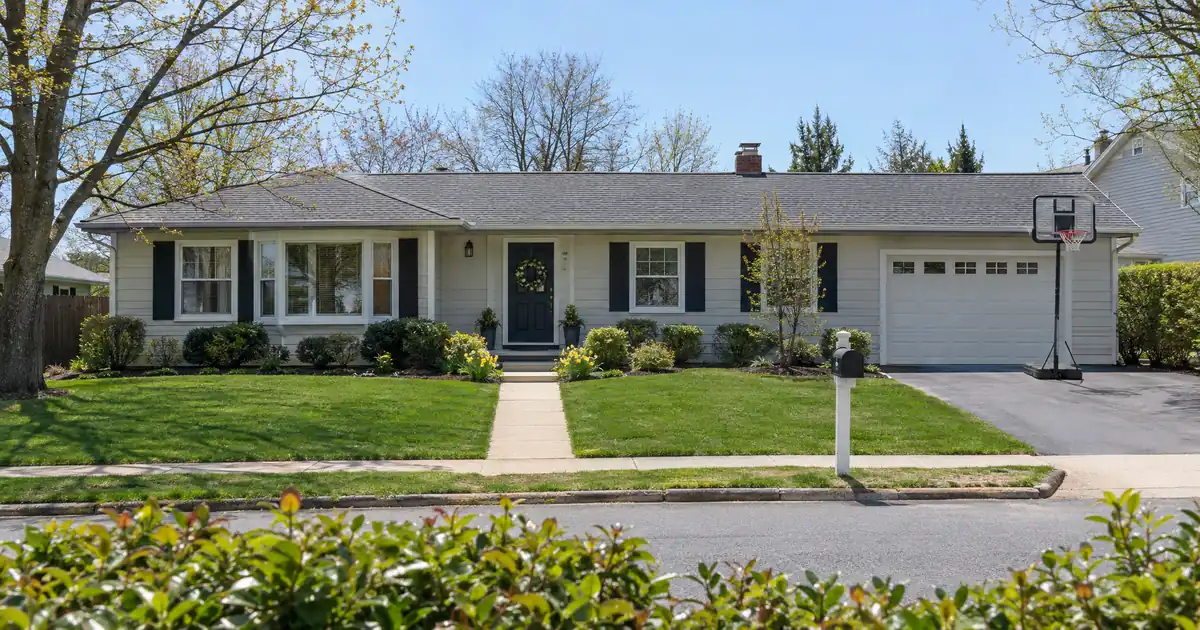
The Quick Read: Yes, once the first FHA loan is paid off or sold, FHA is available to you again. FHA has no lifetime limit. The restriction is on holding more than one FHA-insured mortgage at the same time. If the first loan is still open, a second FHA loan is allowed only under a short list of HUD exceptions, and even then the new loan gets full underwriting with both housing payments in view.
What Is the Actual Rule?
The rule is one open FHA loan at a time, not one FHA loan per lifetime. FHA insures loans on a borrower’s principal residence. It was not built to help someone stack up several insured mortgages.
FHA payment estimate
Starting assumptions reflect an example price and the FHA minimum investment. Replace them with your own figures.
Editable benchmark: 7.32% as of October 22, 2026 · Freddie Mac 30-year average via FRED®. A conventional market reference, not an FHA loan quote.
Illustrative starting assumptions: a $350,000 price, the FHA minimum investment as the down payment, a thirty-year term at the current Freddie Mac benchmark, and property taxes and insurance estimated at typical national rates. Every field is editable.
Illustrative estimate only — not a Loan Estimate, approval, quote, or commitment to lend. The rate field carries the weekly Freddie Mac thirty-year conventional benchmark, a market reference and not an FHA loan quote; your rate is set by the lender at lock. FHA mortgage insurance follows HUD’s published schedule for the term, leverage and loan size entered; taxes, insurance and dues are editable estimates; closing costs are not included; county loan limits are not checked here. Licensed in sixteen states for consumer mortgages. Lendmire is not affiliated with or acting on behalf of FHA, HUD, or the federal government.
That distinction explains most of the confusion. Borrowers hear “only one FHA loan” and assume the door closes after the first purchase. It doesn’t. Sell the home, pay the loan off, or refinance out of FHA, and the next purchase can be an FHA loan again, subject to lender guidelines and full file review.
The CFPB describes FHA as a loan-insurance program: FHA insures approved lenders against loss if the homeowner defaults, and the cost of that insurance is passed to the homeowner. Standards are generally more flexible than conventional loans. That’s the reason the program is aimed at people buying the home they live in.
One caution on wording: the practical effect of the rule is what matters, and the limit applies to loans open at the same time.
Lendmire’s FHA loan programs page covers the program basics. Lendmire is a mortgage broker that arranges FHA loans through wholesale lenders, so the points below come from what actually shows up in files.
Key Terms Defined
Principal residence: The home you actually live in as your main address, not a vacation home or rental.
Non-occupying co-borrower: A person on the loan and the title who does not live in the home.
Loan-to-value (LTV): The loan balance divided by the home’s appraised value.
Roster appraiser: An appraiser approved to do FHA appraisals.
Mortgagee Letter: A HUD notice that sets or changes policy for FHA lenders.
How Do You Use FHA Again After the First Loan Is Gone?
Selling, paying off, or refinancing out of the first FHA loan clears the way. The lender asks one screening question first: is any FHA loan still open? If the answer is no, you apply as a normal FHA borrower.
Standard FHA terms apply again. Across the wholesale programs Lendmire places files with, a purchase can reach 96.5% financing with a 3.5% minimum investment at a decision score of 580 or higher. Ratios start at a base pair of 31/43 and can reach 40/50 with documented compensating factors, and the automated finding governs most files. Those figures are subject to lender guidelines and full file review.
Mortgage insurance applies again too. There is an upfront premium of 1.75% of the base loan, which is financed, plus an annual premium between 0.15% and 0.75% of the balance depending on term, loan amount, and LTV. On a thirty-year loan above ninety percent LTV, the annual premium lasts for the term. At or below ninety percent, it ends after eleven years. County loan limits apply and change every year.
The sequencing problem is where files stumble. If you’re selling the first home to buy the next one, the payoff has to show up in the file. A lender wants a settlement statement or payoff evidence showing the old FHA loan is gone, not a plan to pay it off later. Buy-first, sell-later is the version that needs an exception.
For a fuller walk-through of that path, see Lendmire’s piece How to Use an FHA Loan a Second Time After Selling Your First Home.
Can You Have a Second FHA Loan While the First Is Still Open?
Only under HUD’s listed exceptions. HUD’s FHA Answers page reproduces the Handbook 4000.1 exceptions, and HUD’s Handbook 4000.1 page is the controlling policy source lenders follow. The handbook table calls these the only circumstances for an additional FHA mortgage.
| Exception | Trigger | What the lender wants to see | Common pitfall |
|---|---|---|---|
| Relocation | Employment-related move to an area more than 100 miles away | Job offer or transfer letter, employment verification, proof of distance | Moves under 100 miles don’t count |
| Family size | Increase in legal dependents; current home no longer fits | Proof of the added dependent; current appraisal | Existing loan must be at 75% LTV or less |
| Leaving a jointly owned home | You leave with no intent to return; a co-borrower stays | Evidence the co-borrower remains and you’re leaving permanently | Treating a temporary move as a departure |
| Non-occupying co-borrower | You’re on someone else’s FHA loan but don’t live there | Evidence of your role on that loan | Assuming co-signing used up your eligibility |
The document list for relocation is typical of what lenders ask for, not an HUD-mandated checklist. Each lender can add its own overlay.
Relocation
The move must be for an employment-related reason, and the new home must be more than 100 miles from the current one. You don’t have to sell the existing FHA home. A job change across town doesn’t fit. Neither does wanting to be closer to family without a work reason.
Increase in family size
You need an increase in legal dependents, and the current home must no longer meet the family’s needs. The current home’s LTV has to be 75% or less, measured on the outstanding balance and a current appraisal. If you’re above that, paying the balance down to the line is how some borrowers get there. That means cash out of pocket before the second purchase.
Leaving a jointly owned home
If you co-own with someone who stays and you leave with no intent to return, you may be able to finance your own new principal residence with FHA. The file has to show who stays and that the departure is real.
Non-occupying co-borrower
A parent or relative who co-signed as a non-occupant can still get their own FHA loan on their own principal residence. Lendmire’s piece Can You Use a Second FHA Loan When You Already Have One? goes deeper on the concurrent path.
Exception Met Doesn’t Mean Approved
Fitting an exception gets you past the screening step. It doesn’t approve the loan. The lender still underwrites income, debts, credit, and repayment ability, and the payment on the first home generally counts in the debt picture unless HUD’s rules let it be offset or removed.
This is where files fail. Borrowers pass the exception test, then miss on the ratios because two housing payments don’t fit the 31/43 base pair, or even the higher documented-factor limits. The exception answers a policy question. Debt-to-income answers an affordability question.
Budget for the stack: two mortgages, two sets of taxes and insurance, and mortgage insurance on each FHA loan. A second purchase also means new closing costs, a new appraisal, and a new upfront premium.
What about rent from the home you’re leaving?
Rental income can help, but it has to be documented. HUD’s Mortgagee Letter 2023-17 covers the case where you have no rental history on the property, including one you’re vacating. The lender must get an appraisal showing market rent, and the appraisal must show you have at least 25 percent equity in the property. That rent appraisal doesn’t have to be done by a Roster appraiser. The lender documents the proposed rent with a small residential income property appraisal report and leases if available.
The letter dates from an earlier year, so a lender confirms the current handbook hasn’t changed it. A plan to “rent it out later” with no appraisal and no equity doesn’t count as income.
What Does Not Qualify?
Several common reasons feel like exceptions and aren’t.
- Downsizing, a better house, or a shorter commute. None of these is on HUD’s list.
- Turning the first home into a rental. Conversion alone creates no exception. You still need one of the four.
- Moving out after a year and buying again. The one-open-loan rule still applies while the first loan exists.
- A vacation home or investment property. FHA insures principal residences. Occupancy is what decides the leverage, and a home you won’t live in isn’t an FHA purchase.
- Treating a second lien as a second FHA loan. Borrowing against the same home is a different question from buying a second home. A refinance of the same home replaces the existing FHA loan rather than adding one.
Treat any claimed fifth exception with suspicion. HUD’s list has four.
Two Situations, Walked Through
These are illustrations without dollar figures.
Relocation. Say a borrower holds an FHA loan on a home and accepts a job in a city well over 100 miles away. The borrower keeps the first home and wants FHA on the new one. The file needs the transfer or offer letter, employment verification, and the distance. If the borrower wants the old home’s rent to help, the lender asks for the market-rent appraisal and the 25 percent equity showing. Then the borrower has to qualify with both payments, or with the old payment offset by documented rent. The exception was the easy part.
Growing family. Picture a couple with a legal dependent added to the household. The current home no longer fits. Their existing loan sits above 75% LTV on a current appraisal. Until the balance comes down to that level, the exception isn’t available. They have three options: pay down, wait, or sell the first home and use FHA again after the payoff. Leverage, reserves, and pricing vary by lender and program; the final terms follow the full file review.
Which Route Fits Your Situation?
| Your situation | Likely path | Tradeoff |
|---|---|---|
| Selling the first home before buying | Use FHA again after payoff | Timing: payoff must be evidenced |
| Moving over 100 miles for work, keeping the home | Relocation exception | Two payments in the debt picture |
| Added a dependent, home too small | Family-size exception | Existing LTV must be 75% or less |
| Co-owner staying in the home | Joint-ownership exception | Needs proof of permanent departure |
| Co-signed for someone else | Non-occupying co-borrower exception | Your own principal residence only |
| None of the above, first loan open | Sell first, or pay off, or refinance out of FHA | Slower sequence, cleaner file |
Refinancing out of FHA is a legitimate way to free yourself up, but it’s a separate transaction with its own costs. If you hold an FHA loan and want to reduce its cost, the FHA Streamline refinances an existing FHA loan with no appraisal, a limited credit review, and a net tangible benefit. The premium continues. That is a refinance, not a second loan.
Edge Cases Worth Knowing
Moving back. Older handbook language quoted in secondary sources says a borrower who moves back to the original area isn’t required to live in the original house, if the relocation met both tests. That language is dated. A lender confirms it against the current handbook.
Divorce or separation. The joint-ownership exception is the one that usually applies when one spouse leaves and the other stays on the existing loan. The file has to show who remains and that the departure is permanent.
Occupancy on the new home. The new home must be a principal residence. Lenders look for a documented intent to occupy and a timeline for moving in. Check the exact occupancy terms with your lender rather than relying on a number you saw online.
Other programs. Down-payment assistance and other HUD programs may carry their own rules. Check each program separately.
Appraisal. The new home gets a standard FHA appraisal by a Roster appraiser. HUD’s handbook glossary defines the appraiser as a Roster Appraiser giving an opinion of value to FHA, and notes the appraisal is not as comprehensive as a licensed home inspection.
What to Gather Before You Apply
- Evidence the first FHA loan is paid off, or the exception documents that apply.
- Current mortgage statement on the existing home.
- For relocation: offer or transfer letter and employment verification.
- For family size: proof of the added dependent and a current appraisal.
- For rent from the old home: the market-rent appraisal and equity evidence.
- Standard income, asset, and credit documents.
If you are buying a home and want to see whether an FHA loan fits your file, Lendmire can help you compare the options and what each one asks of the file.
Frequently Asked Questions
Is there a lifetime limit on FHA loans?
No. The limit is one open FHA-insured mortgage at a time. After a sale or payoff, FHA is available again, subject to lender guidelines and full file review.
Can I keep my first FHA home as a rental and buy another with FHA?
Not automatically. Renting out the first home creates no exception on its own. You’d still need to qualify under one of HUD’s exceptions, and the new home must be your principal residence.
Does downsizing or wanting a better house qualify?
No. Neither appears on HUD’s list. Relocation requires an employment-related move of more than 100 miles, and family size requires an increase in legal dependents.
If I fit an exception, am I approved?
No. The lender still reviews income, debts, credit, and your ability to carry both housing payments. Many files that fit the exception fail on the debt-to-income ratios.
Can a co-signer on my FHA loan get their own FHA loan?
Yes, in many cases. A non-occupying co-borrower may qualify for their own FHA loan on their own principal residence. This is one of HUD’s four exceptions, and the lender still underwrites them.
For your own numbers, request a scenario review with Lendmire.
About Lendmire
Lendmire is a mortgage brokerage (NMLS# 2371349) licensed for consumer mortgage lending in 16 states, arranging FHA, VA, conventional and jumbo purchase and refinance loans through a wholesale lending network. Eligibility is determined by the lender on each file. Scotsman Guide named Lendmire a Top Mortgage Workplace in both 2025 and 2026.
Get Started
Ready to find the right loan for you?
In about two minutes you can review financing options available for your home or investment property. No commitment required.
Informational only. Not a Loan Estimate, approval, or commitment to lend. Program availability and eligibility are subject to lender guidelines, credit approval, property review, and underwriting.
References
3. HUD Single Family Handbook 4000.1
4. HUD Mortgagee Letter 2023-17
5. HUD Handbook 4000.1 Glossary
This article is part of Lendmire’s FHA loan program — full qualification details, guidelines, and scenarios live on the program page.
Related reading: How to Apply for a New FHA Loan After Moving Out of Your First Home · How to Get an FHA Loan Approved for a Condo Purchase · FHA Loan Requirements for a Second Home Purchase
Brandon Miller
Founder & CEO, Mortgage Loan Originator, Lendmire LLC
- Mortgage Loan Originator · NMLS# 1129696 · Verify on NMLS Consumer Access
- North Carolina Real Estate Broker · License# 343312 · Verify on NCREC
- North Carolina Insurance Producer · License# 19053198 · Property, Casualty, Life, Health · Verify on NAIC SBS
- Lendmire LLC · Firm NMLS# 2371349 · Verify firm licensure
Important disclosures. Lendmire (NMLS# 2371349) is a licensed mortgage brokerage. Lendmire is not a direct lender, depository institution, or financial advisor. All loan inquiries are subject to lender underwriting; this article does not constitute a commitment to lend. Rates, terms, and program guidelines are subject to change without notice and vary by borrower profile, property type, and state. Information in this article is general in nature and is not financial, legal, or tax advice. Equal Housing Opportunity. NMLS Consumer Access: nmlsconsumeraccess.org.