
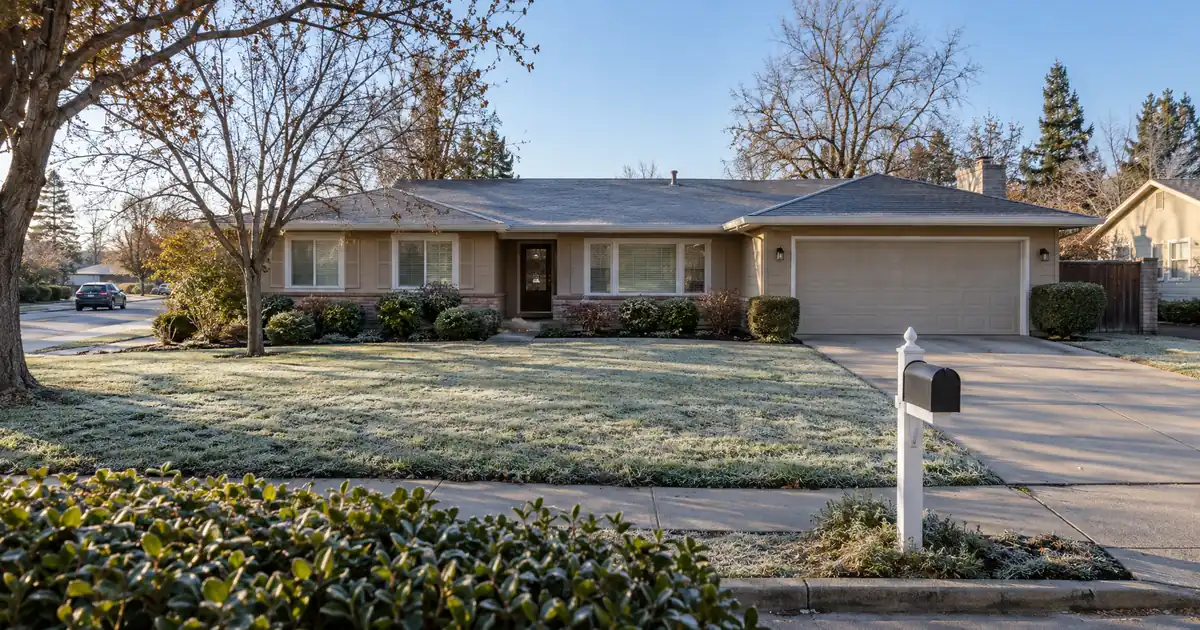
The Quick Read: It depends on the property: for a rental, often yes, because a DSCR loan is reviewed primarily on property-level rental income covering the payment, subject to lender guidelines, while a personal-income loan on a home you will live in is much harder with under twelve months of history. DSCR stands for debt service coverage ratio, which is the property’s monthly rent divided by its monthly debt costs. Most files fall into a handful of routes, outlined below.
- Rental purchase: DSCR judges the property, so time in business usually matters far less than credit, down payment, and reserves.
- Home you will live in: you generally need a documented income stream, often twelve months of it, or a same-field work history to bridge the gap.
- Savings-rich borrowers: qualifying from liquid assets can work on a primary residence at up to about 80% LTV.
- Nothing fits yet: waiting, adding a co-borrower, or building deposits is a legitimate plan, not a failure.
The “two-year rule” is a lender habit, not a law. Habits have exceptions. Here is where they are and where they stop.
What your deposits qualify you for.
Alt-doc programs read 12 months of business or personal bank deposits instead of tax returns. Enter your average monthly deposits and see the income a lender would credit you.
The expense factor is set by the lender from your business type and profit-and-loss statement; it is not a number you choose. This widget quotes no rate and no payment.
Program parameters shown update from Lendmire’s centralized guideline source.
Estimate
Illustrative estimate only — not a quote, Loan Estimate, approval, or commitment to lend. Deposit average, expense factor, and housing ratio are editable assumptions; the expense factor a lender applies is set from your business type and documentation. No interest rate or monthly payment is quoted here. Purchase capacity is a simplified illustration and does not account for taxes, insurance, HOA dues, or other debts. Alt-doc income documentation is available on consumer mortgages in the states where Lendmire is licensed for consumer lending; actual terms vary by lender, borrower, and property.
Key Terms Defined
Seven terms come up repeatedly below. Here they are once, in plain words.
- Bank statement loan: a mortgage that estimates your income from the deposits in your bank statements instead of from traditional personal-income documentation.
- Alt-doc: short for alternative documentation, any program that proves income without the standard tax-return package.
- Non-QM: a loan that falls outside the standard mortgage box that big retail lenders sell on, so each lender sets its own rules.
- LTV: loan-to-value, the loan amount as a percentage of the property’s value or price.
- Reserves: liquid cash left after closing, usually counted in months of the housing payment.
- Asset depletion: a method that turns your liquid savings and investments into qualifying income.
- Year-to-date P&L: a profit-and-loss statement covering the business from January 1 to the present.
Why Do Lenders Want Two Years, and Why Is Under One Different?
Lenders want two years because traditional personal-income documentation shows whether income repeats. One good quarter proves little. Two full years of returns show a trend, and the underwriter is paid to worry about trends.
Under twelve months is a different problem from under twenty-four. With 13 to 23 months, you have a first-year return and some momentum, so exceptions are common. With under twelve months, you usually have no full-year return and fewer than twelve months of business deposits. That removes most personal-income programs from the table.
No federal rule sets a minimum time in business. The CFPB’s ability-to-repay compliance guide says a lender may consider many kinds of employment, self-employment included, and it does not dictate a particular underwriting model. Its example is a rancher whose current-year profit-and-loss statement counts as reliable when a third-party accountant prepared or reviewed it. So a lender can verify current income without two full years of returns. Many choose not to.
Which Route Fits Your Situation?
Several routes cover nearly every file. The right one depends on the property type, your prior work, and your savings.
| Route | What it leans on | Main limit |
|---|---|---|
| Same-field transition | Prior W-2 or 1099 work in your trade | Lender-specific; needs proof |
| Bank statement / alt-doc | Deposit history | Often wants 12 months of deposits |
| Asset depletion | Liquid savings | Needs real liquid assets |
| Co-borrower | Their documented income | They share the debt |
| DSCR rental loan | The property’s rent | Investment property only |
| Waiting | Time and tax filings | Delays the purchase |
Across the wholesale network Lendmire places files with, the borrowers with under a year in business who succeed rarely rely on the business alone. They pair it with something else: a related work history, savings, a spouse’s income, or a property that carries its own weight.
How Do Bank Statement Loans Treat a Young Business?
A bank statement loan needs a year of deposits, so a business under twelve months old usually sits just short of it. Programs we place files with ask for twelve months of business or personal statements. They average the deposits and apply a lender-specific expense factor. That factor varies, and no one can promise yours in advance.
Here is the catch: if the business launched five months ago, only five months of its deposits exist. Some lenders will consider personal statements that cover the full year when the income comes from the same trade you worked in before. Others will not. This is lender by lender, and the strictest overlays want the full twelve months of business history.
Where a file does fit, leverage on a primary residence purchase or rate-and-term refinance runs up to 90% LTV through select lenders. Stronger files earn the top of that range. Loan sizes run from roughly $125,000 to $3,500,000, and reserves of about six months of the housing payment are common. Terms follow each lender’s program sheet, subject to lender guidelines.
Why Does DSCR Skip the Business-History Question?
A DSCR loan looks at the building, not your résumé. The lender compares the property’s rent to its monthly debt costs. Rent comes from the appraiser’s rent schedule (Form 1007 for single-family, Form 1025 for two to four units) or from an existing lease. Your personal income is not the basis.
That does not mean no underwriting. The lender still reviews credit, down payment, reserves, the property itself, and the appraisal. Borrowers with little business history are often surprised that experience owning rentals matters more than experience running a company. If the business needs proof, entity documents and proof of funds usually cover it.
DSCR loans are designed for non-owner-occupied investment properties. Because they are business-purpose investor loans, they are reviewed differently from a standard owner-occupied mortgage. Many programs are built around a coverage of 1.00x, where rent matches the payment. Programs below 1.00 are available through select lenders in the network, but LTV and terms adjust. Strong credit and cash in the deal help.
On leverage, investment cash-out tops out around 75% LTV. Investment purchase leverage on alt-doc documentation varies by lender, so investor-focused guidance belongs on the DSCR side. The complete DSCR loans guide walks through coverage ratios, reserves, and documents in full.
Does Occupancy Change the Rules?
Yes, and it decides which disclosures you get. An owner-occupied file, meaning a primary residence or second home, is a consumer mortgage, so TRID disclosures apply. A bank statement loan on a non-owner-occupied rental, including a short-term rental, is business-purpose and exempt from TRID.
Do not assume the word “investment” settles it. The test is the actual purpose and occupancy of the loan, and a mixed-use or partly owner-occupied property can land on the consumer side. Owner-occupied alt-doc lending is offered in 16 states through Lendmire’s consumer licensing.
What Do the Agencies Do for Under Two Years?
Agency rules are stricter, and they do not govern DSCR or bank statement loans. Freddie Mac’s self-employment guide addresses borrowers self-employed under two years. It requires a combined two-year history that counts the current business plus a prior job in a similar field. It also requires traditional personal-income documentation showing at least one year of self-employment income. That is a conventional-loan contrast, nothing more.
Four Profiles, and How Each Tends to Play Out
These are hypothetical, built to show how a lender reads a file. Outcomes depend on credit, the property, and each lender’s guidelines.
The same-field switch. A designer leaves a salaried design job and freelances for eight months at similar income. A lender can pair prior W-2 history in the same field with a year-to-date P&L and recent statements. This is the most commonly accepted exception, and it is still lender-specific.
The savings-rich career changer. A teacher starts a consulting practice four months ago and holds a large brokerage balance. Business income is thin, but asset depletion can qualify the liquid savings as income on a primary residence, at up to about 80% LTV. Income from the new business may not count at all. Each figure is subject to lender guidelines and a complete review of property type, leverage, and credit.
The rental buyer. A new business owner, five months in, wants a duplex. The rent schedule shows coverage around 1.2x. A DSCR loan reviews that coverage along with credit, down payment, and reserves. Business age barely appears on the file.
The not-yet. Someone with three months in business, no related experience, thin savings, and a goal of a maximum-leverage home purchase. No route fits cleanly. This borrower is better off building deposits and credit, or adding a co-borrower with documented income.
Which Documents Should You Gather?
Underwriters trust paper. For an income-based program, collect these:
- Proof the business exists: license, state filing, or a CPA letter.
- A year-to-date P&L, ideally prepared or reviewed by an accountant.
- Recent business bank statements, kept separate from personal accounts.
- Prior W-2 or 1099 history in the same field.
- A short written explanation of how you moved from employee to owner.
For a DSCR rental file, the list is shorter: entity documents, the lease or rent schedule, proof of funds, and ID. If you hold the rental in an LLC, that works subject to program terms.
What Mistakes Sink New-Business Files?
Five mistakes show up again and again.
1. Mixing personal and business money. Deposits that cannot be traced to the business get discounted.
2. Large unexplained deposits. A lender has to explain every one. Skip the transfers that need a story.
3. Heavy deductions. Lenders using returns look at net income after write-offs, which makes a healthy business look thin. Tax treatment can depend on how the funds are used and how the property is held; borrowers should keep clear records and speak with a qualified tax professional before relying on any deduction.
4. New debt mid-application. A financed vehicle or equipment lease changes your debt picture.
5. Applying and hoping. Lenders do not grant exceptions to files that never made the case. Structure first, apply second.
Should You Wait? A Stage-by-Stage Plan
Waiting can be a strategy if you use it. Here is how the stages usually play out.
- Before launch: keep your W-2 history documented and your credit clean. Open a separate business account on day one.
- A few months in: route all revenue through the business account. Keep a monthly P&L.
- At the first tax filing: this return is the one lenders ask about. A partial-year return shows less than a full one, so expect questions.
- At twelve months: bank statement programs and several alt-doc routes open up, and the file looks much stronger.
The honest take: if you are buying a rental, there is usually no reason to wait. If you are buying a primary residence on thin history, waiting often improves the file more than any exception does. It is a toss-up for borrowers close to twelve months, since a short wait can mean much better terms.
What Should You Ask a Lender?
A few questions separate lenders who can handle your file from those who cannot.
- Do you have a program for under twelve months of business history?
- Will you count prior work in my field, and what proof do you need?
- Do you accept personal statements, business statements, or both?
- Which documents does an accountant need to prepare?
- Does my property type change the leverage or the disclosure rules?
A broker sees many lenders’ guidelines, so the useful move is to compare programs rather than test them one by one. Each file is underwritten individually, and nothing here is a commitment to lend.
Frequently Asked Questions
Can I use a bank statement loan with only six months of business history?
Rarely. Most programs we place files with ask for twelve months of statements. A few lenders will consider personal statements for the full year when you stay in the same trade, but that is lender-specific and not a promise.
Does prior W-2 work in my field count as history?
It often helps. Lenders typically want proof that the work is in the same field at comparable income, plus a P&L and recent statements for the new business. It supports the file but does not replace the current-income review.
Does a DSCR loan check how long I have been in business?
Generally not as a deciding factor. A DSCR file qualifies primarily on property-level rental income covering the payment, subject to lender guidelines. Credit, down payment, reserves, and the appraisal still matter.
Can a co-borrower fix a short history?
Often, yes. A co-borrower with documented, stable income can carry qualification on a home you will live in. They share the debt, so both credit profiles are reviewed.
Should I wait until I hit two years?
Only if no route fits. Twelve months of deposits opens most doors, and a rental purchase may not require waiting at all.
Next Step
If you are self-employed and want to see how the numbers work, Lendmire can help you compare bank statement loan options based on your deposits, the property, credit profile, leverage, and your goals. For rentals, the same review covers DSCR options. Call 828-256-2183 or request a quote.
The first twelve months of a business are a record, not just a hurdle: every clean deposit you make now becomes the evidence that opens better options later.
For current guidelines and terms, see Lendmire’s self-employed mortgage programs page.
About Lendmire
Lendmire (NMLS# 2371349) is a mortgage brokerage serving self-employed and high-net-worth borrowers in 16 states. Bank statement, P&L-only, 1099-only and asset-based mortgages are arranged through wholesale lending channels; Lendmire brokers the financing and the lender underwrites each application. Scotsman Guide named Lendmire a Top Mortgage Workplace in both 2025 and 2026.
Get Started
Ready to find the right loan for you?
In about 30 seconds you can review financing options available for your home or investment property. No commitment required.
Informational only. Not a Loan Estimate, approval, or commitment to lend. Program availability and eligibility are subject to lender guidelines, credit approval, property review, and underwriting.
References
1. CFPB Ability-to-Repay and Qualified Mortgage Small Entity Compliance Guide
2. Freddie Mac Single-Family Seller/Servicer Guide § 5304.1
This article is part of Lendmire’s bank statement loan program — full qualification details, guidelines, and scenarios live on the program page.
Related reading: Bank Statement Loan Ownership Share Rules for Business Deposits · How to Open a HELOC on Assets Alone When Self-Employed · First-Lien Rental HELOC Documentation for a Self-Employed Investor
Brandon Miller
Founder & CEO, Mortgage Loan Originator, Lendmire LLC
- Mortgage Loan Originator · NMLS# 1129696 · Verify on NMLS Consumer Access
- North Carolina Real Estate Broker · License# 343312 · Verify on NCREC
- North Carolina Insurance Producer · License# 19053198 · Property, Casualty, Life, Health · Verify on NAIC SBS
- Lendmire LLC · Firm NMLS# 2371349 · Verify firm licensure
Legal disclosures. Lendmire (NMLS# 2371349) is a state-licensed mortgage brokerage that arranges financing through wholesale lender relationships. Lendmire is not a direct lender, depository institution, or registered financial advisor. The discussion above is general informational content about real estate financing — it is not financial, legal, or tax advice, and readers should consult licensed professionals for guidance on their individual circumstances. Loan inquiries are subject to lender underwriting; this article does not represent a commitment to lend. Loan terms, rates, and qualification standards vary by borrower, property, and state, and are subject to change at any time. Equal Housing Opportunity. NMLS Consumer Access: nmlsconsumeraccess.org.