
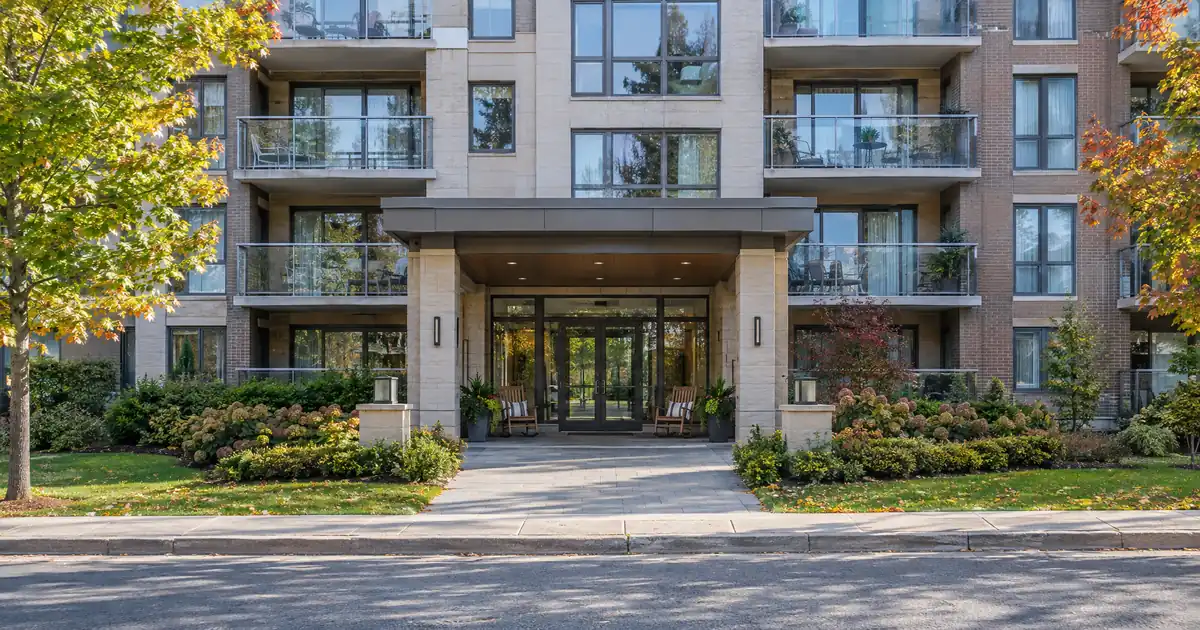
The Quick Read: Usually, yes: an asset-based mortgage can finance a condo as a principal residence or second home, and on the asset depletion path as an investment property, as long as two separate reviews both pass: your assets must support the loan, and the lender must approve the condo building itself, subject to underwriting. Strong balances do not rescue a building that fails its review. Across the wholesale network, condos are a routine property type, but the building is where files stall.
- Two approvals run side by side: your assets, and the condo project.
- Principal residences and second homes work on both asset paths. Investment condos work only on the asset depletion path.
- Association dues count against you on the depletion path, because they sit inside the housing payment.
- A building with heavy litigation, weak reserves, or hotel-style operation can sink a file no matter how much you hold in assets.
- Screen the building before you make an offer, not after.
An asset-based mortgage is a home loan that is reviewed around what you own rather than on a paycheck. It suits retirees, people who sold a business, heirs, and households living off a portfolio. Lendmire is a mortgage broker. It arranges these loans through select lenders in its network, and each lender underwrites the file on its own.
Two Paths, Two Different Condo Questions
The path you choose changes how the condo shows up in your numbers. The asset qualifier path asks whether your eligible assets cover the entire loan. The asset depletion path turns your assets into monthly income and tests whether that income carries the payment.
On the asset qualifier path, no employment or income is documented. Brokerage accounts, certificates of deposit, money market and savings count at 100%. A 401(k) or IRA counts at 90% if you are under 59½ and 100% after. Say you want an $800,000 loan and hold $330,000 in brokerage accounts, $300,000 in a 401(k) under 59½ (counted at 90%, or $270,000) and $200,000 in savings. That is $800,000 of usable assets, and the loan can qualify on assets alone. This illustration is not an offer, and the lender’s own calculation governs.
On the asset depletion path, usable assets are divided by 60 months to produce qualifying income. With $1,500,000 in securities (counted at 80%, or $1,200,000) plus $300,000 in cash (counted at 100%), you have $1,500,000 usable. Divided by 60 months, that is $25,000 of monthly qualifying income. That income then carries the housing payment and your other debts through the debt-to-income test. Debt-to-income, or DTI, compares your monthly debts to your qualifying income.
Here is the condo twist. On the depletion path, dues paid to the homeowners’ association (HOA) are part of the housing payment, so higher dues eat into the income. On the qualifier path, no DTI is run on documented income, so dues matter less to the math. They still matter to the building review.
Why a Condo Adds a Second Review
Every condo loan has two questions. Can the borrower carry it? Is the building sound enough to lend against? Your assets answer the first. Only the building can answer the second.
| Factor | Borrower review | Building review |
|---|---|---|
| What is checked | Assets, credit, seasoning | Financials, litigation, insurance |
| Who supplies it | You | The association |
| Cured by more cash? | Often | No |
| Typical decline reason | Thin or unseasoned funds | Litigation or weak reserves |
The lender usually sends a questionnaire to the association or its management company. According to Scotsman Guide coverage of investor loans, the project report looks at outstanding HOA litigation, reserve adequacy, and the split between owner-occupied and non-owner-occupied units. Treat that as the shape of the review. Exact pass-or-fail thresholds differ by program and by lender.
Many HOAs do not know whether their building is warrantable. Warrantable means the building meets the project standards used by the big mortgage agencies. The questionnaire answers that question, so you should not rely on the HOA’s own say-so.
Warrantable, Non-Warrantable, and Why It Matters Less Here
Non-warrantable does not mean unfinanceable. A non-warrantable condo fails the agency checklist, often because of investor concentration, commercial space, or a single owner holding many units. Buyers of those units often turn to non-QM financing, which is lending outside agency standards. Scotsman Guide notes that tighter agency condo definitions push investors toward non-QM loans for exactly these units.
Asset-based programs placed through the network run their own project review. They look at similar risk factors, but the lender sets the thresholds, not the agencies. Some programs are more flexible than the agency checklist. Others are stricter in places. Do not assume either.
One recent agency change shows why you should not assume anything. Per CAI, a condo-association trade group, Fannie Mae and Freddie Mac eliminated the 50% investor-concentration limit and expanded the waiver of project review to projects of up to 10 units. That may make some buildings warrantable that were not before. It does not rewrite the rules for asset-based files. Those still follow each lender’s own guidelines.
Not every non-warrantable reason is equal. In practice, heavy investor ownership is usually the easiest cause to live with. Pending litigation and hotel-style operation are the hardest.
Condo Types and the Likely Path
| Condo type | Typical outlook | Watch for |
|---|---|---|
| Warrantable condo | Most straightforward | Dues, reserves |
| Non-warrantable condo | Possible, lender-specific | Why it failed |
| Condotel or rental pool | Often restricted or a hard stop | Operator splits |
| Co-op | Program-specific | Share-loan rules |
| Resort or timeshare units | Usually difficult | Use restrictions |
Treat the table as a starting point, not a verdict. The lender decides after reviewing the project and your file.
Condotels deserve extra caution. Most programs restrict them or decline them outright. When one is considered, the lender usually looks at the revenue potential, vacancy, management fees, and the rental program’s track record. Gross rent is not the number that counts there, because operator splits and fees come off first.
What Sinks a Building
Some red flags come up again and again on condo files:
- Pending or threatened litigation against the association.
- Thin reserves or a deferred-maintenance backlog.
- A large special assessment that is announced or likely.
- Delinquent dues across many owners.
- High investor concentration, or one owner holding several units.
- Commercial space that makes up a big share of the project.
- Master or flood insurance gaps.
- Hotel-style services or a mandatory rental pool.
Small buildings are the most sensitive. In a project of a handful of units, one delinquent owner or one extra investor unit moves the ratios. Your own purchase changes the building’s numbers too. The same applies if you plan to buy several units in one building, since each added unit raises the share held by one owner.
Special assessments deserve their own warning. A large per-unit charge disclosed mid-contract can change the whole deal. Ask for the budget, the reserve study, and any assessment notices before you commit.
HOA Documents to Request
Order these early, ideally the moment you are under contract:
| Document | Who provides it |
|---|---|
| Lender’s condo questionnaire | HOA or management company |
| Current budget | HOA |
| Reserve study | HOA |
| Master insurance certificate | HOA or its insurer |
| Litigation disclosure | HOA |
| Rental and occupancy rules | HOA |
Association paperwork is often the slowest part of a condo file, so start it first. Your asset documents are the part you control. Have them in order too.
Seasoning and Sourcing Your Assets
Seasoning is the length of time funds have sat in your account. The lender wants to see that the money is truly yours and not freshly borrowed.
On the qualifier path, expect 60 days of seasoning and two months of statements for each qualifying account. On the depletion path, statements must be at least 120 days old at application, plus a recent statement within 45 days. Funds from the sale of a business, an inheritance, or a legal settlement are excused from that seasoning. These are typical ranges through select programs, subject to underwriting.
Assets are always documented. “No income documentation” never means no documentation. Cryptocurrency, precious metals, collectibles, and pledged or borrowed funds are not published as eligible on either path. The documented route is converting them to a seasoned cash balance in a regulated account, with the source reviewed by the lender.
Occupancy: Primary, Second Home, or Investment Condo
Occupancy changes the leverage you can use.
On the qualifier path, loans on a principal residence or second home go up to 80% loan-to-value (LTV) on a purchase and 75% on a refinance, subject to underwriting. LTV is the loan amount as a share of the property’s value. Loans run up to $4,000,000 on this path. The minimum credit score is 600. No reserves are required at or below 75% LTV, and above that the lender sets them. Final terms depend on the lender’s guidelines, the property type, and the borrower’s complete credit picture.
On the depletion path, a principal residence or second home goes up to 80% on a purchase or rate-and-term refinance and 60% on a cash-out. Loan amounts run from $125,000 to $3,500,000. Credit follows the lender’s matrix, and a first-time investor needs 700. Cash-out proceeds never count as qualifying assets.
The depletion path also sets asset minimums: the lesser of $1,000,000 or 1.25 times the loan, and never below $250,000 liquid when assets are your only income. Asset-derived income can also supplement documented income up to a 45% DTI. When it does, the minimum-assets rule is waived.
If you plan to rent an investment condo, check the association’s rules first. A rental ban or short-term-rental restriction in the building cannot be fixed by any loan. Short-term rental rules can vary by city, county, HOA, and property type, so confirm local rules before relying on projected rental income. Tax treatment varies; consult a qualified professional.
When the Building Fails
A failed building is not always the end. You have a few moves:
1. Ask what failed. A fixable item, like a missing document, differs from a structural one, like litigation.
2. Try a different building. Often the cleanest fix, especially if you screened poorly.
3. Change the structure. A lower-leverage request or a different occupancy may change how a lender sees the file.
4. Switch loan type. If the property is a rental, a loan built on the rent may fit better.
If the unit is a rental and your assets are thin, a business-purpose DSCR loan is the usual alternative. DSCR means debt service coverage ratio: monthly rent divided by the full payment, including taxes, insurance, and HOA dues. Dues go in the payment, never off the rent. A condo needs stronger rent than an otherwise identical house to clear the same ratio. Programs below 1.00 coverage are available through select lenders in the network, though leverage and terms adjust. Lenders typically want rent evidence from a lease or an appraisal rent schedule, and the appraisal forms for that are Form 1007 for a single unit and Form 1025 for 2–4 units. Lendmire’s complete DSCR loans guide covers that route in full.
Asset-Based Versus the Alternatives on a Condo
| Option | Reviewed on | Fits best when |
|---|---|---|
| Asset-based, qualifier path | Assets cover the loan | Large balances, no documented income |
| Asset-based, depletion path | Assets turned into income | Portfolio income, DTI-driven |
| Bank statement loan | Deposits as income | Self-employed with steady deposits |
| DSCR loan | Property rent | Investment condo with strong rent |
Each runs its own condo review. None skips the building.
Key Terms Defined
Warrantable condo: a building that meets the project standards of the big mortgage agencies.
Non-warrantable condo: a building that fails those standards, often for investor mix, litigation, or commercial space.
HOA (homeowners’ association): the body that runs the building and collects monthly dues.
Seasoning: how long funds have sat in your account before the loan.
LTV (loan-to-value): the loan amount as a share of the property’s value.
DTI (debt-to-income): your monthly debts compared with your qualifying income.
Condotel: a condo operated like a hotel, often with a rental pool.
Frequently Asked Questions
Can I use an asset-based mortgage on a non-warrantable condo?
Sometimes. Non-warrantable status is not an automatic no, because the lender runs its own project review instead of the agency checklist. The reason the building fails matters most. Heavy investor ownership is often workable, while active litigation or hotel-style operation usually is not. Each file is underwritten individually.
Do HOA dues reduce the assets I can count?
No. Dues do not change your asset balances. On the depletion path they sit inside the housing payment, so higher dues take a bigger bite out of your derived income. On the qualifier path, no income is documented, so dues matter mainly to the building’s financial health.
Can I buy an investment condo with this loan?
Only on the asset depletion path. At that path’s published leverage, an investment property goes up to 65% on a purchase or rate-and-term refinance and 60% on a cash-out, subject to underwriting. The qualifier path covers principal residences and second homes only.
Does a strong asset balance override a bad building?
No. The two reviews run separately. More assets can fix a borrower-side shortfall, but they cannot cure litigation, weak reserves, or a failing project.
Can I rent my condo short term?
That depends on the HOA and local rules, not on the loan. A building ban on short-term rentals stands no matter how the loan is structured. Ask for the rental rules in the document package before you offer.
Next Step
If you are qualifying on assets rather than income and want to see how the numbers work, Lendmire can help you compare asset-based mortgage options based on your statements, the property, credit profile, leverage, and your goals. Consumer mortgage lending is available in 16 states: Alabama, California, Colorado, Florida, Georgia, Indiana, Michigan, Montana, New Mexico, North Carolina, Ohio, Pennsylvania, Tennessee, Texas, Virginia, and Washington. Every file is underwritten individually, and nothing here is a commitment to lend.
About Lendmire
Lendmire is a mortgage brokerage (NMLS# 2371349) licensed for consumer mortgage lending in 16 states, arranging bank statement and other alternative-documentation mortgages — P&L-only, 1099-only and asset-based paths — through a wholesale lending network. Eligibility is determined by the lender on each file. Scotsman Guide named Lendmire a Top Mortgage Workplace in both 2025 and 2026.
Get Started
Ready to find the right loan for you?
In about 30 seconds you can review financing options available for your home or investment property. No commitment required.
Informational only. Not a Loan Estimate, approval, or commitment to lend. Program availability and eligibility are subject to lender guidelines, credit approval, property review, and underwriting.
References
1. Scotsman Guide, “Get in the Game”
2. Scotsman Guide, “Invest in Your Future”
3. CAI advocacy, Fannie Mae and Freddie Mac condo update
This article is part of Lendmire’s asset-based mortgage program — full qualification details, guidelines, and scenarios live on the program page.
Related reading: How Lenders Count Assets Toward an Asset Depletion Mortgage · How an Asset Depletion Mortgage Works · Asset Qualifier Mortgage vs Bank Statement Mortgage
Brandon Miller
Founder & CEO, Mortgage Loan Originator, Lendmire LLC
- Mortgage Loan Originator · NMLS# 1129696 · Verify on NMLS Consumer Access
- North Carolina Real Estate Broker · License# 343312 · Verify on NCREC
- North Carolina Insurance Producer · License# 19053198 · Property, Casualty, Life, Health · Verify on NAIC SBS
- Lendmire LLC · Firm NMLS# 2371349 · Verify firm licensure
Required disclosures. Lendmire (NMLS# 2371349) operates as a licensed mortgage broker, not a direct lender or depository. The discussion in this article is general in nature and should not be relied upon as financial, legal, or tax advice — every investment scenario is unique and should be reviewed by a qualified professional. Any loan inquiry is subject to lender underwriting, and this article is not a commitment to lend or a guarantee of approval. Mortgage rates, loan terms, and program guidelines vary by borrower, property, and state, and may change without notice. Equal Housing Opportunity. Verify licensure at NMLS Consumer Access.