
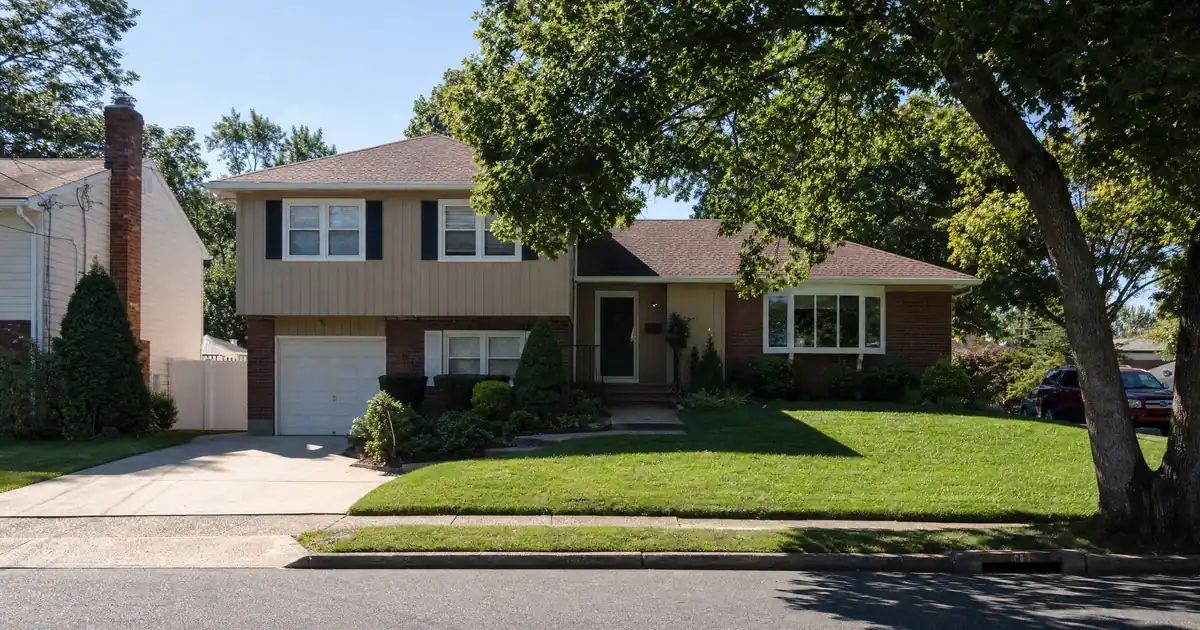
Get Loan With Bank Statement Equity Line Of Credit — The Quick Read: Self-employed borrowers and business owners can qualify for a home equity line of credit in a different way. Qualification for the line runs on a borrower-permissioned account connection analysed for deposit history and income trend — no tax returns, and no hand-counted stack of monthly statements. The lender averages the deposits to come up with a qualifying income number. This line works as its own credit tool. It is not a purchase mortgage. How much you can draw depends a lot on how you use the property. A primary residence gets the most room. An investment property gets the least. Many investors then use the money they draw as a down payment on a rental they are buying. That rental purchase is usually financed with a DSCR loan, which looks at the new property’s rental income instead of personal pay stubs. The two loans get reviewed separately. Whether the equity-line money counts as “seasoned” (meaning it has sat in an account long enough to look clean) depends completely on which lender handles the second loan.
Key Terms Defined
- Bank statement loan: a loan or credit line qualified using deposit history from bank statements instead of traditional personal-income documentation.
- HELOC (home equity line of credit): a revolving credit line secured by a property’s equity, drawn against as needed rather than disbursed all at once.
- CLTV (combined loan-to-value): every lien on a property — the first mortgage plus the equity line — divided by the property’s value.
- DSCR (debt service coverage ratio): a ratio comparing a rental property’s monthly rent to its full monthly payment (principal, interest, taxes, insurance, and any HOA dues), used to review a loan on the property’s own income.
- Draw period: the phase of a HELOC where funds can be pulled, typically with interest-only payments, before a separate repayment period begins.
- Non-QM (non-qualified mortgage): a loan that falls outside the federal Qualified Mortgage definition and instead follows lender-set underwriting rules.
- Business-purpose loan: financing for a non-owner-occupied investment property, reviewed under a different rulebook than a loan on a home the borrower lives in.
What Investors Need to Know First
- A bank statement equity line is reviewed on deposit averages. It does not look at adjusted gross income from a tax return.
- The maximum combined loan-to-value ceiling changes with how you use the property. In this network, primary residences can reach up to 80% CLTV. Second homes and investment properties cap at 70% CLTV, no exceptions.
- Title has to sit with an individual borrower or a revocable living trust. An LLC or corporation cannot hold title on this product. This is the biggest structural difference from a DSCR loan.
- Investors often draw against a line on one property. They then use that money as a down payment on a separate rental. This is often paired with a DSCR loan on the new property.
- Rules for sourcing and seasoning those funds differ from lender to lender. There is no single industry standard to memorize.
How the Bank Statement Math Actually Works
The basic method stays the same across nearly every bank statement program. But the exact lookback period and how expenses are treated shift from lender to lender.
How large a line the equity supports in your market.
An equity line is sized by combined loan-to-value, occupancy, and credit — not by rental coverage. Switch the occupancy or the credit band and the ceiling moves with it.
Investment-property lines require a 700 minimum credit score. Second-home tiers reach 640; primary-residence tiers reach 600.
A debt-to-income ratio above 45% requires 680+ credit. Profiles under 640 are limited to single-family homes. At least 75% of the approved line is drawn at closing. Ceilings, floors, and caps update from Lendmire’s centralized guideline source.
Line estimate
Illustrative estimate only — not a quote, Loan Estimate, approval, or commitment to lend. The rate is an editable assumption; equity-line pricing is variable through both the draw and repayment periods and never converts to fixed. Occupancy and credit drive the ceiling together: investment property runs to 70% combined LTV with a 700 credit floor and a $500,000 cap; a second home runs to 70% at a 640 floor with a $500,000 cap; a primary residence reaches up to 80% at a 600 floor, and its $750,000 maximum line applies only at 75% combined LTV or below with 720+ credit and a full appraisal. Lines above $500,000 require a full appraisal. Credit, debt-to-income, property type, and full underwriting review all affect the final line.
First, the lender totals up deposits over a set window of time. This is commonly 12 months, sometimes 24, depending on the program and how strong the file is. Then that total gets divided by the number of months reviewed. This produces an average monthly deposit figure. If the statements come from a business account instead of a personal one, the lender applies an expense factor. This strips out the cost of running the business before landing on a final qualifying income number. A flat 50% cut is the common default. But a borrower whose real overhead runs lower can sometimes prove a different ratio. This usually takes a letter from a CPA, EA, or tax preparer confirming the business’s actual expenses.
Continuity matters just as much as the total. Underwriters generally want the most recent statement dated close to the closing date. If the borrower switched banks partway through the lookback period, the old and new histories need to line up cleanly. This lets the reviewer track deposits without a gap in the record.
None of this runs through an automated approval system the way a W-2 file does. A person reviews the statements line by line. They check for deposits that don’t count — transfers between the borrower’s own accounts, one-time windfalls that don’t reflect regular income, and anything that looks like undocumented debt rather than earned money. This manual process is built by design. It’s exactly why this loan type works for income patterns that don’t fit neatly into a tax return.
Files that mix personal and business deposits in one account tend to draw the most scrutiny in this corner of non-QM lending. An account showing both a regular paycheck-style deposit and irregular client invoice payments almost always triggers a request for a letter of explanation or a breakdown of transactions. This happens even when the total deposits clearly support the loan. Keeping personal and business banking separate before applying tends to cut down on that back-and-forth. Seasonal businesses face a related problem. Underwriters typically don’t smooth out seasonal swings. So a contractor, landscaper, or event-based business with three busy months and nine slow ones often does better on a 24-month lookback than a tight 12-month window.
This kind of underwriting fits a specific type of borrower: self-employed owners, freelancers, 1099 contractors, gig workers, and real estate investors whose Schedule E shows paper losses from depreciation despite healthy real cash flow. Lendmire’s self-employed home equity line of credit program walks through the documentation checklist in more detail. And Lendmire’s equity line of credit based on bank statements page covers the same mechanics from the borrower’s side.
How the Line Itself Is Structured
This is a real revolving line. It is not a one-time bank statement home equity loan dressed up to look like one. That distinction matters — some products marketed the same way are actually lump-sum installment loans, not a line you can draw and repay again and again.
The line can sit in either first or second lien position. It is structured as its own credit tool, not bundled into a first mortgage. Two draw structures exist across the wholesale network: a 3-year interest-only draw with a 17-year repayment on the higher-leverage path, and a 5-year interest-only draw with a 25-year repayment on the longer-runway path — a quoted CLTV always carries its own structure. Tennessee shortens the runway on both network structures: a 3-year draw with a 12-year repayment on the higher-leverage program, and a 5-year draw with a 10-year repayment on the longer-runway program. Pricing floats during both the draw and repayment periods and never locks into a fixed rate structure. That’s the tradeoff for having a flexible, revolving line.
Line sizes run from $25,000 to $750,000. Michigan has a lower floor of $10,000. Anything above $500,000 requires a 720 credit score, caps at 75% CLTV no matter the score, and needs a full appraisal instead of an automated valuation. Below $500,000, most files get valued through an automated model with no traditional appraisal. Still, a borrower can request a full appraisal at any point if they think the model is undervaluing the property. Once the line is open, later draws have a $1,000 minimum. Texas is the exception — its minimum jumps to $4,000. Exact terms depend on lender and investor guidelines, credit profile, reserves, and property review.
Debt-to-income runs up to 50% on most files. That tightens to 45% for credit scores between 600 and 679. Anyone wanting to go past 45% needs at least a 680 score. Qualification is measured against the interest-only payment on the full approved line — not just the amount actually drawn.
CLTV Ceilings Move With Occupancy — Every Time
The biggest variable on this product isn’t your credit score. It’s how you use the property. A primary residence, a second home, and an investment property carry three different risk levels. Each one has its own ceiling, and none of them can borrow room from the others.
| Occupancy | Program Ceiling | Entry Credit Score | Max Line |
|---|---|---|---|
| Primary residence | 80% CLTV | 600 | $750,000 |
| Second home | 70% CLTV | 640 | $500,000 |
| Investment property | 70% CLTV | 700 | $500,000 |
On a primary residence, the ceiling moves with both credit score and line size. A borrower with a 720+ score can reach 80% CLTV on lines up to $500,000. Or they can step up to a larger $750,000 line at a slightly lower 75% CLTV ceiling. A 700 score also reaches 80% CLTV up to $500,000. Drop to a 680 score and the ceiling falls to 75% CLTV. A 660 score lands near 70% CLTV. A 640 score caps around 65% CLTV. And scores from 600 to 639 top out between 50% and 55% CLTV, on lines capped at $250,000.
Second homes and investment properties are simpler, but tighter. Both are capped at 70% CLTV as the absolute program ceiling, no matter the credit score — there is no higher tier in this network, even for a borrower with an 800 FICO. Second homes start accepting applications at a 640 score. Investment properties require at least 700. Chase’s own consumer education on HELOCs describes combined loan-to-value ceilings as high as 80% for owner-occupied borrowers in the broader market. That figure applies to primary residences generally. It does not extend to second homes or investment properties in this network, where 70% CLTV is the hard stop.
Where the Rules Break — Title, Property, and State
Every program has edge cases. This one has a few worth knowing before you apply, not after.
Title has to be personal. Fee simple or leasehold title has to sit with an individual borrower or a revocable living trust set up during the person’s lifetime. LLCs, corporations, partnerships, and irrevocable, blind, or land trusts cannot hold title on this product at all. If a property is already deeded to an LLC, the owner has two choices. They can change the vesting back to their own name or a trust. Or they can use a DSCR cash-out refinance instead — a completely different underwriting path that does accept LLC ownership on many files, subject to lender program eligibility.
Some property types just aren’t eligible. Single-family homes, 2-4 unit properties (640 minimum credit score), PUDs, townhomes, and condos — including non-warrantable condos and modular factory-built homes — are all fair game. Manufactured homes, co-ops, condotels, timeshares, barndominiums, log homes, commercial and mixed-use property, agricultural-zoned land, raw land, and income-producing enterprises are not offered under this program. They’re not “harder to finance” — they’re simply outside its scope.
Exposure limits cap how much of this a single investor can stack. A borrower can hold up to three lines, with combined exposure to $2,000,000 on the higher-leverage program ($750,000 on the longer-runway program) and a 15-financed-property limit on both. Anyone already holding more than 15 financed properties isn’t eligible for this product, regardless of credit or equity.
Below 640, the door narrows to primary residences by default. Since second homes floor at 640 and investment properties floor at 700, a borrower below 640 is effectively limited to a single-family primary residence with a clean 12-month payment history. The lower tiers simply don’t exist on the other two occupancy types.
State overlays add their own texture. Texas applies a 12-day waiting period, a one-lien-at-a-time rule, and 12-month seasoning — but only on primary residences. Texas second homes and investment properties are treated as non-homestead transactions and skip those restrictions, though acreage is capped at 10 acres statewide. New Mexico and Ohio apply CLTV caps that shift with the borrower’s credit profile. And a property currently listed for sale, or listed within the past 60 days, is ineligible in Indiana, North Carolina, Pennsylvania, Tennessee, Texas, and Washington.
This particular equity line program is available through Lendmire’s 16 full-service states — Alabama, California, Colorado, Florida, Georgia, Indiana, Michigan, Montana, New Mexico, North Carolina, Ohio, Pennsylvania, Tennessee, Texas, Virginia, and Washington. That’s a narrower footprint than the 40-market DSCR platform covered below.
Can HELOC Funds Actually Fund a Rental’s Down Payment?
Yes. This is the two-transaction structure this whole topic is built around: draw against an owned property’s equity, then use that money as funds-to-close on a separate loan for a different property.
Here’s how it works in practice. An investor opens a bank statement equity line against one property, often a primary residence. They draw part or all of it. Then they apply for a separate mortgage on the new investment property. The lender on that second loan will ask where the down payment came from. How comfortable that lender is with a fresh HELOC draw depends entirely on the lender. Practitioner-focused sourcing guidance puts typical seasoning windows for borrowed-and-redeployed funds like this in the 60-to-90-day range. That means some lenders want the funds to sit in an account for that stretch of time. Only then will they count it as clean, seasoned money instead of an unexplained deposit.
Two loan types sit at opposite ends here — one rejects this approach outright, the other doesn’t care much at all. FHA loans generally prohibit borrowed funds for a down payment. Any FHA down payment has to come from the borrower’s own funds or an approved gift source. A HELOC draw is borrowed money by definition, so that door stays closed no matter how long the funds have seasoned. On the other end, hard money lenders typically don’t scrutinize down-payment sourcing much at all. They focus instead on the deal’s numbers and the borrower’s track record.
DSCR loans sit in the middle. And the rule there is simply that there is no fixed rule — each lender in a wholesale network sets its own seasoning and sourcing standards for equity-line proceeds used as a down payment. Some will count freshly drawn funds right away, as long as there’s a clear paper trail back to the HELOC. Others hold to that same 60-to-90-day window described above. This is why the two transactions — the equity line and the DSCR purchase loan — get underwritten separately. In practice, they often go through completely different lenders. The lender on the DSCR side sets the sourcing standard, not the institution that issued the equity line.
For the end-to-end picture of how these loans work — qualification, structures, and the full process — see Lendmire’s complete DSCR loans guide.
Frequently Asked Questions
How do you qualify for a bank statement equity line of credit?
Qualification runs on 12 to 24 months of deposit history instead of traditional income paperwork. The lender averages your deposits and, if the statements come from a business account, applies an expense factor to arrive at a qualifying income figure. Title has to sit with an individual borrower or a revocable living trust. The maximum line size, entry credit score, and CLTV ceiling all shift depending on whether the property is a primary residence, second home, or investment property.
What credit score do you need to qualify for this equity line?
The floor moves with how you use the property. A primary residence can start at a 600 score. A second home needs at least 640. An investment property requires a minimum of 700. Higher scores unlock higher CLTV ceilings and larger line sizes, especially on primary residences, where a 720+ profile can reach the top of the program.
Can you use HELOC funds as a down payment on a rental property?
Yes. An investor can draw against an owned property’s equity line and use that money as funds-to-close on a separate rental purchase, typically financed with a DSCR loan. The two loans are underwritten separately. Whether the funds count as seasoned depends completely on the standards of the lender handling the second loan.
Does a bank statement equity line accept LLC ownership?
No. Title must sit with an individual borrower or a revocable living trust set up during the person’s lifetime. LLCs, corporations, partnerships, and irrevocable, blind, or land trusts cannot hold title on this product. A property already deeded to an LLC would need to be re-vested. Or the owner could pursue a DSCR cash-out refinance instead, which does accept LLC ownership on many files, subject to lender guidelines.
How is qualifying income calculated on a bank statement equity line?
Deposits get totaled over the lookback period, then divided by the number of months reviewed. This produces an average monthly figure. If the account is a business account, a standard 50% expense cut applies by default. A lower expense ratio can sometimes be documented instead, with a letter from a CPA, EA, or tax preparer confirming the business’s actual overhead.
About Lendmire
Lendmire is a mortgage broker, NMLS# 2371349, arranging DSCR investor loans through wholesale and investor-lending channels across 40 markets — not a direct lender. Lendmire does not fund loans directly. Instead, it matches borrower files to the wholesale and investor-lending partners whose guidelines fit the transaction, including the equity line and DSCR products described above. Scotsman Guide named Lendmire a Top Mortgage Workplace in both 2025 and 2026.
Get Started
Ready to find the right loan for you?
In about 30 seconds you can review financing options available for your home or investment property. No commitment required.
Informational only. Not a Loan Estimate, approval, or commitment to lend. Program availability and eligibility are subject to lender guidelines, credit approval, property review, and underwriting.
References
Brandon Miller
Founder & CEO, Mortgage Loan Originator, Lendmire LLC
- Mortgage Loan Originator · NMLS# 1129696 · Verify on NMLS Consumer Access
- North Carolina Real Estate Broker · License# 343312 · Verify on NCREC
- North Carolina Insurance Producer · License# 19053198 · Property, Casualty, Life, Health · Verify on NAIC SBS
- Lendmire LLC · Firm NMLS# 2371349 · Verify firm licensure
Legal disclosures. Lendmire (NMLS# 2371349) is a state-licensed mortgage brokerage that arranges financing through wholesale lender relationships. Lendmire is not a direct lender, depository institution, or registered financial advisor. The discussion above is general informational content about real estate financing — it is not financial, legal, or tax advice, and readers should consult licensed professionals for guidance on their individual circumstances. Loan inquiries are subject to lender underwriting; this article does not represent a commitment to lend. Loan terms, rates, and qualification standards vary by borrower, property, and state, and are subject to change at any time. Equal Housing Opportunity. NMLS Consumer Access: nmlsconsumeraccess.org.