
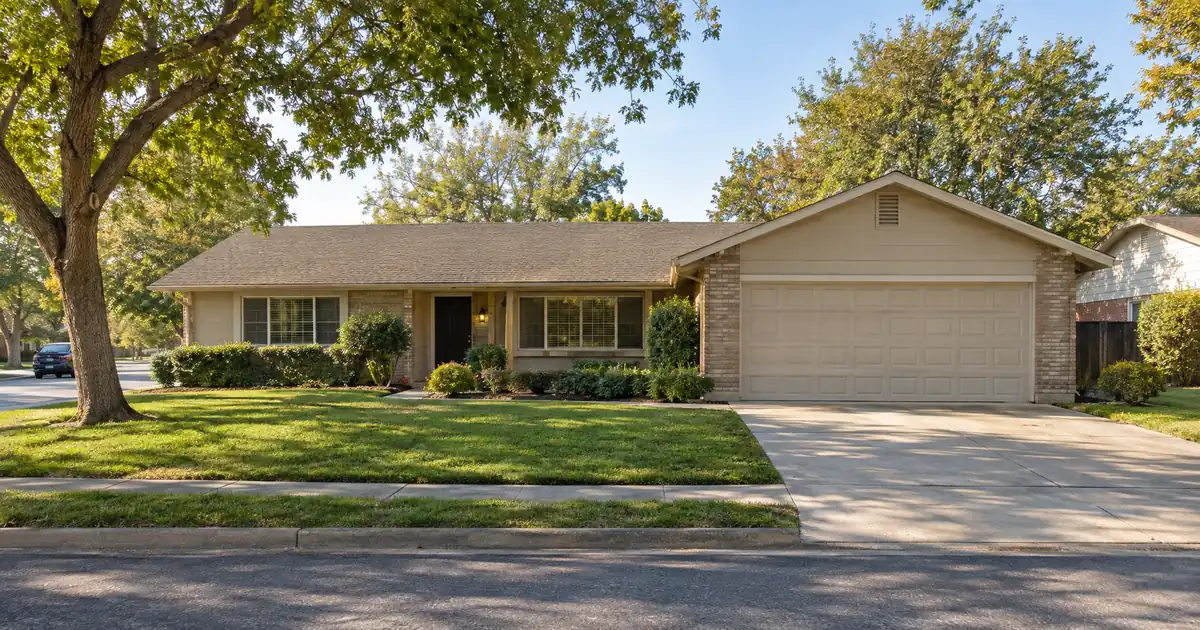
The Quick Read: Opening a bank statement HELOC on an inherited home starts with clear title in the heir’s own name or a revocable trust, then moves to documenting retirement income through deposits, then to equity and credit. Lendmire arranges these lines through select wholesale partners, and every figure is subject to lender guidelines and full file review.
- Title comes first. An heir has to hold a lien-able interest, and an executor needs court-issued authority before signing anything.
- Retirement income counts when it lands as documentable deposits: pension, Social Security, annuity, and IRA or 401(k) distributions.
- Investment-property lines top out at 70% CLTV with a 700 minimum credit score and a $500,000 maximum line.
- The line is variable-priced for its whole life, so size it to what a fixed income can carry after the draw period ends.
- A rental-use inherited home may fit a DSCR cash-out better than a HELOC.
An inherited house can be the largest asset a retiree owns and the hardest one to borrow against. The reason is rarely the house. It is the paperwork around who owns it and how a retiree’s income shows up in a bank account. This piece walks through the mechanics in order: what the product is, how files are reviewed, which structures exist, where files break, and how an investor should decide.
How large a line the equity supports.
An equity line is sized by combined loan-to-value, occupancy, and credit — not by rental coverage. Switch the occupancy or the credit band and the ceiling moves with it.
Investment-property lines require a 700 minimum credit score; second-home lines start at a 640 minimum and primary-residence lines at 600, and the combined-LTV ceiling steps down as the credit band drops on primary-residence and second-home lines and holds on investment-property lines; the line cap steps down on primary-residence lines and holds at every tier on investment-property and second-home lines.
A debt-to-income ratio above 45% requires 680+ credit. Profiles under 640 are limited to single-family homes. At least 75% of the approved line is drawn at closing. Ceilings, floors, and caps update from Lendmire’s centralized guideline source.
Line estimate
Illustrative estimate only — not a quote, Loan Estimate, approval, or commitment to lend. The rate is an editable assumption; equity-line pricing is variable through both the draw and repayment periods and never converts to fixed. Occupancy and credit drive the ceiling together: an investment property tops out at 70% combined LTV (minimum credit 700, line cap $500,000); a second home tops out at 90% combined LTV (minimum credit 640, line cap $500,000), with the ceiling stepping down as the credit band drops (the cap holds at every tier); a primary residence tops out at 90% combined LTV (minimum credit 600), and its $750,000 maximum line is available only at 75% combined LTV or below with a 700-or-better credit profile (720 on the longer-runway program) and a full appraisal. Lines above $500,000 require a full appraisal. Credit, debt-to-income, property type, and full underwriting review all affect the final line.
Availability matters up front. These lines are arranged in Lendmire’s 16 full-service states: AL, CA, CO, FL, GA, IN, MI, MT, NM, NC, OH, PA, TN, TX, VA, and WA. That is narrower than the 41-market DSCR footprint.
What Is a Bank Statement HELOC on an Inherited Home?
A bank statement HELOC is a revolving line of credit secured by a home, where repayment capacity is shown through averaged bank deposits rather than a W-2 or tax return. On an inherited home, the heir is the borrower, and the line sits against the property once title is in the heir’s name.
The federal consumer-finance regulator explains that a HELOC is an open-end line you can borrow against repeatedly. It has a draw period, followed by a repayment period, and the rate is usually variable. The same page warns that payments can rise sharply when repayment begins.
“Bank statement” describes how income is documented. It does not mean light documentation. The file still gets a credit review, a valuation, a debt-to-income test, and a title review. A file is reviewed on documented income under the applicable program, subject to lender guidelines. Retirees usually have little traditional employment income, so deposit-based review is a natural fit when pension, Social Security, or distributions arrive on a steady schedule.
Key Terms Defined
Draw period: the stretch when you can borrow from the line and pay interest only.
Repayment period: the stretch after the draw ends, when the balance amortizes and payments typically step up.
CLTV (combined loan-to-value): all liens on the property added together, divided by the property’s value.
Vesting: how title is held, such as an individual or a revocable living trust.
Letters (letters testamentary or of administration): the court document that gives an executor authority to act for an estate.
Asset-based review: an income method that converts retirement and liquid assets into qualifying income instead of reading deposits.
Gate One: Who Holds Title and Who Can Sign?
A lender needs a clean interest to lien. Until title sits in the heir’s name or a revocable trust, there is nothing to pledge. Title state, not retirement status, is the first decision point on every inherited-home file.
| Title state | What it means for a new line |
|---|---|
| Deeded to the heir, probate closed | Ready to review |
| Held in the heir’s revocable trust | Eligible vesting |
| Transfer-on-death or survivorship deed recorded | Often skips probate; confirm recorded transfer |
| Probate still open | Standard line generally waits |
| Executor named in will, no court letters | Cannot sign for the estate |
| Deeded to an LLC or irrevocable trust | Ineligible vesting |
A will names an executor, but only court-issued letters give that person authority. That gap stalls files more often than any credit issue. If the home is still in the estate, the heir typically waits for the transfer before a line can be arranged.
Vesting is the sharpest structural difference from a DSCR loan. On these lines, fee simple or leasehold must be held by the individual borrower or an inter vivos revocable living trust. LLCs, corporations, partnerships, and irrevocable, blind, or land trusts cannot hold title. A home already deeded to an LLC needs a vesting change, or a DSCR cash-out instead, subject to program terms.
Co-heirs on the deed
Where several heirs share title, each owner generally has to consent to a new lien. One reluctant sibling can stop the file. Sort out buyouts, or a partition of ownership, before applying.
An existing mortgage or HELOC
A lien on the decedent’s home stays attached through the transfer. Its balance counts in combined leverage, so a home with an old HELOC leaves less room for a new line. The existing loan has to be resolved or accounted for before the new line sits in first or second position. Federal rules protect an heir’s ability to keep servicing the existing loan, but that protection does not create a right to new credit.
Gate Two: How Does Retirement Income Show Up as Deposits?
Retirement income counts when it appears as recurring bank deposits in the borrower’s own name. Pension payments, Social Security, annuity payouts, IRA or 401(k) distributions, and rent are the usual items. The underwriter averages them over the statement window and tests the result against debt.
Non-QM guides for retirees describe these same income types as countable, with deposit review suiting steady income and asset-based review suiting a large portfolio with little monthly income. The practical split looks like this.
| Factor | Deposit review | Asset-based review |
|---|---|---|
| Best fit | Steady monthly deposits | Large balances, thin deposits |
| What gets read | Averaged statement deposits | Vested and liquid account value |
| Common failure | Deposits look irregular | Accounts not documented as retirement-aged |
| Retiree example | Pension plus Social Security | Rollover IRA, few withdrawals |
Large balances with thin deposits get declined under a deposit read. If a retiree lives off savings, the deposit history looks light, and the file may fit an asset-based approach better. Which approach a given lender offers varies by program.
Inherited cash is not income
Statement reviews trip on one-time deposits. A lump of inheritance cash, a transfer between the borrower’s own accounts, or a sale proceeds deposit does not read as recurring income. Underwriters strip these out, and a statement window padded with them can leave the average far lower than the borrower expected. Keep a clean trail: label transfers, and keep one account where recurring income lands.
The retiree document pile
Build the package before applying:
- Pension award letter and 1099-R forms
- Social Security benefit letter
- Annuity contracts and distribution statements
- Recent statements in the borrower’s own name
- Estate or trust papers showing title transfer
- Rent roll or leases, if the home already produces rent
What Do the Network’s Program Numbers Look Like?
Primary-residence and second-home lines carry different ceilings, so occupancy decides the answer.
Select lenders in Lendmire’s wholesale network set these ranges, and they work as guidance, not promises:
| Occupancy | Credit floor | Max line | Ceiling |
|---|---|---|---|
| Primary residence | 600 | $500,000 | 90% CLTV, only at 720+ |
| Second home | 640 | $500,000 | 90% CLTV, only at 720+ |
| Investment property | 700 | $500,000 | 70% CLTV |
On a primary residence, the 90% CLTV tier applies at 720 or better and only on lines up to $500,000. A line above $500,000 is primary-residence only, requires 700 or better (720 on the longer-runway structure), caps at 75% CLTV, and requires a full appraisal. Market surveys of no-doc HELOC programs report CLTV caps of 80–90%. Those describe the broader market. For an investment property in this network, the figure is 70%.
A retiree who moves into the inherited home is a primary-residence file. One who keeps it as a rental is an investment file. Say which one it is at the start, because the ceiling, credit floor, and line size all change.
Other parameters that shape retiree files:
- DTI: 50% maximum, 45% for credit from 600 to 679, and a ratio above 45% needs a 680 minimum. Qualification runs on the interest-only payment calculated on the maximum draw.
- Credit: 600 program floor, with a single-bureau score keyed to the primary wage earner. The report can be no more than 90 days old at closing.
- Valuation: lines at or below $500,000 ordinarily run automated valuation, though a higher CLTV may require a secondary valuation. Lines above $500,000 need a full appraisal, and a borrower may ask for one on any line.
- Property types: single-family, 2-4 units, PUD, townhome, and condominium including non-warrantable. Manufactured homes, co-ops, condotels, log homes, and commercial, mixed-use, or agricultural zoning are not eligible.
Texas, Tennessee, New Mexico, Ohio, and several other states carry their own adjustments, so confirm state treatment before assuming a standard tier.
What Structures Exist?
Two draw structures exist on primary residences and second homes: a 3-year interest-only draw with a 17-year amortizing repayment, and a 5-year draw with a 25-year repayment. Tennessee shortens both. Investment lines run the 5-year/25-year structure only.
At least 75% of the line is drawn at closing. Pricing floats through both the draw and repayment periods and never converts to fixed. The CFPB’s HELOC brochure notes that interest-only payments during the draw are a common feature, which is why the repayment step-up deserves attention.
For a retiree, the structure choice is a cash-flow decision. A longer draw delays the payment jump. It also delays principal reduction. Either way, the line is secured by the home, so an affordable payment at the end of the draw matters more than the line size.
Where Does the General Rule Break?
Files break at title, co-heirs, vesting, and income mix. Each one has a clean fix if it is caught before submission, and an expensive one if it surfaces in review.
Probate not finished. Title is limited, and a standard line generally waits. A separate estate-focused loan product exists for estate representatives, but the borrower is then the estate, not the heir. It is a different product.
Heirs’ property with no probate opened. Heirs hold possession but not clean title. That is a collateral problem until the title work is done.
Home sitting in an LLC. Not eligible vesting for this line. Move title to the individual or revocable trust, or use a DSCR cash-out refinance if the house is a rental, subject to program terms.
Home listed for sale. A property listed, or listed within the past 60 days, is ineligible in NC, PA, TN, TX, and WA. Heirs who list, then change their minds, can trip this.
Credit history. A bankruptcy needs 4 years of seasoning from discharge or dismissal. Foreclosure history splits by program: one seasons a foreclosure at 7 years and a deed-in-lieu, pre-foreclosure, or short sale at 4, and the other declines the history entirely. Investment files follow the 7-and-4-year path.
Exposure. A borrower is limited to three lines, with combined exposure capped at $2,000,000 on the higher-leverage program and $750,000 on the longer-runway program. A borrower owning more than 15 financed properties is not eligible.
Big-bank expectations. Large retail lenders typically require traditional income documentation, and comparison coverage notes that bank statement lines come mostly from non-bank lenders and brokers. A retiree turned down at a depository institution is not necessarily out of options.
Is a HELOC the Right Tool for a Retiree, or Is a DSCR Cash-Out?
If the inherited home will be a rental, a DSCR cash-out refinance can qualify the property’s rent instead of the retiree’s personal income. Across the network, cash-out tops out around 75% LTV on standard rentals with about 6 months of seasoning as the common expectation. A HELOC suits a borrower who needs flexible draws and has documentable income. The exact numbers vary by lender and program and follow a full review of property, leverage, and credit.
The two products differ in shape. A HELOC is a revolving, variable-priced line. A DSCR cash-out is a closed-end loan with a 30-year fixed spine, with 40-year terms and interest-only periods through select lenders. DSCR compares rent to PITIA only, and clearing 1.00 does not mean positive cash flow, since repairs, vacancy, management, and capex sit outside the calculation. Coverage of 1.00 is where select programs start, and a separate select-lender path goes below 1.00 with leverage and terms adjusted.
The decision usually turns on three questions:
1. How much equity does the retiree need, and over what schedule?
2. Is personal income documentable through deposits or assets?
3. Will the house be lived in or rented?
Lendmire’s complete DSCR loans guide covers the rental-side path in full. For heirs who plan to keep the house, Lendmire’s piece Can Heirs Who Won’t Sell an Inherited Home Get a Bank Statement HELOC? covers the keep-versus-sell question in more detail. For a rental held by an heir, the piece How to Use a Bank Statement HELOC on a Rental Instead of Your Primary Home is the closer match.
Rental use also has a federal angle. Business-purpose credit is exempt from certain consumer-credit rules, so lenders ask how the proceeds will be used. Tax treatment can depend on how the funds are used and how the property is held; investors should keep clear records and speak with a qualified tax professional before relying on any deduction.
Step-by-Step: Opening the Line
Run the file in this order, and most preventable gaps disappear.
1. Confirm title. Get the recorded deed, trust certification, or court order showing the heir’s interest.
2. Settle co-heirs. Get written agreement from every owner on the deed.
3. Pull the lien picture. Identify any existing mortgage or HELOC and its balance.
4. Choose occupancy. Primary, second home, or investment, since the ceiling and credit floor depend on it.
5. Assemble income documents. Award letters, distribution forms, and clean statements in the borrower’s name.
6. Separate inherited cash from income. Flag one-time deposits before the underwriter does.
7. Order valuation. Expect automated valuation at or below $500,000, with an appraisal above that. A date-of-death tax value is not a lending valuation, so do not assume the two match.
8. Size the line to the payment. Test what the payment looks like after the draw ends, on a fixed income.
A worked scenario
Picture a retired heir with a 740 credit profile, steady pension and Social Security deposits, and a recorded deed on an inherited single-family home. If the heir moves in, it is a primary-residence file, and that profile fits the 720+ tier with a 90% CLTV ceiling on a line up to $500,000, less any existing lien. If the heir rents the house instead, the file becomes an investment property at the 70% CLTV ceiling, still with a $500,000 maximum line. Same borrower, same house, materially different leverage. Change one variable, occupancy, and the answer moves.
Now change another. Say the deed is still in an LLC. The file does not proceed as a HELOC at all until vesting changes.
Is It Wise in Retirement?
A HELOC can bridge a temporary need or fund a repair, but a variable-priced line on a fixed income carries real risk. Payments often rise at the end of the draw, the home is the collateral, and a line can be frozen or reduced under its terms.
The CFPB notes that repayment is often spread over 10 or 20 years and that some plans require the full balance at repayment. Use cases that fit a retiree include repairs to hold the house, buying out co-heirs, and bridging a short-term gap. Use cases that do not fit include funding recurring living costs the income cannot support.
Alternatives deserve a look: selling the house, a lump-sum closed-end loan, a reverse mortgage for older homeowners, or a DSCR cash-out if the property rents. A stepped-up tax basis on inherited property often improves the case for keeping a rental, but a tax professional should confirm how that applies to a given estate.
Frequently Asked Questions
Can I get a HELOC on a home I just inherited?
Only once the title is in your name or your revocable trust. A will alone does not do it, and an executor needs court letters to act for the estate. Once title is recorded, the deal works to income, credit, equity, and valuation review, subject to lender guidelines.
Do bank statements work if my income is Social Security and a pension?
Yes, when those payments arrive as recurring deposits in your own name. The underwriter averages them across the statement window. If your income comes mostly from savings with thin deposits, an asset-based approach may fit better, depending on the program.
What leverage can I expect on an inherited rental?
On an investment property, the network ceiling is 70% CLTV, with a 700 minimum credit score and a $500,000 maximum line. A primary residence reaches up to 90% CLTV only at 720 or better on lines up to $500,000. All figures are subject to lender guidelines and full file review.
What if my siblings and I all inherited the house?
Every owner on the deed generally has to consent to the new lien. If one heir refuses, the file stalls until ownership is resolved through a buyout or a change in title.
Should I use a HELOC or a DSCR cash-out on an inherited rental?
If the house will be rented and your personal income is hard to document, a DSCR cash-out qualifies primarily on property-level rental income covering the payment, subject to lender guidelines. A HELOC fits better when you need flexible draws and have documentable deposits.
If you are considering a home equity line and want to see how the numbers work, Lendmire can help you compare HELOC options based on the property, the equity available, credit profile, combined leverage, and your goals.
About Lendmire
Lendmire, NMLS# 2371349, is a mortgage brokerage that arranges home equity lines of credit through wholesale lending partners in its 16 full-service states. Lines on primary residences, second homes and investment properties are each reviewed individually by the lender under the program’s occupancy, credit and combined-loan-to-value guidelines. Scotsman Guide named Lendmire a Top Mortgage Workplace in both 2025 and 2026.
Get Started
Ready to find the right loan for you?
In about 30 seconds you can review financing options available for your home or investment property. No commitment required.
Informational only. Not a Loan Estimate, approval, or commitment to lend. Program availability and eligibility are subject to lender guidelines, credit approval, property review, and underwriting.
References
1. CFPB – What is a home equity line of credit (HELOC)?
2. Home Equity Mart – Non-QM loans for retirees on a fixed income
3. Finder – No-doc HELOC comparison
This article is part of Lendmire’s bank statement HELOC program — full qualification details, guidelines, and scenarios live on the program page.
Related reading: How to Document 1099-K Rideshare Deposits for a Bank Statement HELOC · How to Get a Bank Statement HELOC With an Extended or Missing Return · Bank Statement HELOC Eligible Uses on a Primary Home vs. a Rental
Brandon Miller
Founder & CEO, Mortgage Loan Originator, Lendmire LLC
- Mortgage Loan Originator · NMLS# 1129696 · Verify on NMLS Consumer Access
- North Carolina Real Estate Broker · License# 343312 · Verify on NCREC
- North Carolina Insurance Producer · License# 19053198 · Property, Casualty, Life, Health · Verify on NAIC SBS
- Lendmire LLC · Firm NMLS# 2371349 · Verify firm licensure
Legal disclosures. Lendmire (NMLS# 2371349) is a state-licensed mortgage brokerage that arranges financing through wholesale lender relationships. Lendmire is not a direct lender, depository institution, or registered financial advisor. The discussion above is general informational content about real estate financing — it is not financial, legal, or tax advice, and readers should consult licensed professionals for guidance on their individual circumstances. Loan inquiries are subject to lender underwriting; this article does not represent a commitment to lend. Loan terms, rates, and qualification standards vary by borrower, property, and state, and are subject to change at any time. Equal Housing Opportunity. NMLS Consumer Access: nmlsconsumeraccess.org.