
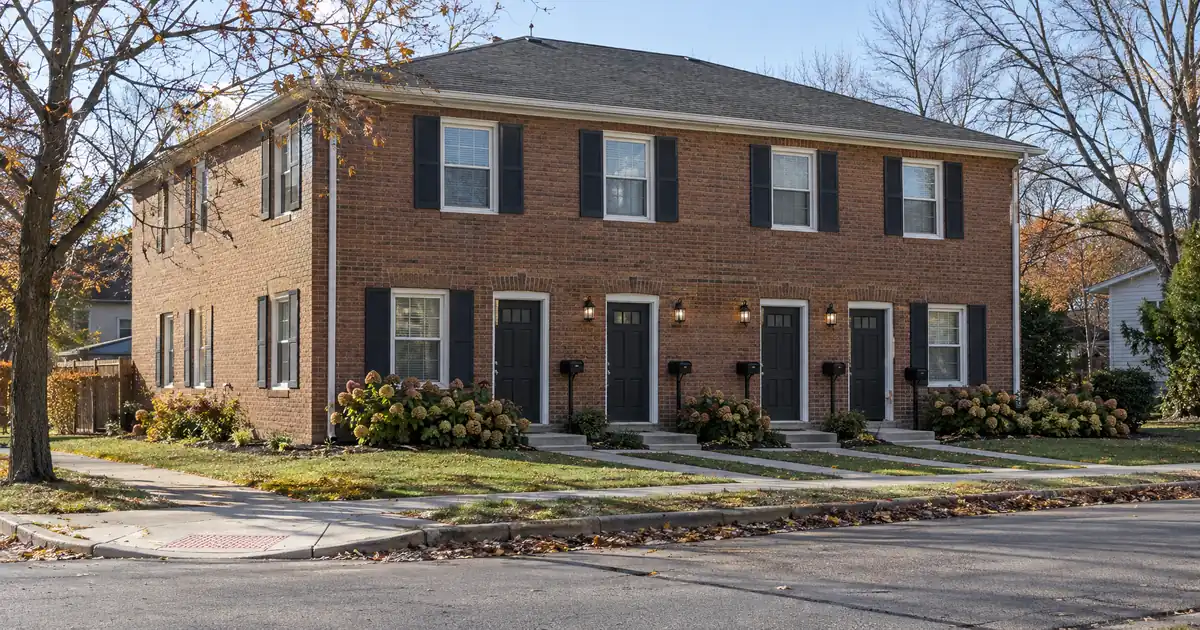
The Quick Read: Often yes, but it depends on which underwriting path your file takes. Most files get an automated finding, and that finding governs the decision. If the file goes to manual review, hard ratio ceilings apply. Rent from the other units helps, but it is not a free offset, and a three- or four-unit building adds a separate property test and reserves.
What Does “High DTI” Actually Mean on an FHA File?
DTI means debt-to-income. It is your monthly debts divided by your gross monthly income. FHA looks at two versions: a housing ratio (the new payment alone) and a total ratio (the payment plus every other monthly debt).
FHA payment estimate
Starting assumptions reflect an example price and the FHA minimum investment. Replace them with your own figures.
Editable benchmark: 7.32% as of October 22, 2026 · Freddie Mac 30-year average via FRED®. A conventional market reference, not an FHA loan quote.
Illustrative starting assumptions: a $350,000 price, the FHA minimum investment as the down payment, a thirty-year term at the current Freddie Mac benchmark, and property taxes and insurance estimated at typical national rates. Every field is editable.
Illustrative estimate only — not a Loan Estimate, approval, quote, or commitment to lend. The rate field carries the weekly Freddie Mac thirty-year conventional benchmark, a market reference and not an FHA loan quote; your rate is set by the lender at lock. FHA mortgage insurance follows HUD’s published schedule for the term, leverage and loan size entered; taxes, insurance and dues are editable estimates; closing costs are not included; county loan limits are not checked here. Licensed in sixteen states for consumer mortgages. Lendmire is not affiliated with or acting on behalf of FHA, HUD, or the federal government.
Across the wholesale programs Lendmire places FHA files with, the base pair is 31/43 with no compensating factors. Documented compensating factors can stretch that to 40/50 at the top tier. A compensating factor is a documented strength in the file that offsets a weak spot, such as cash reserves.
So “high” is relative. A 45% total ratio is high against the base pair, but it may still work with documented strengths. Subject to lender guidelines and full file review, of course.
Two Paths: Automated Approval or Manual Underwriting
Almost every FHA file runs through FHA’s automated scoring tool first. It returns an Accept or a Refer. An Accept can be approved on that finding. A Refer, or an Accept the underwriter downgrades, goes to manual underwriting.
This matters because HUD’s published ratio matrix governs only the manual path. The automated finding weighs the whole file together: credit, reserves, down payment, and debt. In practice, the automated finding governs most files, which is why two borrowers with the same DTI can get different answers.
The manual matrix is spelled out in HUD Mortgagee Letter 2026-11, and HUD’s FHA Answers page points to the same sections. Here is how it reads for a borrower at a 580 decision score or higher:
| Ratios (housing/total) | What the file needs |
|---|---|
| 31/43 | No compensating factors |
| 37/47 | One factor: reserves, small payment increase, or residual income |
| 40/40 | No discretionary debt |
| 40/50 | Two documented compensating factors |
Some lenders also set stricter limits of their own, called overlays. A decline from one lender does not always mean FHA itself says no.
How Does Rent From the Other Units Count?
Rent helps, but it works as income, not as a payment offset. HUD’s rental-income policy lets a lender treat subject-property rent as effective income on a two- to four-unit home. On a purchase with no rental history, the lender documents it with an appraisal showing fair market rent, plus leases if they exist. HUD’s archived reference guide is explicit that rent may not be used as a direct offset to the mortgage payment.
Three practical points follow:
- A haircut applies. Lenders count only a portion of the gross rent, to allow for vacancy and maintenance.
- Your own unit produces no rent used for lender review. Only the units you rent out count toward qualifying income.
- No commercial income. A storefront on the ground floor does not count.
Rent usually narrows the gap. It rarely closes it. If a buyer says “the tenants pay the mortgage, so my DTI doesn’t matter,” the underwriter will disagree.
Duplex vs. Triplex vs. Fourplex: Where High-DTI Buyers Often Land
A high-DTI buyer often does better on a duplex. That is a judgment call, though a well-grounded one. Here is why.
| Factor | Duplex | Three or four units |
|---|---|---|
| Borrower ratio test | Yes | Yes |
| Property self-sufficiency test | No | Yes |
| Reserves after closing | Per file | Three months of PITI, per HUD’s archived guide |
| Gift funds for reserves | Per lender | Not allowed for those reserves |
The self-sufficiency test is a property-level gate, separate from your DTI. The lender takes the appraiser’s fair market rent from all units, including yours. It subtracts a vacancy and maintenance allowance, then checks whether the full payment fits inside what is left. Handbook 4000.1 holds the exact formula, so confirm the wording there.
You can fail either gate independently. A strong borrower can buy a property that fails the test. A weak-ratio borrower can buy a duplex that never faces it. PITI (principal, interest, taxes, and insurance) feeds that test, and the FHA mortgage insurance premium raises PITI.
What Does Mortgage Insurance Do to the Math?
FHA charges an upfront premium of 1.75% of the base loan, usually financed into the balance. It also charges an annual premium between 0.15% and 0.75% of the balance, depending on term, loan amount, and LTV. LTV is loan-to-value, the loan as a share of the home’s value.
On a thirty-year loan above 90% LTV, the annual premium lasts the full term. At or below 90%, it ends after eleven years. Both premiums raise the payment, and a higher payment pushes up your ratios and the 3–4 unit test. Mortgage insurance is a program cost, and Lendmire does not set it. Leverage, reserves, and pricing vary by lender and program; the final terms follow the full file review.
Down Payment, Credit, and Occupancy
For a purchase, FHA allows maximum financing of 96.5% LTV with a 3.5% minimum investment at a decision score of 580 or higher. The wholesale programs Lendmire works with start at 580. HUD has a lower tier for scores in the 500s that asks for more down, but the network does not reach below 580. Terms vary by lender guidelines, property type, leverage, credit profile, and full file review.
The home must be your principal residence, and it can have one to four units. At least one borrower has to live there. Occupancy is a certification you sign, not a formality, and calling an investment purchase owner-occupied is mortgage fraud. HUD’s 203(b) program page confirms FHA insurance covers principal residences with one to four units. Five or more units fall outside the program.
A non-occupant co-borrower is allowed on these programs. It can help, since the co-borrower’s income and strength may support the file. Seller or interested-party contributions are allowed up to 6% of the price. County loan limits apply and change yearly, so check yours with a loan officer.
Reserves do double duty here. They can serve as a compensating factor for the higher manual tiers, and they are required on three- and four-unit homes. Because those reserves can’t come from a gift, a buyer using gift money for the down payment needs separate savings.
Levers That Lower a High DTI Before You Apply
Earning more is not the only fix. Try these, roughly in order of effect:
1. Pay off small installment loans. A car loan with a few payments left can drop out of the ratio entirely. Lowering a credit card balance helps less than closing out an installment loan.
2. Check how student loans are counted. Ask the loan officer how your payment will be treated, since income-driven plans can be handled differently.
3. Add a co-borrower. A non-occupant co-borrower’s income may help, though their debts come along too.
4. Choose the duplex. It sidesteps the extra property test and the reserve requirement.
5. Put more down or buy cheaper. A smaller loan means a smaller payment and a smaller mortgage insurance premium.
6. Build documented reserves. They can unlock a higher manual tier.
What not to do: open new credit or finance furniture before closing. Every new payment lands in the ratio.
Can Boarders or an ADU Add Income?
Possibly, with rules. An accessory dwelling unit (ADU) on a one-unit home keeps the property a one-unit home. On a property with two or more units, a separate additional dwelling counts as another unit. HUD treats renters of an ADU differently from boarders, who rent space inside your own unit.
For boarders, FHA’s guidance says the income must have been received for at least nine of the most recent twelve months, be current, and be averaged over twelve months. It cannot exceed 30% of total monthly effective income. A new house hacker usually has no such history, so don’t plan on it.
What Underwriters Weigh Beyond the Ratio
The ratio is one input. Across the files Lendmire sees, underwriters tend to weigh these things alongside it:
- Credit history. Recent late payments hurt more than a thin file does.
- Reserves. Cash left after closing signals you can absorb a vacancy.
- Payment shock. A new payment far above your current housing cost raises questions. A small increase counts as a compensating factor.
- Debt behavior. Rising revolving balances can read as strain.
Federal ability-to-repay rules also require the lender to consider your DTI or residual income and to verify what it relies on. The CFPB‘s qualified-mortgage rules are separate from FHA’s underwriting standards. FHA sets its own ratios.
If You Get a No
A decline is information, not a verdict. Work through it in this order:
1. Ask which path it came from. Automated refer, manual limit, or a lender overlay each have different fixes.
2. Fix the biggest ratio driver. Usually that is one debt.
3. Change the property. Move from a fourplex to a duplex, or to a lower price.
4. Change the file. Add a co-borrower or build reserves.
5. Wait and rebuild. If credit is the issue, time and clean payments help. HUD sets its own waiting periods after credit events: two years from a chapter 7 discharge and three years from a foreclosure.
A different lender may also read the same file differently, since overlays vary.
Key Terms Defined
DTI (debt-to-income): Your monthly debts divided by your gross monthly income.
Compensating factor: A documented strength, like reserves, that supports a higher ratio.
Self-sufficiency test: A property-level check on three- and four-unit homes that asks whether the building’s rent covers its payment.
PITI: Principal, interest, taxes, and insurance, the full monthly housing payment.
Overlay: A lender’s own rule that is stricter than HUD’s.
What to Bring to a Loan Officer
- Pay stubs, W-2s, and traditional personal-income documentation for the income side.
- Statements for every debt, with balances and payments.
- Bank statements showing the source of your down payment and reserves.
- The property address, unit count, and any leases.
- A short list of questions: Which underwriting path? Any lender overlays? What will my ratios be with and without the other units’ rent?
Tax treatment can depend on your situation; borrowers should speak with a qualified tax professional before relying on any deduction or credit.
If you are buying a home and want to see whether an FHA loan fits your file, Lendmire can help you compare the options and what each one asks of the file. You can review the FHA loan programs first. For a related scenario, see Lendmire’s piece on whether a 2–4 unit primary home with a high DTI can get an FHA cash-out.
Frequently Asked Questions
Is there a hard 43% DTI cap on FHA loans?
No. 31/43 is the baseline for manual underwriting. Higher manual tiers exist with compensating factors, and automated findings weigh the whole file. Lender overlays can still be stricter, subject to lender guidelines.
Can I count rent from the unit I live in?
No, not as qualifying income. Your own unit produces no rent used for lender review. It enters only the three- and four-unit self-sufficiency test, where the appraiser’s market rent from all units is considered.
Do I need landlord experience?
Not for a purchase. With no rental history, the lender documents projected rent through an appraisal showing fair market rent, plus leases if they exist.
Does the self-sufficiency test apply to duplexes?
No. It applies only to three- and four-unit homes. That is one reason a high-DTI buyer often looks at a duplex first.
Can a non-occupant co-borrower help?
Yes, on the programs Lendmire places, a non-occupant co-borrower is allowed. Their income and debts both enter the file, and the borrower who lives there must still meet the occupancy rule.
For your own numbers, request a scenario review with Lendmire.
About Lendmire
Lendmire (NMLS# 2371349) is a mortgage brokerage serving homeowners and home buyers in 16 states. FHA, VA, conventional and jumbo purchase and refinance loans are arranged through wholesale lending channels; Lendmire brokers the financing and the lender underwrites each application. Scotsman Guide named Lendmire a Top Mortgage Workplace in both 2025 and 2026.
Get Started
Ready to find the right loan for you?
In about 30 seconds you can review financing options available for your home or investment property. No commitment required.
Informational only. Not a Loan Estimate, approval, or commitment to lend. Program availability and eligibility are subject to lender guidelines, credit approval, property review, and underwriting.
References
1. HUD Mortgagee Letter 2026-11 (manual ratios)
2. HUD FHA Answers: manual qualifying ratios
3. HUD Archives HOC Reference Guide: Rental Income
5. FHA INFO 2025-05 (boarder income)
6. CFPB
This article is part of Lendmire’s FHA loan program — full qualification details, guidelines, and scenarios live on the program page.
Related reading: FHA Cash-Out Buyout Documentation for an Existing FHA Loan · How to Close a Texas FHA Cash-Out to Pay Off Debt on a High DTI · Can You Get an FHA Cash-Out With One Unit Vacant in Your Triplex?
Brandon Miller
Founder & CEO, Mortgage Loan Originator, Lendmire LLC
- Mortgage Loan Originator · NMLS# 1129696 · Verify on NMLS Consumer Access
- North Carolina Real Estate Broker · License# 343312 · Verify on NCREC
- North Carolina Insurance Producer · License# 19053198 · Property, Casualty, Life, Health · Verify on NAIC SBS
- Lendmire LLC · Firm NMLS# 2371349 · Verify firm licensure
Compliance and disclosures. Lendmire (NMLS# 2371349) is a licensed mortgage broker and is not a direct lender, depository institution, financial advisor, or tax professional. Content in this article is general market analysis and educational information — not financial, legal, or tax advice for any specific situation. Lendmire does not guarantee loan approval; every transaction is subject to underwriting by the funding lender. Mortgage pricing and loan program guidelines are subject to change at any time without notice and vary by borrower characteristics, property type, and state regulations. Lendmire complies with Equal Housing Opportunity. Licensure verification: NMLS Consumer Access.