
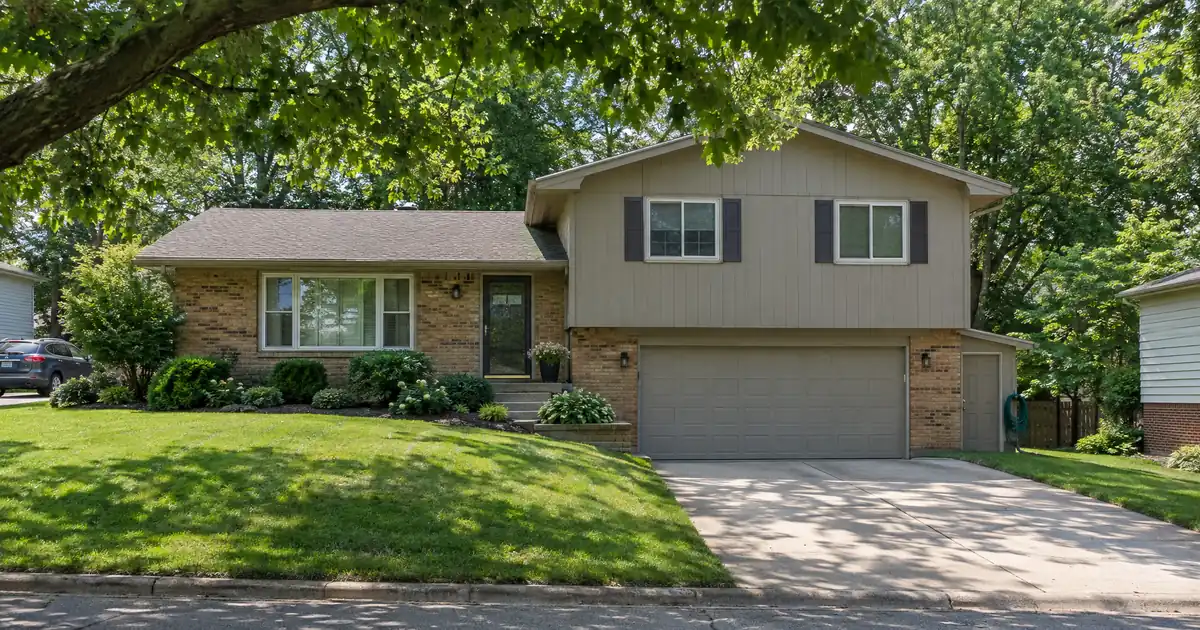
The Quick Read: A bank statement cash-out refinance is underwritten like any other cash-out loan. The only real change is how income is measured: deposits are averaged instead of tax returns being read. The lender reviews the borrower, the property value, and the leverage. It does not review the repair project, and a contractor bid or draw schedule is generally not part of a standard cash-out, subject to lender guidelines.
- Income comes from 12 months of business or personal bank statements, averaged after an expense factor.
- Cash-out leverage is capped below purchase leverage: up to 80% LTV on an owner-occupied primary residence, up to 75% on a second home or an investment property.
- The appraisal values the home as it stands today, not after the repairs.
- Proceeds arrive as one lump sum, so the investor sequences contractor payments and carries the budget risk.
- Occupancy decides the paperwork: owner-occupied files are consumer mortgages, while non-owner-occupied rentals are business-purpose. Exact terms depend on the lender’s guidelines, property type, leverage, and a full review of the borrower’s file.
Self-employed owners hit this question often. The roof leaks, the HVAC is dying, the tax returns show little income after write-offs, and the contractor has not even quoted. The loan can still work. This guide walks through what the lender looks at, in order, and where files go sideways.
What Is a Bank Statement Cash-Out Refinance for Repairs?
It is a new mortgage that pays off the existing loan and returns the difference in cash. The borrower is reviewed on documented income under the applicable program, subject to lender guidelines. Repairs are simply one way to spend the cash.
Three pieces make up the scenario:
1. Bank-statement income. Twelve months of statements replace tax returns as the income proof.
2. Cash-out treatment. The new loan is larger than the payoff, and the lender classifies it as cash-out. That triggers a lower leverage cap and any ownership-period rules in the program.
3. No contractor involvement. The lender is not funding a renovation. It is lending against the property and the borrower.
That third piece is what separates this from a renovation loan. Freddie Mac’s Guide defines a cash-out refinance as a mortgage with no specific restrictions on how proceeds are used. It treats its renovation product differently: that product counts as no-cash-out only when the money pays for the eligible work, and that is the structure that brings in project review. Bank-statement loans are non-agency products, so this is a contrast, not a program rule. But the underlying logic carries over. A plain cash-out is not tied to a scope of work.
How Do Lenders Underwrite the File, Step by Step?
Lenders underwrite four things: income, equity, credit, and the property. The repair itself is not on the list. Here is the order a file usually moves through.
1. Statement window. The file carries 12 months of business or personal statements. Which type fits depends on how the borrower is paid and how the accounts are kept.
2. Deposit review. The underwriter totals eligible deposits and strips out anything that is not income. Transfers between the borrower’s own accounts come out. So do loan proceeds and one-off refunds.
3. Expense factor. For business statements, the lender reduces deposits by an expense factor to reach net income. The formula is simple: deposits times one minus the factor, divided by the number of months. Each lender sets its own factor, and an accountant-prepared ratio can change it. Nothing here is universal.
4. Payment test. The resulting monthly income is tested against the new housing payment and the borrower’s other debts.
5. Appraisal and leverage. An appraiser sets value. The cash-out cap then limits how much can be borrowed against it.
6. Credit and reserves. The lender pulls credit and verifies assets. Reserves commonly run around six months of the housing payment on this type of file.
7. Closing and funding. The borrower receives net cash. The lender does not pay the contractor, schedule a draw inspection, or approve the repair scope.
What decides the outcome: appraised value against the leverage cap, qualifying income after the expense factor, credit and reserves, and how clean the deposit history is. Most trouble shows up in that last item.
Which Deposits Count and Which Get Flagged?
Recurring, explainable deposits count. Unexplained ones get questioned or removed. Underwriters treat every deposit as unproven until the source is clear.
| Deposit type | Typical treatment |
|---|---|
| Regular client or customer payments | Counted |
| Transfers between own accounts | Excluded |
| Large one-time deposit | Needs a letter and source documents |
| Loan proceeds or cash advances | Excluded |
| Refunds and reimbursements | Usually excluded |
| Cash deposits with no paper trail | Often excluded or questioned |
The reason is practical. Lenders cannot count a deposit as income without confirming it is income. That is why a letter of explanation, with a matching invoice or contract, is routine for any large or irregular deposit.
A few habits keep this clean. Pull statements early and scan them the way an underwriter would. Mark every transfer. Gather the paper behind any deposit that is far above the monthly pattern. Do this before the application, not after the first conditions list arrives.
What Does the Income Math Look Like?
The math averages deposits, applies the expense factor, and compares the result to the payment. A ratio-style walk-through keeps it concrete without quoting dollars.
Picture a business owner whose eligible deposits average out to a steady monthly figure after exclusions. The lender applies its expense factor and lands on qualifying income. If the accountant supplies an expense ratio and the program accepts it, qualifying income can move. The new payment is then compared with that income. If the ratio is comfortable, the deal works on. If it is tight, the borrower has levers: a smaller cash-out, a lower balance, or paying down other debts.
Two things trip people up. First, the expense factor is a lender convention, not a law. Different programs set it differently, and a CPA letter can change it. Second, bank-statement qualification is about the borrower’s deposits, so rent on the property matters less than it does on a DSCR loan. A vacant or low-rent property can still work if personal or business deposits are strong. That is the main reason borrowers pick this route over a rental-income loan.
How Much Cash Can You Actually Take Out?
Two ceilings cap the proceeds. The equity ceiling is the leverage cap times appraised value, less the payoff and costs. The income ceiling is how much loan the qualifying income can support. Whichever is lower wins.
Leverage caps on cash-out through select wholesale lenders:
| Occupancy | Typical cash-out ceiling |
|---|---|
| Primary residence, fixed expense ratio | Up to 80% LTV |
| Primary residence, accountant-prepared ratio | Up to 75% LTV |
| Second home | Up to 75% LTV |
| Investment property | Up to 75% LTV |
The accountant-prepared route is the lower ceiling, not the higher one. Borrowers sometimes assume a CPA letter buys more leverage. In these programs it generally does not. These are typical ranges, and the exact figure moves with loan size and credit.
Do not confuse these with purchase or rate-and-term leverage. On a primary residence, purchase and rate-and-term files can reach up to 90% LTV through select lenders, and an asset-depletion alternative runs to about 80% LTV on a primary. Cash-out sits lower. Loan amounts across the network generally run from $125,000 to $3,500,000.
To tell which ceiling binds, run the equity math first. If the equity cap leaves plenty of room but the payment test fails, income is the limit. If income is strong but the appraisal is light, equity is the limit. Knowing which one binds tells you whether to raise income documentation or adjust the ask.
Why Doesn’t the Lender Need a Contractor Bid?
Because a standard cash-out lends against the home as it stands, not the finished project. The lender has no draw to fund, no scope to review, and no inspection to schedule. Cash goes to the borrower at closing.
Here is how the structures compare:
| Factor | Standard cash-out | Renovation-style loan |
|---|---|---|
| Use of proceeds | Unrestricted | Tied to the project |
| Contractor bid | Not generally required | Typically reviewed |
| Draw schedule | None | Common |
| Appraisal basis | Current condition | Often as-completed value |
| Budget risk | Borrower | Shared with lender oversight |
This is the trade. The investor gets liquidity without scope reviews or draw delays. But the discipline of a draw schedule disappears. If the roof estimate doubles, nobody adjusts the loan. A lump sum cannot be topped up without another refinance. Build a buffer into the ask. Pay the contractor in stages yourself, and tie payments to finished work.
The appraiser also does not credit repairs that have not happened. An improvement may support a higher appraised value later, depending on comps and underwriter review, but the value on this loan is today’s value. Problems that affect habitability or insurability can hurt the file regardless of purpose. A failing roof, a missing mechanical system, or active water damage can lead to appraisal conditions. In that case the lender may require the repair before closing, which puts you back in contractor territory.
How Does Occupancy Change the Paperwork?
Occupancy decides the disclosure regime. An owner-occupied primary residence or second home is a consumer mortgage, and TRID disclosure rules apply. A non-owner-occupied rental, including a short-term rental, is business-purpose and exempt from TRID. Keep these apart in the file and in your planning.
For the consumer side, ability-to-repay review applies in full, even on non-QM loans. The CFPB’s official commentary says credit to acquire, improve, or maintain non-owner-occupied rental property is deemed business purpose, and the eCFR text of Regulation Z section 1026.3 exempts business-purpose credit. The exemption does not reach an owner-occupied home. A bank-statement cash-out to repair your own residence is a consumer loan and gets consumer-level review.
Investment-property files carry a business-purpose statement from the borrower. If proceeds will go partly to personal spending, that can complicate the statement, so the stated purpose should match the real plan.
Consumer mortgage licensing for this lane covers 16 states, so availability depends on where the property sits. Investor-focused leverage guidance for rentals lives on the DSCR side.
Key Terms Defined
Expense factor: The percentage the lender subtracts from business-account deposits to estimate net income.
Letter of explanation: A written note from the borrower describing the source of a large or unusual deposit, backed by documents.
Cash-out refinance: A new mortgage that pays off the old one and returns the extra amount as cash.
Seasoning: The minimum time a borrower must have owned the property or held the loan before cash-out is allowed.
Business-purpose loan: A loan made primarily for business or investment use, such as a non-owner-occupied rental.
Asset depletion: An income method that spreads liquid assets over a set period to produce qualifying income.
Where the General Rule Breaks
The no-contractor rule holds for standard cash-out. These are the cases where it bends.
- Habitability and insurability. If the condition blocks insurance or appraisal sign-off, the lender may require the fix first.
- Seasoning on a recent purchase. Lenders want a minimum ownership period, documented by the settlement statement. Files that assume it away get kicked back. Delayed-financing exceptions exist for some all-cash purchases.
- Small cash back. Any amount above the payoff is usually treated as cash-out. A lien-free property is also cash-out.
- Short-term rental collateral. Cash-out on an STR often needs history, or carries a lower leverage cap. Short-term rental rules can vary by city, county, HOA, and property type, so investors should confirm local rules before relying on projected rental income.
- Prepayment penalties. Business-purpose loans fall outside the consumer limits on these, so investor loans may carry one. Model it before replacing the existing loan.
- Replacing a low first mortgage. A cash-out replaces the whole balance, not just the extra cash. Weigh that against a second lien.
- Dual-use proceeds. Mixed personal and business use can muddy the stated purpose.
Bank Statement or Rental-Income Loan?
Choose by where your strength is. A strong personal deposit history with thin rent points to a bank-statement loan. Strong rent with messy personal income points to a DSCR loan, which qualifies primarily on property-level rental income covering the payment, subject to lender guidelines. Some lenders will not write DSCR loans unless the property cash-flows, and programs below 1.00 coverage exist through select lenders, though leverage and terms adjust.
A passing coverage ratio also does not mean positive cash flow. The ratio ignores repairs, vacancy, and management. Cash-out adds debt, so check the margin after the loan, not before. For the other side of this decision, read Lendmire’s piece Does a Bank Statement Cash-Out Refinance Make Sense for Repairs Without a Contractor?. The complete DSCR loans guide covers the rental-income alternative in full.
What to Prepare Before Applying
A clean file prevents most conditions. Gather these first:
- Twelve months of statements for every account used, with all pages.
- Letters and backup for any deposit well above the usual pattern.
- The current mortgage statement and a payoff figure.
- Proof of insurance and the most recent tax bill on the property.
- Business documents if business statements are used: entity papers, license, or accountant letter.
- Reserve documentation: recent statements showing liquid assets.
- Any repair estimates you already have. They are optional for the lender, but they help you size the ask.
For investment properties, add the lease or rent evidence if the file calls for it, and the business-purpose statement. Appraisal access matters too. If a tenant lives there, coordinate entry early.
Common Mistakes
- Sizing the cash too tightly, with no buffer for overruns.
- Overestimating value and underestimating the payoff.
- Mixing personal and business transfers so deposits look inflated.
- Leaving large deposits unexplained until the lender asks.
- Assuming the accountant route raises leverage.
- Ignoring prepayment terms on an investor loan.
- Skipping seasoning checks on a recent purchase.
Frequently Asked Questions
Do lenders require a contractor estimate on a bank statement cash-out?
Generally not. A standard cash-out has no use-of-proceeds restriction, so the lender does not review scope or bids. Getting estimates is still smart planning, because the borrower carries all budget risk. Renovation-specific products work differently and do review the project.
Can a bank statement loan do cash-out at all?
Yes. It works like a normal cash-out, with income measured from 12 months of statements. Cash-out leverage is lower than purchase leverage: up to 80% LTV on a primary residence, up to 75% on a second home or investment property, subject to lender guidelines.
What happens to large deposits in my statements?
They get reviewed. Underwriters want the source documented, and unexplained deposits are generally not counted as income. A letter of explanation with matching paperwork usually resolves routine cases.
What if the appraisal comes in low?
Lower value shrinks the equity ceiling, which cuts the cash available. Borrowers can request an appraisal reconsideration with recent nearby sales and condition adjustments. Otherwise the ask drops to fit the new cap.
Can I add money later if repairs cost more?
Not on the same loan. The cash-out is a single lump sum. Extra funds mean another loan or paying from reserves, so build a buffer upfront.
Does it matter if the property is a rental or my home?
Yes. Owner-occupied homes are consumer mortgages with TRID disclosures and full ability-to-repay review. If you are self-employed and want to see how the numbers work, Lendmire can help you compare bank statement loan options based on your deposits, the property, credit profile, leverage, and your goals. Programs are subject to lender guidelines and credit approval, and none of this is a commitment to lend.
For how equity extraction works on an investment property, see Lendmire’s guide to cash-out refinance on an investment property.
About Lendmire
Lendmire is a mortgage brokerage (NMLS# 2371349) licensed for consumer mortgage lending in 16 states, arranging bank statement and other alternative-documentation mortgages — P&L-only, 1099-only and asset-based paths — through a wholesale lending network. Eligibility is determined by the lender on each file. Scotsman Guide named Lendmire a Top Mortgage Workplace in both 2025 and 2026.
Get Started
Ready to find the right loan for you?
See your offer in seconds. No credit pull, no obligation.
Informational only. Not a Loan Estimate, approval, or commitment to lend. Program availability and eligibility are subject to lender guidelines, credit approval, property review, and underwriting.
References
2. CFPB Regulation Z Comment 3, Exempt Transactions
This article is part of Lendmire’s bank statement loan program — full qualification details, guidelines, and scenarios live on the program page.
Related reading: Does a Bank Statement Cash-Out Refinance Make Sense to Invest in the Stock Market? · How Lenders Underwrite a Bank Statement Cash-Out Refinance With a 50% Expense Ratio · Can You Get Approved for a Bank Statement Cash-Out Refinance When the Appraisal Is Low?
Brandon Miller
Founder & CEO, Mortgage Loan Originator, Lendmire LLC
- Mortgage Loan Originator · NMLS# 1129696 · Verify on NMLS Consumer Access
- North Carolina Real Estate Broker · License# 343312 · Verify on NCREC
- North Carolina Insurance Producer · License# 19053198 · Property, Casualty, Life, Health · Verify on NAIC SBS
- Lendmire LLC · Firm NMLS# 2371349 · Verify firm licensure
Legal disclosures. Lendmire (NMLS# 2371349) is a state-licensed mortgage brokerage that arranges financing through wholesale lender relationships. Lendmire is not a direct lender, depository institution, or registered financial advisor. The discussion above is general informational content about real estate financing — it is not financial, legal, or tax advice, and readers should consult licensed professionals for guidance on their individual circumstances. Loan inquiries are subject to lender underwriting; this article does not represent a commitment to lend. Loan terms, rates, and qualification standards vary by borrower, property, and state, and are subject to change at any time. Equal Housing Opportunity. NMLS Consumer Access: nmlsconsumeraccess.org.