
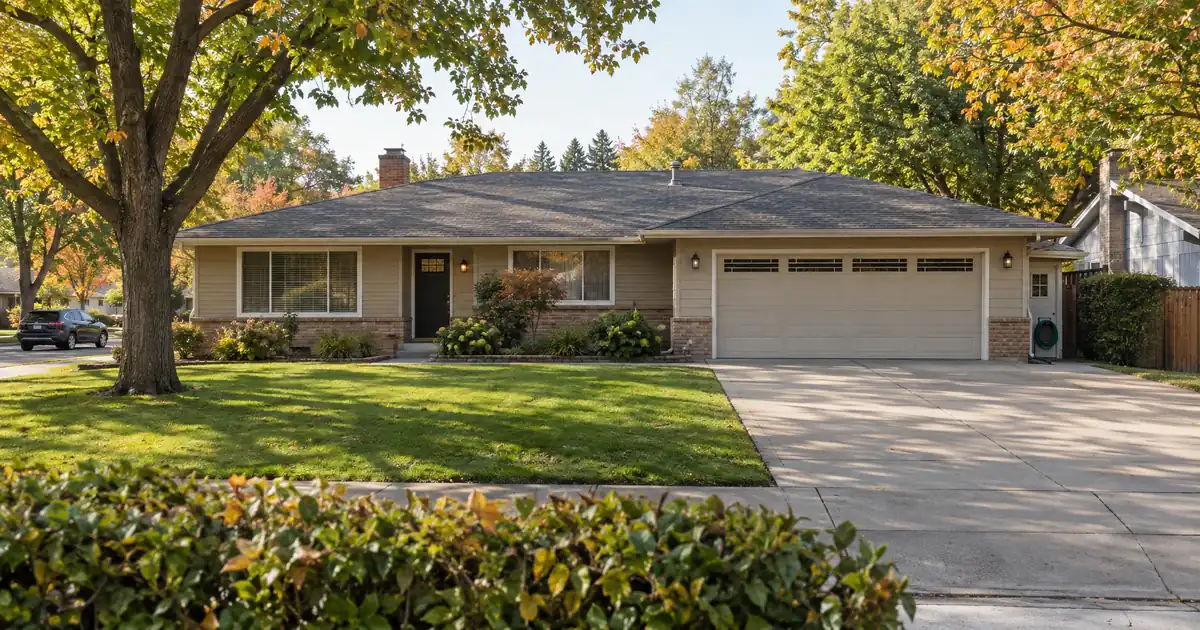
The Quick Read: Lenders treat a paid-off home as a full cash-out loan, prove the title is clean, and turn 12 months of bank deposits into monthly income. They then test the new payment against that income, size the loan to the appraised value, and check reserves, so the file is reviewed on documented income under the applicable program, subject to lender guidelines.
- A home with no mortgage still counts as cash-out, because the entire new loan is money out against equity.
- Twelve months of personal or business statements stand in for tax returns, but title, appraisal, credit and reserves still apply.
- Cash-out ceilings are lower than purchase ceilings: up to 80% LTV on a primary residence with a fixed expense ratio, and up to 75% on a second home.
- Occupancy sets the rules. An owner-occupied home is a consumer loan. A rental is a business-purpose loan.
- Because the home has no payoff, the new payment is the only housing debt in the ratio. Every figure here varies by lender and program — guidelines, property type, leverage, and credit profile all apply.
Self-employed owners with a paid-off house often assume the hard part is behind them. In practice, the underwriting is different from a typical refinance, and that is what this guide walks through, step by step.
What Is a Bank Statement Cash-Out on a Paid-Off Home?
It is a loan secured by a home with no existing mortgage, qualified on bank deposits instead of tax returns. The borrower gets cash, and the home gets a first lien for the first time in years.
Self-employed borrowers often write off enough expenses that their tax returns show little income. Their deposits tell a different story. A bank statement program reads the deposits. Across the wholesale lenders Lendmire works with, the usual documentation is 12 months of statements, business or personal, and qualifying income comes from deposit averages with lender-specific expense factors.
This is not a no-paperwork loan. It swaps one proof of income for another. Everything else on a normal file still shows up: title work, an appraisal, credit review and reserves.
Key Terms Defined
Free and clear: A home with no mortgage or other lien recorded against it.
Cash-out refinance: A new loan that puts cash in the borrower’s hands, secured by the home’s equity.
Bank statement loan: A mortgage qualified on deposit history instead of tax returns or pay stubs.
Expense factor: The share of business deposits a lender treats as operating costs, which are removed before income is counted.
LTV (loan-to-value): The loan amount divided by the home’s appraised value.
Reserves: Liquid savings, counted in months of housing payments, that a borrower holds after closing.
Seasoning: The time a borrower has owned the property before a lender will lend against it.
Why a Paid-Off Home Still Counts as Cash-Out
With no balance to pay off, every dollar of the new loan beyond closing costs goes to the borrower. Lenders classify the whole transaction as cash-out. This is industry practice, not a technicality they overlook for owners who have paid down everything.
The practical effect is leverage. Cash-out ceilings sit below purchase ceilings. Across the programs in Lendmire’s network, purchase and rate-term loans on a primary residence can reach up to 90% LTV on stronger files. Cash-out on a primary residence tops out at up to 80% LTV with a fixed expense ratio. Using an accountant-prepared ratio instead lowers that ceiling to 75%. A second home goes up to 75% LTV, by loan size and credit.
An owner who sees 90% advertised somewhere is looking at a purchase or rate-term number. Expect the cash-out figure on a paid-off home.
The Underwriting Sequence, Step by Step
Here is the order a file usually moves, from application to clear-to-close.
1. Classify the loan. The lender labels it cash-out and picks the occupancy: primary residence, second home or rental. That choice sets the leverage cap and the disclosure rules.
2. Verify title. A title search must show no liens. The underwriter looks for released-lien paperwork, closed credit lines, judgments and tax liens.
3. Pick the statement set. The lender decides whether personal or business statements carry the file. The Scotsman Guide describes self-employed borrowers supplying 12 to 24 months of statements. Most programs we place files with use 12.
4. Scrub the deposits. The underwriter strips out anything that is not income.
5. Apply the expense factor. Business deposits are reduced for operating costs.
6. Average to monthly income. The adjusted total is divided by the number of months.
7. Test the payment. The new housing payment, plus taxes, insurance and other debts, is compared with monthly income.
8. Appraise and size the loan. The appraised value and the LTV cap set the maximum loan.
9. Check reserves and credit. Roughly six months of the housing payment in reserves is common.
10. Clear conditions and close.
Loan amounts across these programs run from roughly $125,000 to $3,500,000. Every file is underwritten individually, and nothing here is a commitment to lend.
How Deposits Become Qualifying Income
Underwriters do not count every dollar that lands in the account. They count money that looks like repeatable business or personal earnings.
| Deposit type | Typical treatment |
|---|---|
| Customer or client payments | Counted |
| Transfers between your own accounts | Excluded |
| Refunds and reimbursements | Usually excluded |
| Owner cash injections | Excluded or sourced |
| Loan proceeds | Excluded |
| Large one-time deposits | Need a written explanation |
Treatment varies by lender, so read this as the common pattern and not a rule.
Next comes the expense factor. On business accounts, the lender removes a share of deposits as operating costs. Lenders set their own factors, and no universal number exists. In the programs we place files with, a fixed expense ratio supports the higher cash-out ceiling on a primary residence, while the accountant-prepared route carries the lower one.
The commonly used math looks like this: eligible deposits, divided by the months in the statement window, times one minus the expense factor, times your ownership share. Personal statements generally carry little or no expense factor, but a lender may look harder at where the money comes from.
Picture a contractor whose business account shows steady customer payments, a few transfers from a savings account, and one large deposit from a family loan. Only the customer payments count. The transfers drop out. The family deposit needs a paper trail or it comes out too.
Worked Example: A Free-and-Clear Home From Start to Finish
These numbers are modeled assumptions, not market data. Picture a self-employed owner with a paid-off primary residence appraised at $800,000, asking for the highest cash-out the program allows.
- Occupancy: primary residence, cash-out.
- Leverage ceiling: up to 80% LTV with a fixed expense ratio, or 75% with an accountant-prepared ratio.
- Documentation: 12 months of business statements, with deposits scrubbed and the expense factor applied.
- Payment test: the new payment is the only housing obligation, so the income-to-debt ratio is driven by that payment, taxes, insurance and any other debts.
- Net result: closing costs, prepaids and any escrows come out of the loan amount, so the cash that reaches the borrower is less than the loan. Final terms depend on lender guidelines, property type, leverage, and the borrower’s complete credit picture.
If the appraisal comes in below $800,000, the maximum loan shrinks with it. A lower value cuts the loan by the same percentage. Payment, rate and dollar proceeds are not shown here because they depend on the individual file.
How to Prove the Home Is Really Free and Clear
Owners are often surprised at this step. A house can feel paid off while the record says otherwise.
The title search looks for:
- An old mortgage that was paid but never formally released.
- A home equity line that was paid down but never closed.
- Judgment liens from lawsuits or unpaid business debts.
- Tax liens from unpaid property or income taxes.
- Mechanic’s liens from contractors.
If something turns up, the lender asks for a payoff letter or a release before it will fund. Clearing an old lien is usually paperwork, but it can add steps. Ask your title company for a preliminary report before you apply, so any surprises show up early.
Where the Standard Path Breaks
The general sequence holds for most files. These cases change it.
Business under 24 months. A shorter history can mean more weight on credit, liquid assets and reserves. Programs differ.
Recent cash purchase, inheritance or transfer. Waiting periods on title are program choices, not federal rules. Some lenders want months of ownership before lending against value. A few will size the loan to the purchase cost, not the appraisal, for a recent cash buyer.
Low appraisal. The loan shrinks to match the value. The borrower can bring a second opinion, but the lender decides.
Expense factor disputes. A CPA-prepared profit-and-loss or expense letter may support a different factor than the default. Lender acceptance varies.
Asset-depletion alternative. If deposits are uneven but liquid assets are strong, qualifying from assets runs up to about 80% LTV on a primary residence. These specifics are subject to lender guidelines and a full review of property, leverage, and credit.
LLC ownership. If the home sits in an LLC, availability depends on lender program eligibility. Loans to individuals who sign personally are handled differently from loans to entities.
Short-term and long-term rentals. Occupancy changes the whole file. Investment-property cash-out tops out around 75% LTV. Terms depend on the lender’s guidelines, the property type, the leverage, and a full review of the credit profile.
Owner-Occupied or Rental: Why Occupancy Changes the Rules
Occupancy decides which set of consumer protections applies. This is the one regulatory point that changes what you should do.
An owner-occupied home, whether a primary residence or a second home, is a consumer mortgage. It is covered by the ability-to-repay requirement, which the Federal Register notice adopting the rule describes as a reasonable, good-faith determination based on verified and documented information. Bank statement loans are still verified. The lender has more flexibility in how it qualifies you, not permission to skip the check.
A non-owner-occupied rental, including a short-term rental, is generally a business-purpose loan and is exempt from the consumer disclosure forms. The CFPB’s Regulation Z commentary on business-purpose credit treats credit to acquire, improve or maintain a non-owner-occupied rental as business purpose. If you expect to occupy the home more than 14 days in the coming year, that treatment does not apply. A cash-out whose proceeds go to something else is judged on a multi-factor test.
The takeaway: state your real occupancy and your real use of the funds. A mismatch is the fastest way to turn a clean file into a problem file.
Which Loan Fits: Bank Statement, DSCR, or Something Else?
| Situation | Likely fit |
|---|---|
| Self-employed, strong deposits, owner-occupied | Bank statement cash-out |
| Rental where rent covers the payment | DSCR cash-out |
| Salaried with clean tax returns | Full-documentation loan |
| Small, flexible borrowing need | Home equity line |
A DSCR loan is reviewed primarily on property-level rental income covering the payment, subject to lender guidelines. It does not use your deposits or expense factors. If your personal income looks thin but the rent is strong, the property may carry the file. For more on that lane, see Lendmire’s complete DSCR loans guide.
A home equity line avoids a new first mortgage but can carry its own limits and a variable structure. The best program for your situation depends on occupancy, credit, leverage need and how your income is documented.
What to Prepare Before You Apply
- Twelve months of statements for every account you want counted, with all pages.
- A short written explanation for any large or unusual deposit.
- A preliminary title report, to find old liens early.
- A CPA-prepared profit-and-loss or expense letter, if your costs differ from a standard factor.
- Proof of reserves, such as recent statements for savings or investment accounts.
- A clear statement of how you will use the funds.
Keep business and personal money separate where you can. Commingled accounts force more explanations and slow the review.
Why These Files Stall
- Deposits that are mostly transfers, which leave little left to count.
- Unexplained large deposits.
- A lien nobody knew about.
- A low appraisal that shrinks the loan below what the borrower planned.
- Reserves held in accounts that cannot be documented.
- An occupancy answer that does not match how the home is used.
Most of these can be fixed before applying. A related read is Lendmire’s piece Can You Get Approved for a Bank Statement Cash-Out Refinance on a Free-and-Clear Home?, which looks at the approval side of the same question.
If you are self-employed and want to see how the numbers work, Lendmire can help you compare bank statement loan options based on your deposits, the property, credit profile, leverage, and your goals. Lendmire is a mortgage broker that shops select wholesale lenders and matches the file to the program, and consumer lending covers 16 states.
Frequently Asked Questions
Does a paid-off home count as cash-out?
Yes. With no balance to retire, the whole loan, less costs, goes to the borrower, so lenders price and cap it as cash-out. Expect the cash-out ceiling, which is up to 80% LTV on a primary residence with a fixed expense ratio and up to 75% on a second home. The exact numbers vary by lender and program and follow a full review of property, leverage, and credit.
Can I use only personal bank statements?
Often, yes. Personal statements generally carry little or no expense factor, though lenders vary. A lender may still scrub the deposits and ask about transfers and large credits. Business statements take an expense factor instead.
What if my tax returns show a loss?
A loss on paper does not rule you out, because the loan reads deposits. The lender still reviews credit, reserves, the appraisal and your ability to repay. Qualification is subject to lender guidelines and individual underwriting.
How long do I need to own the home before a cash-out?
No federal rule sets a waiting period. Any seasoning requirement is a lender or program choice, and it matters most after a recent purchase, inheritance or transfer. Ask your broker to match your timeline to a program that fits.
How much cash will I actually get?
Less than the loan amount. Closing costs, prepaids and escrows come out of the loan. A low appraisal also reduces the maximum loan. Net proceeds depend on the individual file.
For the mechanics of pulling equity out of a rental property, see Lendmire’s guide to cash-out refinance on an investment property.
About Lendmire
Lendmire (NMLS# 2371349) is a mortgage brokerage serving self-employed and high-net-worth borrowers in 16 states. Bank statement, P&L-only, 1099-only and asset-based mortgages are arranged through wholesale lending channels; Lendmire brokers the financing and the lender underwrites each application. Scotsman Guide named Lendmire a Top Mortgage Workplace in both 2025 and 2026.
Get Started
Ready to find the right loan for you?
See your offer in seconds. No credit pull, no obligation.
Informational only. Not a Loan Estimate, approval, or commitment to lend. Program availability and eligibility are subject to lender guidelines, credit approval, property review, and underwriting.
References
1. Scotsman Guide, “Rev Up the Engine for Non-QM Lending”
2. Federal Register, Ability-to-Repay and Qualified Mortgage Standards Final Rule
3. CFPB, Regulation Z § 1026.3 (business-purpose exemption)
This article is part of Lendmire’s bank statement loan program — full qualification details, guidelines, and scenarios live on the program page.
Related reading: Does a Bank Statement Cash-Out Refinance Make Sense to Invest in the Stock Market? · How Lenders Underwrite a Bank Statement Cash-Out Refinance With a 50% Expense Ratio · Can You Get Approved for a Bank Statement Cash-Out Refinance When the Appraisal Is Low?
Brandon Miller
Founder & CEO, Mortgage Loan Originator, Lendmire LLC
- Mortgage Loan Originator · NMLS# 1129696 · Verify on NMLS Consumer Access
- North Carolina Real Estate Broker · License# 343312 · Verify on NCREC
- North Carolina Insurance Producer · License# 19053198 · Property, Casualty, Life, Health · Verify on NAIC SBS
- Lendmire LLC · Firm NMLS# 2371349 · Verify firm licensure
Required disclosures. Lendmire (NMLS# 2371349) operates as a licensed mortgage broker, not a direct lender or depository. The discussion in this article is general in nature and should not be relied upon as financial, legal, or tax advice — every investment scenario is unique and should be reviewed by a qualified professional. Any loan inquiry is subject to lender underwriting, and this article is not a commitment to lend or a guarantee of approval. Mortgage rates, loan terms, and program guidelines vary by borrower, property, and state, and may change without notice. Equal Housing Opportunity. Verify licensure at NMLS Consumer Access.