
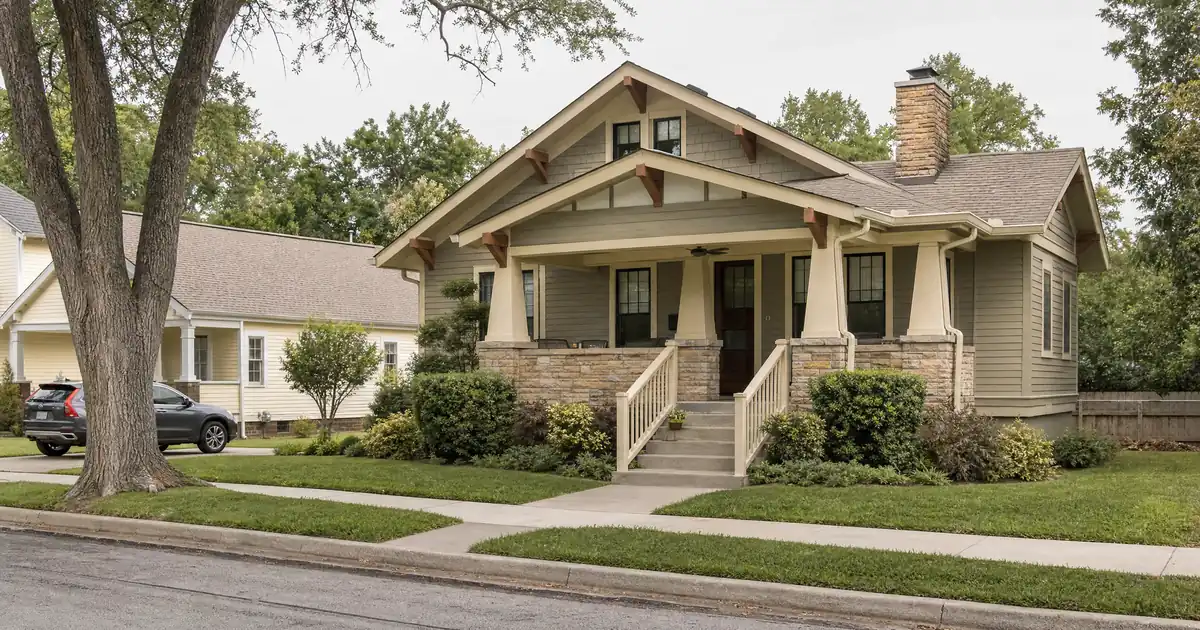
How To Get Mortgage If Self Employed — The Quick Read: Self-employed borrowers can qualify for a mortgage in one of two ways. The first is personal-income underwriting. This pulls two years of traditional personal-income documentation and calculates a net qualifying figure. The second is property-income underwriting. This looks at what the property rents for, not what you earn. For rental property investors, the second path is usually easier. It’s called DSCR financing. It skips the tax-return math and qualifies the deal on rent versus payment. Which path fits you depends on two things: is the property a primary residence or an investment, and how much of your income runs through a business return instead of a W-2.
Self-employment is common. This isn’t a small, niche problem. In the fourth quarter of 2023, 9.1 million unincorporated self-employed workers made up 5.7% of all nonagricultural U.S. workers, according to the Bureau of Labor Statistics. BLS also projects total employment will grow from 170.0 million to 175.2 million between 2024 and 2034. That’s a 3.1% increase. Self-employed workers are expected to grow 2.2% over that same span, per BLS’s Monthly Labor Review projections. A lot of people hit the same documentation wall.
What your deposits qualify you for in your market.
Alt-doc programs read 12 months of business or personal bank deposits instead of tax returns. Enter your average monthly deposits and see the income a lender would credit you.
The expense factor is set by the lender from your business type and profit-and-loss statement; it is not a number you choose. This widget quotes no rate and no payment.
Program parameters shown update from Lendmire’s centralized guideline source.
Estimate
Illustrative estimate only — not a quote, Loan Estimate, approval, or commitment to lend. Deposit average, expense factor, and housing ratio are editable assumptions; the expense factor a lender applies is set from your business type and documentation. No interest rate or monthly payment is quoted here. Purchase capacity is a simplified illustration and does not account for taxes, insurance, HOA dues, or other debts. Alt-doc income documentation is available on consumer mortgages in the states where Lendmire is licensed for consumer lending; actual terms vary by lender, borrower, and property.
Key Terms Defined
DSCR (Debt Service Coverage Ratio): a ratio that compares a rental property’s monthly rent to its monthly mortgage payment (principal, interest, taxes, insurance, and any HOA dues). A ratio at or above 1.00 means the rent covers the payment.
Non-QM (non-qualified mortgage): a loan that falls outside standard federal documentation rules for verifying a borrower’s income. This gives lenders room to underwrite differently — using bank statements, rental income, or asset-based methods instead of traditional personal-income documentation.
Business-purpose loan: a loan made to finance an investment or rental property, not a home you live in. Lenders review it under different rules than an owner-occupied mortgage.
Seasoning: the length of time you’ve owned or refinanced a property before a lender will consider a new loan on it. It’s usually measured in months.
Global cash flow: an underwriter’s broader look at your total financial picture, beyond the one ratio a loan is built around. Lenders use it as a secondary check, even on DSCR files.
Two Ways to Qualify — Which One Applies to You
Whether you qualify on your own income or the property’s income depends on what you’re buying and how the loan is structured. It has nothing to do with how much money you actually make.
Say you’re buying a primary residence with a standard mortgage. Plan on documenting your income the long way, and start gathering paperwork before you shop. For self-employed applicants, that usually means signed traditional personal-income documentation for the most recent two years. If you run a corporation, S-corp, or partnership, add two years of business returns plus a current profit-and-loss statement and balance sheet. Underwriters build an earnings trend across those two years. One great year won’t erase a soft prior year in this framework. Here’s the practical takeaway: if your business is growing fast, the paperwork will lag the reality. Budget time for that.
Now say you’re buying a rental property instead. There’s a second path that skips all of that. DSCR loans qualify primarily on whether the property’s rental income covers the payment, subject to lender guidelines — not your traditional income documentation, W-2s, or pay stubs. There’s no employer to verify when you’re the employer. So that whole document chain simply isn’t part of the review. Lendmire’s complete DSCR loans guide walks through the full mechanics if you want the deeper version.
Why Self-Employed Borrowers Struggle on the Personal-Income Path
The math problem here is structural, not personal. Sole proprietors report income on Schedule C. Once net self-employment earnings hit $400, you owe self-employment tax, calculated on Schedule SE, per the IRS. That tax runs at 15.3% — 12.4% for Social Security and 2.9% for Medicare — stacked on top of ordinary income tax, according to the IRS’s self-employment tax guidance.
Because that burden is real, most self-employed business owners write off everything the tax code allows. That’s a smart move for April 15. It’s a bad move for a mortgage application. Why? The same deductions that shrink your tax bill also shrink the net income figure a personal-income lender is allowed to count. Your actual cash flow might be strong. Your qualifying income, on paper, often isn’t.
Partnership and S-corp income adds another layer. Even under standard underwriting, your share of K-1 earnings only counts if the lender confirms the business has enough liquidity to support the withdrawal. Lenders document this through the K-1 itself or additional records, per Fannie Mae’s selling guide language on rental and business income. Lenders treat K-1 income as inherently less certain than a paycheck. That’s one reason multi-entity real estate investors often find DSCR structures simpler to work with — the K-1 liquidity question never comes up.
How DSCR Underwriting Actually Works, Step by Step
DSCR underwriting swaps the personal earnings-trend analysis for one question: does the rent cover the payment. Here’s how a file typically moves through the network.
Step 1 — The property gets valued for rent, not just price. An appraiser documents market rent using standard forms — a Single-Family Comparable Rent Schedule for a one-unit property, or a Small Residential Income Property Appraisal Report for two-to-four units. These are the industry-standard rent documentation forms used across DSCR and agency lending alike.
Step 2 — Rent gets compared to the full monthly payment. That payment covers principal, interest, taxes, insurance, and HOA dues where applicable — sometimes shortened to PITIA. Divide rent by that payment and you get the coverage ratio. A property generating $125,000 in annual rental income against $100,000 in annual debt service clears a 1.25 ratio. That’s a real illustration of the mechanics, not a program promise, per trade coverage on DSCR underwriting mechanics.
Step 3 — Credit, leverage, and reserves get layered on. Across the wholesale network Lendmire works with, most programs want a credit score around 660, though a 620 floor exists in parts of the network. A score of 700+ unlocks the strongest leverage tiers. Purchase leverage typically runs 75%-80% LTV, with select high-leverage programs reaching 85% LTV for borrowers around 700+. Reserves commonly land around 6 months of PITIA, stepping up toward 9 months on loans above $1,500,000. Conservative rate-and-term files at modest leverage under that threshold sometimes see reserves waived. None of this is universal. It varies by lender, loan size, and transaction type.
Step 4 — A minimum coverage ratio gets applied. A 1.00 DSCR is where select programs in the network start. Think of it as a floor for specific programs, never a universal standard. Clearing 1.00 doesn’t mean the deal is automatically approved. It also doesn’t mean the property is “cash flowing” in the everyday sense. DSCR only measures rent against the payment. Repairs, vacancy, property management, utilities, and capital expenses all sit outside that calculation. Underwriters also weigh global cash flow. Even a file that clears the minimum ratio can stall if your broader financial picture doesn’t hold up.
For a side-by-side on how this compares structurally to a standard mortgage, Lendmire’s DSCR vs. conventional breakdown covers the documentation gap in more detail.
Loan-Type Comparison
| Path | Income Docs Required | Best Fit |
|---|---|---|
| Conventional/QM (Path A) | 2 years conventional personal-income paperwork, P&L, balance sheet | Self-employed buyer of a primary residence |
| Bank-statement non-QM | 12-24 months personal/business statements | Self-employed buyer needing flexibility, owner-occupied or investment |
| DSCR (Path B) | Property rent vs. payment only | Rental property investors, any number of entities |
Bank-statement programs sit in the middle. Qualification for the line runs on a borrower-permissioned account connection analysed for deposit history and income trend — no tax returns, and no hand-counted stack of monthly statements. The lender then applies a standard expense factor — often around 50% — to estimate qualifying income. Some lenders use a third-party-prepared profit-and-loss statement instead, per Scotsman Guide’s coverage of non-QM lending. It’s a real option for a primary residence. For a rental purchase specifically, DSCR is usually the more direct route, since it skips the income-averaging exercise entirely.
Where the Standard Rules Break — Named Edge Cases
Short-term rentals complicate the standard rent form. Form 1007 was built around long-term lease comparables. Applying it to short-term rental income takes extra layering. On a refinance, the rent schedule typically gets paired with standard personal-income documentation or lease agreements. On a purchase, it can stand alone or pair with a lease, per guidance circulated through Nevada’s Real Estate Division on short-term rental treatment. Across Lendmire’s network, short-term rental DSCR files generally run to 75% LTV on a purchase, and around 70% on a rate-and-term or cash-out refinance. Short-term rentals qualify at a 1.00 coverage threshold on purchase and refinance at reduced maximum leverage, and require a 12-month income history or market data report at most lenders. In practice, these files often show tight coverage when underwritten on projected long-term rent. But they clear comfortably when trailing twelve-month short-term income gets layered in. The stronger files run both scenarios side by side rather than leaning on one number.
Bank-statement files fall apart on documentation mismatches, not income shortfalls. An unsigned P&L can stall a file. So can unexplained cash deposits, statements that don’t line up with an accompanying P&L, or transfers between personal and business accounts that suggest circular cash flow. All of these stall a file even when the underlying income story checks out.
Cash-out on an investment property has its own ceiling. Across the network, cash-out refinance leverage tops out around 75% LTV. Lenders expect roughly 6 months of ownership seasoning before they’ll consider it. A larger down payment on the way in can lift your coverage ratio and lower the payment. But it never overrides that leverage cap, the credit floor, or the reserve requirement. The strongest files clear both the equity test and the rent-coverage test. Every figure here varies by lender and program — guidelines, property type, leverage, and credit profile all apply.
Some property types simply aren’t offered. Manufactured homes — single- or double-wide — along with log homes and barndominiums fall outside DSCR programs across the network. That’s not a “harder to finance” situation. It’s not offered, full stop.
Sub-1.00 coverage isn’t a dead end, but it’s not typical either. Select lenders in the network will review deals below a 1.00 ratio, though leverage and terms adjust to compensate. This isn’t a no-ratio product, and not every file qualifies for it. If a rental property’s coverage lands below 1.00 on long-term rent, the conversation usually shifts. Lenders may look at short-term rental income, a lower leverage structure, or additional reserves — rather than assuming the deal is dead.
A Practical Look at Loan Structure
Standard DSCR loan amounts across the network generally range up to $3,000,000. Smaller balances route through select lenders that specialize in them. Above $2,500,000, the network typically holds to 30-year fixed structures rather than adjustable terms. The 30-year fixed is the spine of most files. But extended 40-year terms, interest-only periods, and adjustable-rate structures are all available through select lenders for investors who want a different payment shape.
A few states carry their own overlays. Connecticut, Florida, Illinois, and New Jersey purchases generally cap near 75% LTV. Overlay-state deals often cap loan amounts around $2,000,000. That’s a detail worth knowing before you get attached to a specific property in one of those states.
Investors sitting on equity have one more tool worth knowing about: an investment-property HELOC line, which caps at $500,000 total across the network. There’s no tier above that threshold for this product. It’s a fixed ceiling, not a starting point.
Here’s a brief note on why the two paths look so different on paper: consumer mortgages carry a documentation mandate that investment loans don’t. Lenders are required to find out, consider, and document your income, assets, employment, credit history, and monthly expenses before approving a consumer loan, per the Consumer Financial Protection Bureau’s Ability-to-Repay rule. The self-employed document list — two years of returns, P&L, balance sheet — traces back to the old Regulation Z Appendix Q standard, retired when the General QM rule took effect. DSCR loans are designed for non-owner-occupied investment properties. Because they’re business-purpose loans, lenders review them differently than a standard owner-occupied mortgage. And unlike a consumer mortgage, they’re exempt from TRID disclosure requirements like the Closing Disclosure timing rule.
Tax treatment can depend on how you use loan proceeds and how you hold the property. Keep clear records, and speak with a qualified tax professional before relying on any deduction.
The Investor Decision
Say you’re self-employed and buying a primary residence. The personal-income path or a bank-statement program are your realistic options. Plan on the two-year earnings-trend review either way. The calculation changes. DSCR financing qualifies primarily on whether the property’s rental income covers the payment, subject to lender guidelines. That means your tax strategy, your K-1 structure, or how many entities you hold property through stop being obstacles.
Frequently Asked Questions
What do you need to qualify for a mortgage when you’re self-employed?
It depends on the loan type. Personal-income underwriting generally wants a two-year earnings trend from conventional income documentation, plus business returns, a profit-and-loss statement, and a balance sheet if you hold an entity. DSCR loans don’t evaluate your personal work history at all. The qualification runs on the property’s rental income, so your time in business isn’t part of that review the way it is on a standard mortgage.
How do you qualify for a DSCR loan on a first rental property if you’re newly self-employed?
DSCR programs qualify on the property’s income, not your personal employment timeline, subject to lender guidelines. Credit score, leverage, and reserves still apply. Most programs in the network want a score around 660 or higher. But there’s no requirement to prove a set number of years running your business.
What happens if my rental property’s coverage ratio comes in below 1.00?
Select lenders in the network will review sub-1.00 files, but leverage and terms typically adjust to compensate. It’s not a standard offering, and no-ratio qualification is available only through select lenders, generally for borrowers who already own a primary residence. Options worth exploring include layering in short-term rental income where it applies, adjusting the down payment, or reviewing the deal with a lender that carries flexibility on that specific ratio.
Is a bank-statement loan the same thing as a DSCR loan?
No — they solve different problems. A bank-statement loan still qualifies you personally, using deposits instead of traditional income documentation to estimate income. It works for primary residences as well as investment properties. A DSCR loan skips personal income entirely and qualifies the deal on the property’s rent versus its payment.
Do short-term rental properties qualify differently under DSCR programs?
Yes. Short-term rental files across the network generally run to 75% LTV on a purchase, and closer to 70% on a refinance. They typically want a credit score around 640 or higher, along with about 12 months of hosting history. Lenders often review long-term rent projections and trailing twelve-month hosting income side by side on these files.
About Lendmire
Lendmire (NMLS# 2371349) is a non-QM DSCR mortgage broker. It arranges financing through select lenders across a wholesale network spanning 41 markets, including Washington, D.C. It is not a direct lender, and it cannot guarantee any outcome. For deeper background on the self-employed qualification question specifically, Lendmire’s guides on how self-employed borrowers get a mortgage and whether self-employed borrowers can get a mortgage cover the personal-income side in more depth. The step-by-step mortgage loan guide for self-employed borrowers walks through the application sequence. Scotsman Guide named Lendmire a Top Mortgage Workplace in both 2025 and 2026.
Loan approval is never guaranteed, and nothing here is a commitment to lend. Every scenario described here is subject to lender approval and to borrower, property, and program guidelines, which can change. This article is general information, not financial, legal, or tax advice.
Get Started
Ready to find the right loan for you?
In about 30 seconds you can review financing options available for your home or investment property. No commitment required.
Informational only. Not a Loan Estimate, approval, or commitment to lend. Program availability and eligibility are subject to lender guidelines, credit approval, property review, and underwriting.
References
1. Bureau of Labor Statistics — Nonagricultural Self-Employment Rate
2. Bureau of Labor Statistics — Industry and Occupational Employment Projections
3. Scotsman Guide — Not An Exact Science
4. Scotsman Guide — Rev Up the Engine for Non-QM Lending
This article is part of Lendmire’s bank statement loan program — full qualification details, guidelines, and scenarios live on the program page.
Related reading: Who Is The Best Mortgage Lender For Self Employed? · Bank Statement Loans For Self-employed Borrowers Buying A Primary Home · Mortgages For Self-employed Owners With Lean Tax Returns
Brandon Miller
Founder & CEO, Mortgage Loan Originator, Lendmire LLC
- Mortgage Loan Originator · NMLS# 1129696 · Verify on NMLS Consumer Access
- North Carolina Real Estate Broker · License# 343312 · Verify on NCREC
- North Carolina Insurance Producer · License# 19053198 · Property, Casualty, Life, Health · Verify on NAIC SBS
- Lendmire LLC · Firm NMLS# 2371349 · Verify firm licensure
Compliance and disclosures. Lendmire (NMLS# 2371349) is a licensed mortgage broker and is not a direct lender, depository institution, financial advisor, or tax professional. Content in this article is general market analysis and educational information — not financial, legal, or tax advice for any specific situation. Lendmire does not guarantee loan approval; every transaction is subject to underwriting by the funding lender. Mortgage pricing and loan program guidelines are subject to change at any time without notice and vary by borrower characteristics, property type, and state regulations. Lendmire complies with Equal Housing Opportunity. Licensure verification: NMLS Consumer Access.