
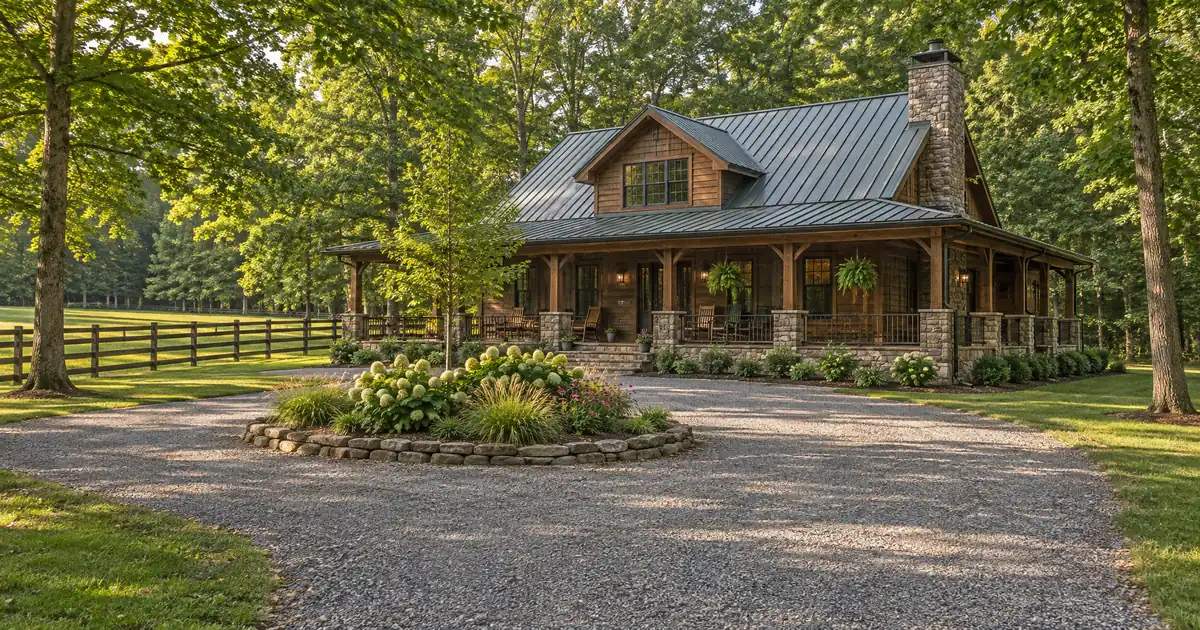
The Quick Read: Rural is not a separate loan program, so qualifying comes down to the loan program you hold, the appraised value, and whether the property reads as a residential home with road access and utilities. Conventional, FHA, and VA cash-out loans can all be used on a rural home, subject to lender guidelines. USDA is the main exception: a USDA loan cannot be refinanced into cash out within USDA. Value and leverage caps, not the zip code, set how much cash you can reach.
What Is a Cash-Out Refinance, and Does Rural Change the Rules?
A cash-out refinance replaces your current mortgage with a new, larger first mortgage. The new loan pays off the old one, and you receive the difference in cash. Freddie Mac defines it as a mortgage with no specific restrictions on how the proceeds are used. It also treats a new loan on a home owned free and clear as a cash-out.
Cash-out refinance estimate
The starting figures are an example value with a balance and a cash request in proportion. Replace them with yours.
Editable benchmark: 7.18% as of November 5, 2026 · Freddie Mac 30-year average via FRED®. A conventional market reference, not a cash-out refinance quote.
Illustrative starting assumptions: a $350,000 home value, a $193,000 current balance, the agency cap on a one-unit principal residence, a thirty-year term at the current Freddie Mac benchmark, and property taxes and insurance estimated at typical national rates. Every field is editable.
Illustrative estimate only — not a Loan Estimate, approval, quote, or commitment to lend. The rate field carries the weekly Freddie Mac thirty-year conventional benchmark, a market reference and not a cash-out refinance quote; a cash-out loan is priced by the lender at lock. The cash available is the loan the program cap allows less the balances paid off, before closing costs, which are not included. The HELOC line is the program’s combined loan-to-value ceiling applied to the same value and balance. Taxes and insurance are editable estimates. Licensed in sixteen states for consumer mortgages.
Rural location does not change that definition. What changes is how easily the property fits the agency’s picture of a home. Lendmire’s cash-out refinance programs page covers the program options in more detail.
The agency test is practical. Fannie Mae’s property eligibility rule asks whether the use is legal, whether roads meet local standards, and whether utilities meet community standards. Nothing in it mentions a county type or an acreage line.
Which Programs Allow Cash-Out on a Rural Home?
The program you hold today decides your path. Here is how the main lanes compare for a primary residence.
| Program | Cash-out available? | What to know |
|---|---|---|
| Conventional | Yes | 80% LTV cap on a one-unit primary residence |
| FHA | Yes | HUD caps LTV at 80% |
| VA | Yes | Eligible borrowers; non-VA loans can move into VA |
| USDA | No | No cash out inside USDA |
| FHA Streamline / VA streamline refinance | No | Streamlines for existing loans, no cash back |
Across the wholesale programs placed through Lendmire, the conventional cash-out tops out at 80% of value on a one-unit primary residence. Two- to four-unit properties, second homes, and investment properties sit at 75%. Occupancy sets the leverage, so a rural second home gets the lower cap.
One wholesale lane reaches 89.99% LTV with no mortgage insurance. It requires a 680 score, a 50% ratio, a thirty-year fixed rate, a primary residence, and a conforming balance. It carries its own six months of seasoning. It is not written in Texas. The exact numbers vary by lender and program and follow a full review of property, leverage, and credit.
Everything here is subject to lender guidelines and full file review.
The USDA Exception: How to Get Cash Out of a USDA Loan
Many rural homeowners with a USDA loan are surprised to learn that it cannot be turned into cash out. Federal rules for USDA refinancing, found in 7 CFR Part 3555, allow streamlined, non-streamlined, and streamlined-assist options. Other than a narrow exception, none of them permits cash out.
So a USDA borrower who wants cash has one route: refinance out of USDA into a conventional, FHA, or VA cash-out. That is a full new application, not a streamline. Three things follow:
- You give up the USDA streamline option once you leave.
- Mortgage insurance may apply under the new program. On the conventional path, it is required above 80% LTV, except in the wholesale no-MI cash-out lane described above.
- The appraisal and seasoning rules of the new program apply. Final terms depend on the lender’s guidelines, the property type, and the borrower’s complete credit picture.
If you only want a lower payment and not cash, the USDA streamline may still be the better tool. That is a real tradeoff. Leaving USDA to take cash resets your loan, so the cash needs a clear purpose.
How Is a Rural Cash-Out Underwritten, Step by Step?
Underwriting follows the same path as any cash-out, with extra attention on the property.
1. Pick the program by what you hold today. A USDA loan changes the plan. FHA, VA, conventional, and paid-off homes each have a cash-out route.
2. Check seasoning. On the standard path, the first mortgage being paid off must be at least 12 months old, measured note date to note date. At least one borrower must also have been on title for six months. Exceptions exist for delayed financing, inheritance, and legal awards. The wholesale no-MI lane carries its own six months of seasoning.
3. Apply and document. Expect to provide income and asset records, a payoff statement for the current loan, and, for delayed financing, the settlement statement from the original cash purchase.
4. Appraisal. This is the swing factor on rural files, covered below.
5. Underwriting review. The lender looks at credit, debt-to-income, reserves, occupancy, and the appraisal. The wholesale conventional programs start at a 620 decision score, and the automated finding governs most files, with a total ratio ceiling of 50%. Manually underwritten loans use 36% or 45% ratios depending on reserves and score. Some lenders set higher floors than the program minimum.
6. Closing. The new loan pays off the old one, and any cash is disbursed to you. Loan Estimate and Closing Disclosure rules apply because this is a consumer mortgage.
Why Does the Rural Appraisal Matter So Much?
Value sets the ceiling. Your maximum loan is the appraised value times the program’s LTV cap, and the existing payoff comes out of that. A low appraisal shrinks the cash directly.
Rural valuation has its own friction. Fannie Mae’s site section rule requires the appraisal to reflect the highest and best use of the site as improved, and to report the actual site size. Its highest and best use playbook gives examples: a home can be residential with a subordinate agricultural use, and the potential to subdivide does not, on its own, change the highest and best use.
In plain terms, the appraiser asks whether this is a house that happens to sit on land, or land with a house on it. Thin comparable sales and large agricultural outbuildings are where valuations slow down or shrink. Land beyond what is typical for the area may be valued low.
Fannie Mae and Freddie Mac do not appear to set a hard acreage cap, according to a mortgage insurer’s appraiser training deck, though that source is secondary and many lenders set their own limits. The same material flags ranches, undeveloped land, properties without road access that meets local standards, and homes not suited to year-round occupancy as problem property types.
Picture a three-bedroom home on several acres with a small barn. If nearby sales are mostly similar homes with a barn, the appraisal can hold up. If the closest sales are a long way off or much smaller, the value may land lower than you expect. Asking your loan officer how the lender handles acreage before you apply saves a wasted appraisal.
How Much Cash Can You Actually Reach?
Equity is not the same as available cash. Lenders typically want you to keep some portion of your home’s value as equity, often in the range of 10% to 20%. Programs set the exact cap.
Here is how the math works in percentages. On a one-unit primary residence under the conventional program, the new loan can reach 80% of appraised value. Subtract your current payoff and any second liens that count toward combined LTV. The FHA cap is also 80%, and that figure is a ceiling, not a promise of that much cash.
Edge Cases Where the General Rule Breaks
- USDA loans. No cash out within USDA, as covered above.
- Free-and-clear homes. A new mortgage on a home with no lien is still a cash-out.
- Recent cash purchase. Delayed financing lets a cash buyer take a cash-out within six months of purchase if the source of funds and the original purchase are documented. It is priced and leveraged as cash-out.
- Subordinate liens. Paying off a non-purchase second lien turns a rate-and-term refinance into a cash-out. Fannie Mae’s limited cash-out rule explains the line.
- Non-VA loan into VA. VA allows a non-VA loan to be refinanced into a VA loan with cash out. A Certificate of Eligibility is needed, and a funding fee may apply.
- Manufactured homes. Single-width manufactured homes are limited under Fannie Mae’s Eligibility Matrix to principal-residence purchase and limited cash-out, so a full cash-out is not available under that program.
- Farm-like properties. The home must be residential in use. A home with subordinate agricultural use is analyzed differently from a working farm.
- Texas. A cash-out on a Texas homestead is a Section 50(a)(6) loan, capped at 80% of the home’s value by the state constitution. The no-MI wholesale lane is not written there. Other states can add their own limits.
Is a Cash-Out Refinance the Right Move?
It depends on what the money does. Paying off high-balance debt or funding a repair that protects the home’s value can make sense. Cash used to clear cards only helps if the habits behind the balances change.
Weigh the tradeoffs honestly:
- Your balance is larger, and the payment may rise.
- Replacing the loan resets your seasoning clock and amortization schedule.
- Closing costs apply, and mortgage insurance may apply above 80% LTV on conventional files.
- If your current loan is already well-positioned, a home equity loan or line of credit may fit better. That is true especially when you need a smaller amount and want to keep your first mortgage as is. Leverage, reserves, and pricing vary by lender and program; the final terms follow the full file review.
The cash-out is a cleaner fit when your existing loan is not worth keeping anyway, or when the amount you need is large enough that a second lien would not cover it.
For more on the VA path, see Lendmire’s article VA Cash-Out Refinance Requirements on a Rural Property With Acreage.
Key Terms Defined
Cash-out refinance: A new, larger first mortgage that pays off your old loan and gives you the difference in cash.
LTV (loan-to-value): The loan amount divided by the home’s appraised value, shown as a percentage.
Seasoning: The minimum time you must hold the home or the current loan before a cash-out is allowed.
Limited cash-out (rate-and-term) refinance: A refinance that pays off the existing loan and costs, with only small incidental cash back.
Delayed financing: A cash-out available soon after an all-cash purchase, with documentation of the purchase and the funds.
Highest and best use: The appraiser’s finding of how the site is most reasonably used, which for a home should be residential.
Frequently Asked Questions
Does a rural zip code or acreage disqualify me from a cash-out refinance?
No. The agencies test whether the use is residential, whether roads and utilities meet local standards, and whether the appraisal supports value. Individual lenders may set their own acreage or property-type limits, so ask early.
Can I take cash out of a USDA loan?
Not within USDA. USDA refinance options do not permit cash out. The route is to refinance into a conventional, FHA, or VA cash-out loan, which is a new application under that program’s rules.
Can an FHA Streamline or VA IRRRL give me cash?
No. Both are no-cash-out streamlines for existing FHA or VA loans. Cash requires the cash-out version of the program, with its own appraisal and underwriting.
How long must I own the home before a cash-out?
For conventional loans, at least one borrower must have been on title for six months, and the first mortgage being paid off must be at least 12 months old, with exceptions for delayed financing, inheritance, and legal awards.
What happens if the rural appraisal comes in low?
The maximum loan drops, because it is value times the LTV cap. You can ask your loan officer whether better comparable sales exist, reduce the cash you request, or consider a limited cash-out if you only need to change the loan terms. Nothing here is a commitment to lend.
If you are weighing a cash-out refinance against keeping the loan you have, Lendmire can help you compare the programs and the equity each one reaches. Call 828-256-2183 to talk through your property.
For your own numbers, request a scenario review with Lendmire.
For current guidelines and terms, see Lendmire’s refinance programs page.
About Lendmire
Lendmire is a mortgage brokerage (NMLS# 2371349) licensed for consumer mortgage lending in 16 states, arranging FHA, VA, conventional and jumbo purchase and refinance loans through a wholesale lending network. Eligibility is determined by the lender on each file. Scotsman Guide named Lendmire a Top Mortgage Workplace in both 2025 and 2026.
Get Started
Ready to find the right loan for you?
See your offer in seconds. No credit pull, no obligation.
Informational only. Not a Loan Estimate, approval, or commitment to lend. Program availability and eligibility are subject to lender guidelines, credit approval, property review, and underwriting.
References
2. Fannie Mae Selling Guide B2-3-01 General Property Eligibility
3. HUD Handbook 4000.1 transmittal
5. Fannie Mae Selling Guide B4-1.3-04 Site Section
6. Its highest and best use playbook
7. Enact MI rural appraisal training deck
8. Fannie Mae Selling Guide B2-1.3-02 Limited Cash-Out Refinance
This article is part of Lendmire’s cash-out refinance program — full qualification details, guidelines, and scenarios live on the program page.
Related reading: How the Cash-Back Line Works on a Cash-Out Refinance · Does a Cash-Out Refinance Make Sense to Pay for Home Repairs on a Rural Property? · How a No-Cost Cash-Out Refinance Works
Brandon Miller
Founder & CEO, Mortgage Loan Originator, Lendmire LLC
- Mortgage Loan Originator · NMLS# 1129696 · Verify on NMLS Consumer Access
- North Carolina Real Estate Broker · License# 343312 · Verify on NCREC
- North Carolina Insurance Producer · License# 19053198 · Property, Casualty, Life, Health · Verify on NAIC SBS
- Lendmire LLC · Firm NMLS# 2371349 · Verify firm licensure
Legal disclosures. Lendmire (NMLS# 2371349) is a state-licensed mortgage brokerage that arranges financing through wholesale lender relationships. Lendmire is not a direct lender, depository institution, or registered financial advisor. The discussion above is general informational content about real estate financing — it is not financial, legal, or tax advice, and readers should consult licensed professionals for guidance on their individual circumstances. Loan inquiries are subject to lender underwriting; this article does not represent a commitment to lend. Loan terms, rates, and qualification standards vary by borrower, property, and state, and are subject to change at any time. Equal Housing Opportunity. NMLS Consumer Access: nmlsconsumeraccess.org.