
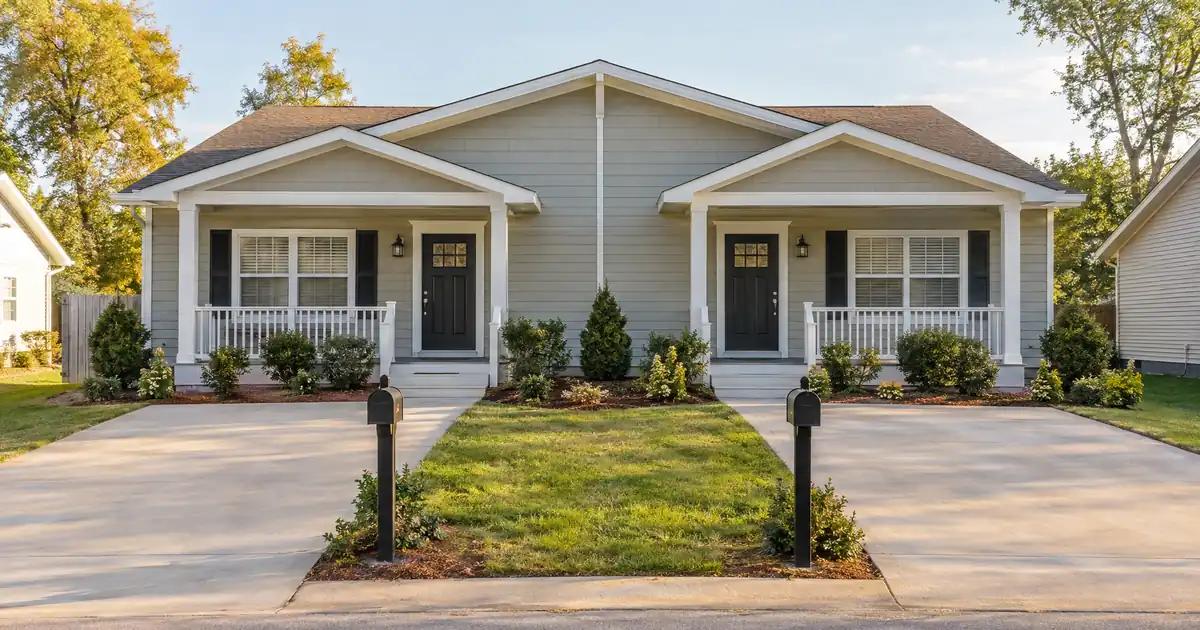
The Quick Read: Yes, when you live in one unit and the new loan lands above the county’s conforming limit, a jumbo lender can review a cash-out on the duplex under its own guidelines. Eligibility is rarely the hard part. The harder question for a lock-in homeowner is whether replacing the entire low-rate first mortgage is worth it, compared with leaving that loan alone and borrowing against equity another way. Leverage on a duplex cash-out is lower than on a purchase, and every figure is subject to lender guidelines and full file review.
Lendmire’s jumbo cash-out refinance program is built for this kind of file. Here is how the pieces fit.
What Makes a Duplex Cash-Out “Jumbo”?
A loan is jumbo when it starts one dollar above the county’s conforming limit. FHFA says Fannie Mae and Freddie Mac can only buy loans up to that limit, and loans above it are known as jumbo loans. The limit changes every year and varies by county.
Two details matter for duplexes:
- Limits rise with unit count. A two-unit property has a higher threshold than a one-unit home in the same county.
- A cash-out adds to the balance. A loan that was conforming at purchase can cross the line once you roll in the cash.
The FHFA announcement of the 2026 limits notes special rules in Alaska, Hawaii, Guam and the U.S. Virgin Islands. Look up your own county on FHFA’s tool. Don’t rely on a national number.
If the new balance fits at or under the duplex limit, a conforming loan may be possible. Conforming cash-out on a duplex is tighter than on a single-family home. Fannie Mae’s Eligibility Matrix lists 80% maximum LTV for a one-unit principal-residence cash-out and 75% for two to four units. So a conforming duplex cash-out may return less cash than a jumbo lane would. Which one wins depends on the lender.
Can You Really Do It If You Live in One Unit?
Yes. Owner-occupied is the cleanest version of this file. A jumbo loan sits outside the agency rulebook, so each lender sets its own LTV, credit and reserve rules. Across the wholesale jumbo programs Lendmire places files with, the envelope looks like this:
- A 660 decision score on the headline lane.
- Leverage up to 90% on purchase, with several lanes reaching 89.99% CLTV and the rest stopping at 80%.
- Loans up to $5,000,000 on the largest lanes.
- A 50% ratio ceiling on the fixed lanes (45% on adjustable, 43% on interest-only). Final terms depend on the lender’s guidelines, the property type, and the borrower’s complete credit picture.
Cash-out is a different animal from purchase. Cash-out leverage is lower than purchase leverage, and the largest lanes put a cash cap on what comes back. A duplex can sit a notch tighter than a single-family home on the same lane. Treat the 90% figure as the top of the range for a purchase, not what a duplex cash-out will reach.
Occupancy decides leverage. The same duplex rented out entirely is a different loan at leverage, and this article stays on the owner-occupied version.
The Lock-in Question: Replace or Keep?
This is the real decision. A cash-out refinance replaces your existing mortgage with a bigger one, and you keep the difference in cash. The CFPB describes it that way and tells borrowers to look hard at the interest rate, especially if it is higher than the current mortgage rate. For a lock-in homeowner, it almost always is.
Here’s the catch. A cash-out doesn’t reprice only the new cash. It reprices the whole balance. The cheap money you already have gets replaced along with the new money.
| Path | What happens to your current first loan | What you borrow against | Review basis |
|---|---|---|---|
| Jumbo cash-out | Paid off and replaced | Full new balance | Full file, new first lien |
| Second lien (HELOC or home equity loan) | Stays in place | Added behind the first | Full file, second lien |
| Wait | Stays in place | Nothing new | None |
Per the CFPB, a cash-out may be more or less expensive than a HELOC depending on terms. No single answer fits everyone. Lendmire’s piece Jumbo Cash-Out vs Second Lien for a Lock-In Homeowner goes deeper on that comparison.
A rough way to think about it: blend the cost. If most of the new loan is old balance moving to a higher rate, the extra cash is carrying a lot of baggage. If the cash you need is large relative to your balance, replacing the first loan can make more sense. If it is small, a second lien often leaves you better off. Honestly, it is a toss-up until you run both sets of numbers.
The lock-in pressure is real nationally. Plenty of homeowners hold first mortgages well below today’s market, which is why so many look at second liens before refinancing. Any worked comparison needs real quotes from real Loan Estimates, not guesses.
How the Duplex Gets Appraised
Two- to four-unit properties are appraised on a different form than a single-family home. Per the Fannie Mae Selling Guide, Form 1025 is used for traditional appraisals of two- to four-unit properties, with narrow exceptions for Form 1004. Jumbo lenders often apply their own appraisal rules, so the lender’s requirement controls.
On jumbo files, the amount matters. Many lanes require two appraisals above a threshold loan amount. That adds cost and adds a failure point: if the first appraisal comes in light, the leverage math moves with it.
The duplex appraisal also leans on a rent schedule and comparable duplex sales. Comps for two-units are thinner than single-family comps in most neighborhoods. When value comes in short, an appraisal reconsideration request is routine. A good packet has recent nearby duplex sales and notes on condition and updates. A thin packet recovers nothing.
What About the Rent From the Other Unit?
Rent from the unit you don’t live in can matter, but it is the lender’s call, not a given. On conforming loans, Fannie Mae’s approach counts only a reduced share of gross rent and requires the borrower to occupy one unit. The rent for your own unit never counts. Jumbo lenders set their own treatment, so ask whether the other unit’s rent helps the ratio at all.
If rent is used, expect to document it:
- A signed lease for the other unit
- Rental history, often shown on the Schedule E of your tax return if you have rented the property before
- The appraiser’s market rent schedule
A vacant second unit is the common snag. No lease means no rent evidence, and the file then rests on your own income. Plan for that before you apply.
Reserves, Credit and Ratios
Jumbo reserves are counted in months of the full payment, and they rise with the loan amount. Cash-out proceeds generally don’t count toward reserves. For comparison only, Fannie Mae’s conforming rules call for six months of reserves on a two- to four-unit principal-residence transaction. Jumbo lanes set their own figure, and it can run higher on larger balances.
On the ratio side, the ceilings listed above apply, and the lender must make a reasonable, good-faith judgment that you can repay. Lower ratios help every file. Bigger loans get examined harder.
Documentation that keeps a duplex file clean:
1. Payoff statement for the current first mortgage.
2. Leases for the rented unit, with rent history if available.
3. Bank and asset statements that show reserves separate from the cash-out.
4. Homeowners insurance and tax information for the property.
5. Title information, including how the property is vested.
Tax treatment can depend on your situation; borrowers should speak with a qualified tax professional before relying on any deduction or credit.
Key Terms Defined
Jumbo loan: A mortgage above the county’s conforming limit, set by the lender’s own guidelines.
Cash-out refinance: A new mortgage that pays off the old one and returns the difference to you in cash.
LTV / CLTV: The loan (or combined loans) divided by the appraised value of the home.
Reserves: Liquid funds you hold after closing, measured in months of the full payment.
Rescission: A three-business-day window to cancel a refinance on your primary residence.
Lock-in effect: The reluctance to give up a low-rate mortgage when market rates are higher.
Questions to Ask Before You Apply
1. Does this lane allow cash-out on a two-unit owner-occupied property, and at what leverage?
2. Is there a cash cap at my loan size?
3. Will the other unit’s rent count toward qualifying, and how is it documented?
4. Does my loan amount trigger two appraisals?
5. How many months of reserves does the lane require, and does cash-out count?
6. Could a second lien get me the same cash while keeping my current first loan?
Ask for the Loan Estimate on each path. Closing costs apply to a cash-out and can reduce the cash you receive or be added to the balance. Compare them side by side.
On a refinance of your primary residence, rescission gives you three business days after closing documents are signed before funds are released, per Regulation Z. Plan around that if you need the cash on a deadline.
Frequently Asked Questions
Can I do a jumbo cash-out if I live in one unit of my duplex?
Yes, owner-occupancy is the strongest position for this loan. The lender reviews the file under its own guidelines, including leverage, credit, ratios and reserves. Leverage on cash-out runs lower than on purchase, and some lanes cap the cash. All terms are subject to lender guidelines and full file review.
Does the rent from my other unit count?
Sometimes. The lender decides whether to use it, and your own unit’s rent never counts. If it is used, expect a signed lease, rent history and the appraiser’s rent schedule. A vacant unit usually means the file stands on your income alone.
Will I lose my current low rate?
Yes, on a full cash-out. The new loan replaces your existing first mortgage, so the whole balance is repriced, not just the new cash. A second lien leaves the first loan in place. The better choice depends on how much cash you need compared with your balance.
Is my duplex loan jumbo or conforming?
It depends on the new balance against your county’s two-unit limit. Look it up on FHFA’s county tool. If the new loan, cash included, lands above that limit, it is jumbo. At or below, conforming may be possible, though conforming duplex cash-out has a lower leverage cap than a one-unit home.
How much equity do I have to leave in the house?
That depends on the lane, the loan size and the occupancy. Cash-out leverage is lower than purchase leverage, and a duplex can sit tighter than a single-family home. The CFPB notes lenders typically want you to keep a meaningful equity cushion on any equity product, so plan on leaving real equity in the property.
If you are weighing a cash-out refinance against keeping the loan you have, Lendmire can help you compare the programs and the equity each one reaches. Lendmire’s piece Is a Jumbo Cash-Out Worth It for a High-Earning W-2 Homeowner? covers the income side of that decision.
For your own numbers, request a scenario review with Lendmire.
About Lendmire
Lendmire, NMLS# 2371349, is a mortgage brokerage with consumer lending licenses in 16 states. FHA, VA, conventional and jumbo purchase and refinance loans are arranged through wholesale lending partners, and each application is reviewed individually by the lender. Scotsman Guide named Lendmire a Top Mortgage Workplace in both 2025 and 2026.
Get Started
Ready to find the right loan for you?
In about 30 seconds you can review financing options available for your home or investment property. No commitment required.
Informational only. Not a Loan Estimate, approval, or commitment to lend. Program availability and eligibility are subject to lender guidelines, credit approval, property review, and underwriting.
References
1. FHFA – Conforming Loan Limits
2. FHFA – 2026 conforming loan limit announcement
3. Fannie Mae – Eligibility Matrix
4. CFPB – Loans similar to a HELOC
6. Fannie Mae Selling Guide – Minimum reserve requirements
7. CFPB – Regulation Z §1026.23
This article is part of Lendmire’s Jumbo Loans series — every loan program’s qualification details, guidelines, and scenarios live on the loan options page.
Related reading: Jumbo Cash-Out Refinance Tiers for a Homeowner With a Low First Mortgage · How to Get Your First Jumbo Cash-Out After a Quitclaim Deed · How Much Cash a Jumbo Cash-Out Releases for a High-Earning W-2 Homeowner
Brandon Miller
Founder & CEO, Mortgage Loan Originator, Lendmire LLC
- Mortgage Loan Originator · NMLS# 1129696 · Verify on NMLS Consumer Access
- North Carolina Real Estate Broker · License# 343312 · Verify on NCREC
- North Carolina Insurance Producer · License# 19053198 · Property, Casualty, Life, Health · Verify on NAIC SBS
- Lendmire LLC · Firm NMLS# 2371349 · Verify firm licensure
Important disclosures. Lendmire (NMLS# 2371349) is a licensed mortgage brokerage. Lendmire is not a direct lender, depository institution, or financial advisor. All loan inquiries are subject to lender underwriting; this article does not constitute a commitment to lend. Rates, terms, and program guidelines are subject to change without notice and vary by borrower profile, property type, and state. Information in this article is general in nature and is not financial, legal, or tax advice. Equal Housing Opportunity. NMLS Consumer Access: nmlsconsumeraccess.org.