
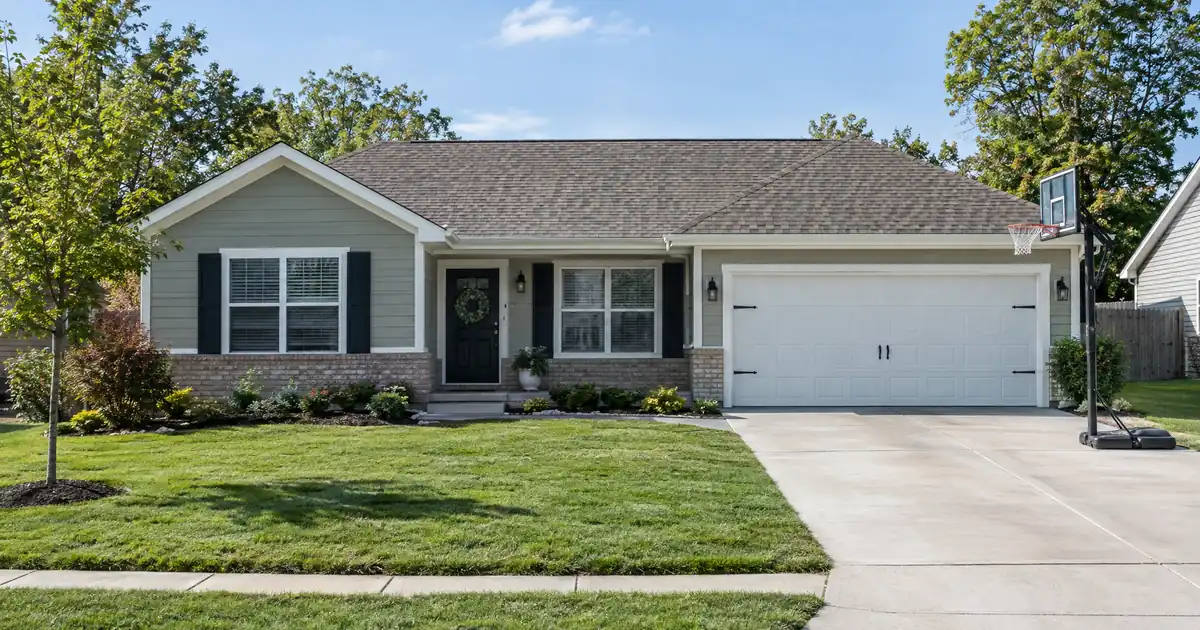
The Quick Read: The way to approach a VA cash-out on a home with no mortgage is to start with what the program actually is. A VA cash-out is a refinance, and a refinance needs an existing loan or lien to pay off. A home you own outright has nothing to replace, so the VA-backed version usually isn’t available. The rest of this page explains why, what a real VA cash-out requires, and where to look instead.
Key Takeaways
- A VA cash-out replaces an existing lien with a new VA-backed loan. It doesn’t create a loan on a debt-free home.
- Federal regulation defines these loans around refinancing existing indebtedness, which is why a free-and-clear home generally falls outside the program.
- Some lender pages claim otherwise. Treat the regulation and VA’s own pages as the authority, and ask any lender to show you the rule in writing.
- If a lien does exist, the loan can reach 100% of the appraised value, including the financed funding fee. Residual income is the controlling test.
- A home with no mortgage still has options. They just aren’t VA products.
Key Terms Defined
Lien: A legal claim against a property that secures a debt, such as a mortgage or home equity loan.
Free and clear: You own the home with no mortgage or other lien against it.
Certificate of Eligibility (COE): The VA document that confirms your service qualifies you for the benefit. VA decides this, not the lender.
Residual income: The money left each month after taxes, debts, and basic living costs. VA treats it as the controlling underwriting test.
Net tangible benefit: A measurable improvement a refinance must deliver, such as a shorter term or an eliminated mortgage insurance payment.
Entitlement: The amount of your VA benefit available to guarantee a loan.
Funding fee: A one-time VA charge that can be financed into the loan. Some veterans are exempt.
Why Does a VA Cash-Out Need an Existing Loan?
Because the program is built as a refinance. The VA regulation governing these loans is titled “Refinancing of mortgage or other lien indebtedness”. The loan pays off what’s already secured against your home and replaces it. The cash you receive is the leftover after the payoff, the funding fee, and closing costs.
Picture a homeowner with a paid-off house and a lot of equity. No lien means no payoff. The program has nothing to refinance, so it has nothing to put the cash-out on top of.
Here’s where the confusion starts. Some lender pages say a VA cash-out works on a paid-off home. Others say it doesn’t. The regulation’s lien-based wording supports the second group. Some lenders offer non-VA or in-house products that look similar from the outside, and that may explain the mixed messages. Before you rely on any claim, ask the lender which program backs the loan.
One more point: the VA doesn’t lend you the money. A private lender makes the loan, and VA guarantees part of it. Lendmire is a mortgage broker, so it arranges these loans through wholesale lenders rather than lending directly.
What a VA Cash-Out Does When a Lien Exists
Where there is a lien, the mechanics are straightforward. VA’s cash-out page says you can take cash from your equity, or refinance a non-VA loan into a VA-backed one. You must qualify for a COE, meet credit and income standards, and live in the home you’re refinancing.
Two points matter here:
1. The old loan can be any type. It doesn’t have to be a VA loan. FHA, conventional, and USDA loans can all be refinanced into a VA-backed loan.
2. It replaces your first mortgage. It isn’t a second loan stacked on top.
Across the wholesale programs Lendmire places VA files with, the structure looks like this: 100% financing with no mortgage insurance of any kind, and no VA loan limit when you have full entitlement. The cash-out reaches 100% of the appraised value, including the financed funding fee. It refinances any loan type into VA. Programs start at a 580 decision score. VA itself sets no minimum score, so floors vary by lender. All of this is subject to lender guidelines and full file review. Some lenders set a higher floor or a lower leverage cap than the VA program allows.
You can read more about the structure on Lendmire’s VA cash-out refinance program page.
How the Loan Is Underwritten, Step by Step
If you have a qualifying lien, here is the path a file takes.
Step 1: Eligibility. You need a COE, and you must occupy the home as your primary residence. An IRRRL (the VA streamline) only asks you to certify current or prior occupancy. A cash-out is stricter.
Step 2: The lien to refinance. The loan must pay off one or more existing liens. A mortgage is the usual one. A home equity loan or HELOC can also count, because the regulation says “other lien indebtedness.” Whether a lender accepts a recently opened lien is an overlay question, and underwriting decides it.
Step 3: Credit and income. Credit and income are reviewed in full. The 41% debt-to-income figure is a guideline, not a cap. A ratio above it needs residual income well above the VA table.
Step 4: Appraisal. The 100% cap is measured against the reasonable value VA determines. VA Circular 26-19-05 says to divide the total loan, including any funding fee, by the appraiser’s reasonable value. The regulation caps the new loan at 100% of that value.
Step 5: Net tangible benefit. A refinance must deliver at least one measurable benefit. The regulation lists several. They include removing monthly mortgage insurance, a shorter term, higher residual income, refinancing a construction loan, a loan at or below 90% of reasonable value, and converting an adjustable loan to a fixed one. Seasoning also applies. Across the wholesale programs Lendmire works with, that means the later of 210 days from the first payment and the sixth payment.
Step 6: Disclosures. The lender must give you a comparison of the new and old loans, including term, total payments, and loan-to-value. It must also disclose the equity you’re removing. You certify that you received them.
Step 7: Closing and cash. Net cash is the new loan minus the payoff, the funding fee, and closing costs. VA notes that allowable fees and closing costs can be paid from loan proceeds. Because this is a consumer mortgage, you’ll receive a Loan Estimate and a Closing Disclosure.
Where the General Rule Breaks (and Where It Doesn’t)
A few cases blur the line. Here’s how each one plays out.
You own the home free and clear. No lien, no VA cash-out. Don’t let anyone talk you into a workaround.
You have a small lien, like a HELOC. A VA cash-out refinancing that lien is conceptually possible. But don’t open a lien just to qualify. That’s a compliance risk, and a lender may treat a newly opened lien differently under its overlays. Have underwriting confirm before you do anything.
Your existing loan isn’t VA. That’s fine. The program was built to convert it.
You have a VA loan and want a lower rate. That’s the IRRRL, a different product. It refinances an existing VA loan with no VA appraisal, and it generally gives no cash. The only exception is a small energy-efficiency reimbursement.
Type I versus Type II. A Type I is a VA-to-VA refinance where the new loan doesn’t exceed the payoff. It carries extra tests, including fee recoupment and a rate-reduction check. A Type II takes cash out. Ask your lender which one your file is.
Your state restricts cash-out. Some states have their own limits on borrowing against a homestead. Because those rules vary by state, confirm with your loan officer which limits apply to your property before you plan on a cash-out amount.
The lender caps below 100%. The program allows up to 100% of reasonable value. Many lenders stop lower, and pricing considerations can push them there. Which cap applies to you depends on the lender.
VA Rules vs. Lender Rules
Mixing these up is a common source of bad information online. Here’s the split.
| Requirement | Who sets it |
|---|---|
| COE and service history | VA |
| Primary-residence occupancy | VA |
| Existing lien to refinance | VA regulation |
| Net tangible benefit | VA regulation |
| 100% of reasonable value cap | VA regulation |
| Minimum credit score | Lender |
| Maximum leverage below 100% | Lender |
| Seasoning overlays | Lender |
Two Quick Scenarios
Scenario one: paid-off home. A veteran owns a house outright. They want cash for a renovation and a family expense. There’s no lien, so a VA cash-out isn’t on the table. They’d compare non-VA equity products instead.
Scenario two: existing conventional mortgage. Another veteran has a conventional loan and a COE. The home appraises well. The refinance moves them into a VA-backed loan, pays off the old one, and puts the leftover equity in their hands, up to 100% of appraised value including the financed funding fee. The file still has to show residual income, credit, and a net tangible benefit.
Same equity. Completely different answer. The lien made the difference.
What Costs and Risks Come With It
The funding fee is one-time and reviewable. On a cash-out refinance it’s 2.15% for first use and 3.3% for subsequent use. Veterans who receive compensation for a service-connected disability, and other exempt groups, don’t pay it. Under the regulation, any part of the fee that would push the loan past 100% of reasonable value must be paid in cash at closing.
Closing costs are real too. VA News warns that a refinance can cost thousands and that taking cash raises your balance and the interest paid over the loan’s life. VA also doesn’t set interest rates. They vary by lender, so comparing lenders matters.
For a debt-free homeowner, the biggest risk is behavioral. You’d be putting a debt on a home that has none. A new monthly payment appears where there wasn’t one. If your income dips, the home is now collateral. That’s a trade-off worth weighing before the cash feels free. It isn’t.
Tax treatment can depend on your situation; borrowers should speak with a qualified tax professional before relying on any deduction or credit.
If You Own Your Home Outright: What to Look At Instead
Because a VA cash-out generally isn’t available, the real question is which non-VA product fits. All of these need their own lender review, and none are VA-guaranteed.
| Option | What it is | Main trade-off |
|---|---|---|
| Conventional cash-out | A new first loan secured by your home | Mortgage insurance and leverage rules vary |
| Home equity loan | A fixed lump sum secured by your home | A new lien and monthly payment |
| HELOC | A revolving credit line secured by your home | Flexibility, but variable terms |
Each puts a lien on a home that doesn’t have one. Compare total cost, term, and what happens if your income changes. Lendmire’s piece VA Cash-Out vs Home Equity Loan for a Lump Sum Keeping a VA Mortgage walks through that tradeoff.
A Quick Self-Check
Run through these in order.
1. Do you have a COE? If not, start there. 2. Will you live in the home? A cash-out requires it. 3. Is there a lien on it right now? If no, stop. A VA cash-out generally isn’t available. 4. Does the appraisal support the amount you want, with the funding fee included, under 100%? 5. Do your credit and residual income hold up? 6. Does the refinance meet a net tangible benefit?
A “no” at step three ends the VA route. A “no” anywhere else may be fixable, depending on the lender.
Frequently Asked Questions
Can I get a VA cash-out refinance if my house is paid off?
Generally no. The program refinances an existing lien, and a paid-off home has none. Some lender pages say otherwise, but the regulation’s lien-based definition is the better guide. Ask any lender to show you which program backs the loan.
Does the existing loan have to be a VA loan?
No. It can be FHA, conventional, or USDA. A VA cash-out is one of the few ways to move a non-VA loan into a VA-backed one. A VA-to-VA rate-reduction refinance is a different product, the IRRRL.
Can I use the cash for anything?
Generally yes. The loan itself still has to meet residual income, credit, and benefit tests.
What does a VA cash-out cost?
There’s a one-time funding fee of 2.15% for first use and 3.3% for subsequent use, unless you’re exempt. There are also closing costs, which can be financed within the 100% cap. Lenders set their own fees, so compare Loan Estimates.
Can I open a small loan on my paid-off home just to qualify?
Don’t. Creating a lien to unlock the program is a compliance risk, and lenders may treat a recent lien differently under their overlays. If a lien already exists, ask underwriting how it will be handled.
If you are weighing a cash-out refinance on a home you own outright, Lendmire can help you compare the programs and the equity each one reaches.
For your own numbers, request a scenario review with Lendmire.
About Lendmire
Lendmire (NMLS# 2371349) is a mortgage broker licensed for consumer lending in 16 states. Lendmire arranges FHA, VA, conventional and jumbo purchase and refinance loans through wholesale lenders; every file is underwritten by the lender under the applicable program guidelines. Scotsman Guide named Lendmire a Top Mortgage Workplace in both 2025 and 2026.
Get Started
Ready to find the right loan for you?
In about 30 seconds you can review financing options available for your home or investment property. No commitment required.
Informational only. Not a Loan Estimate, approval, or commitment to lend. Program availability and eligibility are subject to lender guidelines, credit approval, property review, and underwriting.
References
2. VA.gov: Cash-out refinance loan
6. VA News
This article is part of Lendmire’s VA Loans series — every loan program’s qualification details, guidelines, and scenarios live on the loan options page.
Related reading: How to Qualify for a 2-4 Unit VA Cash-Out on Residual Income Over DTI · How to Get Your First VA Cash-Out on an Inherited Home · How to Close a VA Cash-Out on a Home in an Irrevocable Trust
Brandon Miller
Founder & CEO, Mortgage Loan Originator, Lendmire LLC
- Mortgage Loan Originator · NMLS# 1129696 · Verify on NMLS Consumer Access
- North Carolina Real Estate Broker · License# 343312 · Verify on NCREC
- North Carolina Insurance Producer · License# 19053198 · Property, Casualty, Life, Health · Verify on NAIC SBS
- Lendmire LLC · Firm NMLS# 2371349 · Verify firm licensure
Disclosure information. Lendmire is a state-licensed mortgage brokerage under NMLS# 2371349. Lendmire is not a depository institution, direct lender, or financial advisor — all loans referenced are placed through wholesale lender partners and are subject to each lender's underwriting standards. This article is provided for general informational purposes and is not a commitment to lend, nor does it constitute financial, legal, or tax advice. Loan programs, terms, rates, and qualification standards change without notice and depend on borrower profile, property type, and the state in which the subject property is located. Equal Housing Opportunity provider. NMLS Consumer Access: nmlsconsumeraccess.org.