
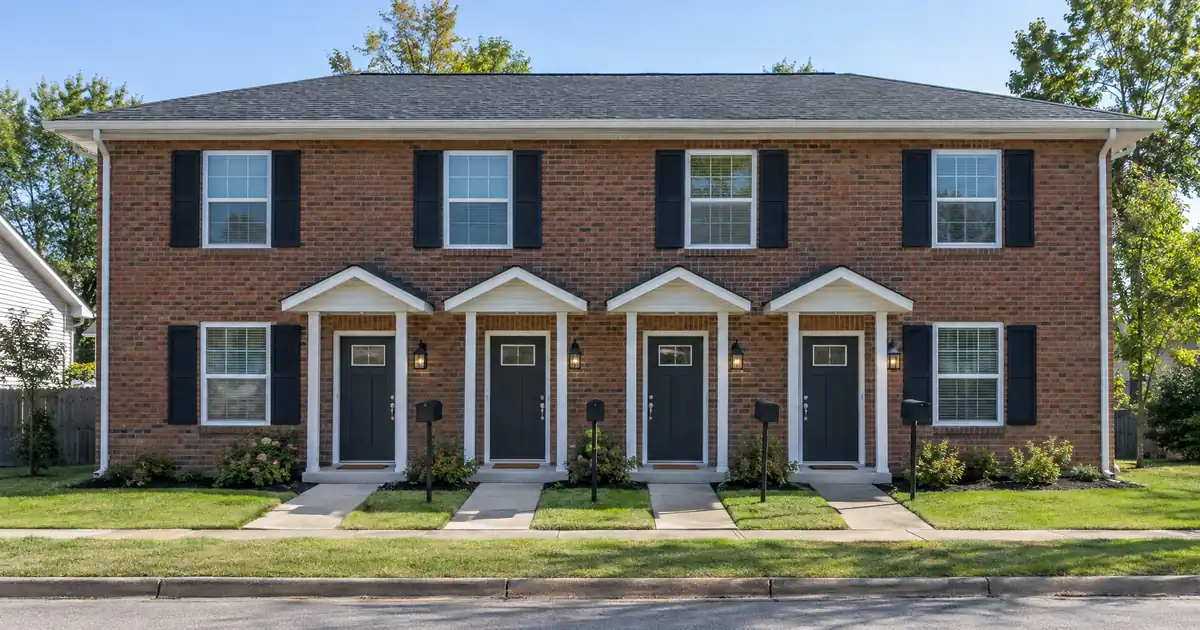
The Quick Read: A low appraisal shrinks your cash-out because the lender multiplies the appraised value by a fixed leverage cap. On a duplex, triplex or fourplex where you live in one unit, that cap is 75% on a conventional cash-out. Read the report for factual errors, request a reconsideration of value only if you have evidence, and be ready to resize the loan.
Key Takeaways
- The appraised value, not your estimate, sets the maximum loan. Less value means less cash.
- A multi-unit home gets a lower cash-out cap than a single-family home: 75% versus 80% on a conventional loan.
- You can challenge a value with facts. You cannot challenge it just because you wanted more cash.
- If the value holds, you can take less cash, switch to a rate-and-term refinance, wait, or keep the loan you have.
Why Does the Appraisal Control Your Cash?
The lender takes the appraised value and multiplies it by the program’s maximum loan-to-value ratio. LTV is the loan balance divided by the home’s value. The result is the biggest loan you can get. Your payoff, closing costs and any liens come out of that number. What’s left is your cash.
Here is the catch on a 2-4 unit home. Across the wholesale programs I place files with, a conventional cash-out on a one-unit principal residence tops out at 80% LTV. On a two- to four-unit principal residence, it is 75%. Fannie Mae’s Eligibility Matrix shows the same split. All figures here are subject to lender guidelines and full file review.
Run it as a picture. Say the appraiser comes in 5% under what you expected. Your maximum loan drops by 5% too. But your payoff doesn’t move, and neither do your closing costs. So the cash you walk away with shrinks by far more than 5%. The check shrinks faster than the value does. Often it disappears.
Read the Report Before You React
You are entitled to a copy of the appraisal. Federal rules require the lender to send you one promptly, even if the loan never closes, per the federal consumer-finance regulator’s ECOA compliance guide. Ask for it the day it’s done.
On a small multi-unit home, the appraiser looks at more than recent sales. The report also covers a unit-by-unit rent schedule and rental comparables. Lenders may compare your actual leases against the appraiser’s market-rent estimate. So check two sides of the report separately.
Sales side:
- Unit count, square footage, bed and bath counts per unit.
- Whether the comparable sales are other 2-4 unit buildings, not single-family homes.
- Whether the sales are recent and nearby, and not distressed.
- Upgrades the report missed: new roof, updated kitchens, a finished basement.
Rent side:
- Whether each unit’s rent matches your leases.
- Whether the rent comparables match your unit sizes and condition.
- Whether a unit is described as vacant, dated or non-conforming when it isn’t.
Many low values trace to one bad comparable or one missed fact. Some are simply the market. Your job is to tell which.
Diagnose the Cause
| What you see | Likely cause | Best response |
|---|---|---|
| Wrong square footage or unit count | Factual error | Request a reconsideration with proof |
| Comps are single-family homes | Wrong property type | Request a reconsideration with better comps |
| Strong recent sales missed | Incomplete comp search | Send those sales in your request |
| Upgrades not credited | Missing documentation | Send receipts and photos |
| Comps are sound, value is just lower | The market | Resize the loan |
How Do You Request a Reconsideration of Value?
A reconsideration of value, or ROV, is a formal request that the appraiser take a second look. You make it through your lender, not directly to the appraiser.
The rules are firm. Fannie Mae’s Selling Guide requires lenders to have a borrower-initiated process. It also says requests must rest on material, substantive issues. A request made only because the value doesn’t support your loan amount doesn’t qualify. A borrower gets one request per appraisal report, according to Fannie Mae’s ROV page. If the appraiser doesn’t change the value, you can’t demand a new appraisal. That choice belongs to the lender.
A strong packet for a small multi-unit home has:
1. A short written list of the specific errors, with proof.
2. Recent nearby sales of similar 2-4 unit buildings the appraiser didn’t use.
3. Documentation of unit count and legal configuration.
4. Receipts and photos for upgrades.
5. Your current leases and rent roll, if rent evidence is the issue.
Keep it factual and short. Arguments about what the home “should” be worth go nowhere. The same process can be used if you believe the value reflects prohibited discrimination.
Expect the process to add time. Talk through your closing timeline with your loan officer before you submit.
Second Appraisal, New Lender, or Automated Redo?
| Option | Cost | Risk |
|---|---|---|
| Second appraisal | You pay again | New appraiser may land lower |
| Different lender | New application, new report | Restarts the file |
| Automated valuation | Varies | Generally not available on 2-4 units |
An appraisal is generally required on a 2-4 unit home, so the shortcuts you hear about on single-family loans often don’t apply. A second appraisal only makes sense when you have documented errors in the first one. Otherwise you’re paying to roll the dice.
If the Value Holds: Your Options, in Order
Work down this list. It runs from least disruptive to most.
1. Take less cash. Rebuild the math with the lower value. If the smaller check still does the job, you’re done.
2. Shift to a rate-and-term refinance. If your real goal is a better term or a different loan type, you may not need cash at all. These no-cash-out refinances allow more leverage than cash-out. On a one-unit principal residence the wholesale programs reach 95% LTV. Two- to four-unit limits are lower and depend on the program, so ask your loan officer to confirm them. Exact terms depend on the lender’s guidelines, property type, leverage, and a full review of the borrower’s file.
3. Bring cash to closing. Paying down the balance can bring the loan back inside the cap. This only makes sense if the cash comes from savings you don’t need.
4. Wait. If the shortfall is small, a few months of payments or a stronger market may change the math. Your existing loan’s age matters too, as covered below.
5. Walk away. Sometimes the right answer is keeping the loan you have. Terms vary by lender guidelines, property type, leverage, credit profile, and full file review.
Different causes point to different fixes. A factual error points to reconsideration. A true market gap points to options 1 through 3.
Is the Smaller Cash-Out Still Worth It?
Ask these before you proceed:
- After payoff and closing costs, does the remaining cash cover your purpose?
- Does the new loan’s term and structure still beat what you have?
- Would you be paying costs now to borrow less than you planned?
- Would a smaller cash-out loan or a separate second lien serve better?
If the answer to the first question is no, stop. Closing costs are fixed whether the check is large or small.
Where the General Rule Breaks
Occupancy. Leverage depends on how you use the home. On conventional cash-out, the wholesale programs I place cap two- to four-unit principal residences, second homes and investment property all at 75%. Document that you live in one unit.
Seasoning. On a conventional cash-out, the first mortgage being paid off must be at least 12 months old, per Fannie Mae’s cash-out guidance. You also need six months on title, with exceptions for delayed financing, inheritance and legal awards.
Pricing. A lower value raises your LTV, and pricing can shift with LTV and credit score. I won’t quote figures, but ask your loan officer to re-run it.
Mortgage insurance. Above 80% LTV, mortgage insurance applies on conventional loans. It can be canceled at 80% and ends automatically at 78%.
FHA and VA. An FHA standard cash-out requires 12 months of owner-occupancy under HUD Handbook 4000.1. A VA cash-out needs an appraisal and full underwriting, but a VA IRRRL generally needs none, per the VA Lenders Handbook (VA Pamphlet 26-7). An IRRRL can’t deliver cash and works only for an existing VA loan.
Taxes. Tax treatment can depend on your situation; borrowers should speak with a qualified tax professional before relying on any deduction or credit.
How to Prepare the Next Appraisal
If you reapply later, set the file up well:
- Give the appraiser access to every unit, including tenant-occupied ones. Give tenants notice.
- Have leases and a rent roll ready.
- List improvements with dates and receipts.
- Make small repairs and clean the common areas.
- Provide proof of legal unit count.
Key Terms Defined
Appraised value: the appraiser’s opinion of what the property is worth, which the lender uses to set the loan limit.
Loan-to-value (LTV): the loan amount divided by the appraised value.
Reconsideration of value (ROV): a formal request, made through the lender, asking the appraiser to review the value based on specific evidence.
Rent schedule: the appraiser’s unit-by-unit table of current and market rents on a 2-4 unit property.
Cash-in refinance: a refinance where you bring money to closing to reduce the loan balance.
Seasoning: how long you’ve owned the home or held the current loan before refinancing.
Frequently Asked Questions
Can I demand a higher appraised value?
No. Reconsideration requests must be based on material, substantive issues, such as errors or missed comparable sales. Wanting more cash is not a basis.
Can I get a second appraisal if I don’t like the first?
Usually not by request. If an ROV leaves the value unchanged, accepting the appraiser’s conclusion is the lender’s decision. A different lender would order its own appraisal, and that one could come in lower.
Why is my cash-out limit lower on a duplex than on a single-family home?
Conventional programs set the cash-out cap at 80% for a one-unit principal residence and 75% for two to four units. The extra unit carries a lower leverage ceiling.
Does a low appraisal matter on a VA loan?
It depends on the loan type. A VA cash-out requires an appraisal and full underwriting, so a low value matters. A VA IRRRL generally needs no appraisal, but it can’t provide cash.
Do I pay for the appraisal if the loan doesn’t close?
Often yes. The lender may charge a reasonable fee to cover the cost of the appraisal itself, but no extra fee for your copy of the report. That is why it helps to ask your loan officer, before the appraisal is ordered, what you would owe if the file stops after a low value.
If you are weighing a cash-out refinance against keeping the loan you have, Lendmire can help you compare the programs and the equity each one reaches. Start with Lendmire’s cash-out refinance programs, and remember that every figure here is subject to lender guidelines and full file review and is not a commitment to lend.
For your own numbers, request a scenario review with Lendmire.
For current guidelines and terms, see Lendmire’s refinance programs page.
About Lendmire
Lendmire (NMLS# 2371349) is a mortgage brokerage serving homeowners and home buyers in 16 states. FHA, VA, conventional and jumbo purchase and refinance loans are arranged through wholesale lending channels; Lendmire brokers the financing and the lender underwrites each application. Scotsman Guide named Lendmire a Top Mortgage Workplace in both 2025 and 2026.
Get Started
Ready to find the right loan for you?
In about 30 seconds you can review financing options available for your home or investment property. No commitment required.
Informational only. Not a Loan Estimate, approval, or commitment to lend. Program availability and eligibility are subject to lender guidelines, credit approval, property review, and underwriting.
References
1. Fannie Mae Eligibility Matrix
2. CFPB’s ECOA compliance guide
3. Fannie Mae Selling Guide B4-1.3-12, Appraisal Quality Matters
4. Fannie Mae Reconsideration of Value FAQ
5. Fannie Mae Selling Guide B2-1.3-03, Cash-Out Refinance Transactions
6. HUD
This article is part of Lendmire’s Refinance series — every loan program’s qualification details, guidelines, and scenarios live on the loan options page.
Related reading: How to Budget a Cash-Out Refinance Remodel on a 2-4 Unit Primary Home · How to Recover Your Cash on a Second Home With a Cash-Out Refinance · How to Size a Cash-Out Refinance for a Home Addition or ADU
Brandon Miller
Founder & CEO, Mortgage Loan Originator, Lendmire LLC
- Mortgage Loan Originator · NMLS# 1129696 · Verify on NMLS Consumer Access
- North Carolina Real Estate Broker · License# 343312 · Verify on NCREC
- North Carolina Insurance Producer · License# 19053198 · Property, Casualty, Life, Health · Verify on NAIC SBS
- Lendmire LLC · Firm NMLS# 2371349 · Verify firm licensure
Disclosure information. Lendmire is a state-licensed mortgage brokerage under NMLS# 2371349. Lendmire is not a depository institution, direct lender, or financial advisor — all loans referenced are placed through wholesale lender partners and are subject to each lender's underwriting standards. This article is provided for general informational purposes and is not a commitment to lend, nor does it constitute financial, legal, or tax advice. Loan programs, terms, rates, and qualification standards change without notice and depend on borrower profile, property type, and the state in which the subject property is located. Equal Housing Opportunity provider. NMLS Consumer Access: nmlsconsumeraccess.org.